Faggeto di Canfaito
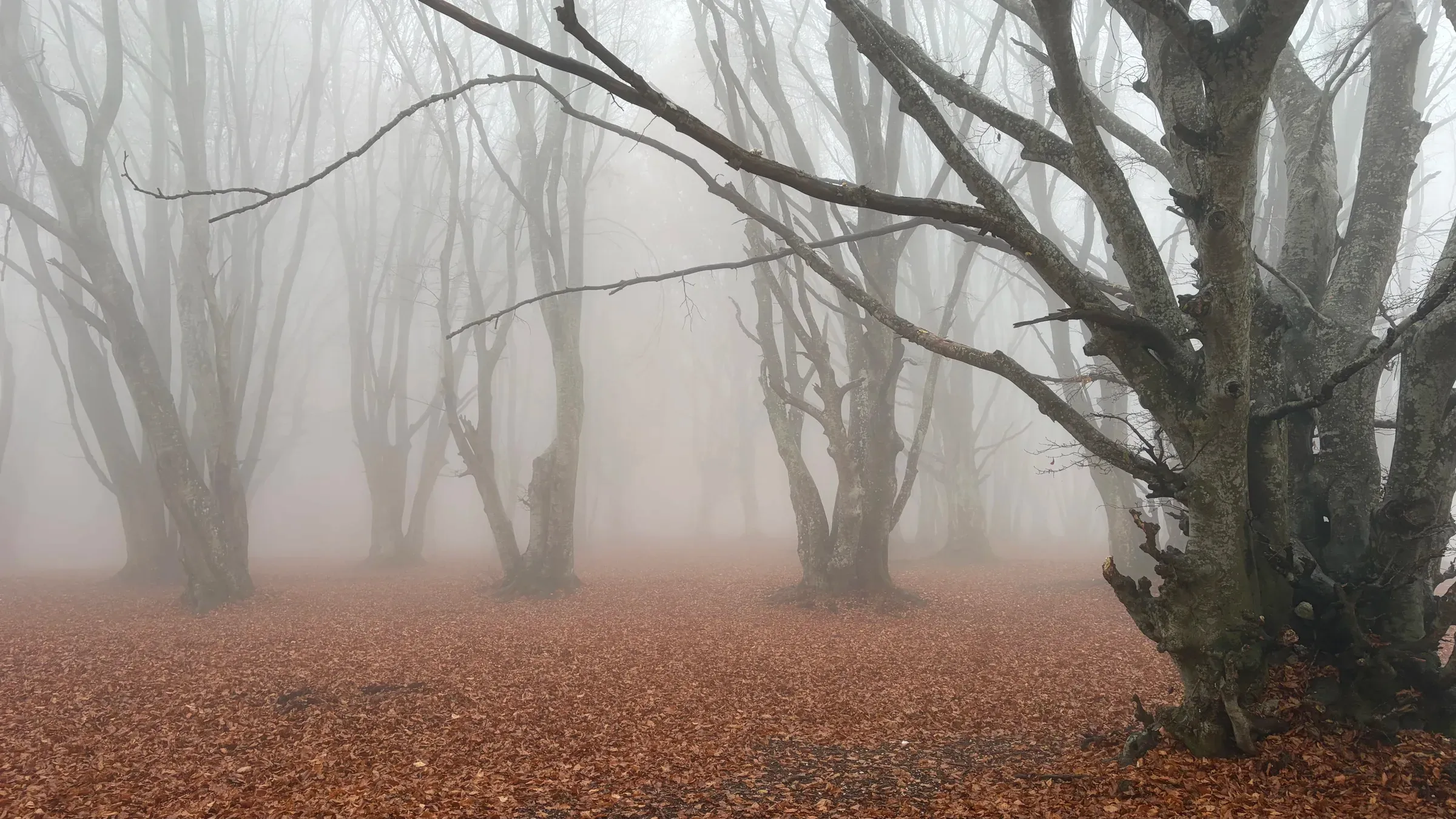
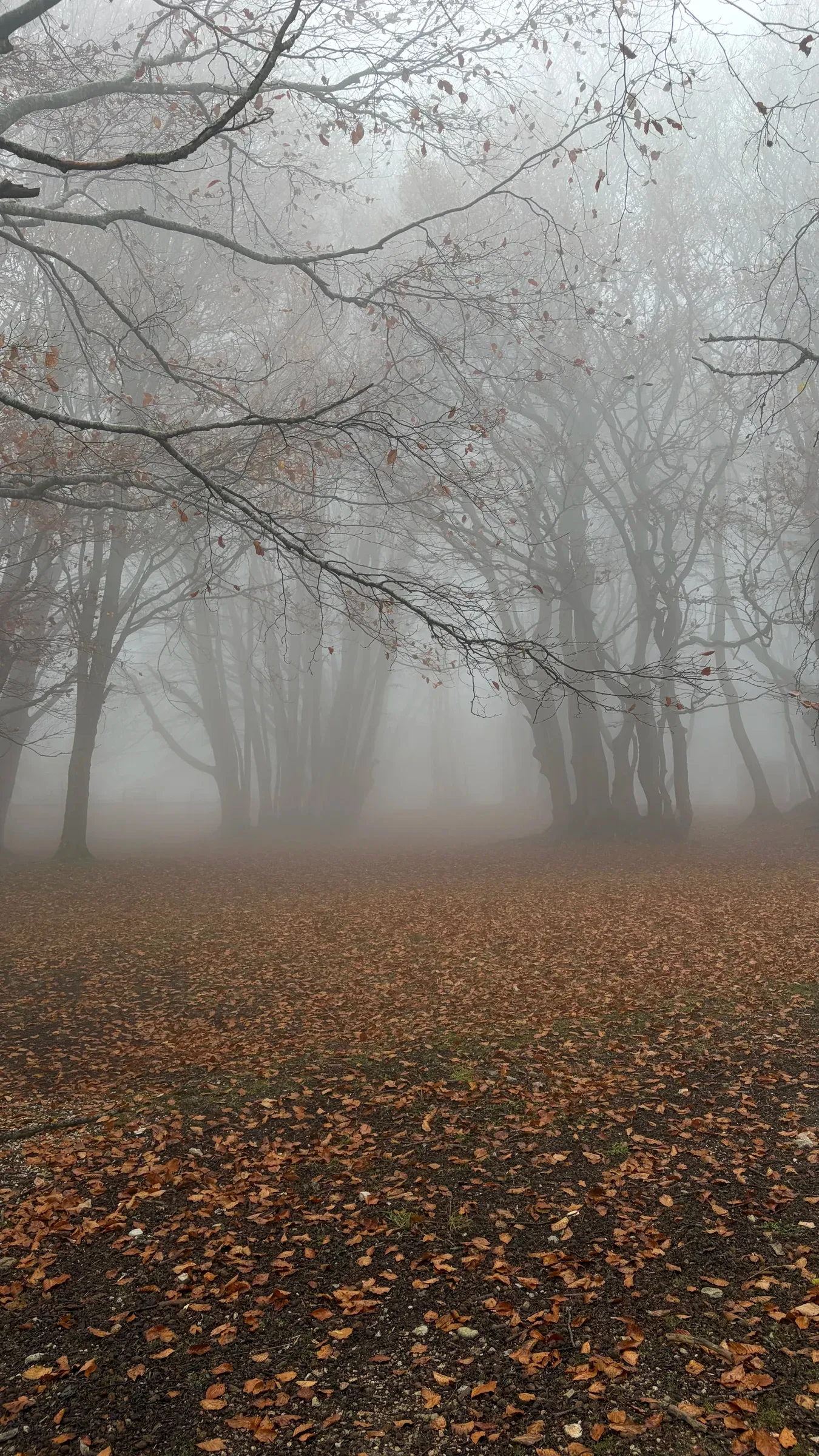
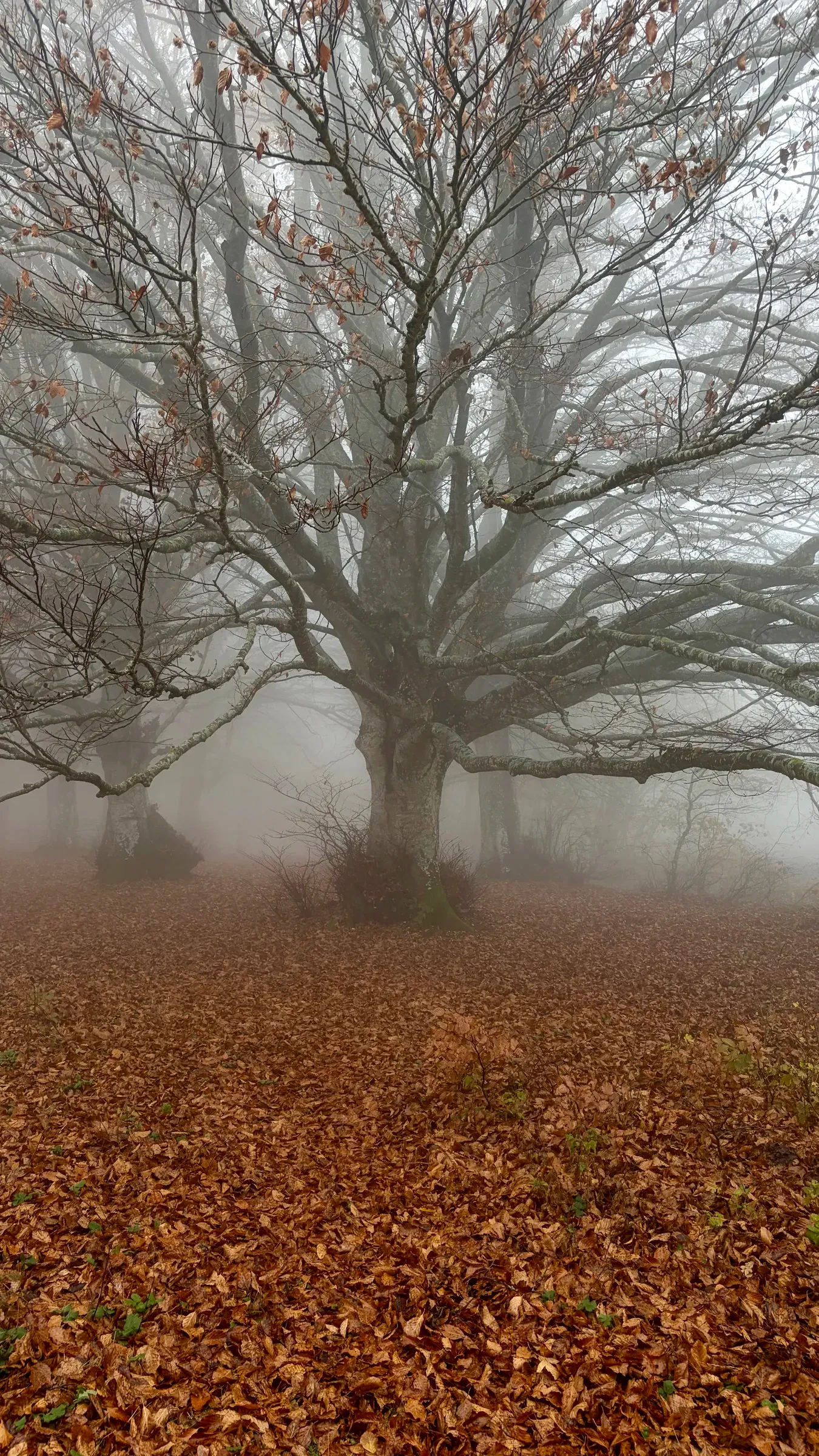
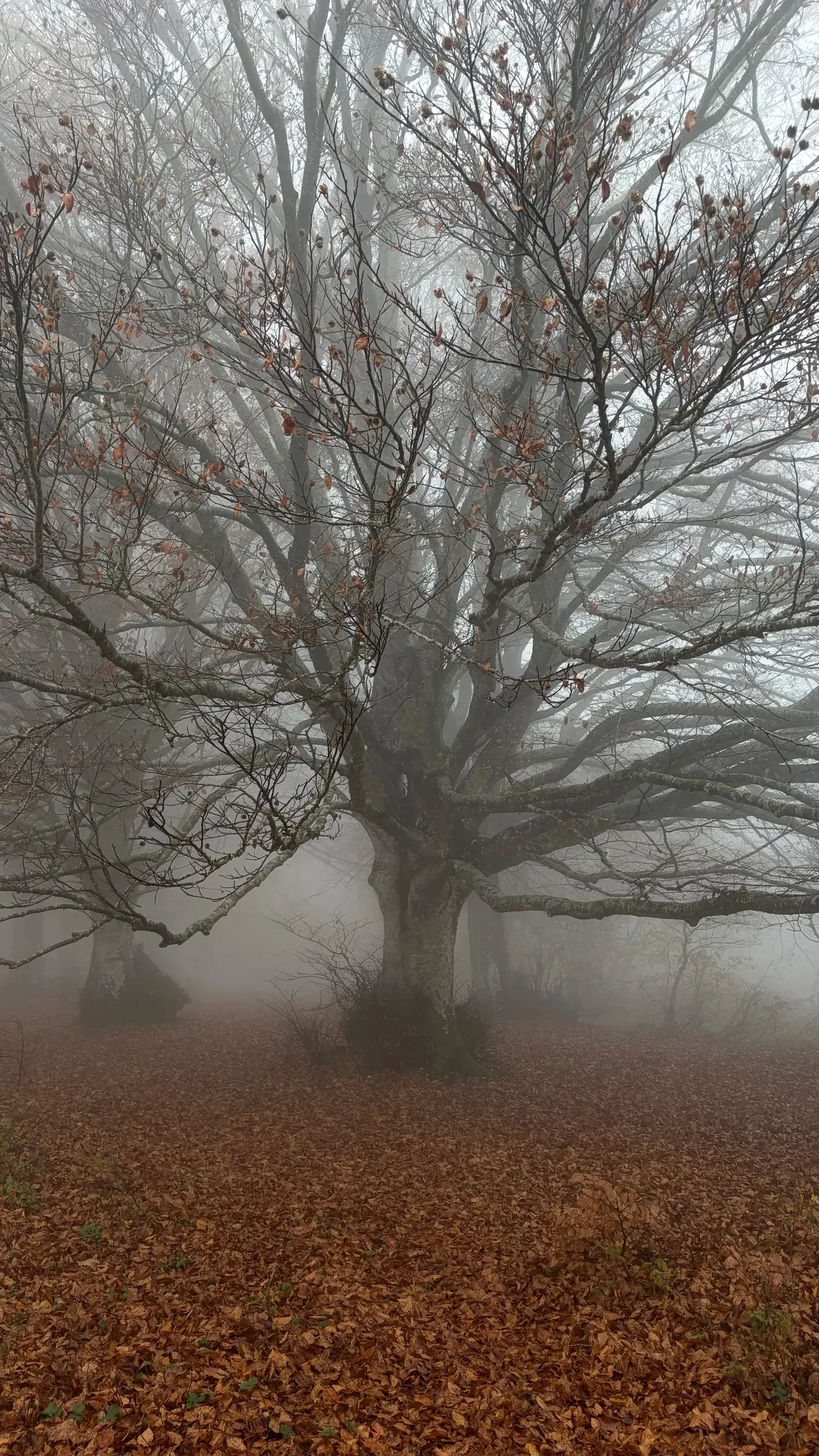
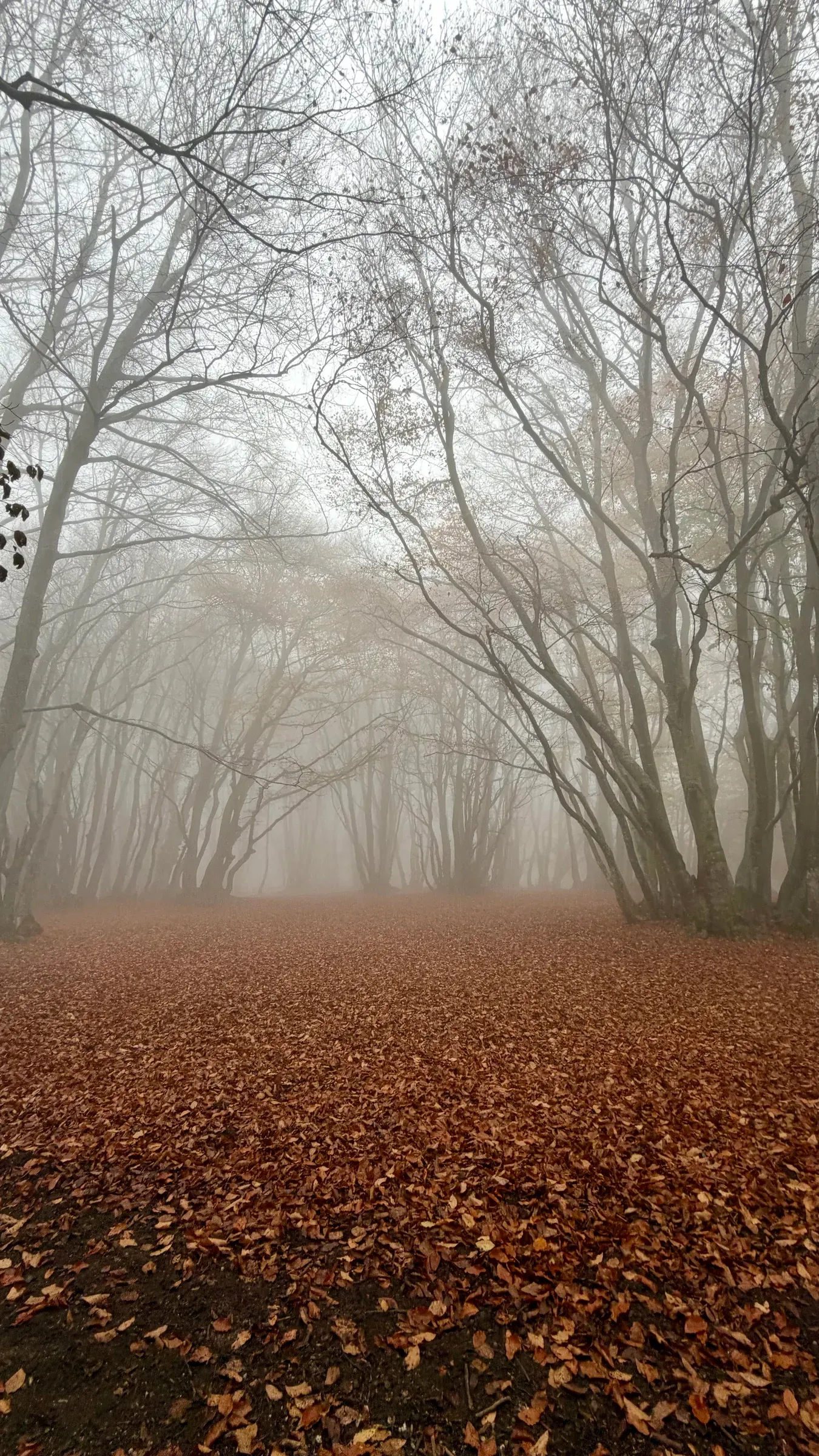
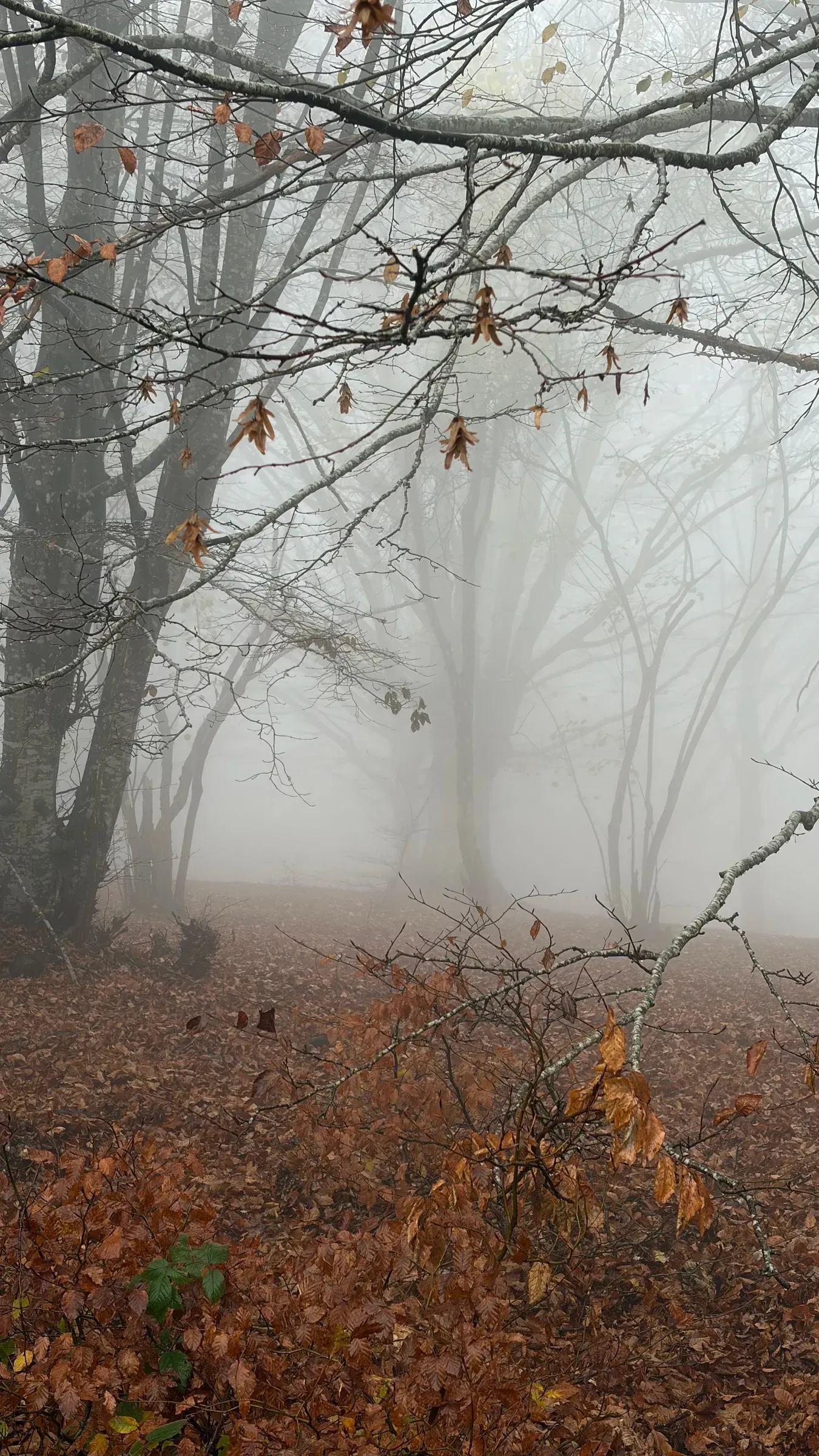
A small November walk through the Faggeto di Canfaito, on the plateau of the Monte San Vicino and Monte Canfaito Regional Nature Reserve. Canfaito sits around one thousand metres up in the Macerata province, between Matelica, San Severino Marche, Apiro, and Gagliole, where pasture and limestone ridges give way to one of the most atmospheric beech woods in the Marche. The morning was all fog and wet leaves: monumental trunks appearing slowly, branches dissolving into white, and the path reduced to a few metres of visible ground at a time.
Field of Beeches
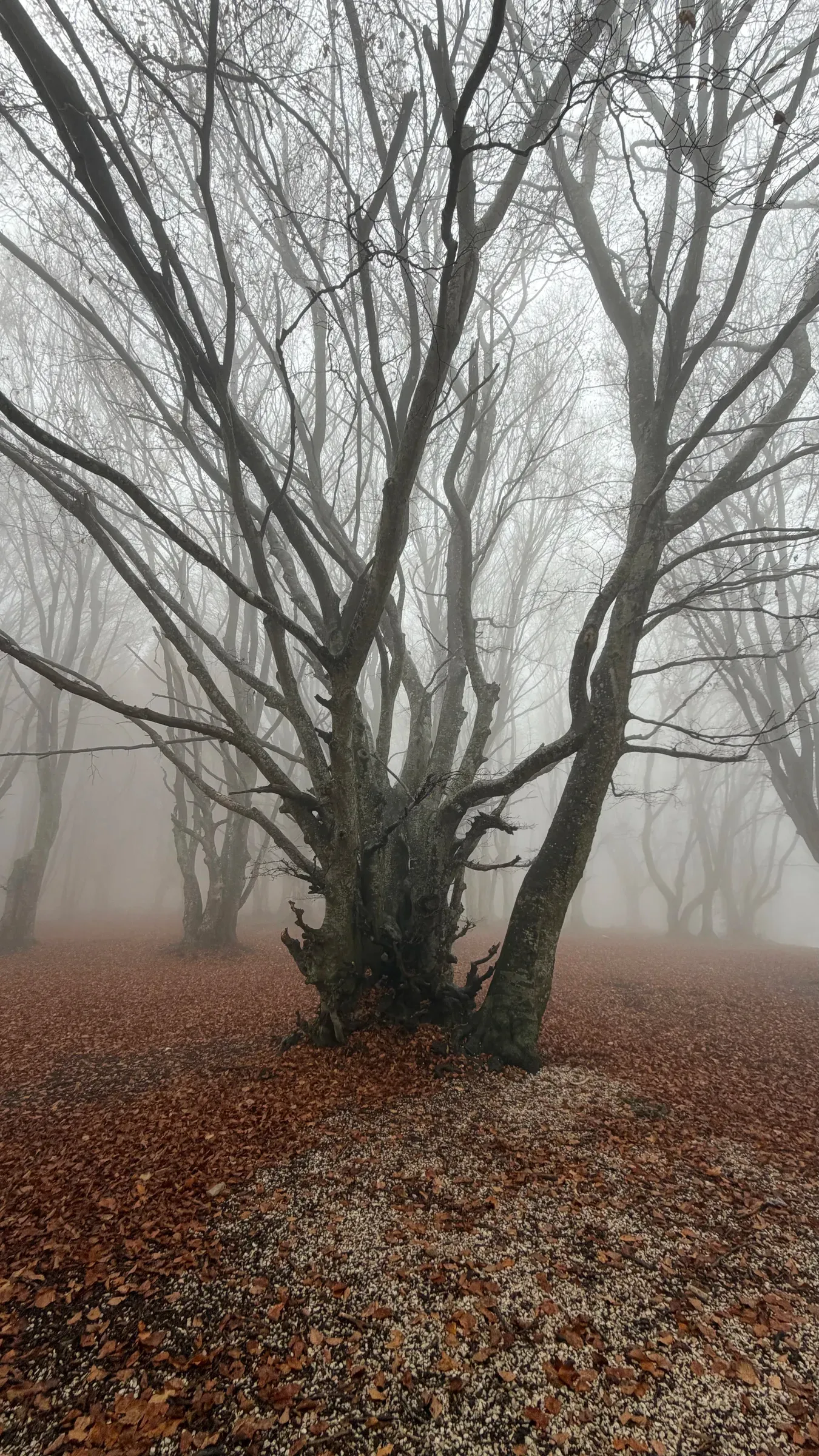
Canfaito is often explained through its name: a field of beeches. The phrase fits because the forest does not feel dense in a dark, closed way; it opens into glades, old trunks, pasture edges, and sudden white gaps where the fog removes the background. The reserve was formally established in 2009 and covers roughly fifteen hundred hectares around Monte San Vicino and Monte Canfaito, with the Canfaito plateau as one of its most recognizable places. In autumn the walk becomes simple: follow the leaf-covered ground, look for the next trunk, then wait for the fog to reveal how much forest is still there.
Old Trees
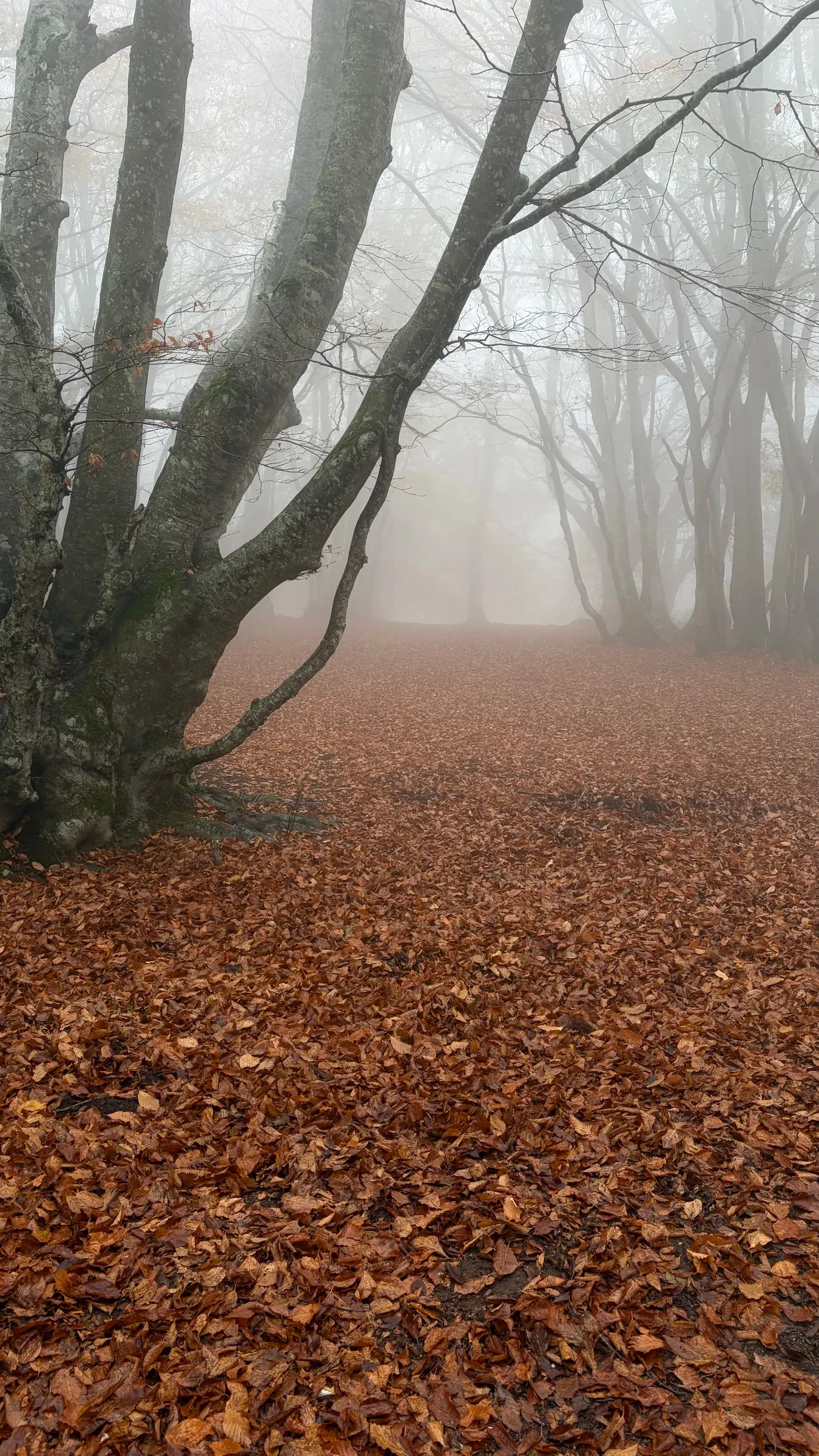
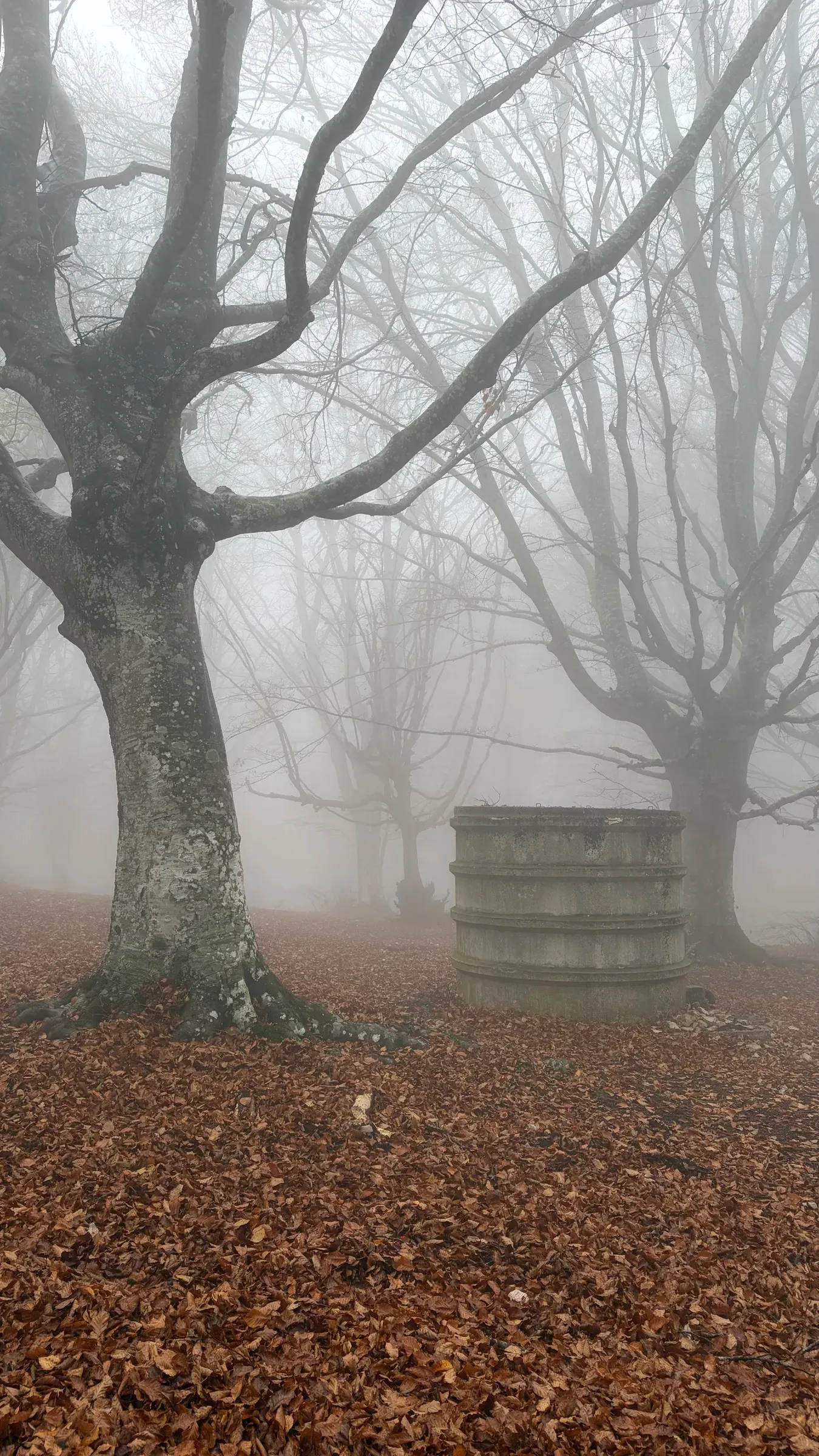
The reason people come to Canfaito is not only the foliage, but the age of the trees. The area is known for monumental beeches, including one of the largest and oldest in the Marche, commonly described as around five centuries old. In the fog it is hard to read scale immediately. A trunk appears first, then the low arms, then the ground around it, and only after a moment does the tree become architecture. These photographs stay with that feeling: the forest not as scenery, but as a group of presences you meet one by one.
A Short Walk
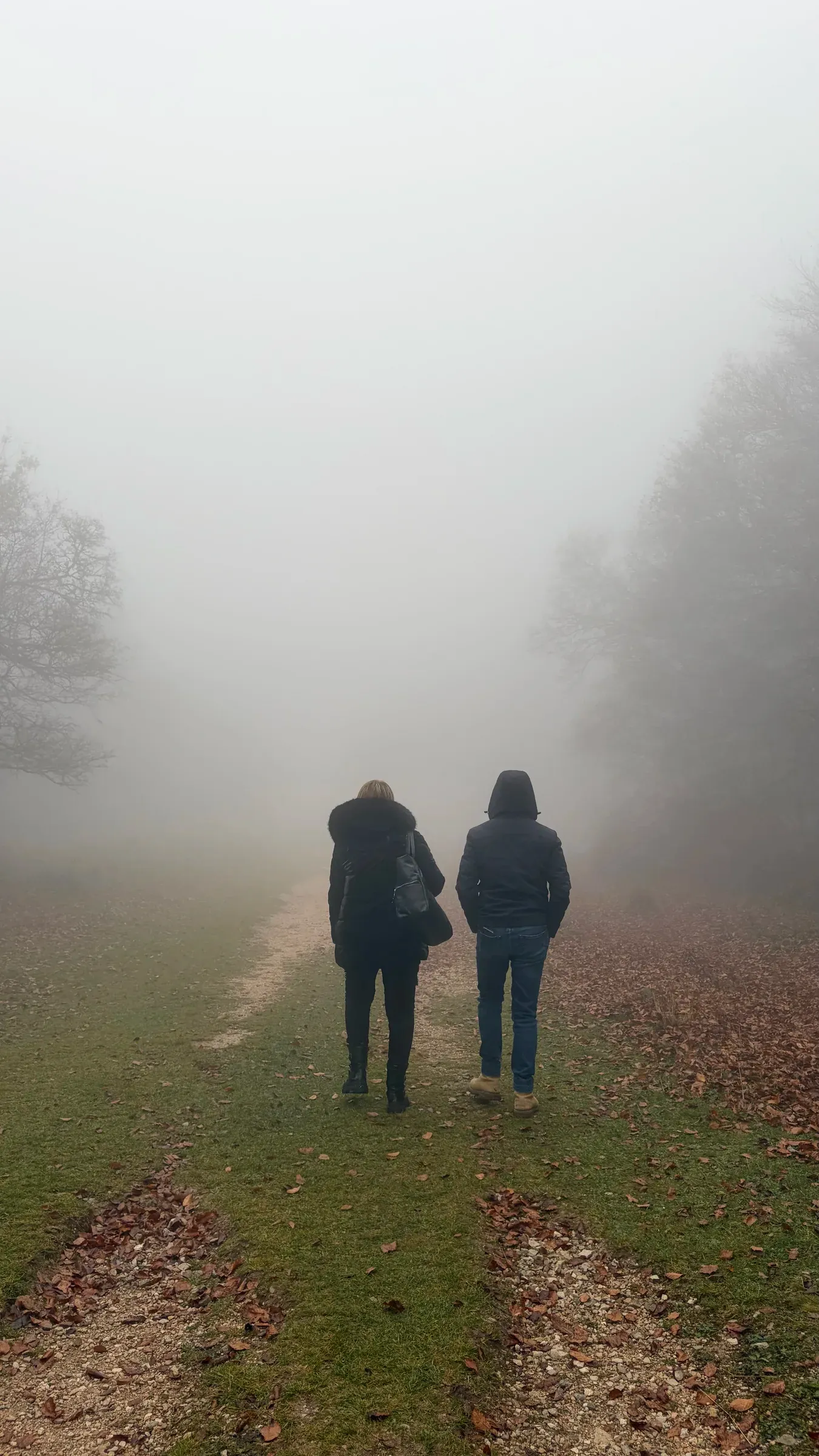
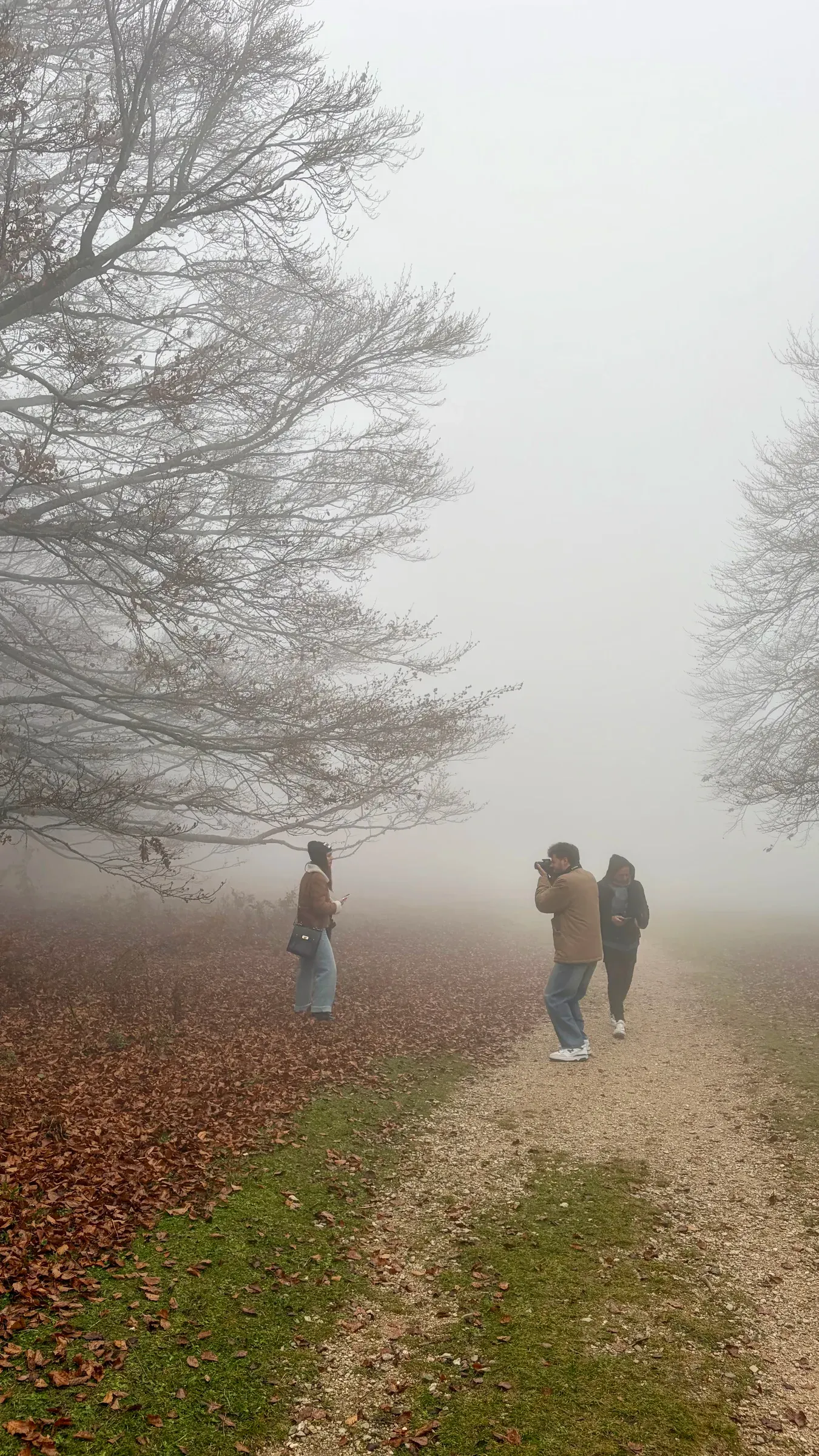
This was not a long hike, more a slow loop through the accessible part of the faggeta. In clear weather Canfaito can open toward ridges, pastures, and wider views of the San Vicino landscape; on this morning the horizon had disappeared. The path became a soft line between grass and leaves, and people ahead were visible only for a few seconds before the fog swallowed them again. That made the walk feel smaller and more concentrated. There was no need to reach a viewpoint. The weather had moved the viewpoint into the forest itself.
Quiet Markers
The forest is not completely wild in the romantic sense. Canfaito is crossed by marked trails and managed as part of a protected reserve; the surrounding territory holds paths, old rural traces, and places tied to local history. A small stone structure in the fog changes the rhythm of the walk for a moment. It gives the scene a human scale without breaking the quiet: a marker in the leaf litter, surrounded by trunks that make it look temporary by comparison.
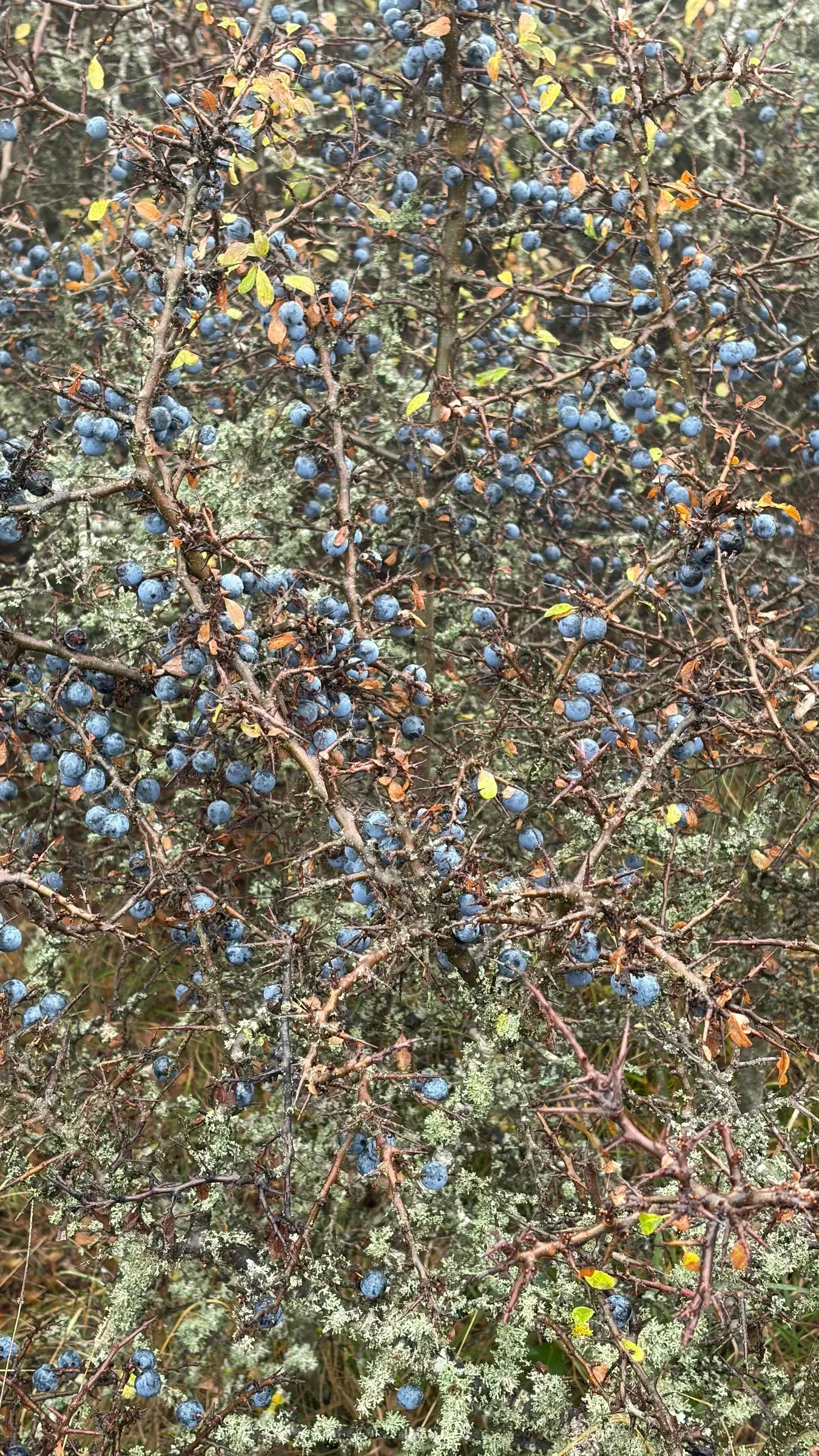
Understory
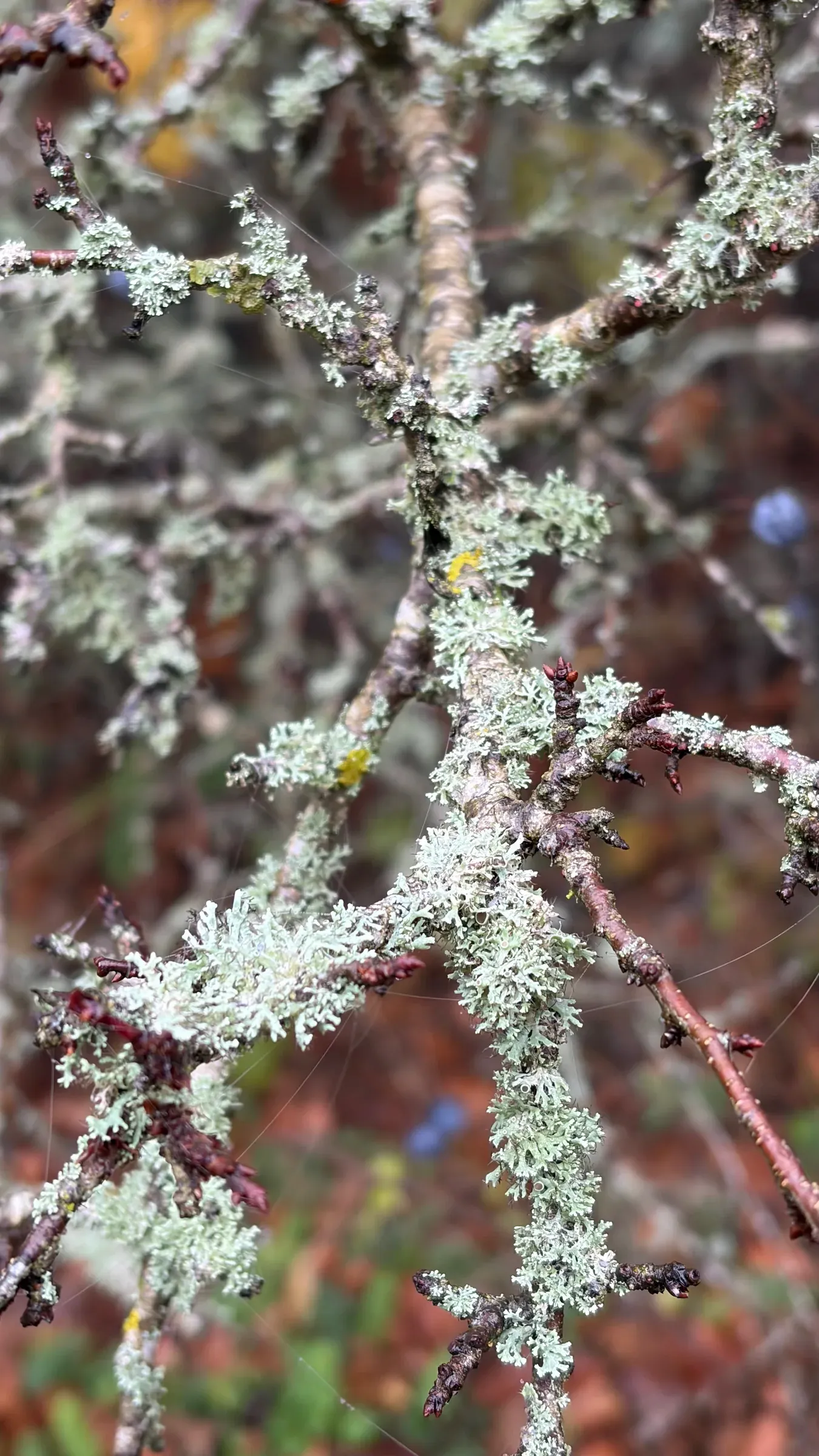
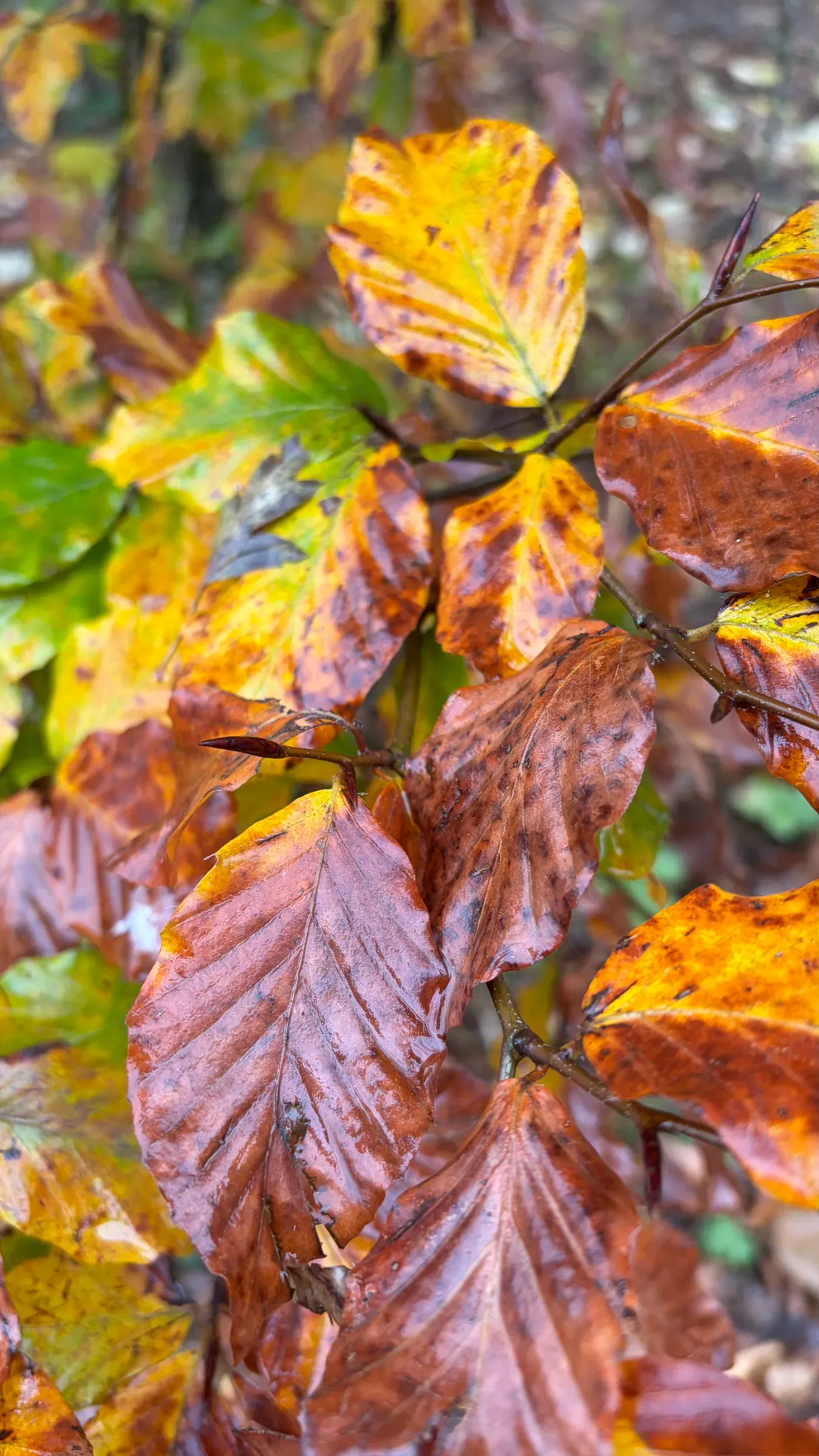
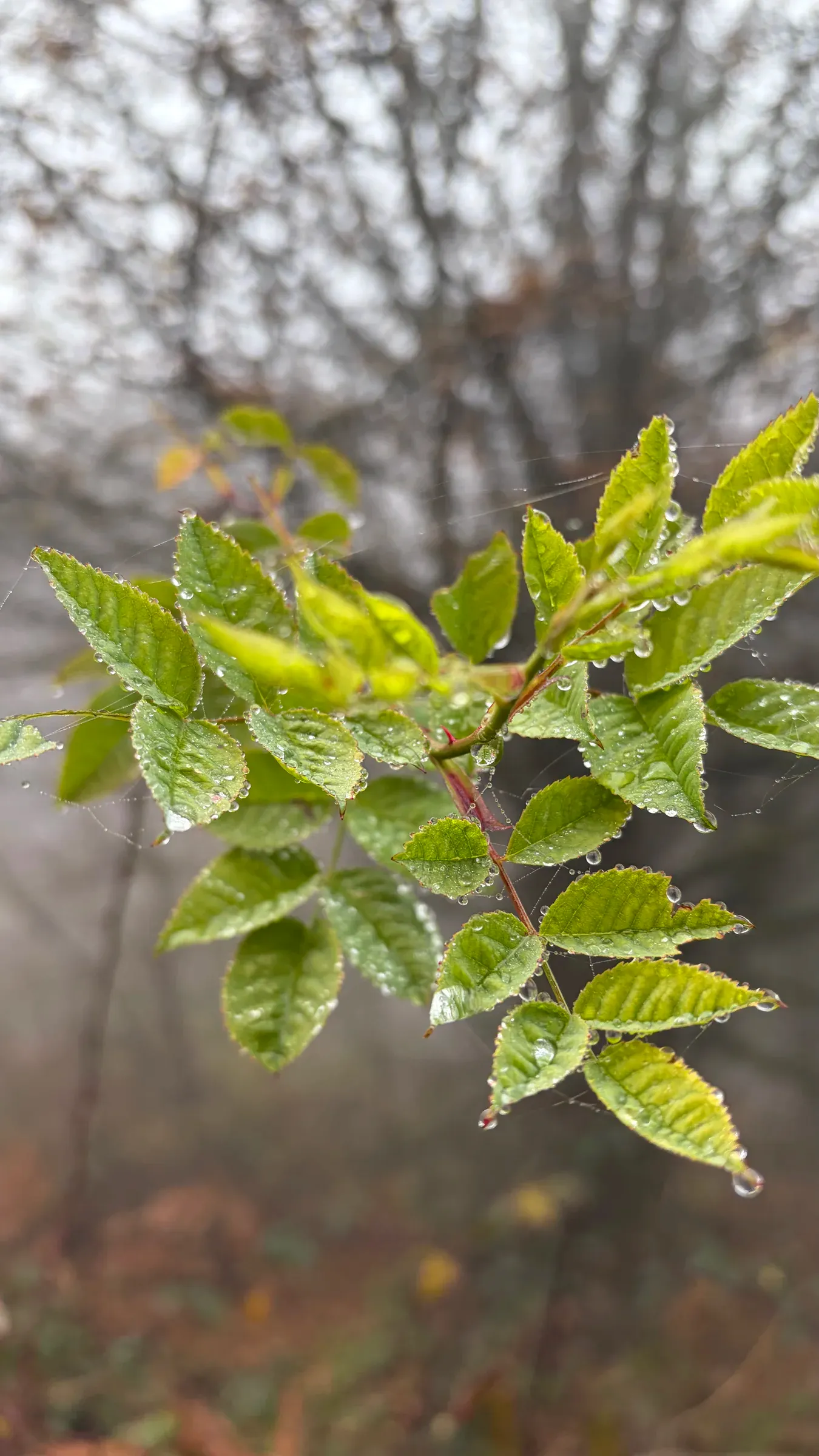
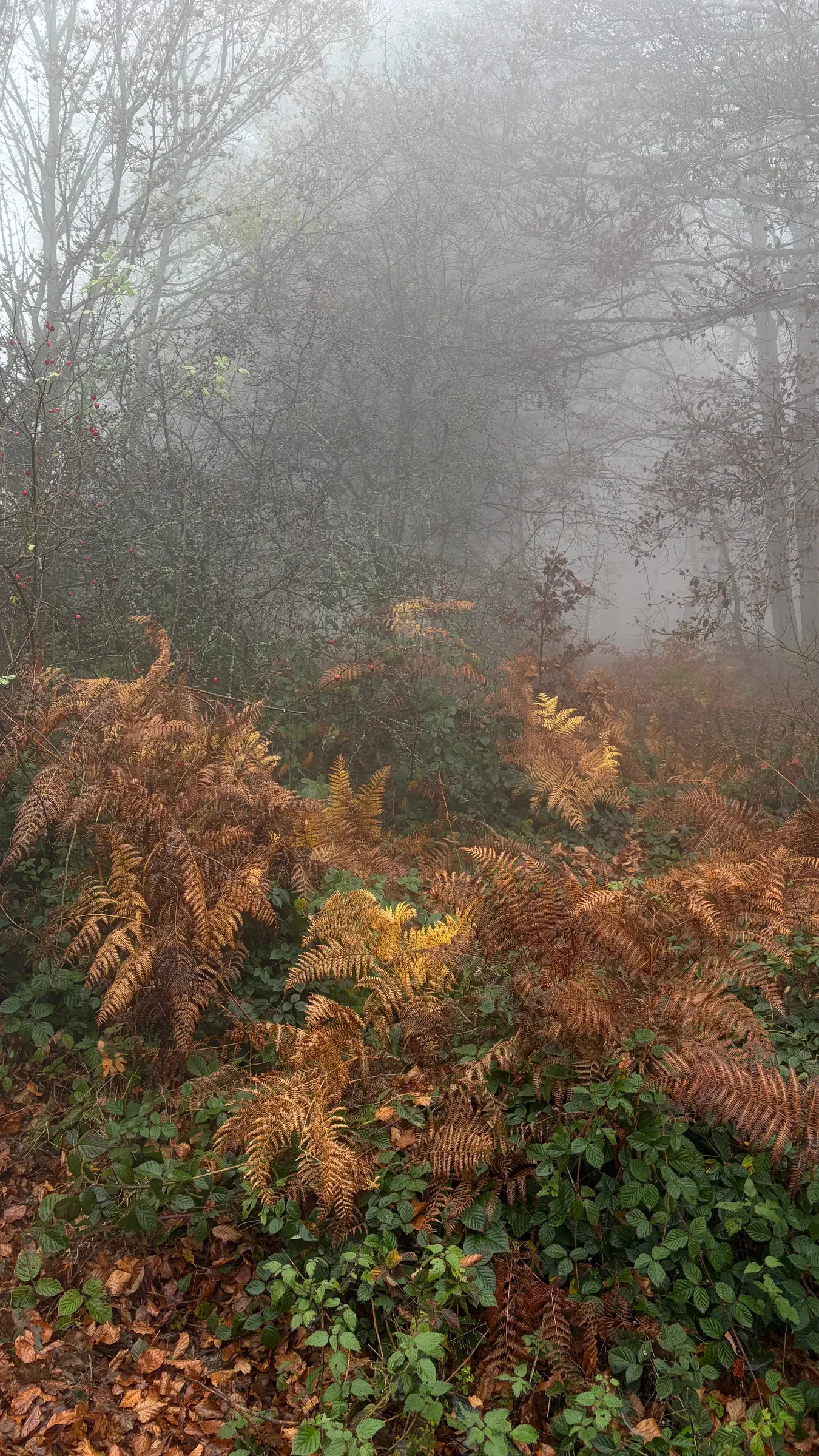
The fog made the large trees theatrical, but the smaller details carried the colour. Wet beech leaves, pale lichens, green shoots, fern fronds, and blue berries kept the walk from becoming monochrome. This is the part of Canfaito that rewards slowing down: not the famous patriarchs, not the autumn panorama, but the damp surface of things after rain. Every branch seemed to hold water, every leaf had a slightly different stage of decay, and the forest floor looked less like ground than a second canopy turned upside down.