German Spring in Düsseldorf
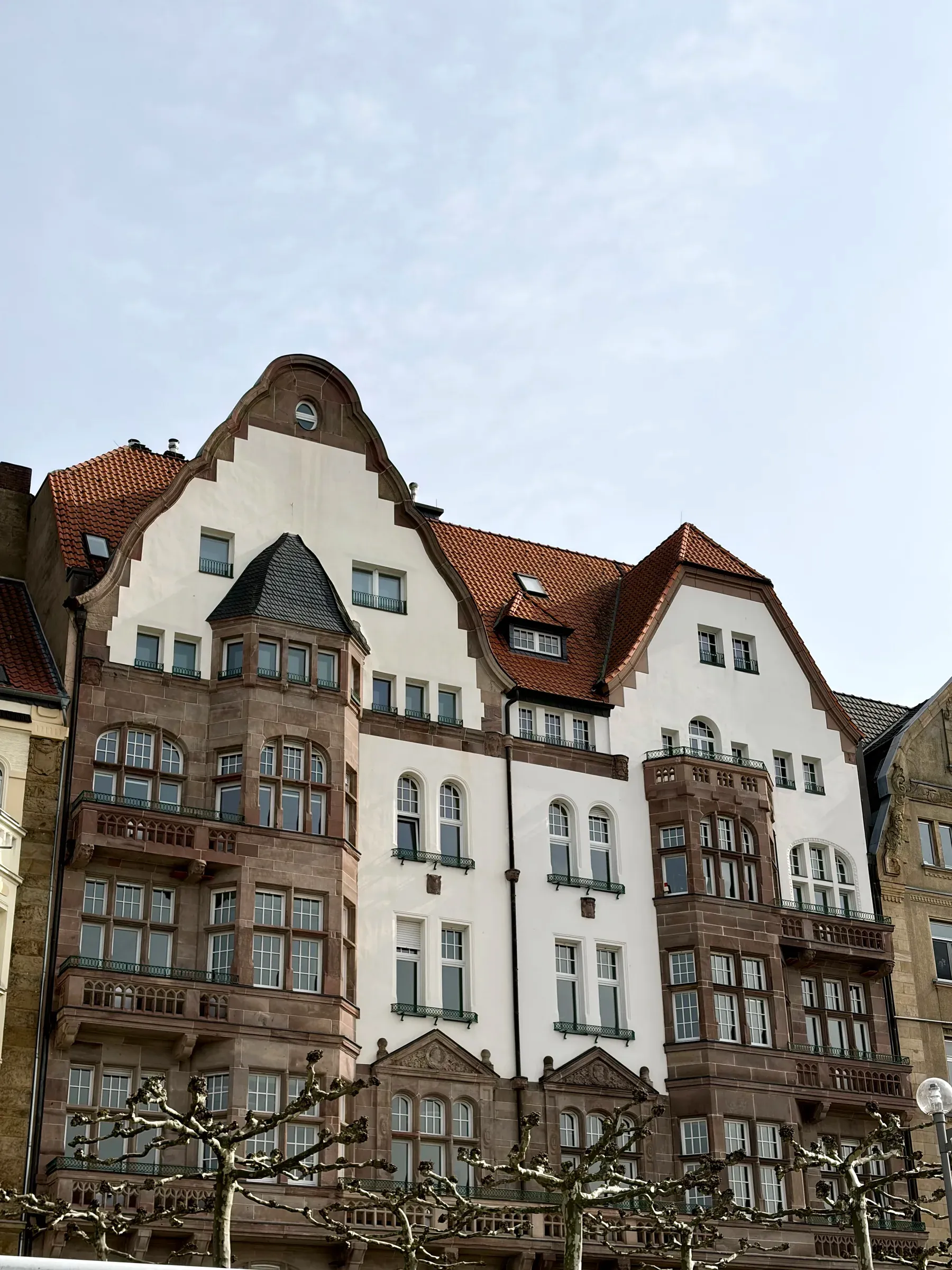
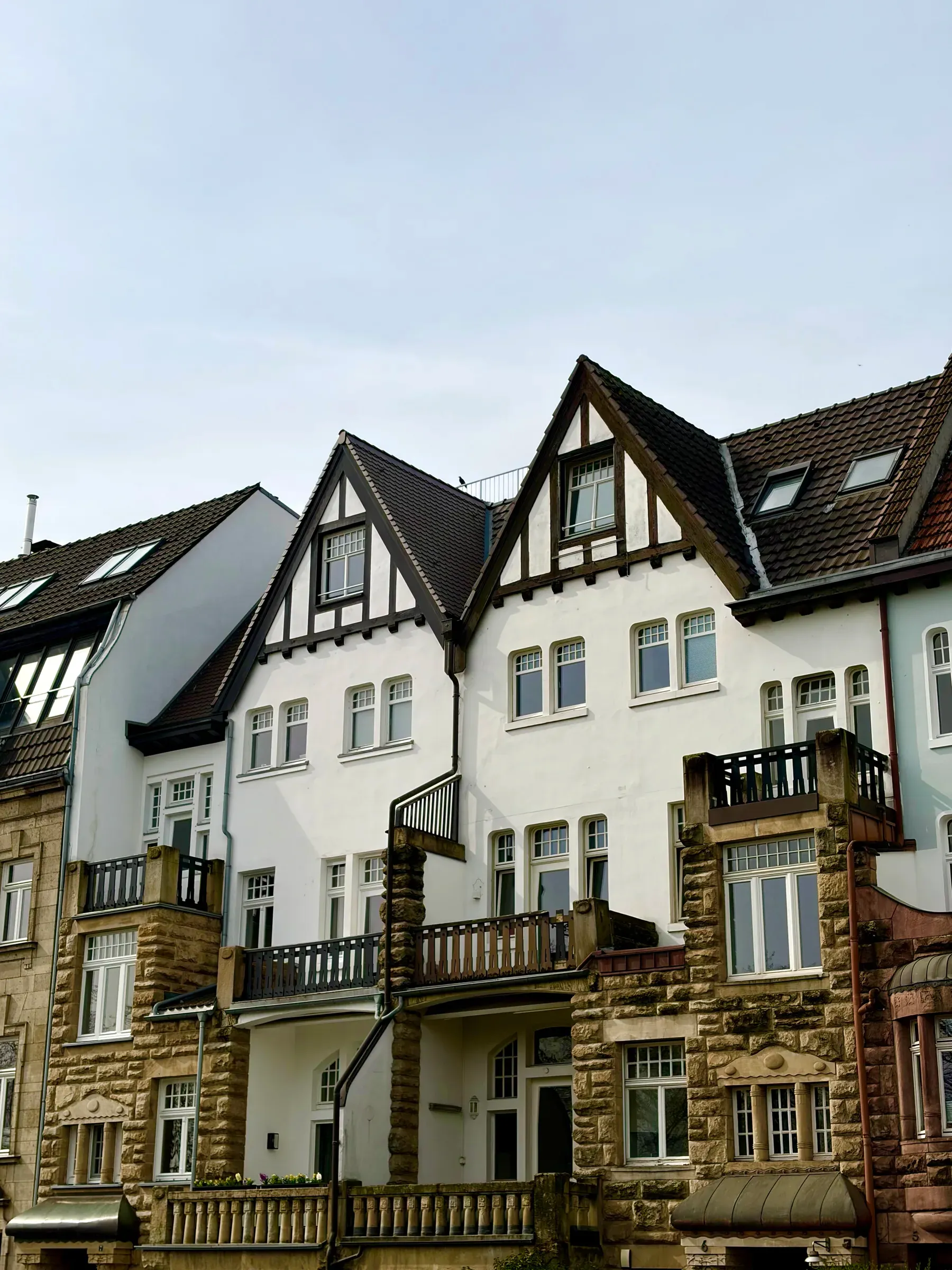
A week in Düsseldorf visiting a friend left a stronger impression than I expected. Beyond the MedienHafen and the Königsallee, I kept noticing how different the city's architecture feels from Italy: cleaner lines, brick and glass in proportions we rarely see at home, and a northern European modernity that never quite overwhelms the street. What surprised me most was the green. Parks, river meadows, tree-lined residential quarters: for a city of this size and economic weight, Düsseldorf carries an unexpected calm. These photographs follow a loose week of walks between harbour, park, and neighbourhood. I had packed for proper March cold; Düsseldorf greeted me with spring sunshine instead.
Rheinturm
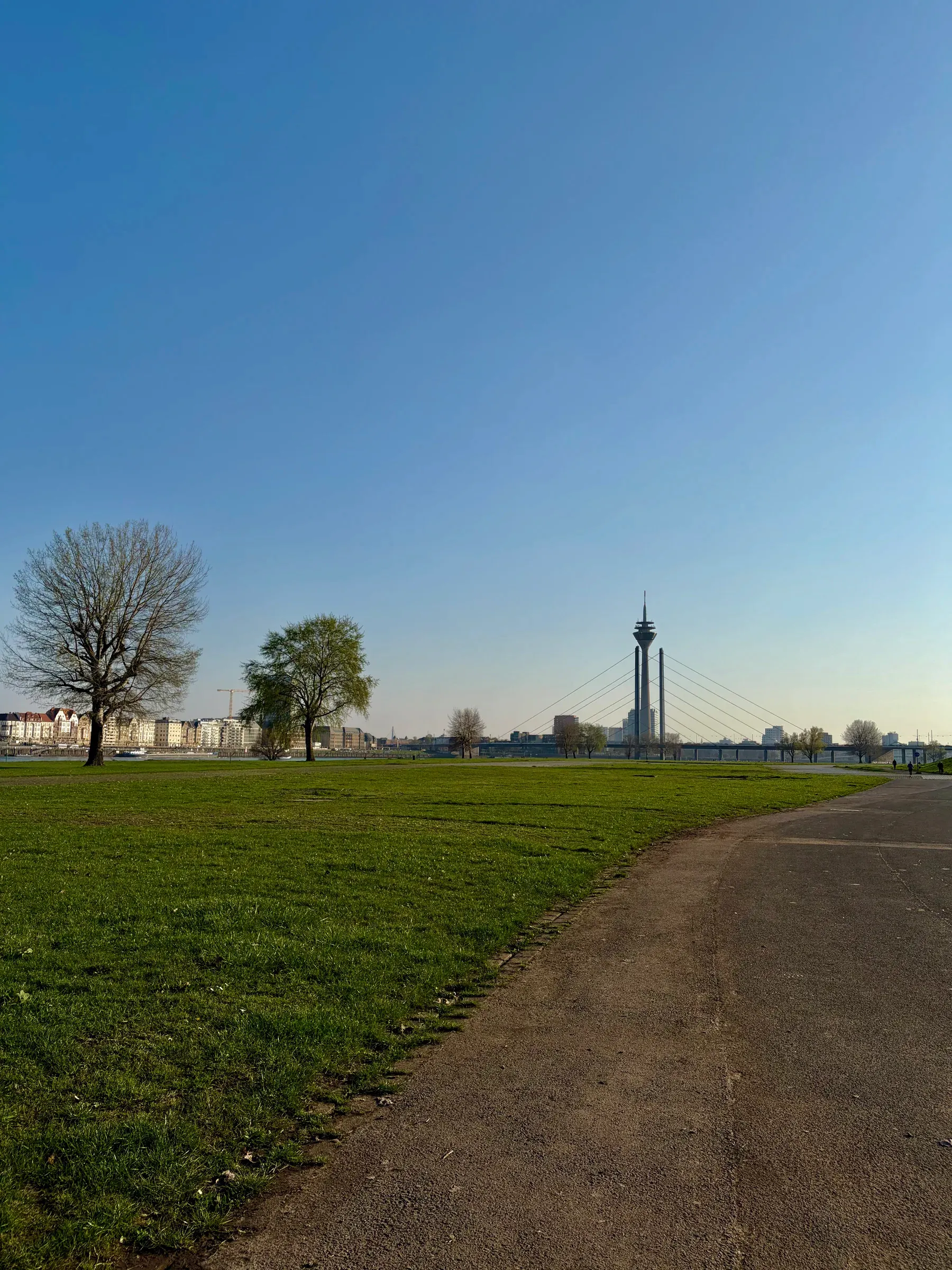
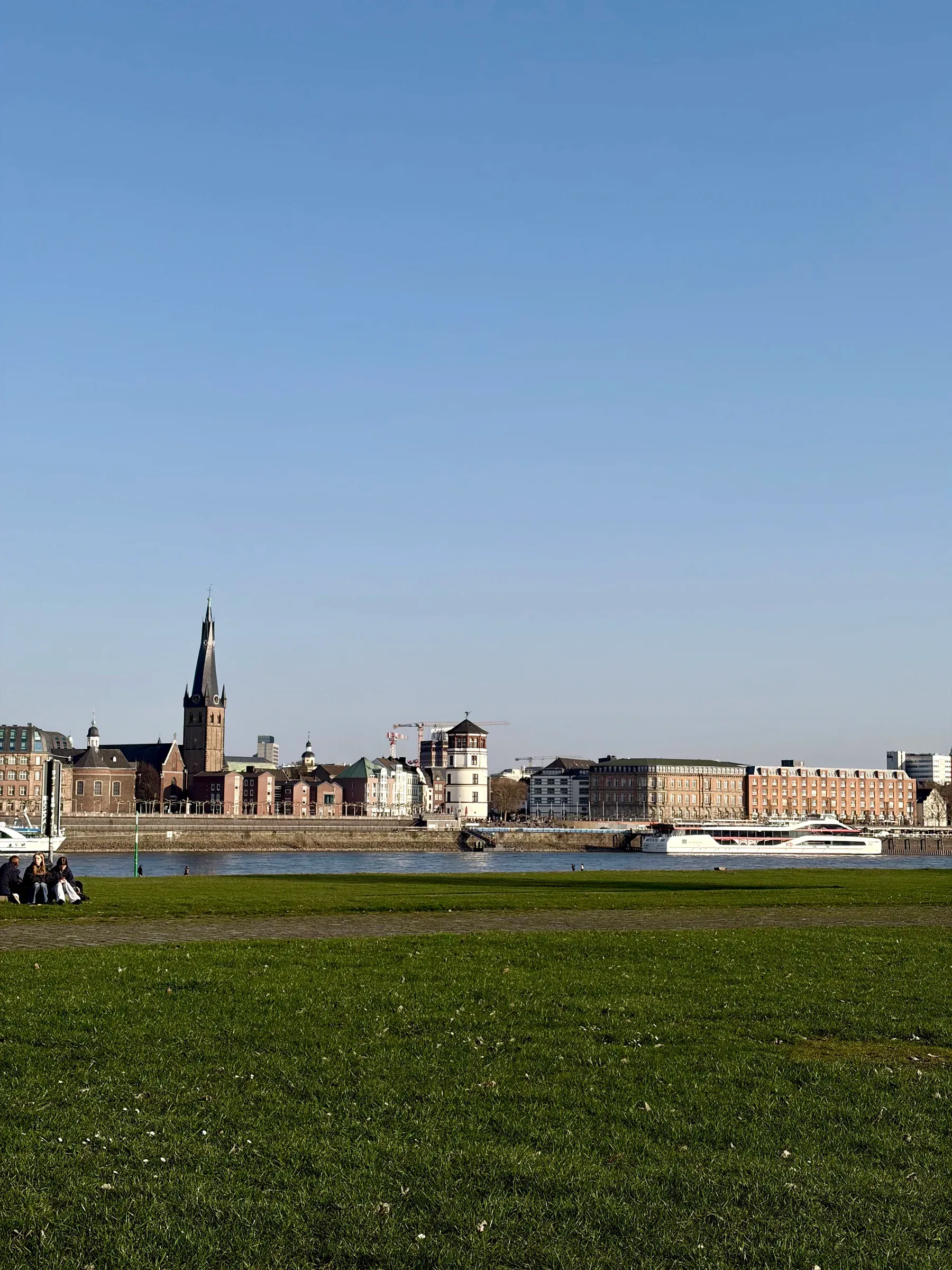
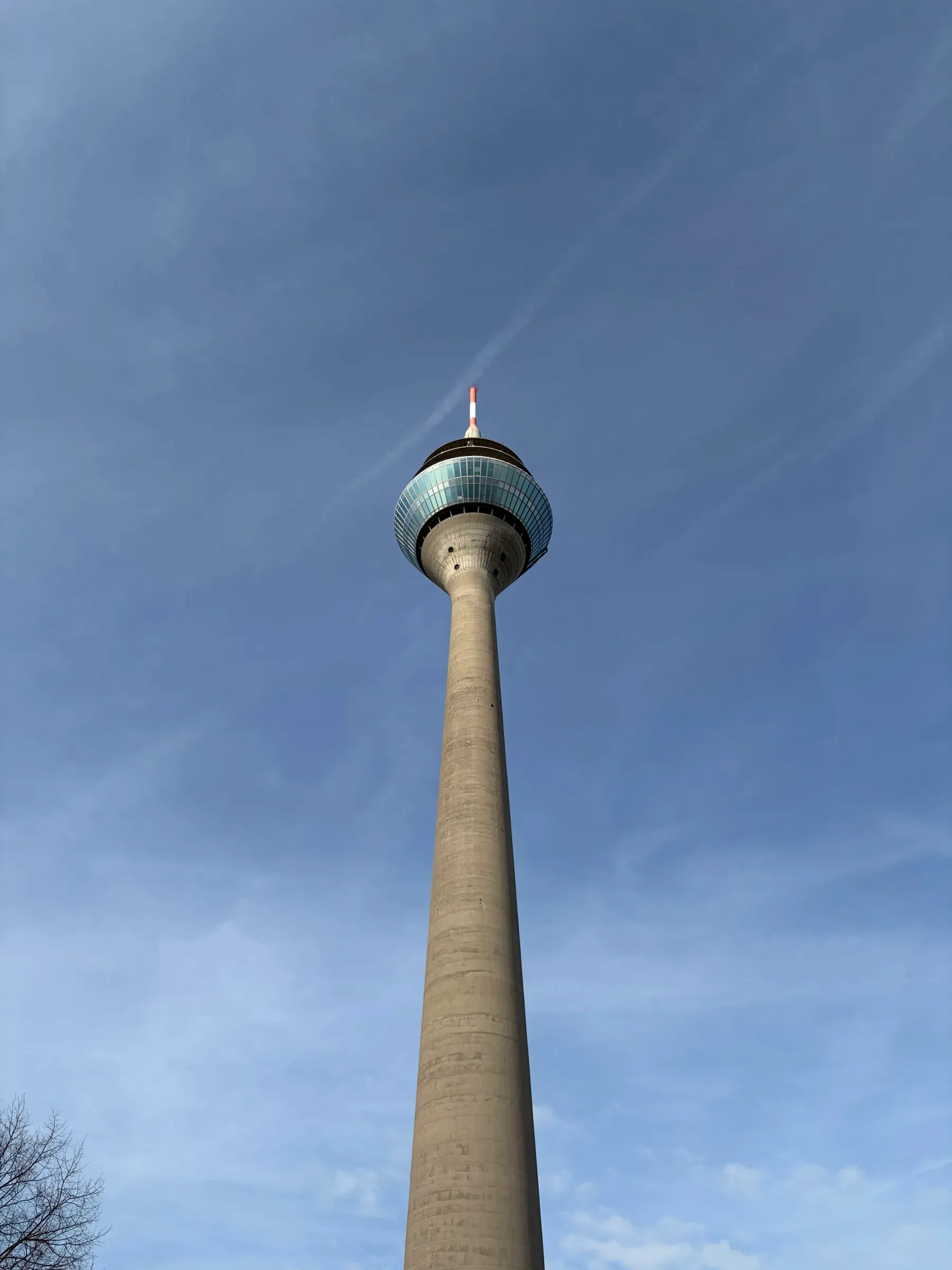
The Rheinturm rises 240 metres above the Rhine promenade, Düsseldorf's tallest structure and its most unmistakable silhouette. Completed in 1981 to a design by architect Karl Brodine, it was conceived not merely as a television and radio mast but as a public landmark: an observation deck at 170 metres, a revolving restaurant, and a shaft that doubles as the world's largest digital clock after dark. From the meadows at Niederkassel it reads as a needle threading the sky; from Unterbilk and the MedienHafen it anchors the horizon, a fixed point against the shifting geometry of glass and steel along the harbour. March light catches its concrete shaft obliquely, softening what is otherwise an uncompromising vertical, a reminder that this is a city built on the river's edge, always looking back toward the water.
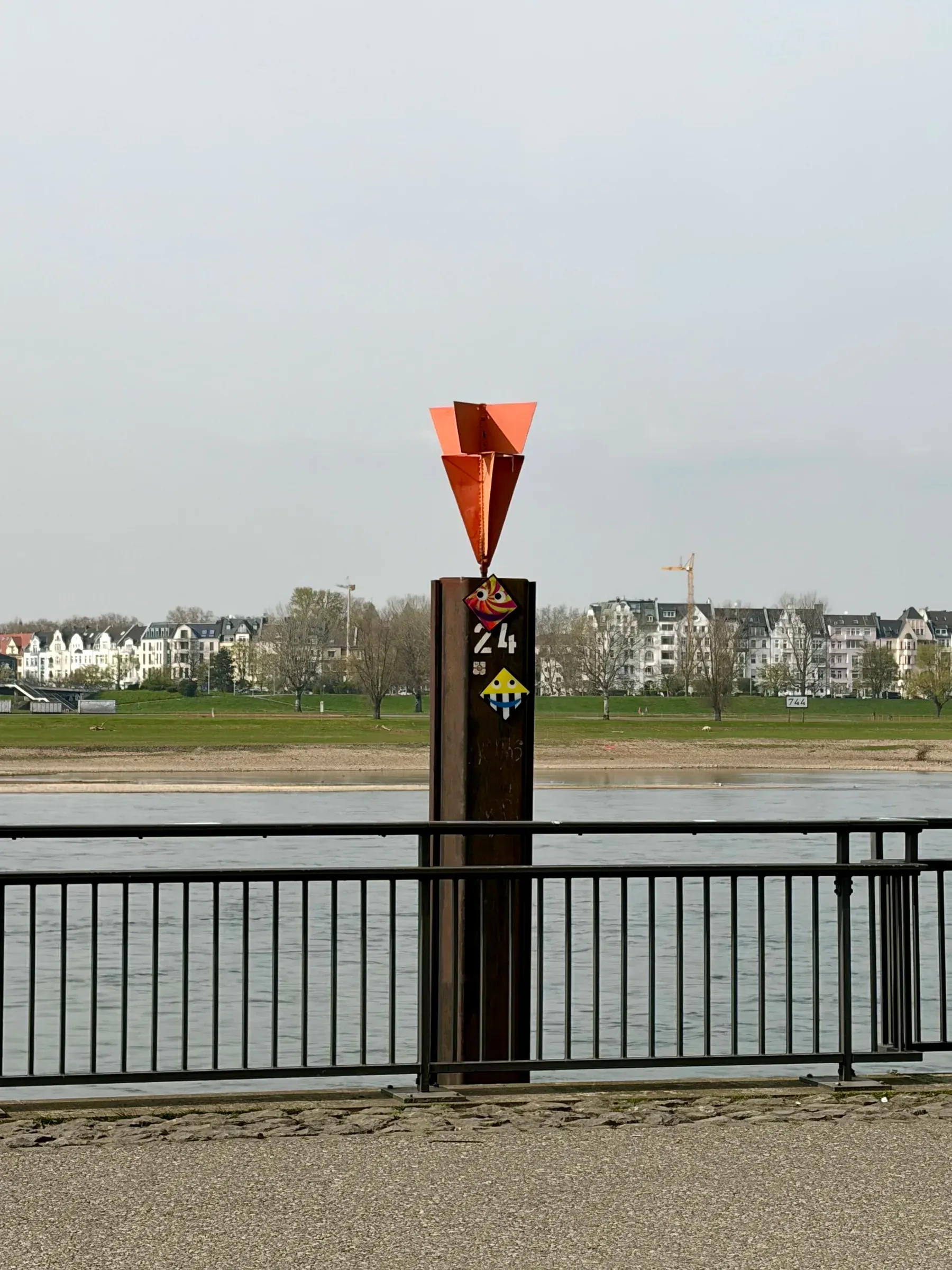
Pdot's Pac-Man ghosts
Since around 2015, colourful Pac-Man ghost stickers have appeared across Düsseldorf, on the backs of street signs, electrical boxes, bridge pillars, and quiet corners of residential streets. The work of an anonymous street artist known as Pdot, the project has grown into one of the city's most recognisable urban interventions: thousands of hand-cut adhesive ghosts in every imaginable colour, from simple silhouettes to elaborate one-offs. Pdot chose the motif deliberately: neutral, friendly, instantly legible, as a way to soften grey municipal surfaces without obstructing them. The front of traffic signs remains untouched; the stickers are designed to peel away cleanly. There is a gentle politics to it too: where surveillance cameras watch the public realm, Pdot's 'good spirits' look back with curiosity rather than judgment, a counterweight to the loss of privacy in shared space. Part treasure hunt, part running joke, the ghosts reward anyone who starts noticing them. Once you spot one, you begin to see them everywhere.
Nordpark
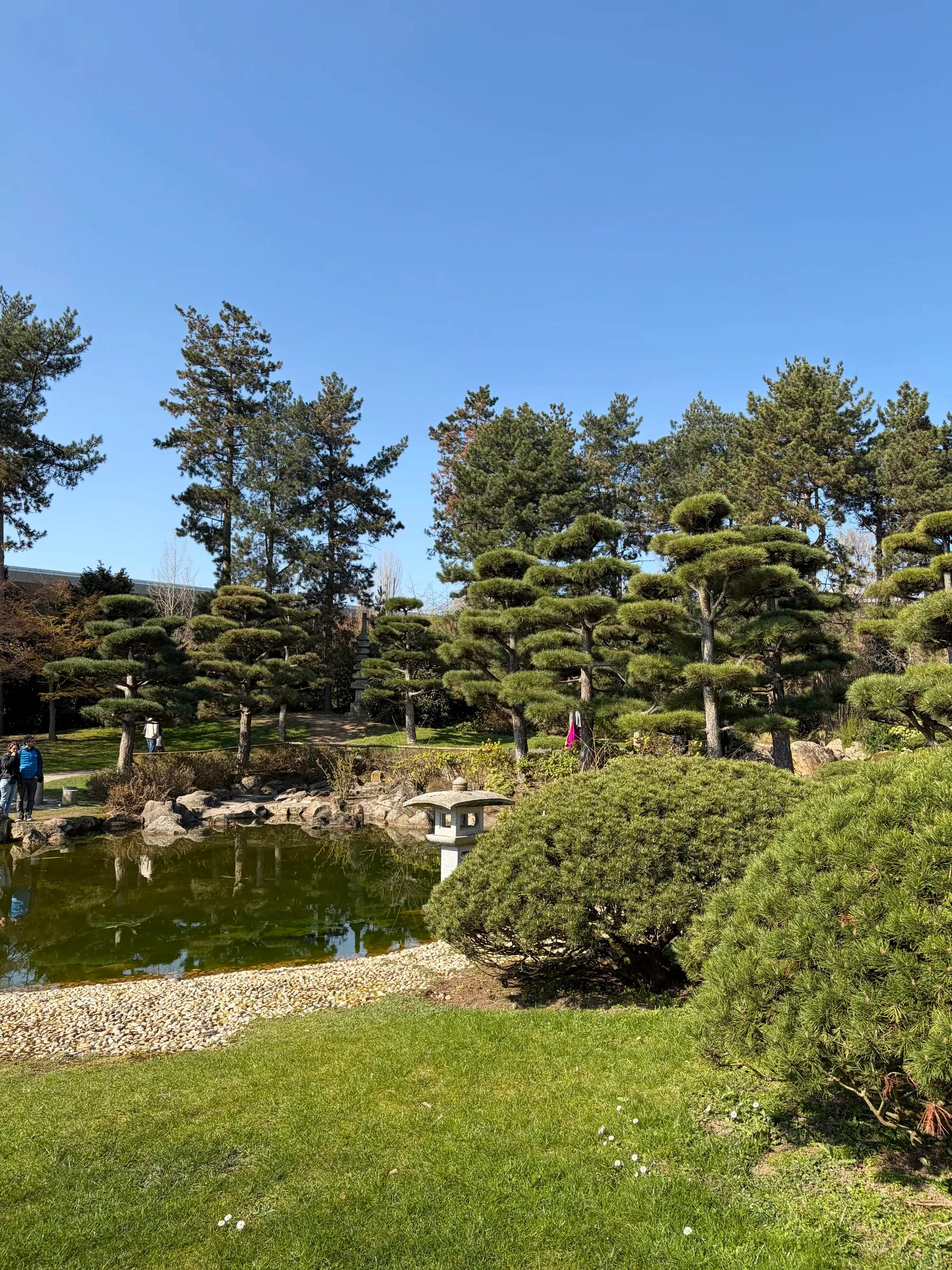
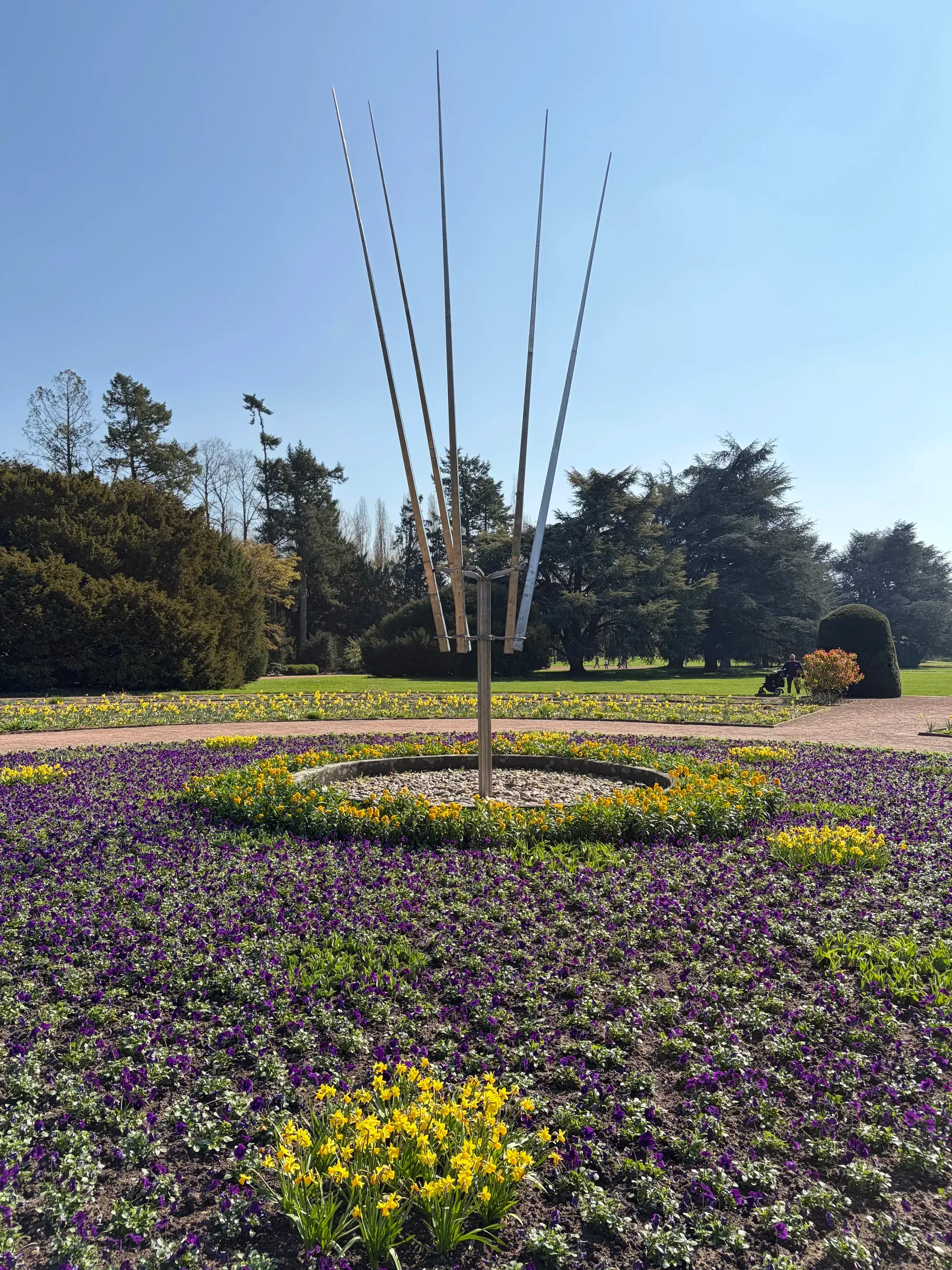
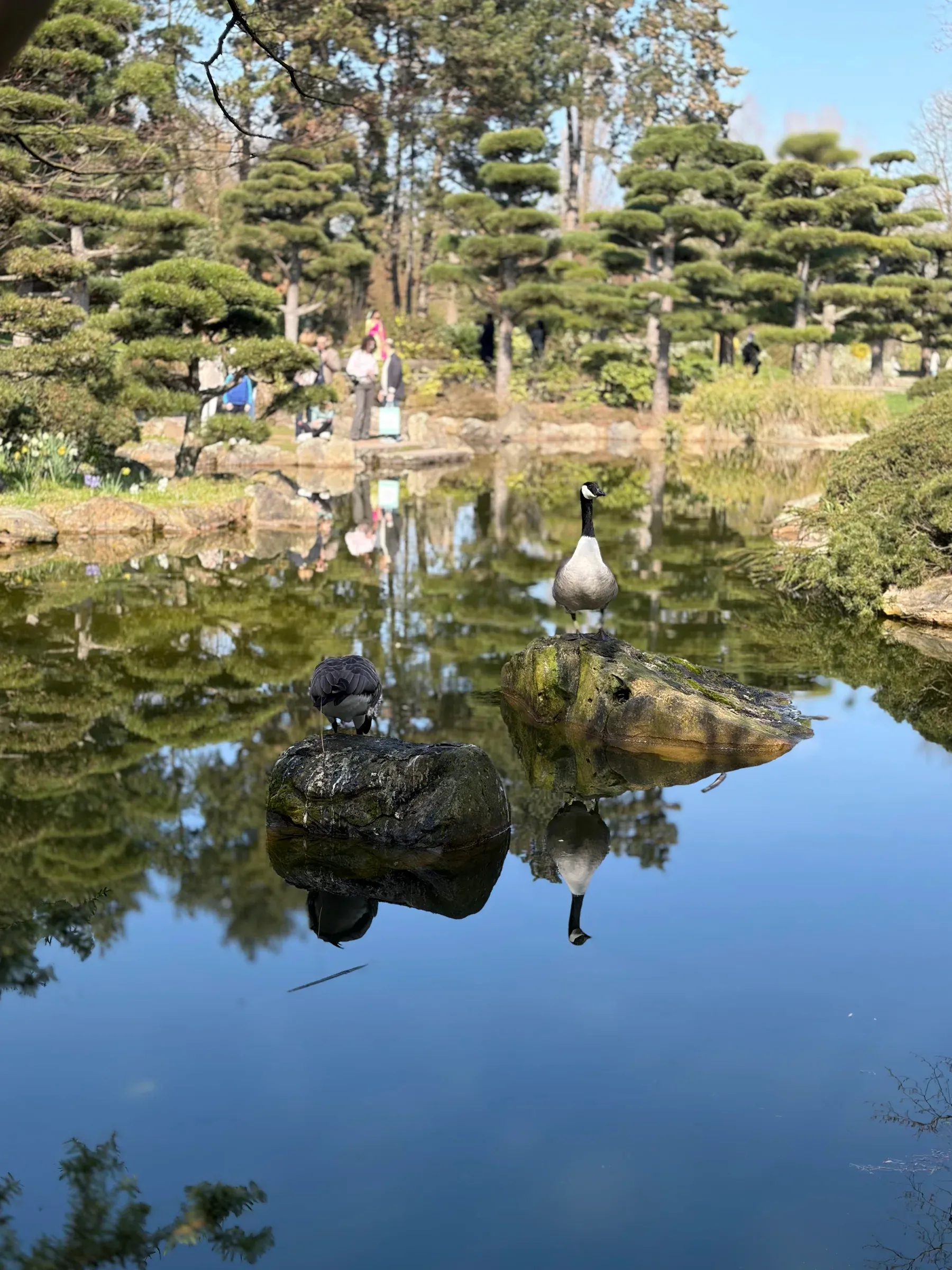
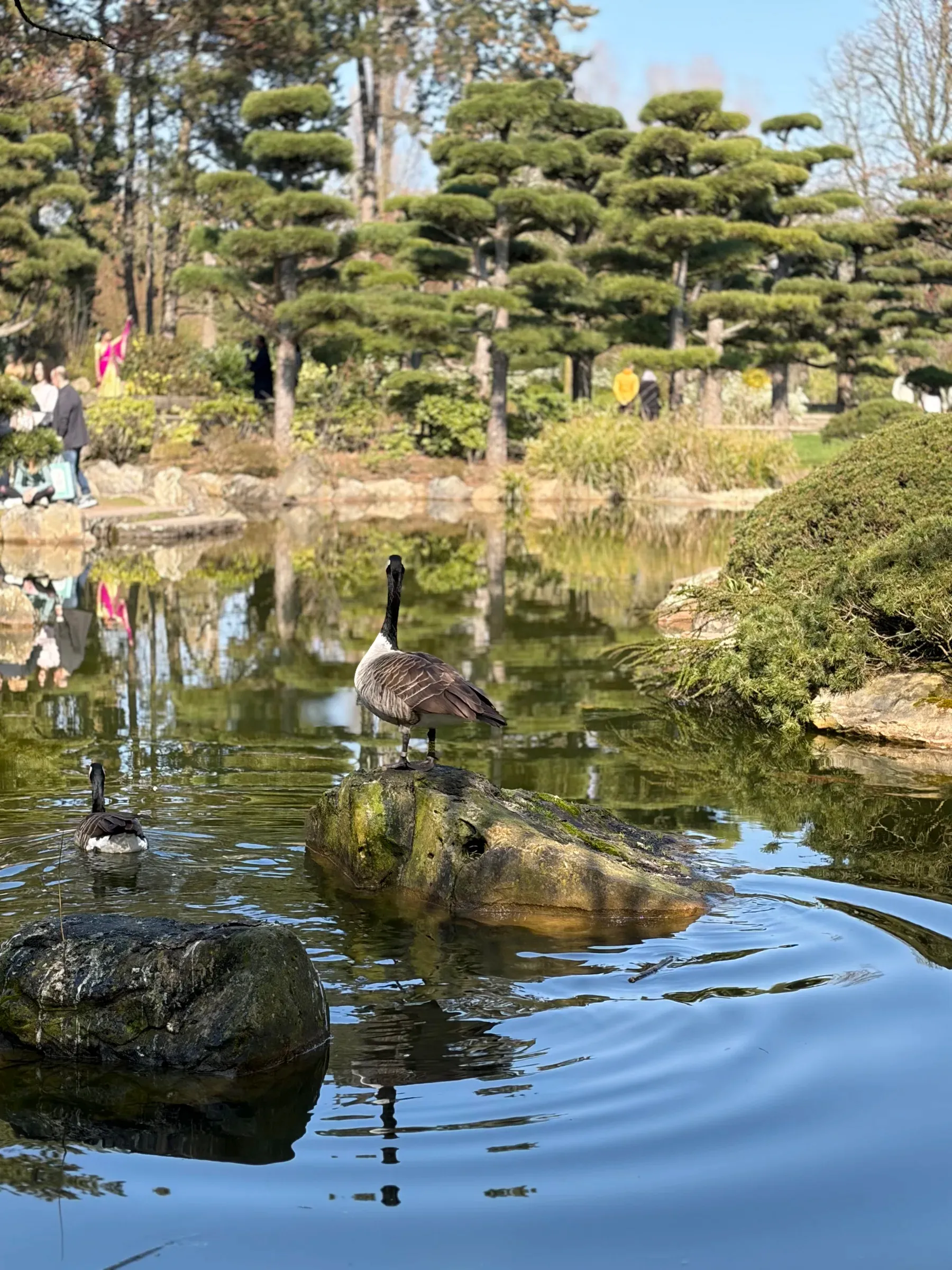
North of the centre, between the Messe grounds and the Rhine, the Nordpark is a surviving piece of 1930s garden architecture. Willi Tapp laid it out in eighteen months for the 1937 Große Reichsausstellung Schaffendes Volk, importing hundreds of mature trees so the park would feel established from day one. What remains today is roughly thirty-seven hectares of lawns, hedges, sculpture, and a famous 170-metre fountain axis. Where a circular flower hall once stood, George Rickey's kinetic sculpture now turns in the wind. In the quiet northwestern corner lies the Japanische Garten am Rhein, a gift from Düsseldorf's Japanese community in 1975, planned by Iwakii Ishiguro and his son Shojiro. In March the park is still waking: bare branches, early bulbs, long shadows across the grass.
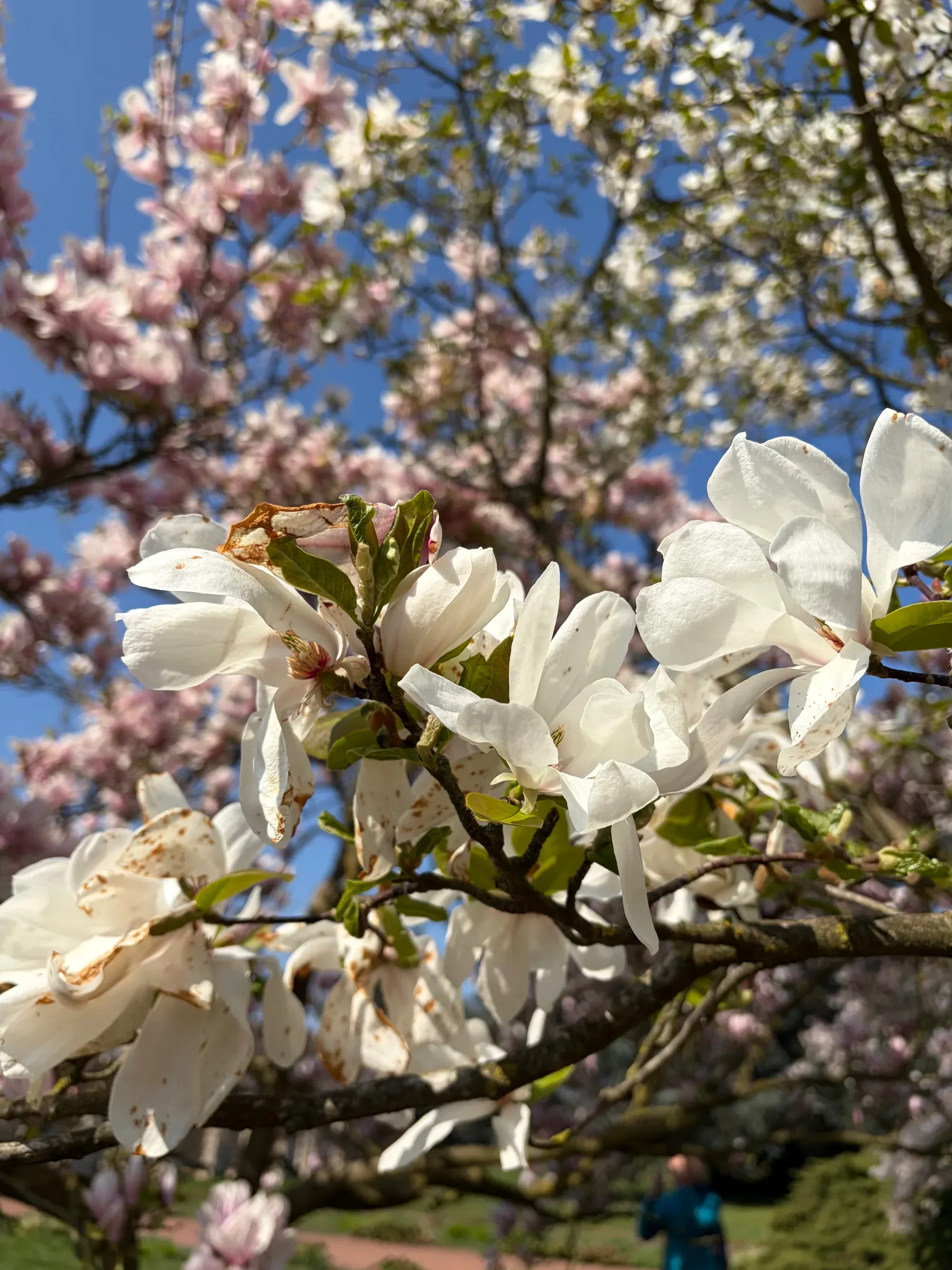
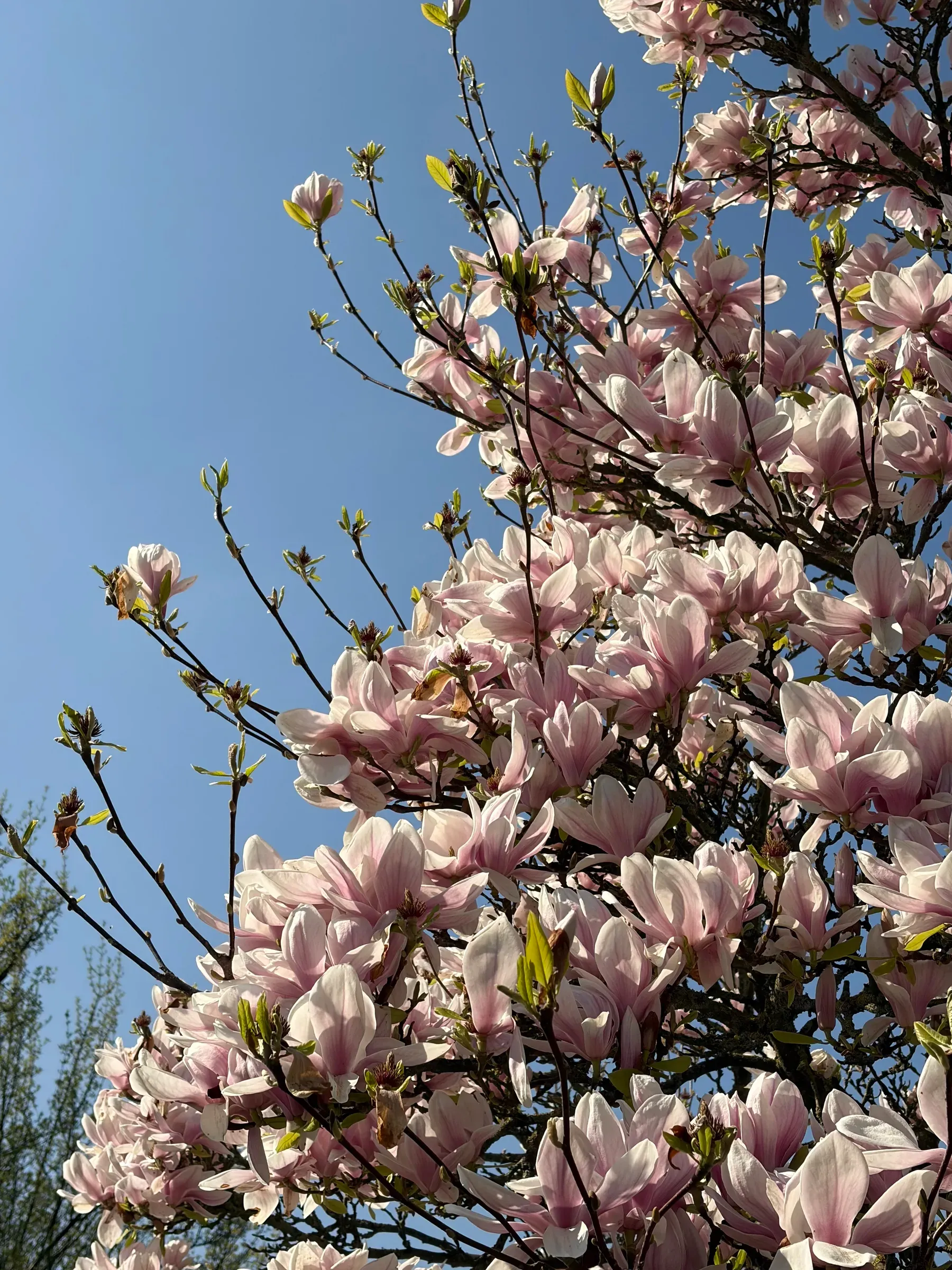
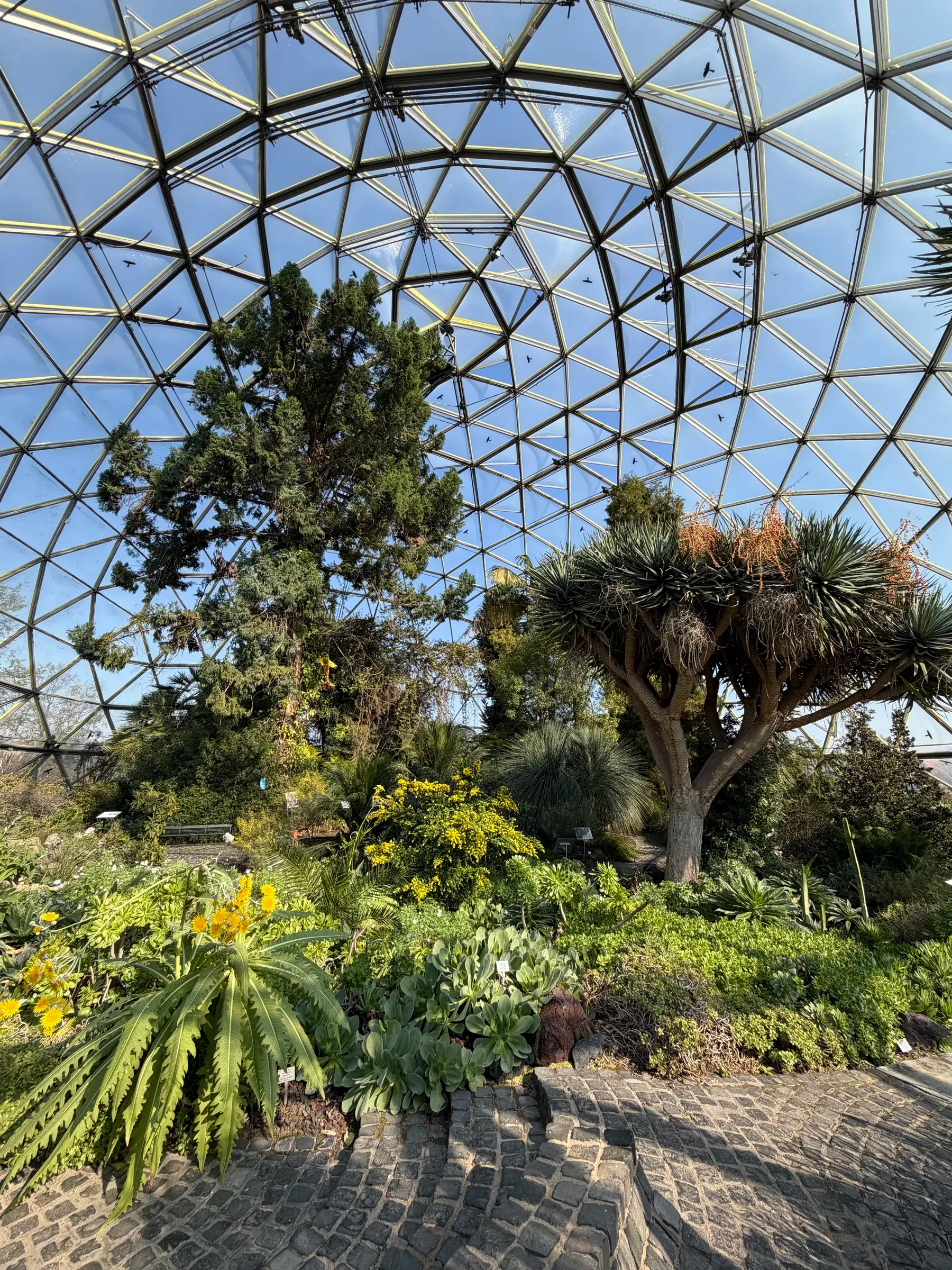
Botanical Garden
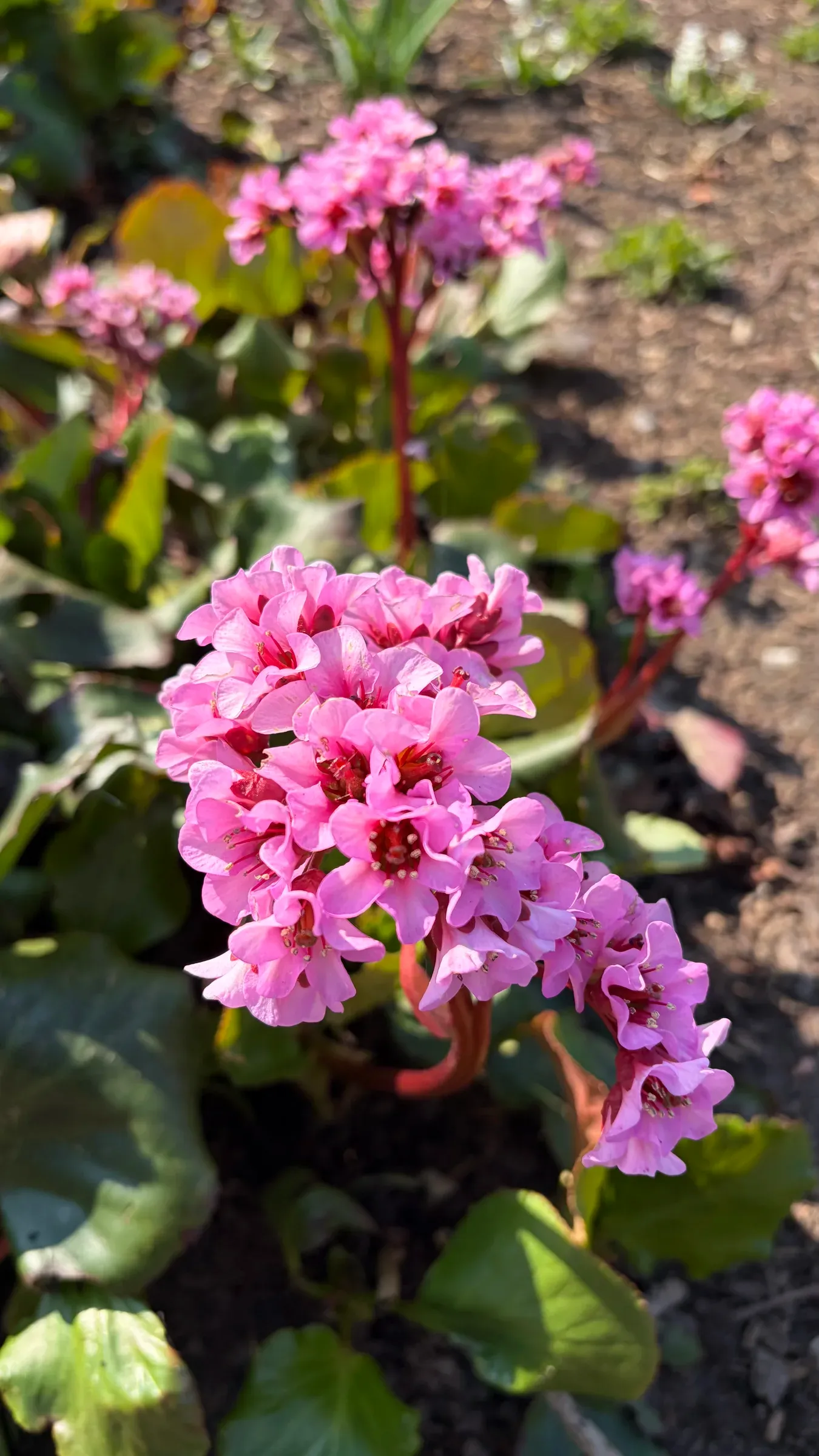
In the south of the city, on the Heinrich Heine University campus, the Botanischer Garten has been open to the public since 1979. Its landmark is an eighteen-metre geodesic dome greenhouse, completed in 1976, surrounded by roughly eight hectares of outdoor beds laid out where fields and allotments once stood. The collection now holds around six thousand species, with teaching plots, geographic zones, and an Orangerie added in 2004 for overwintering Mediterranean specimens. Wollemi pines, lithops, and Canary aeoniums share space with beds designed for university research. In March the glasshouse still holds tropical warmth while outside the first spring plantings begin to stir.
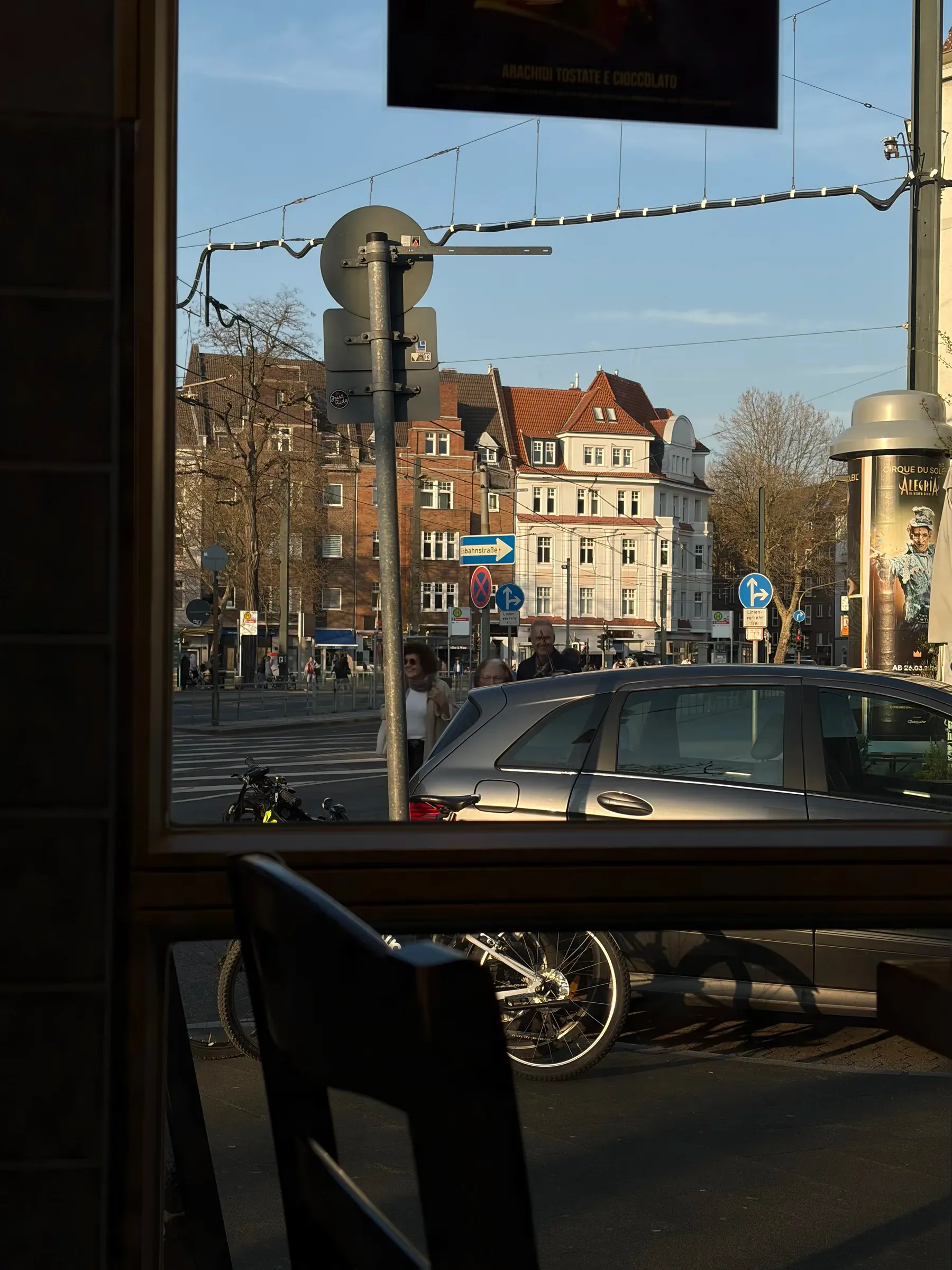
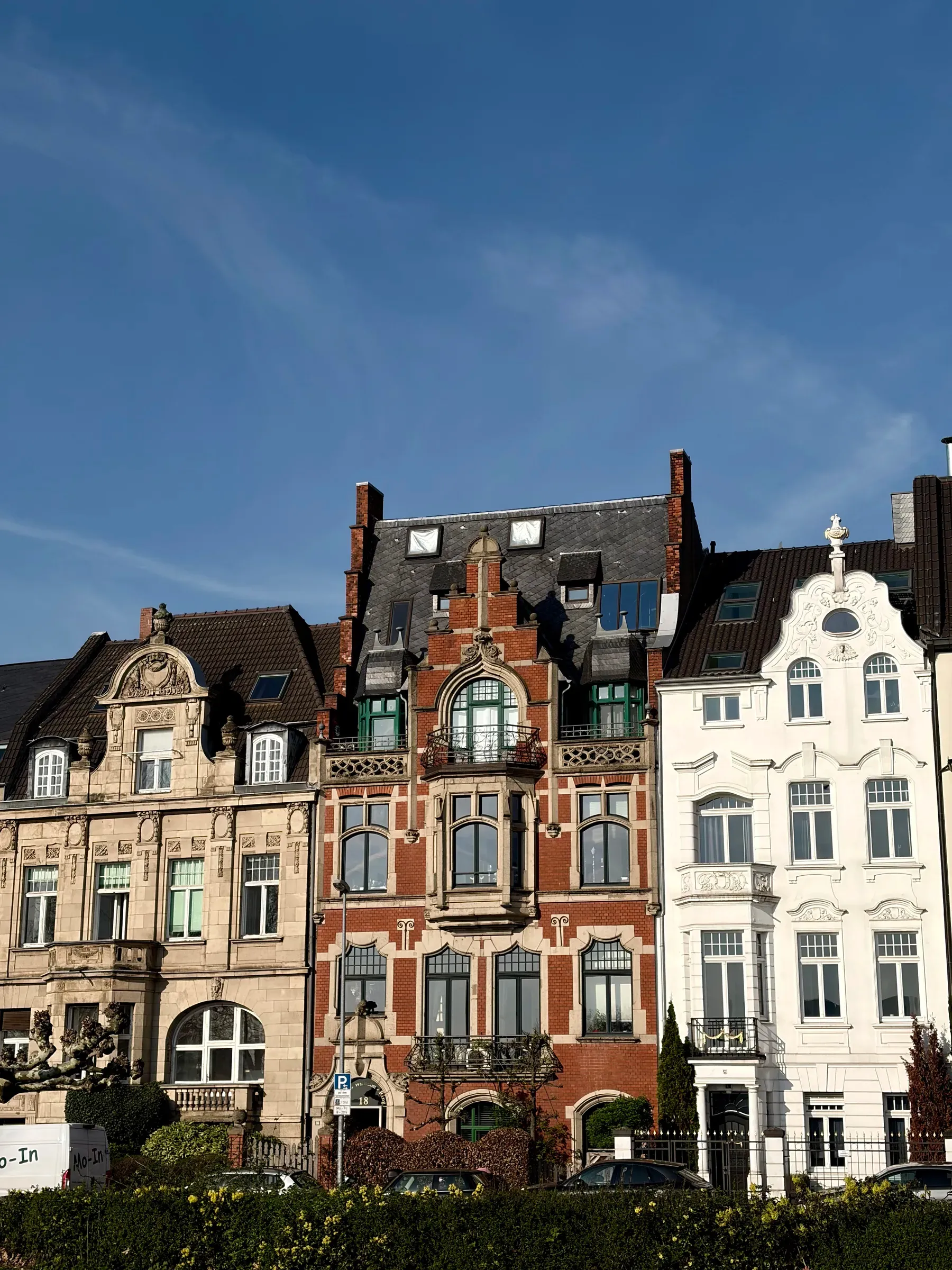
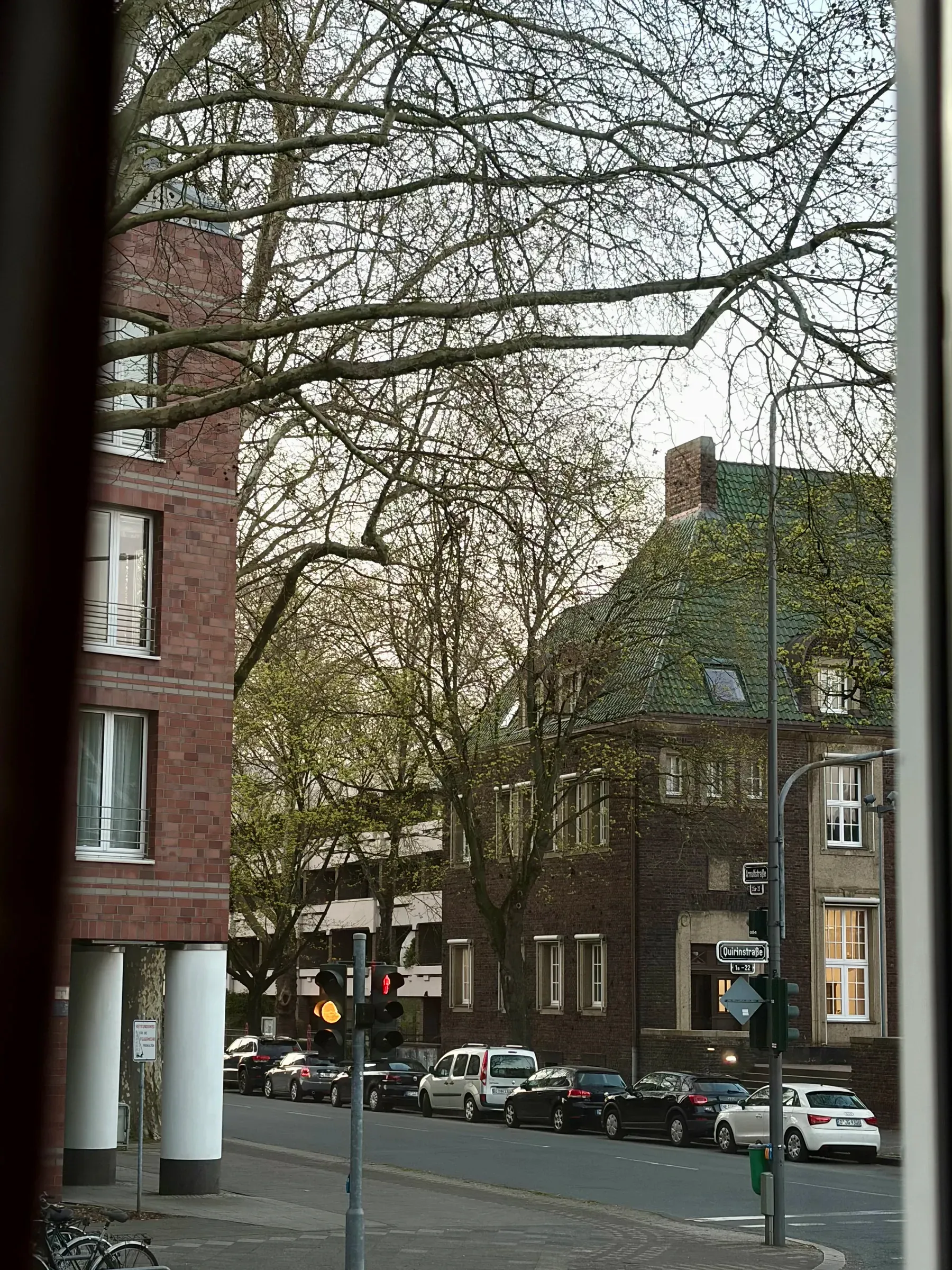
Quirinstraße
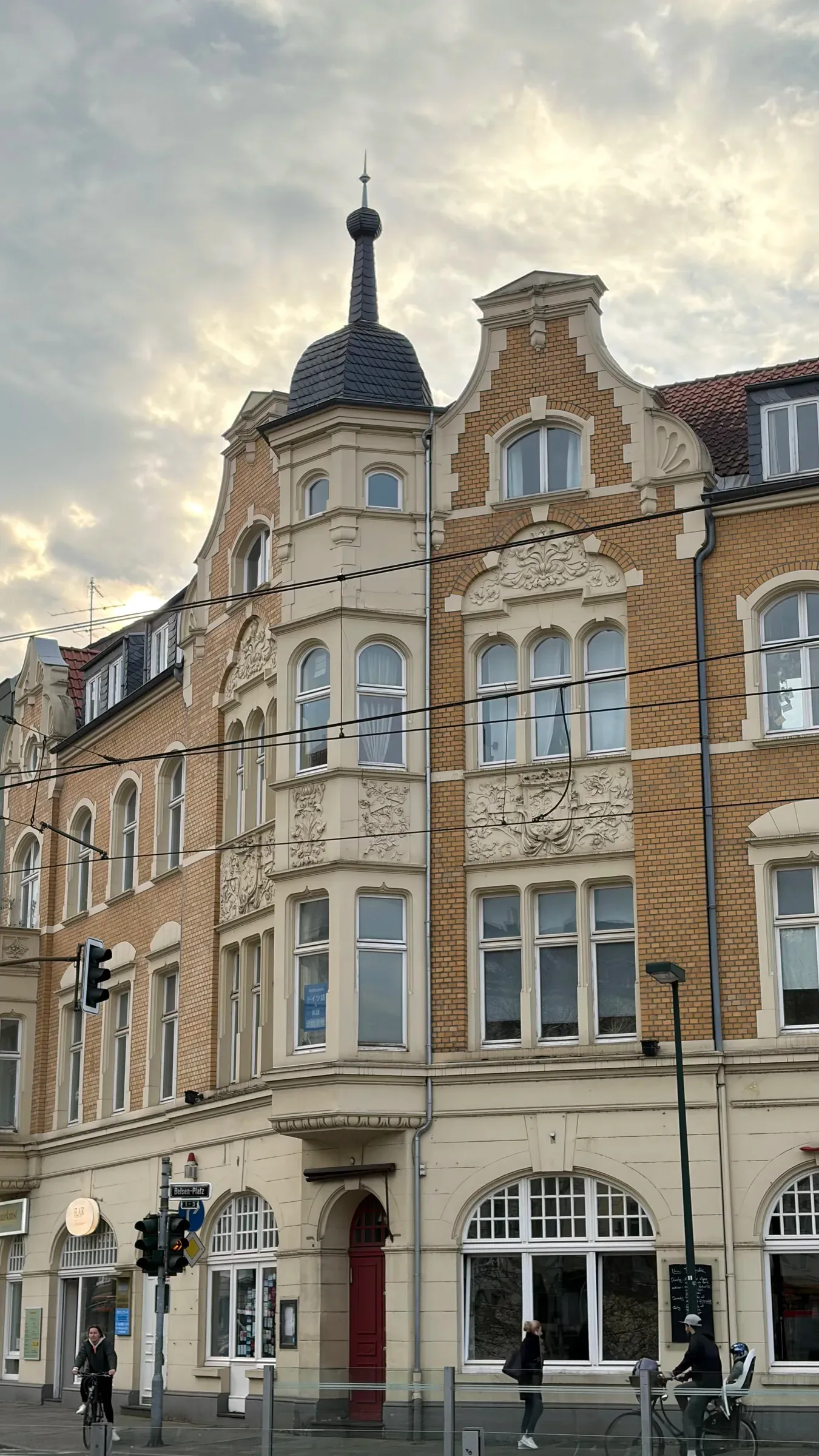
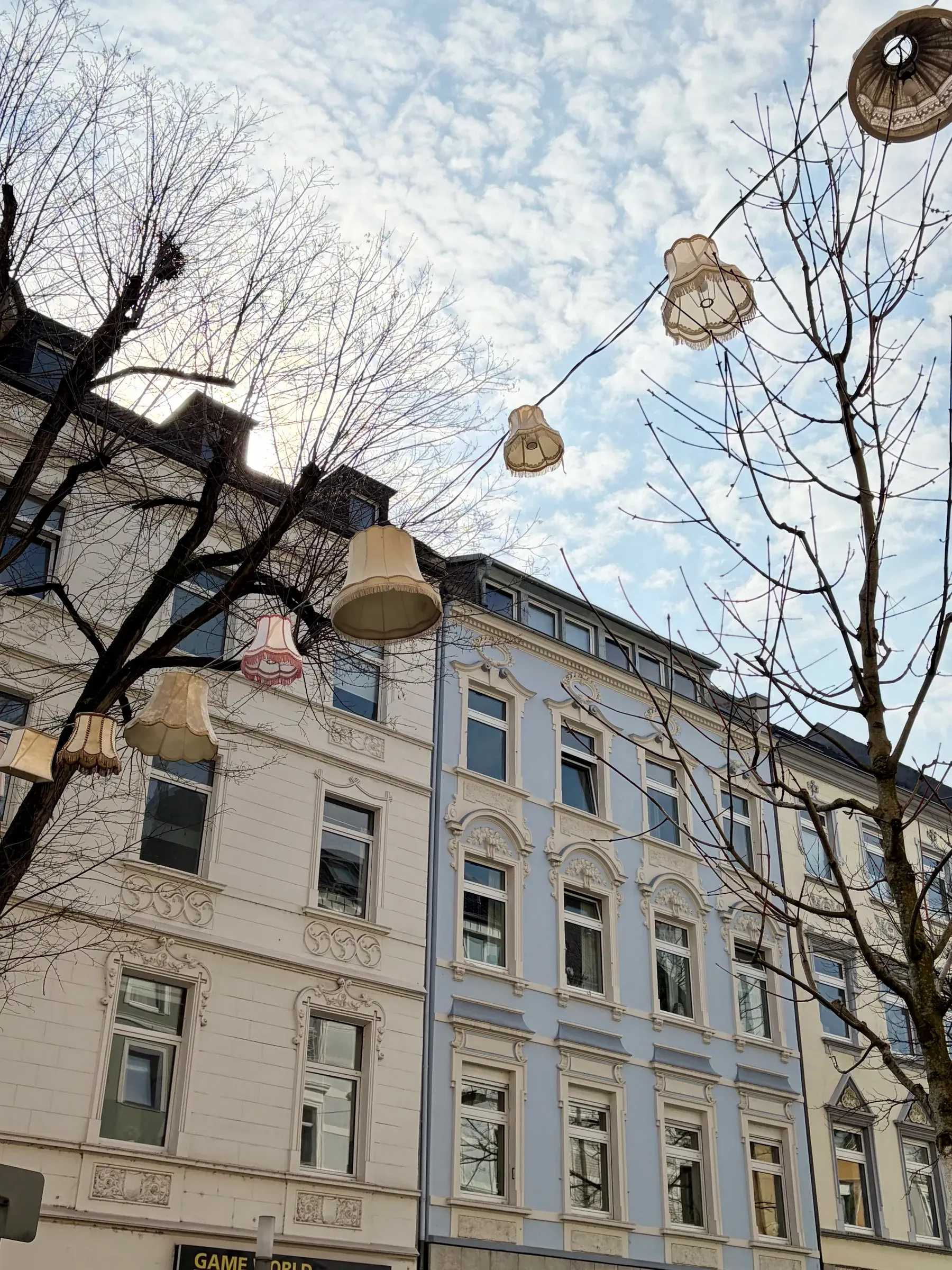
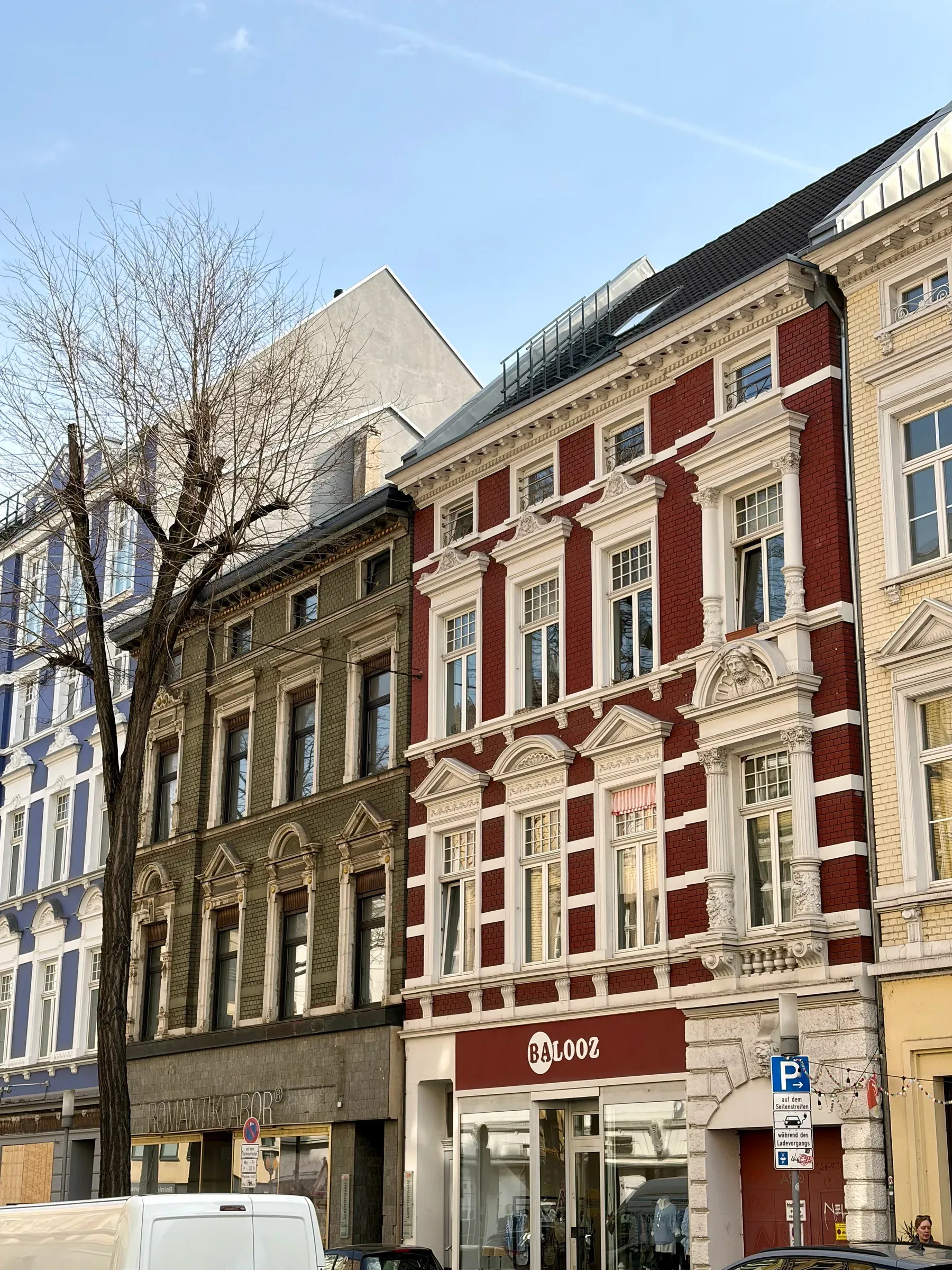
Quirinstraße runs through Oberkassel, a residential quarter on the west bank of the Rhine named for the Quirinushof, a farm once owned by the St Quirinus foundation in Neuss. The street belongs to a protected ensemble of late nineteenth and early twentieth-century architecture: stucco facades, bay windows, blunt corner buildings, and gas-lit sidewalks that feel unchanged at walking pace. At the corner with Arnulfstraße stands the Auferstehungskirche, consecrated on Ascension Day 1914, an Art Nouveau hall church in unrendered brick with green-glazed roof tiles, designed by Rudolf Wilhelm Verheyen and Julius Stobbe. It was a novelty for its time and still sets the tone for the neighbourhood: understated, brick-built, deliberately human in scale.