One Day in Maastricht
One day in Maastricht in early March, walking without much of a plan. The city sits at a crossroads in every sense: Dutch, Belgian, and a touch of French in its cafés and its pace, with limestone churches and cobbled lanes that feel closer to Flanders than to Amsterdam. We kept crossing the Meuse between Wyck and the old centre, losing an hour in bookshops, eating vlaai with my hands like a local, and finding spring light in Stadspark before the blossoms had fully arrived. These photographs follow that loose route from the station to the Vrijthof, through the Jeker quarter, and out toward Céramique.
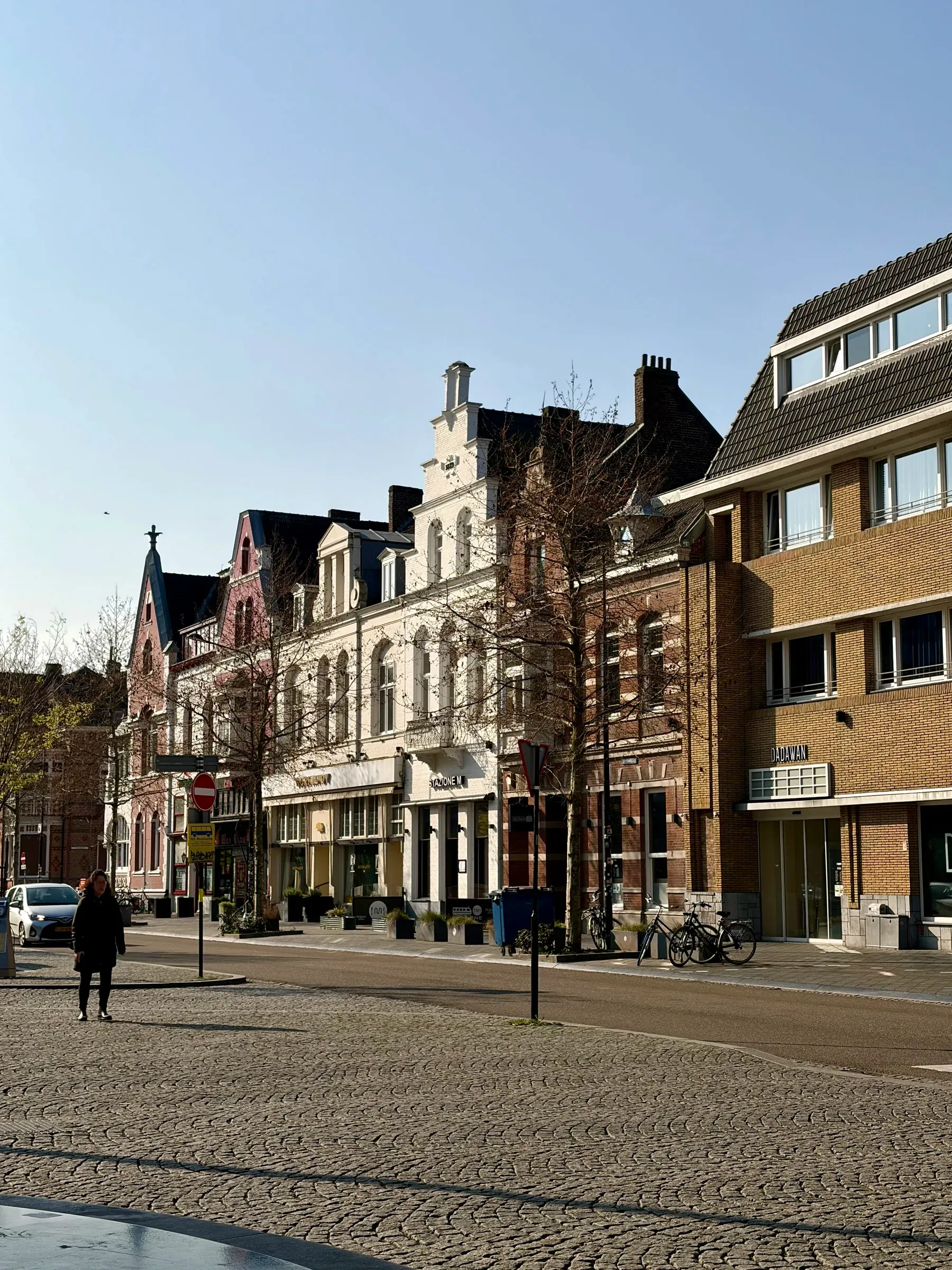
Arriving in Wyck
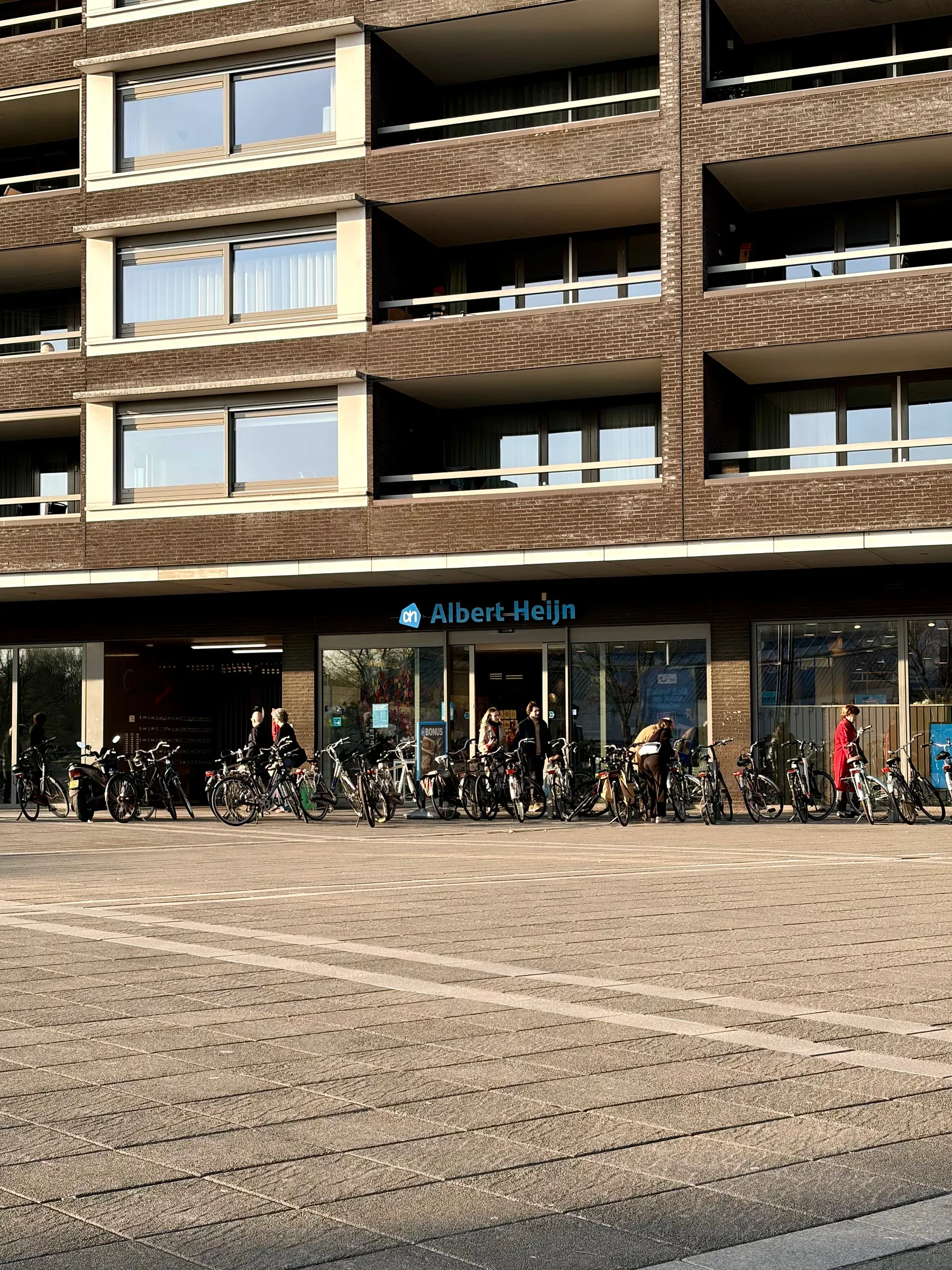
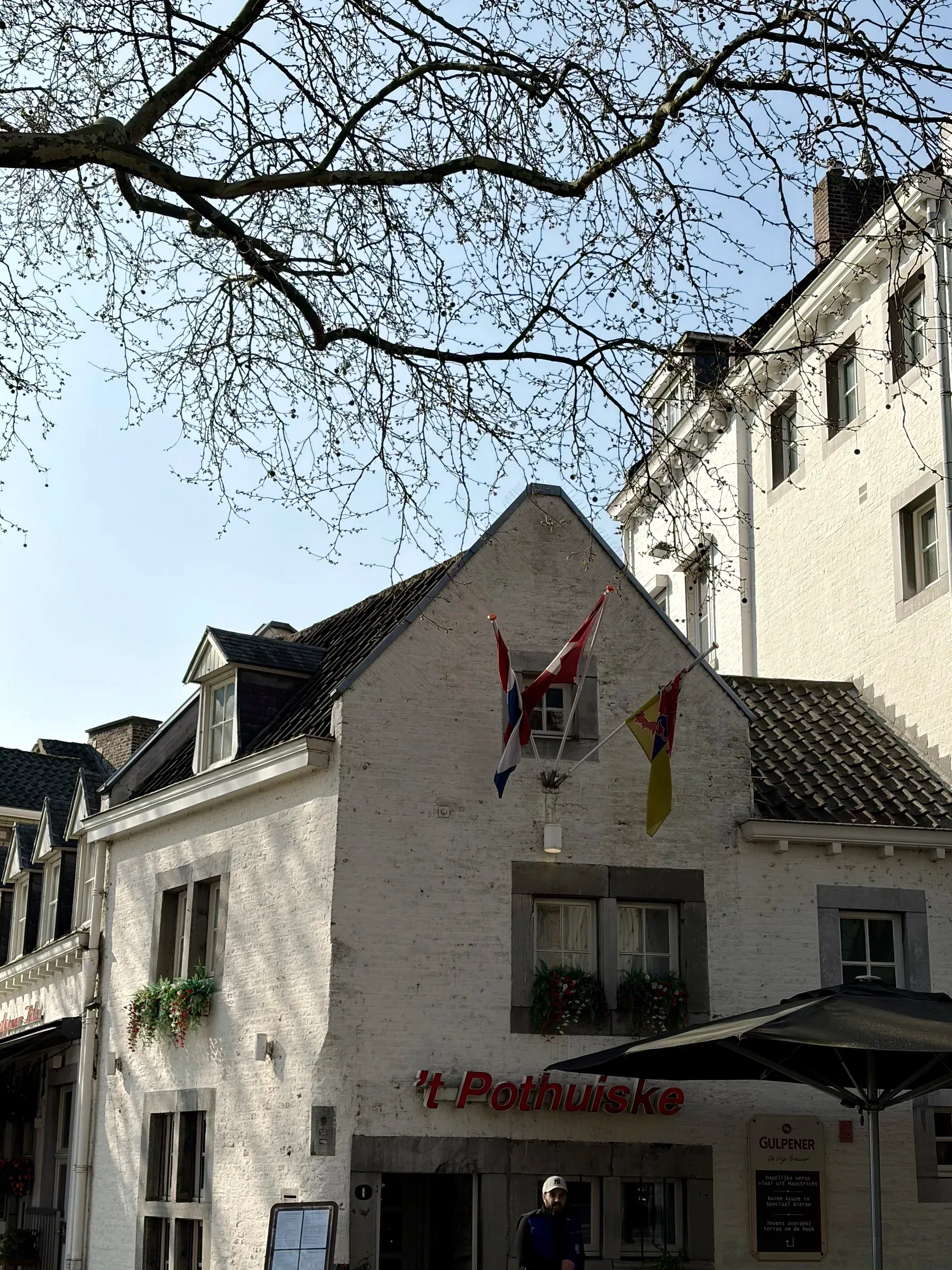
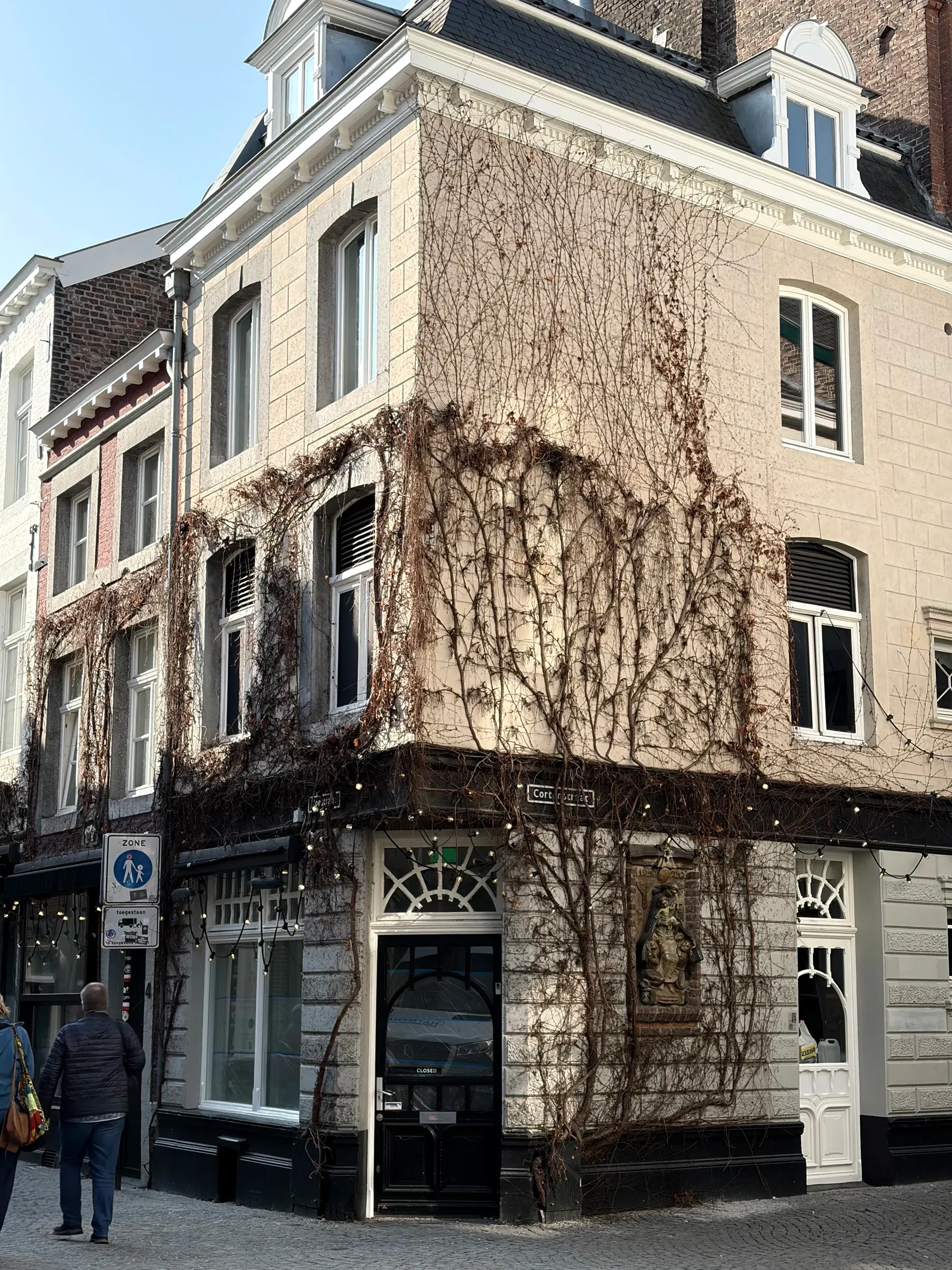
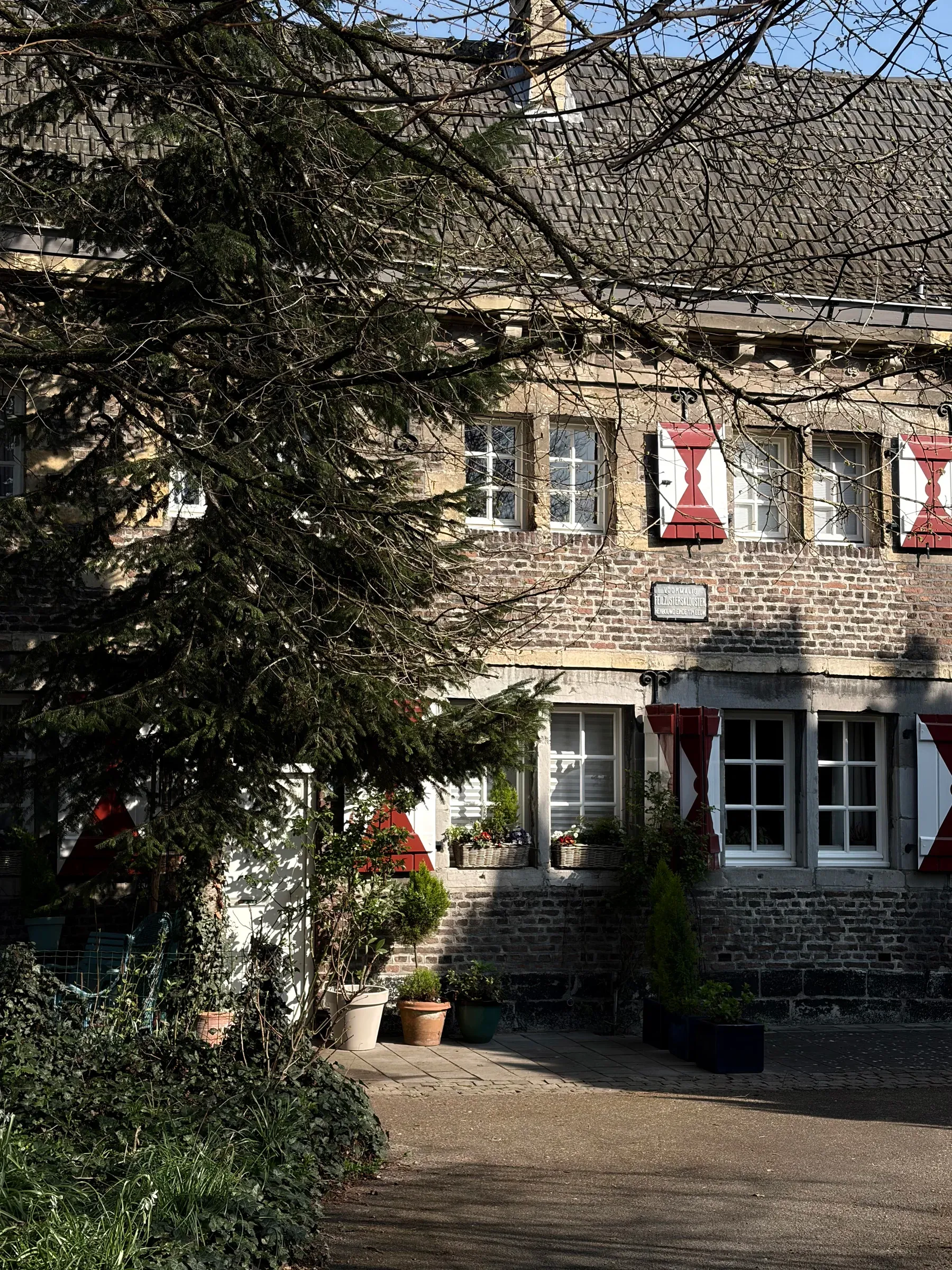
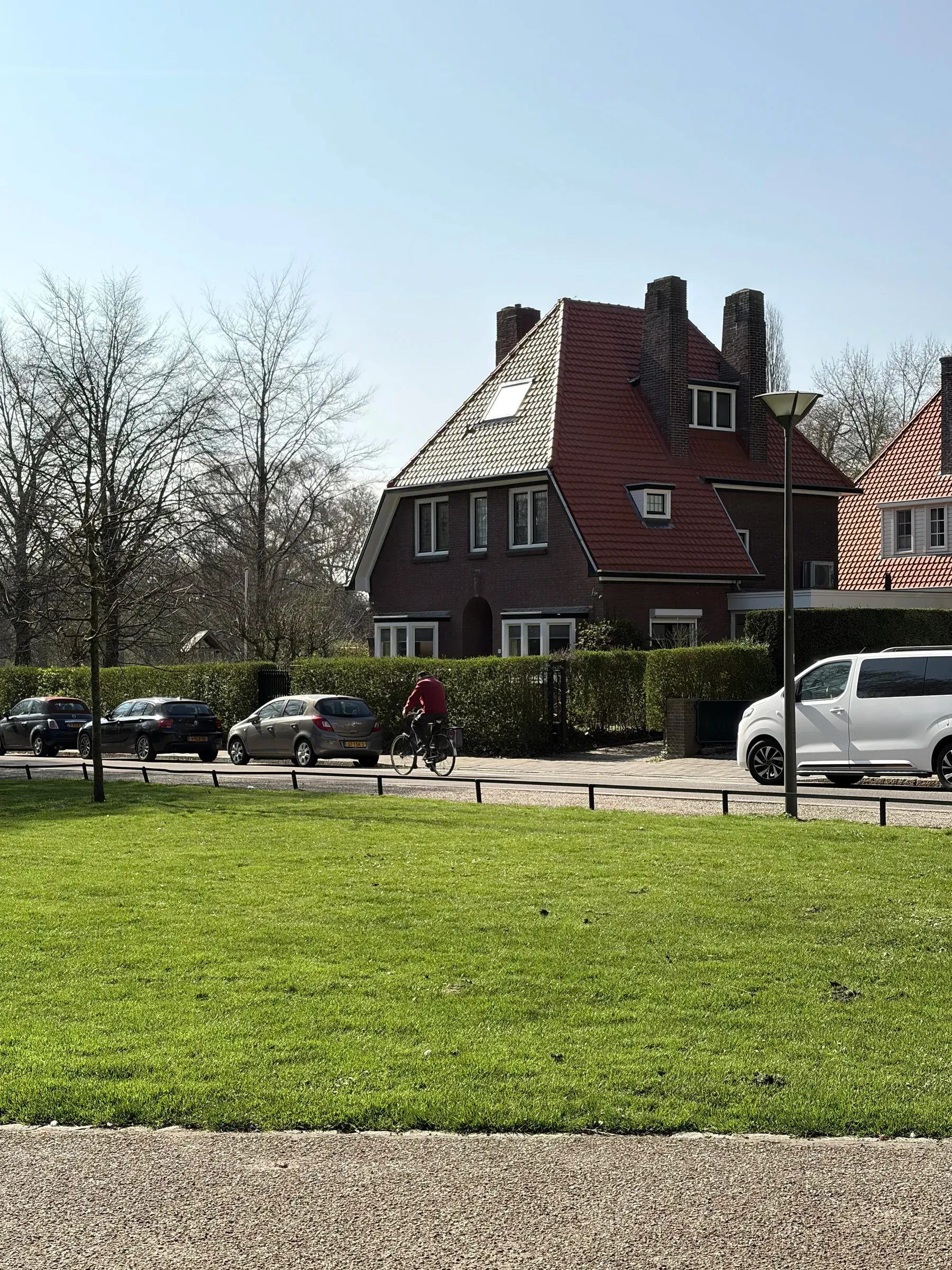
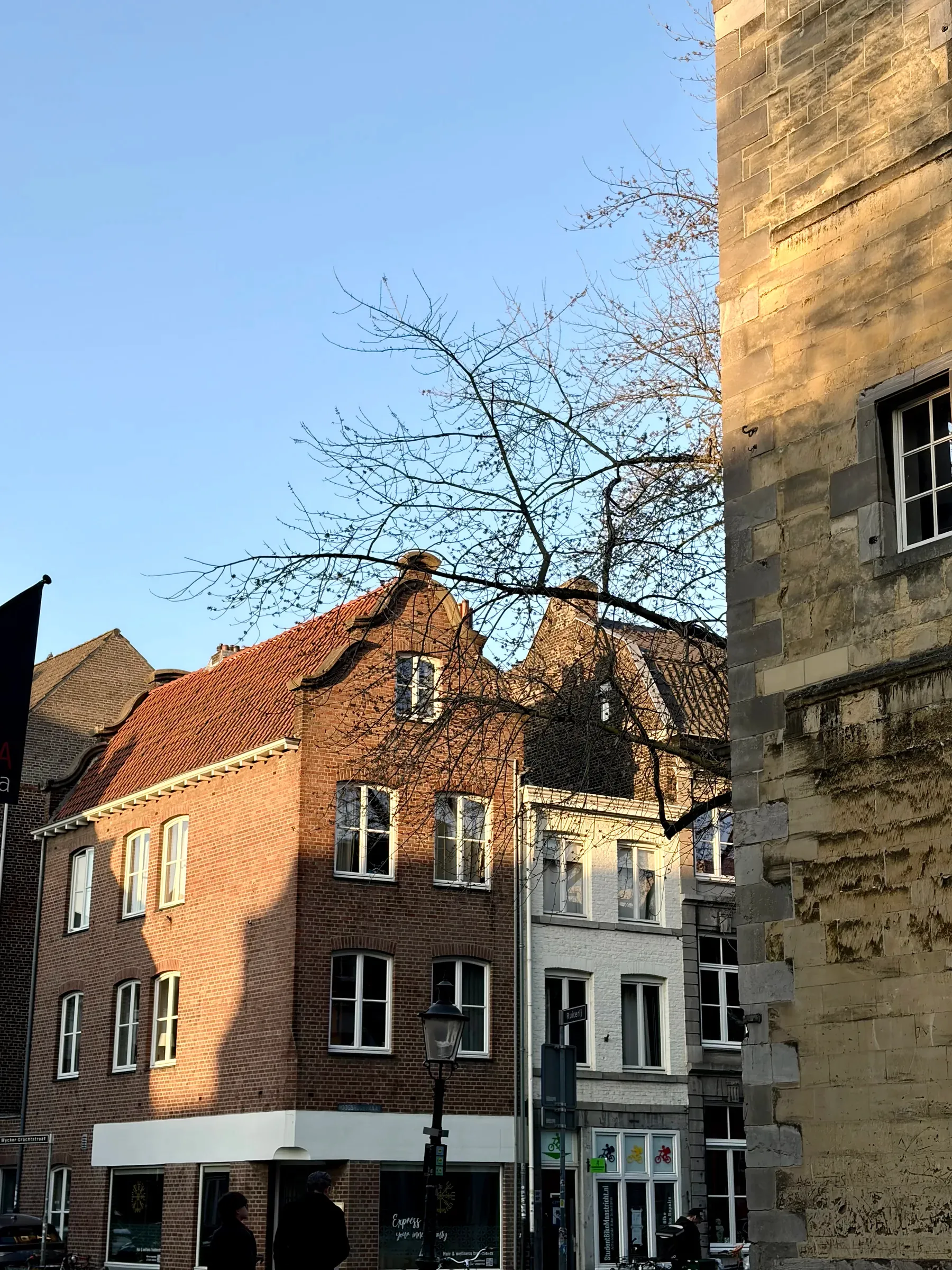
The walk into Maastricht begins in Wyck, east of the Meuse, where the route from the station quickly becomes a sequence of brick facades, shopfronts, cobbles, and low March shadows. It is a practical arrival rather than a grand one: pedestrians crossing the street, bicycles against windows, older houses and modern infill sharing the same block. Before the river and the old centre, Wyck gives the city a more lived-in first impression.
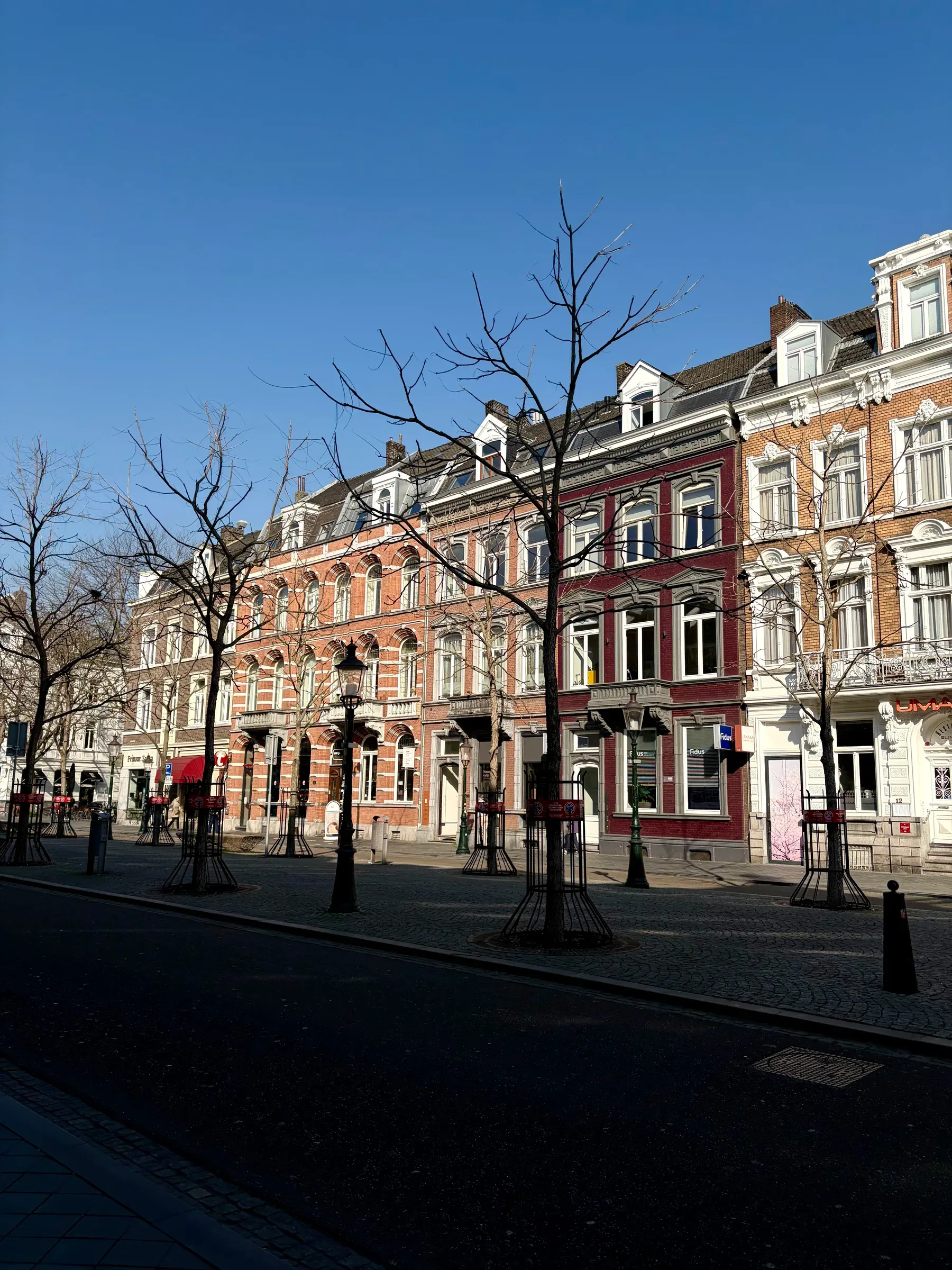
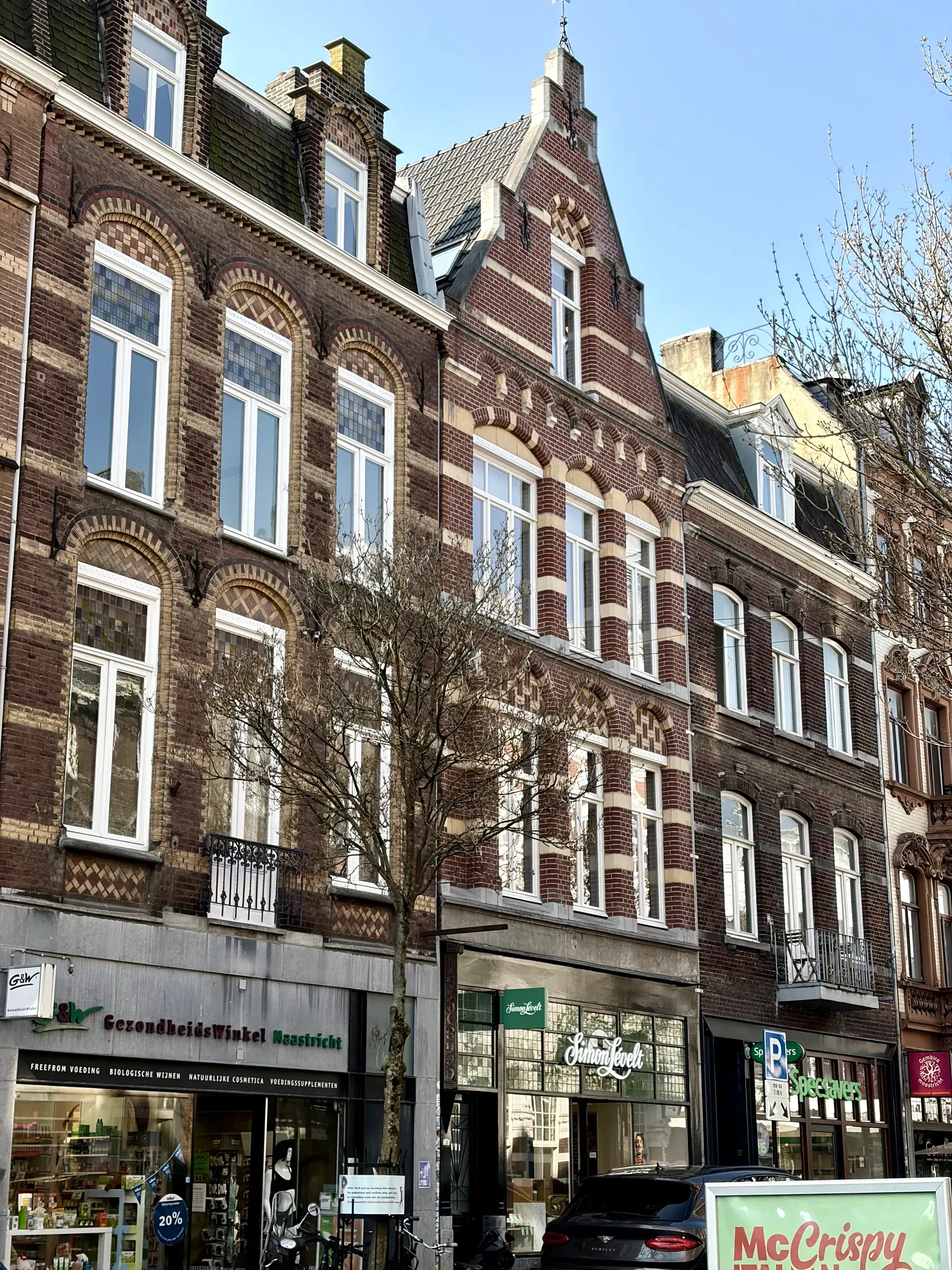
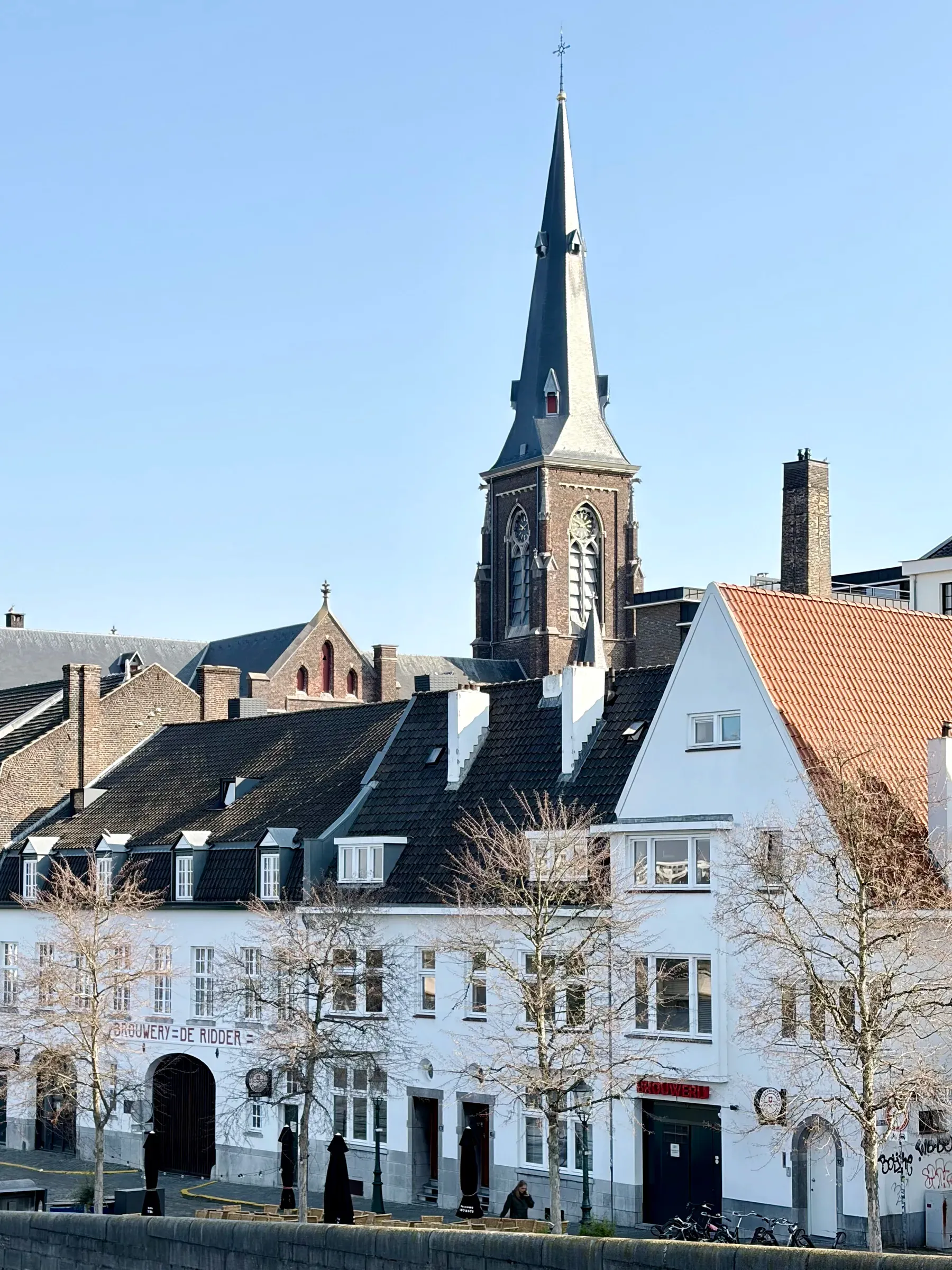
Across the Meuse
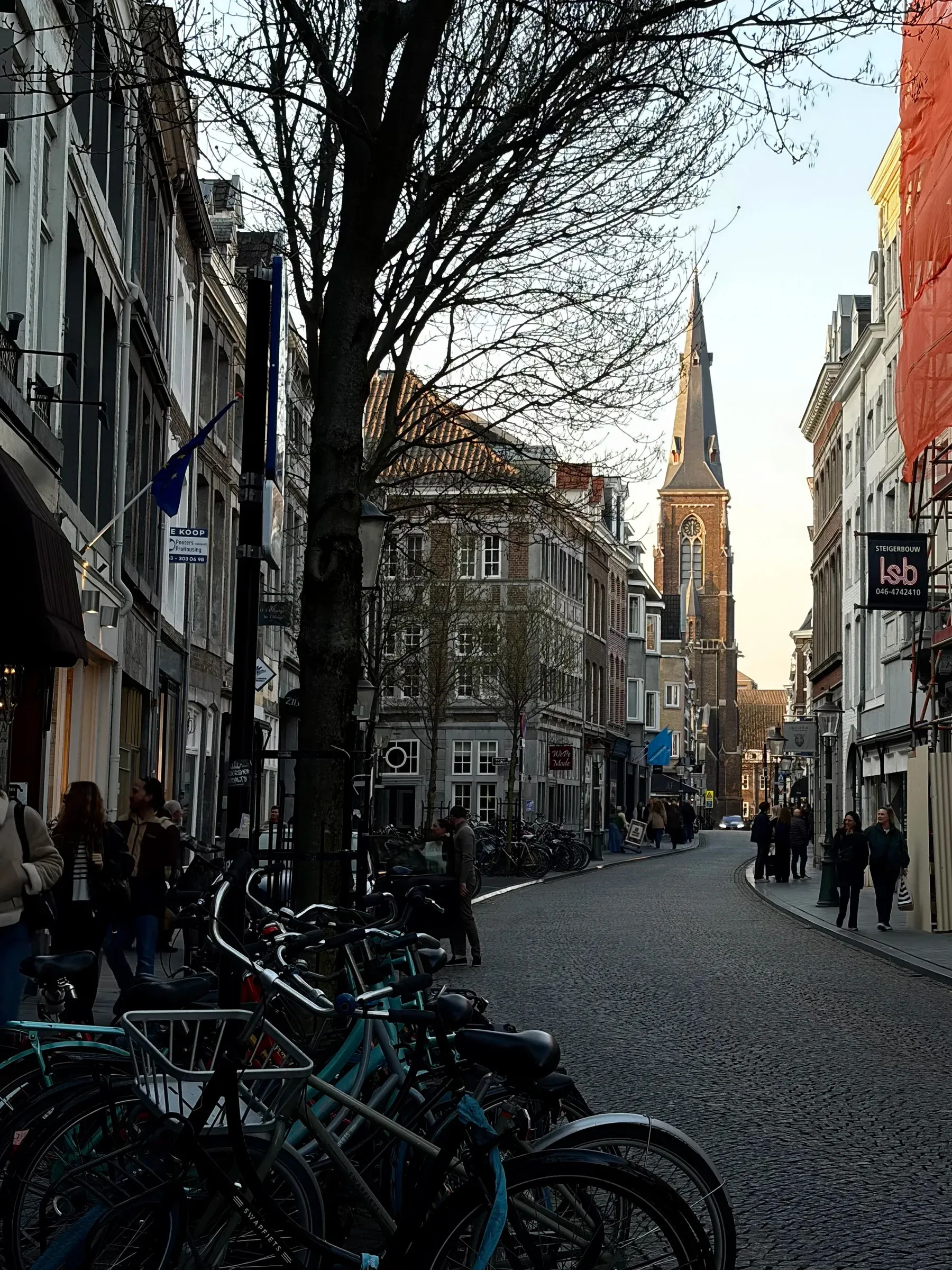
Wyck lies on the east bank of the Meuse, a district of stately façades and independent shops that most visitors reach by crossing the Sint Servaasbrug. The spire of Sint Martinuskerk rises above the rooftops as you approach the river, giving the neighbourhood its own vertical marker before the basilicas and towers of the old centre take over. The route from station to bridge is short, but it already shows Maastricht's particular mix: Dutch street order, Belgian proximity, limestone, brick, flags, cafés, and a border-city rhythm that feels slower than the distance from the train would suggest.
Vrijthof
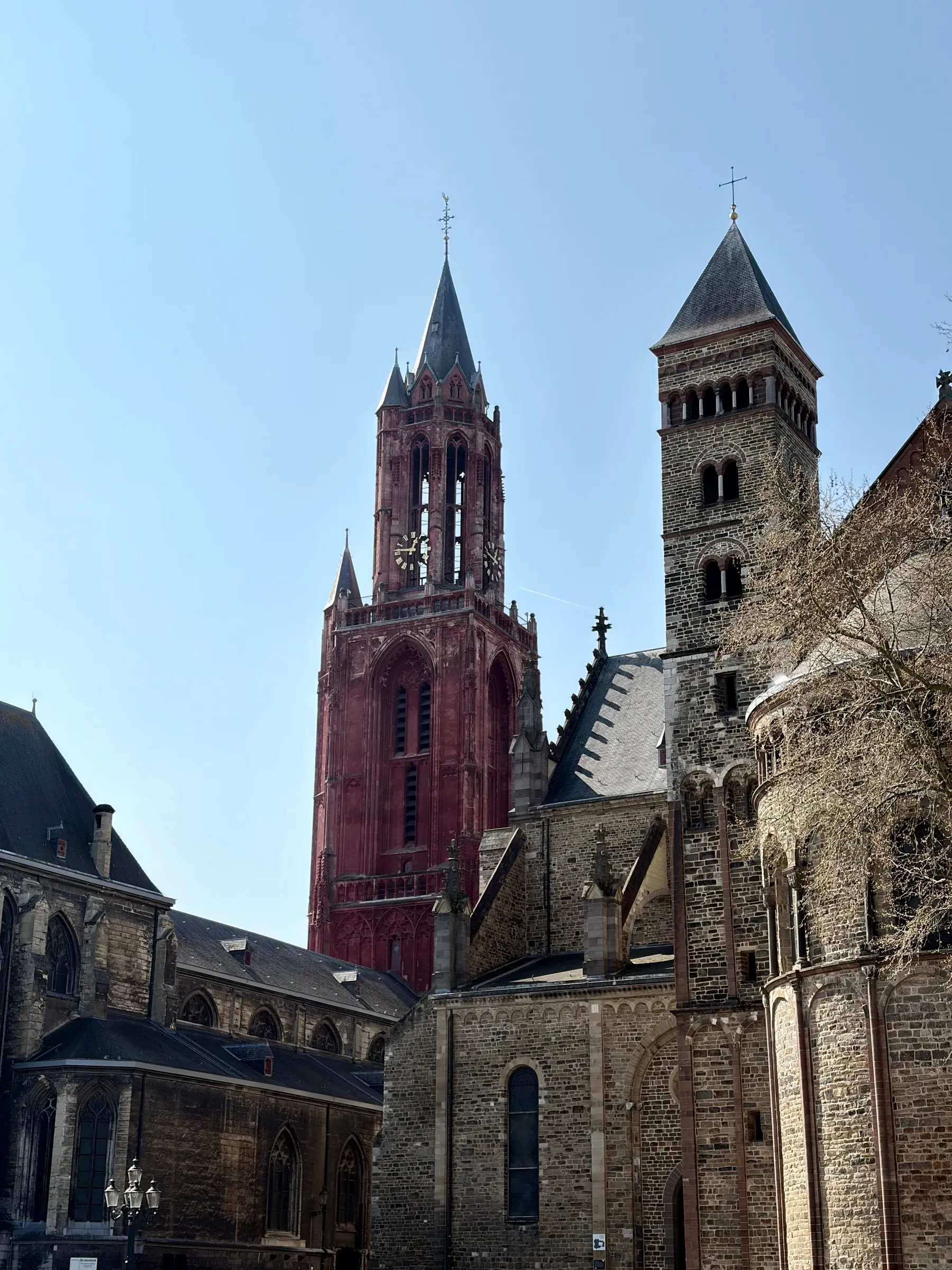
The Vrijthof is Maastricht's main square and its most theatrical view. On one side rises the Romanesque bulk of the Basilica of Saint Servatius, burial place of the city's patron saint since the fourth century. On the other stands Sint-Janskerk with its distinctive red tower, a Gothic landmark you can see from almost anywhere in the centre. The square fills with café terraces in summer and empties again at night, when the stone and the tile roofs take over. Sint-Janskerk is the only church in the Netherlands owned by the Protestant community while sitting directly beside a major Catholic basilica: a small reminder of Maastricht's divided history under two rulers.
Stadhuis
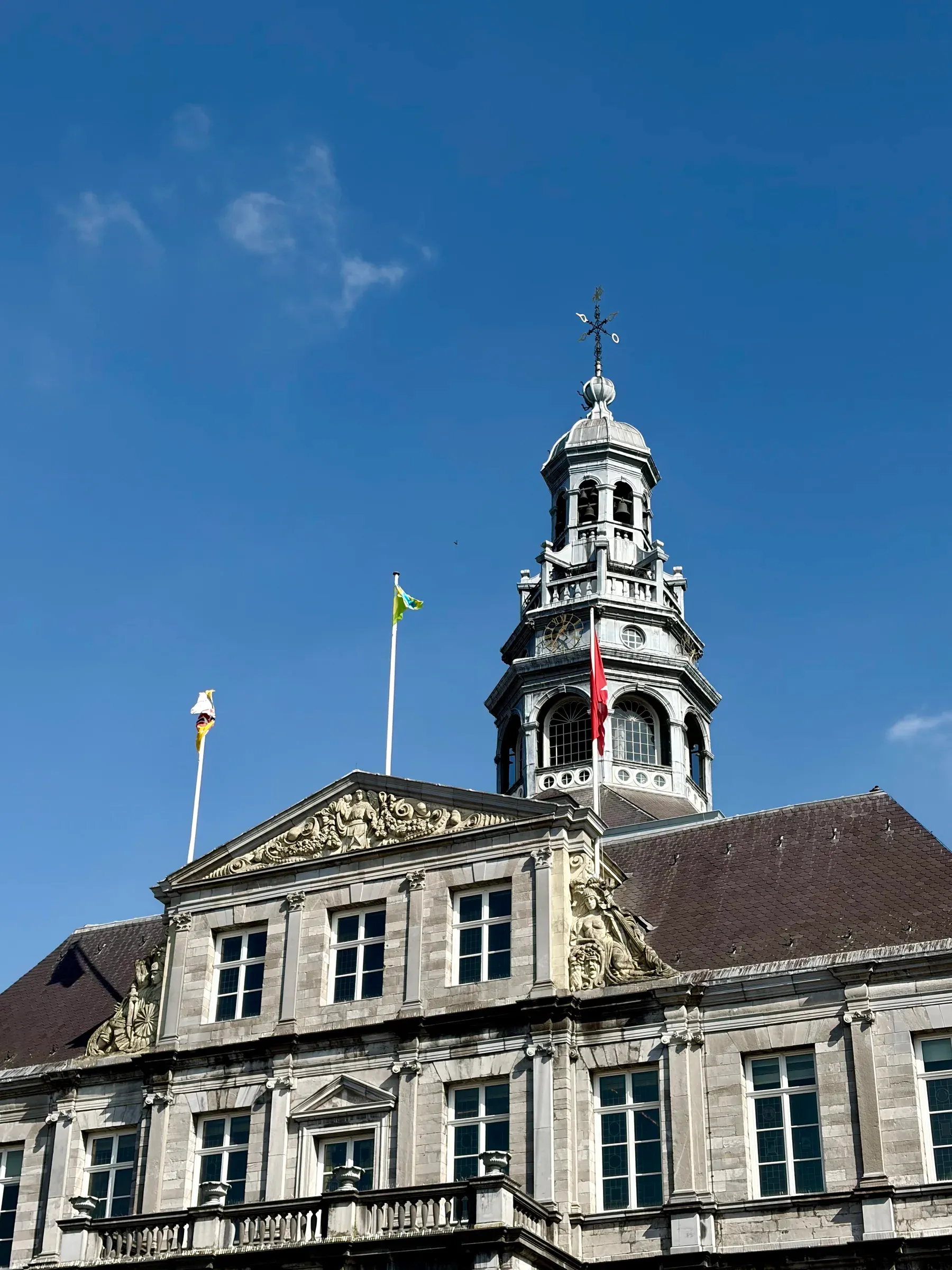
The Stadhuis dominates the Markt, a free-standing monument of Dutch classicism designed by Pieter Post and built from the 1650s onward. Post, trained under Jacob van Campen, placed the building at the centre of the square only after demolishing the medieval Lakenhal, belfry, and part of the first city wall. The result is a limestone façade of pediments, pilasters, and allegorical sculpture that reads more Hague than Limburg, a visible sign of Holland's influence after the city passed to the Dutch Republic in 1632. The tower carillon still marks the hours above the Markt. In December 1991, European leaders dined here during the summit that would produce the Maastricht Treaty.
Sterre der Zee
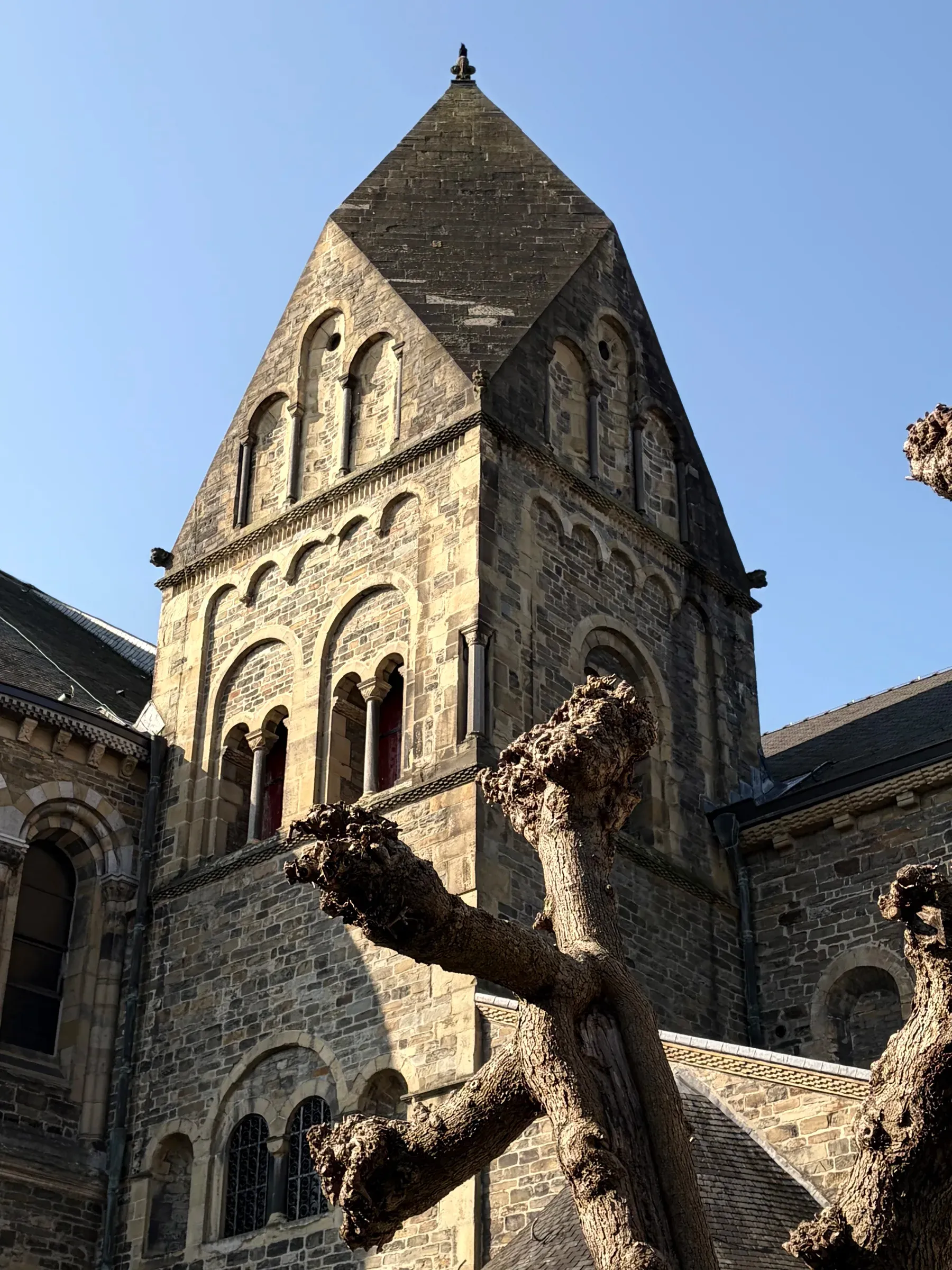
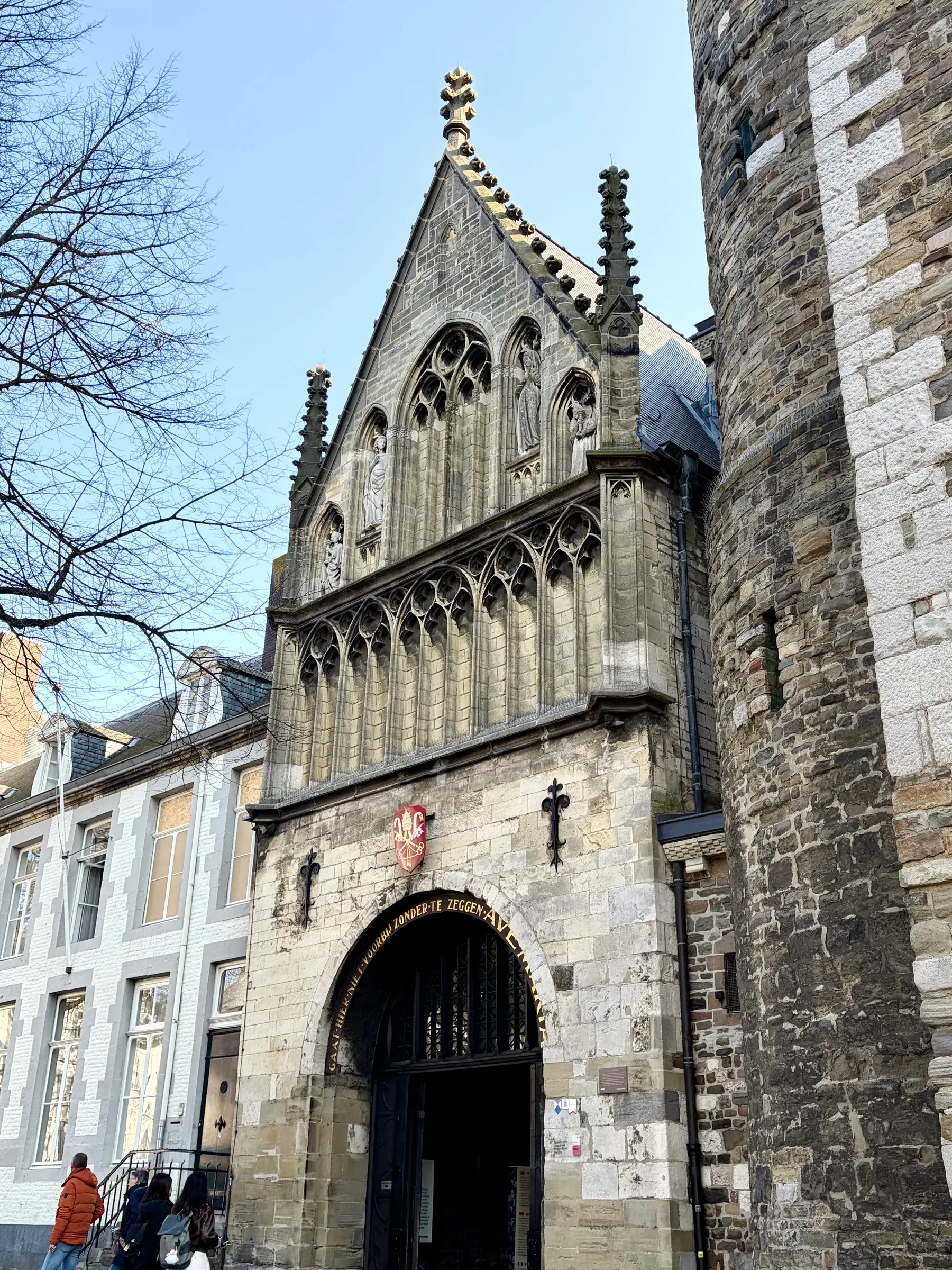
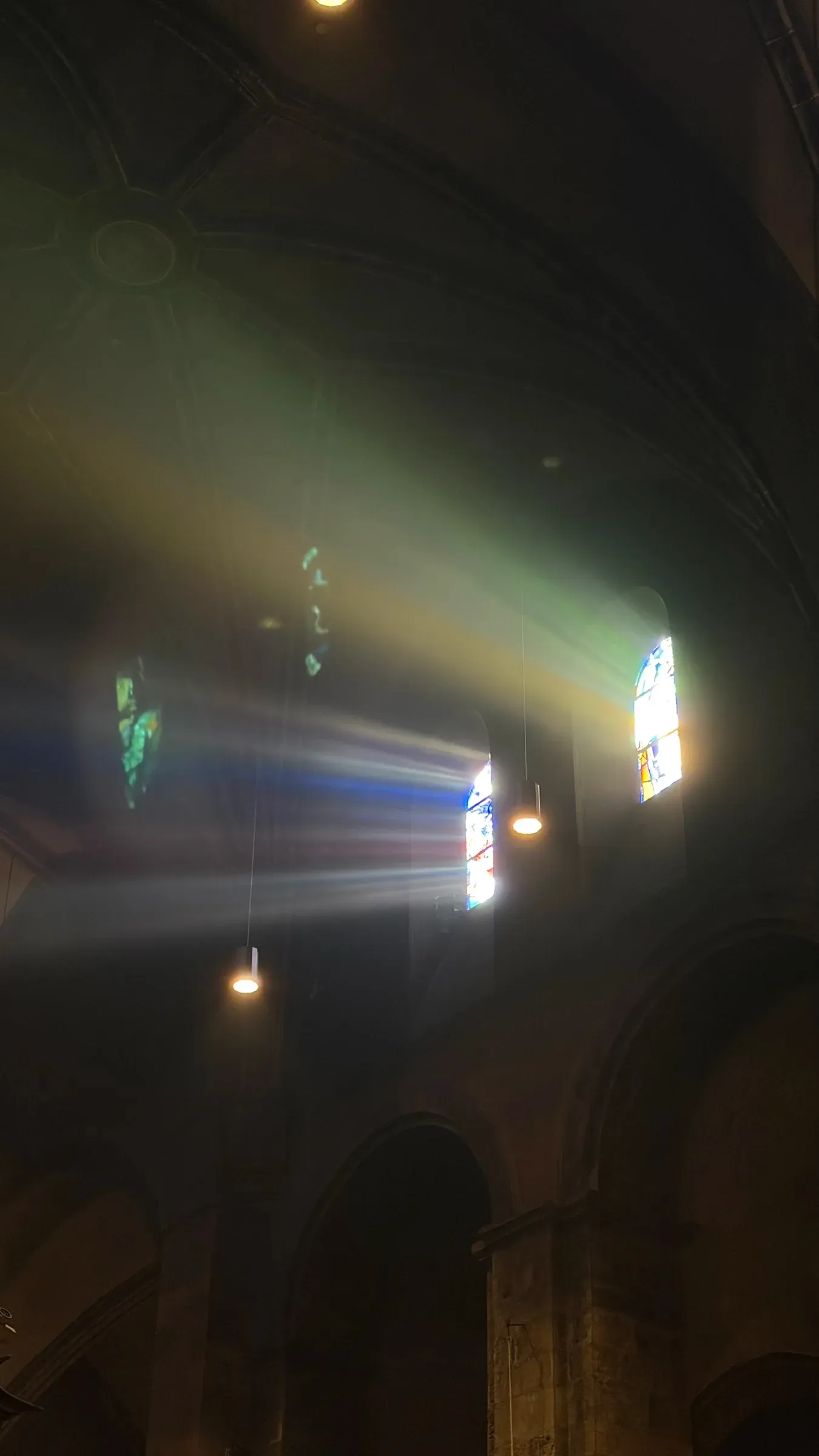
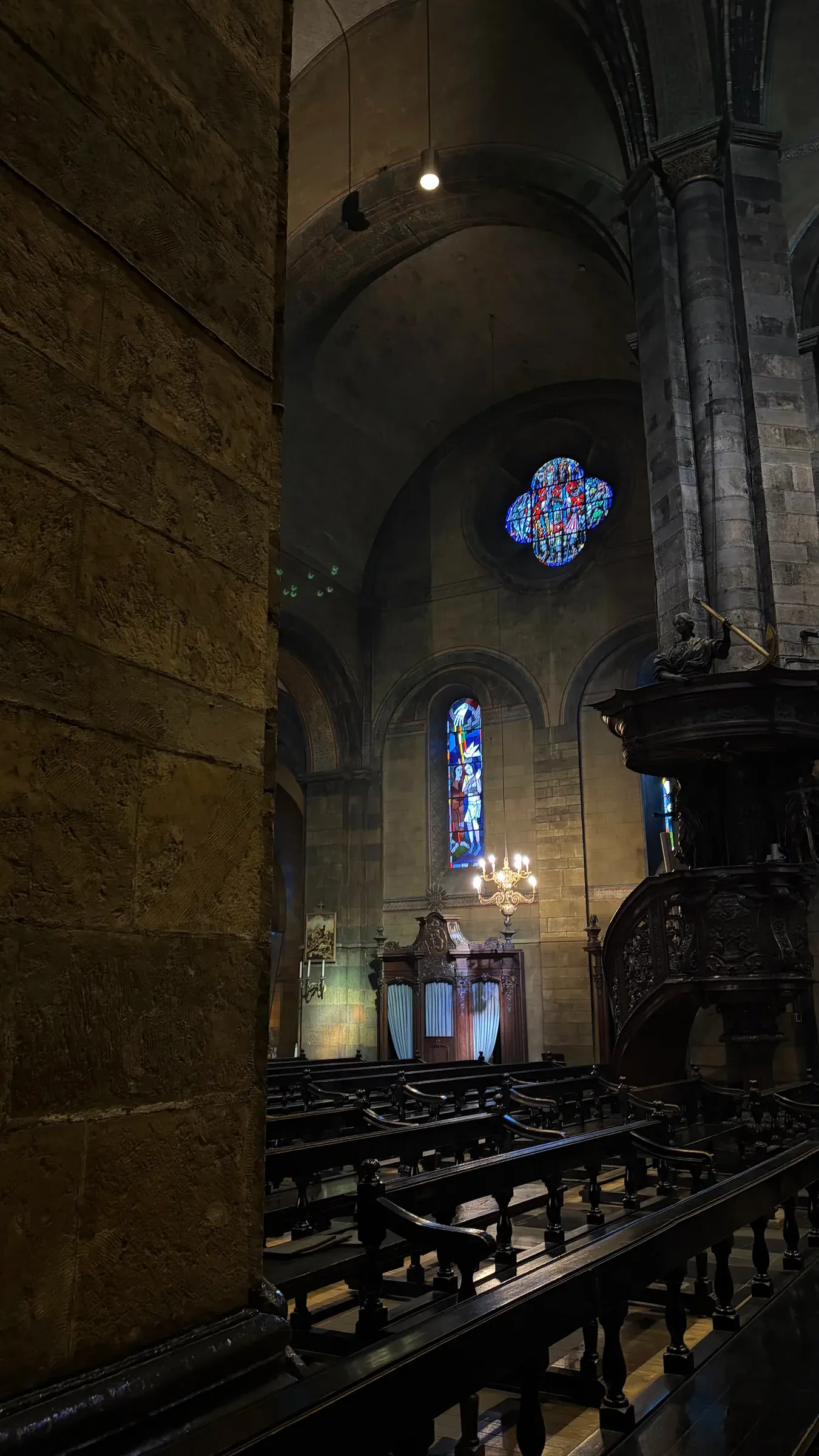
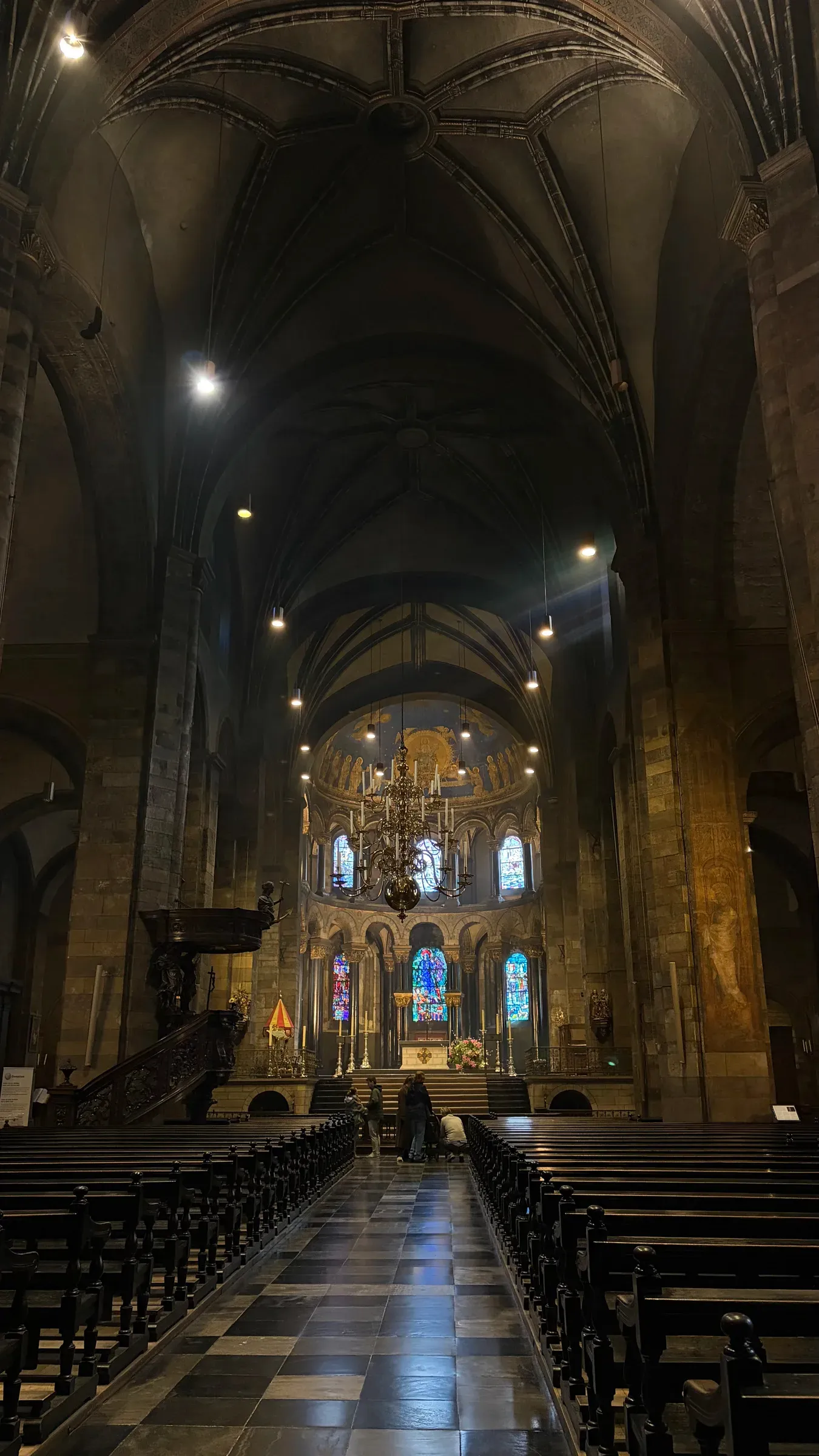
Above the portal of the Merodekapel, gold lettering asks passers-by not to walk by without saying an Ave Maria. Inside the Basilica of Our Lady rests the Sterre der Zee, a fifteenth-century image of Mary that has drawn pilgrims to Maastricht for more than six hundred years. The chapel was rebuilt under Pierre Cuypers in the early twentieth century, but the devotion is older than the stonework. Maastricht people call the basilica Slevrouwe, and the small figure remains one of the most venerated objects in the southern Netherlands. Light through the Romanesque windows falls across carved pulpits and candle smoke in an interior that feels unchanged at walking pace.
Boekhandel Dominicanen
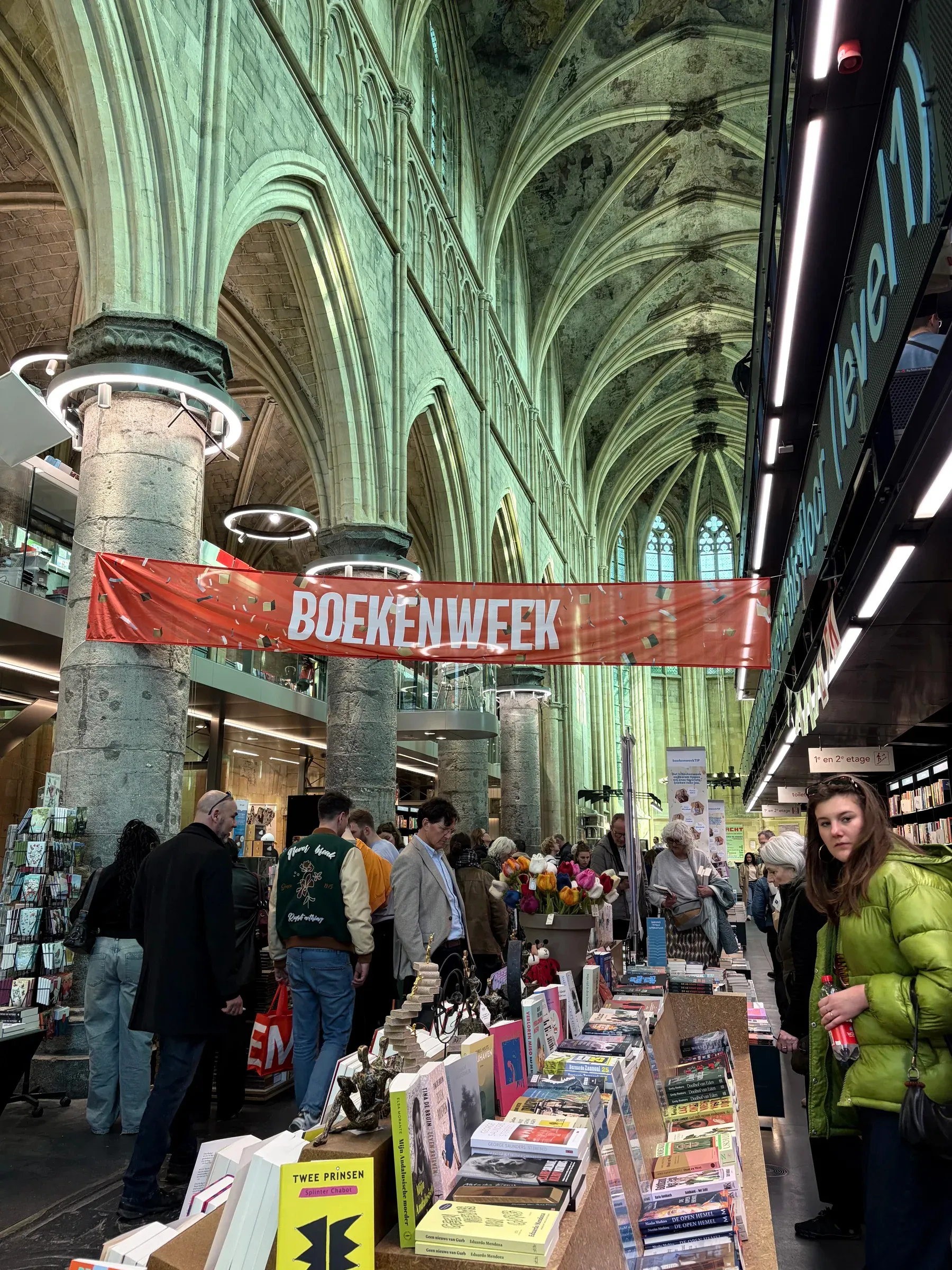
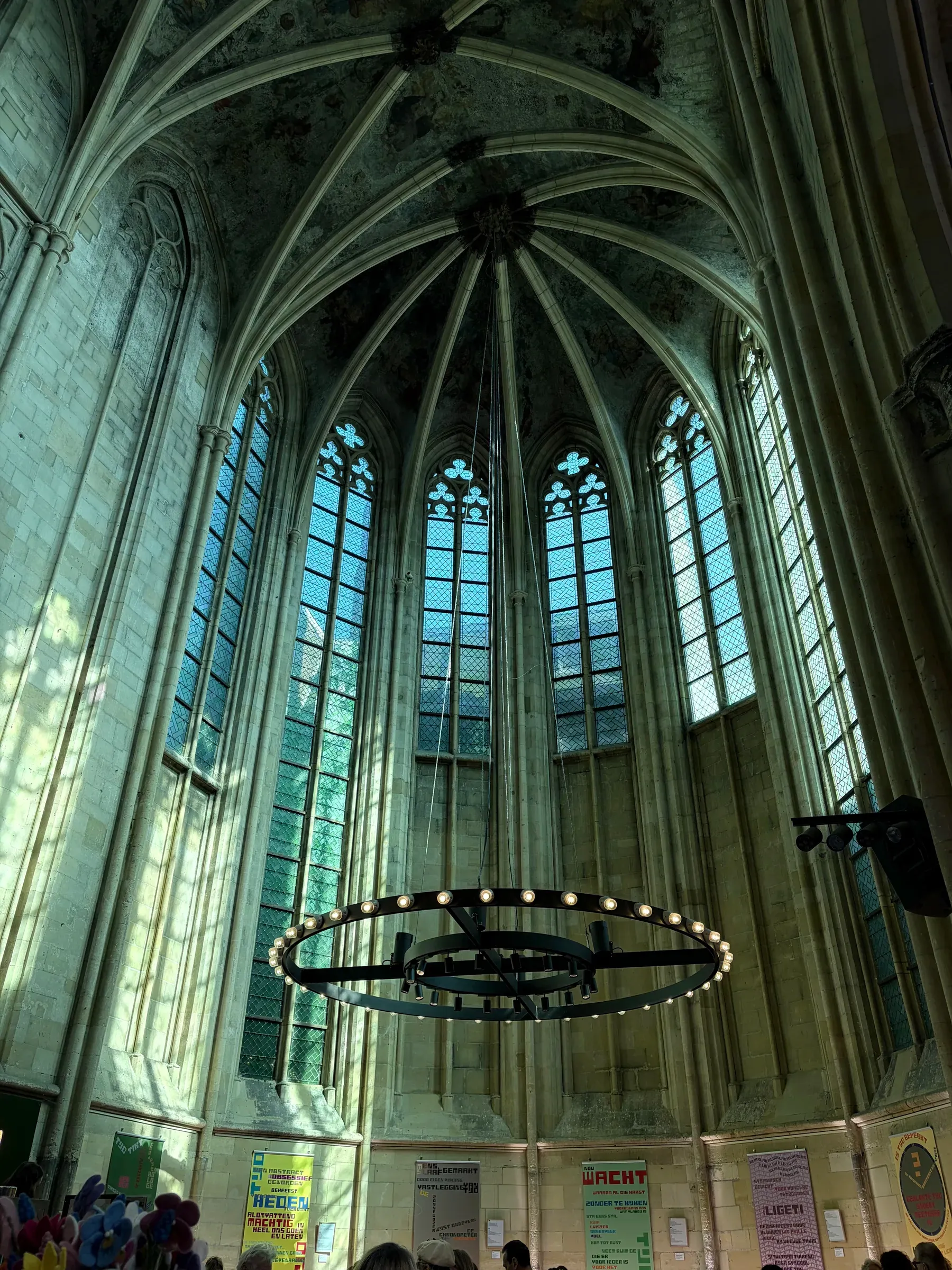
The Dominican church on Dominicanerkerkstraat is considered the first Gothic church in the Low Countries, built from 1261 when the order received permission to settle in Maastricht. After the French occupation of 1794 the building served as a stable, warehouse, bicycle shed, and even a snake exhibition before reopening as a bookstore in 2006. Architects Merkx + Girod inserted a three-storey steel book wall into the nave without touching the vaults, turning the climb to the upper floor into part of the visit. Medieval frescoes, including a fourteenth-century Thomas Aquinas, survive on the walls and ceiling. A café in the former choir serves coffee from the local roaster Blanche Dael. The shop is routinely named among the most beautiful bookstores in the world, and the claim is difficult to argue with on a quiet morning.
De Bisschopsmolen
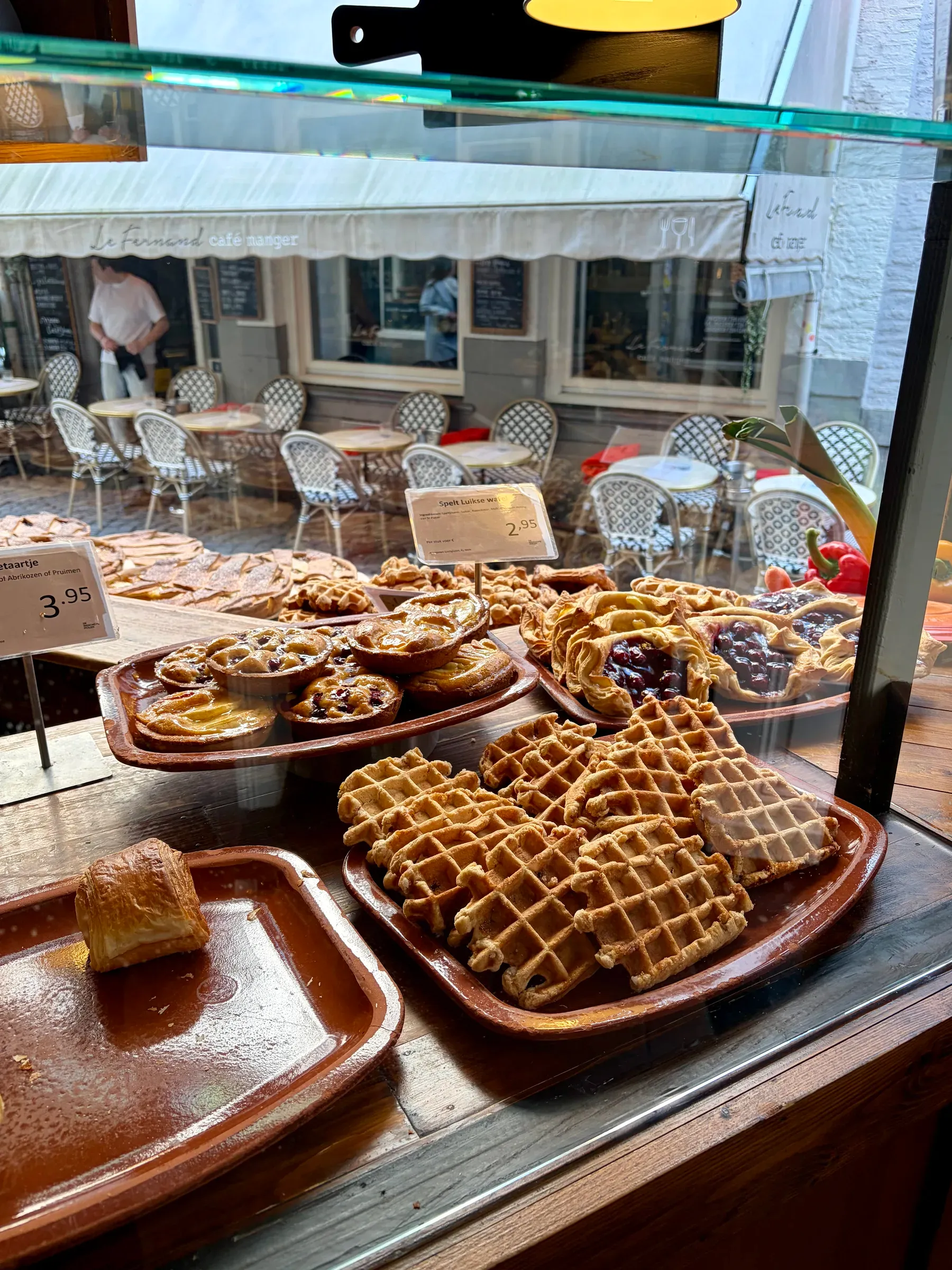
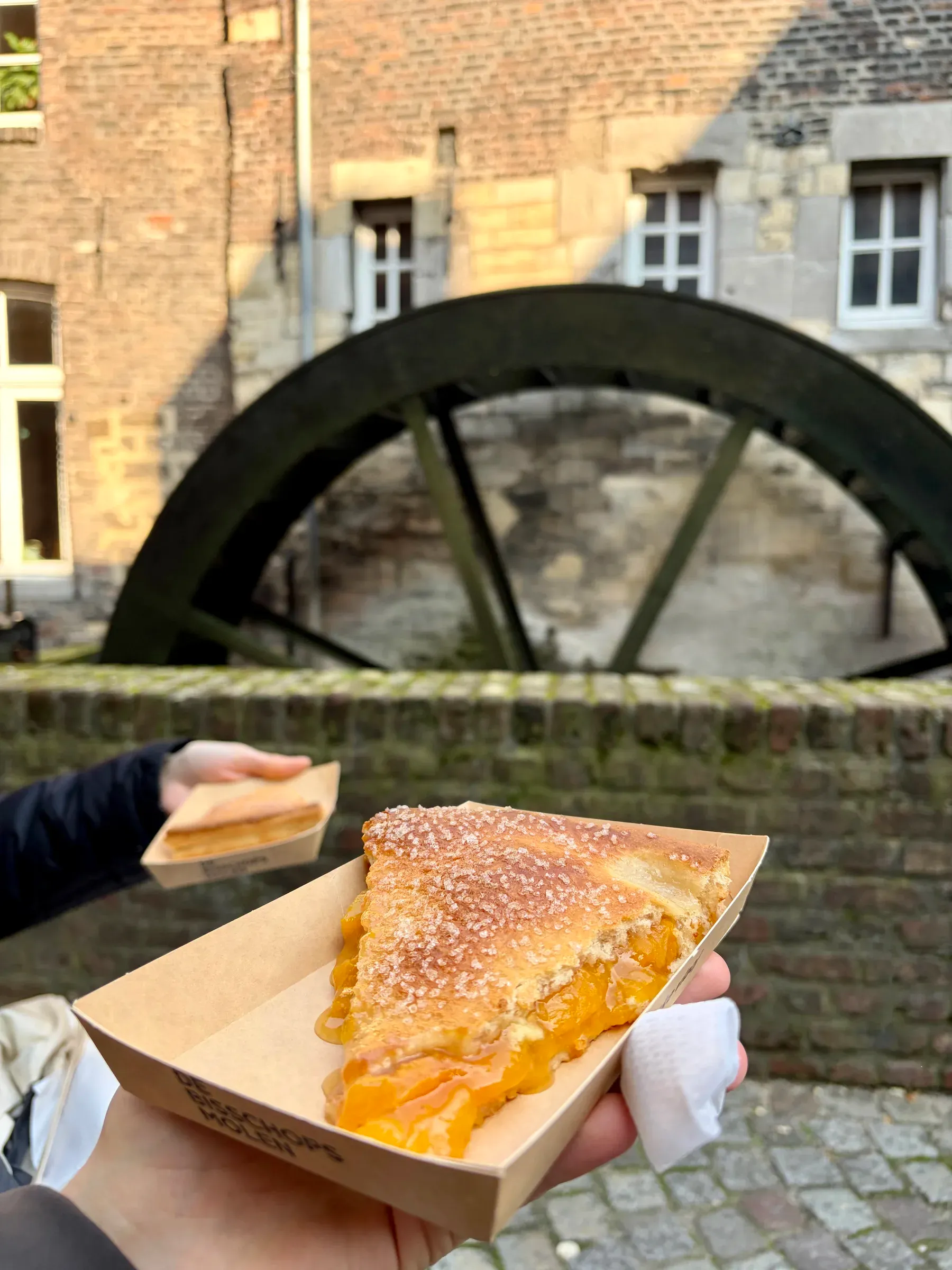
De Bisschopsmolen on the Stenenbrug is thought to be the oldest working watermill in the Netherlands, with origins possibly reaching the seventh century. Duke Godfrey of Bouillon pledged the mill to the Prince-Bishop of Liège before leaving for the First Crusade; when he died in Jerusalem in 1099, it became episcopal property and took its name. For centuries the brewers' guild required Maastricht malt to be ground here. After restoration in 2004 the mill runs again daily, milling Kollenberger spelt for the adjoining bakery and for local beer. Limburgse vlaai, the open fruit tart of the province, is the thing to eat standing beside the wheel: a slice in a paper tray, still close enough to hear the water turning.
Helpoort
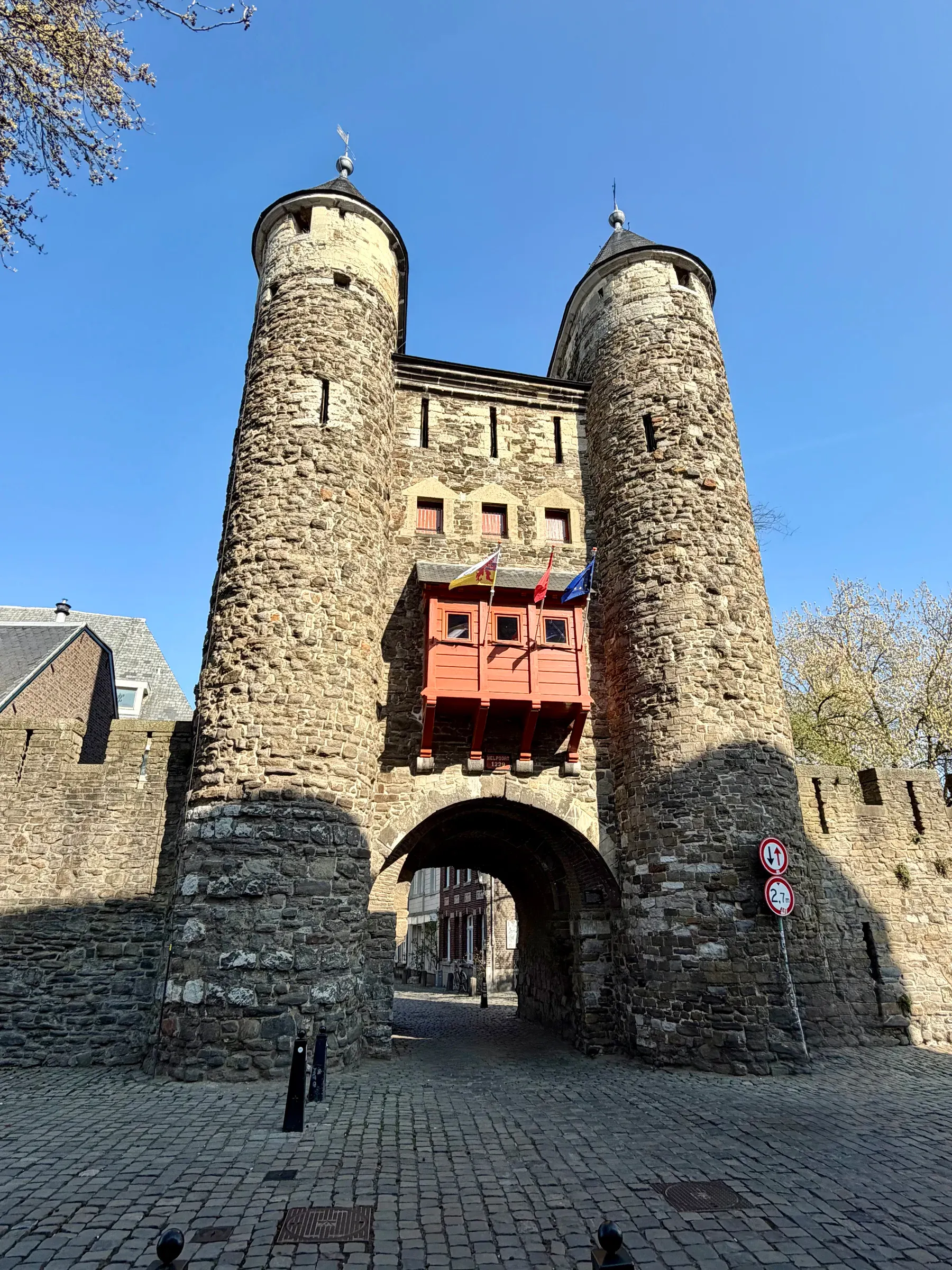
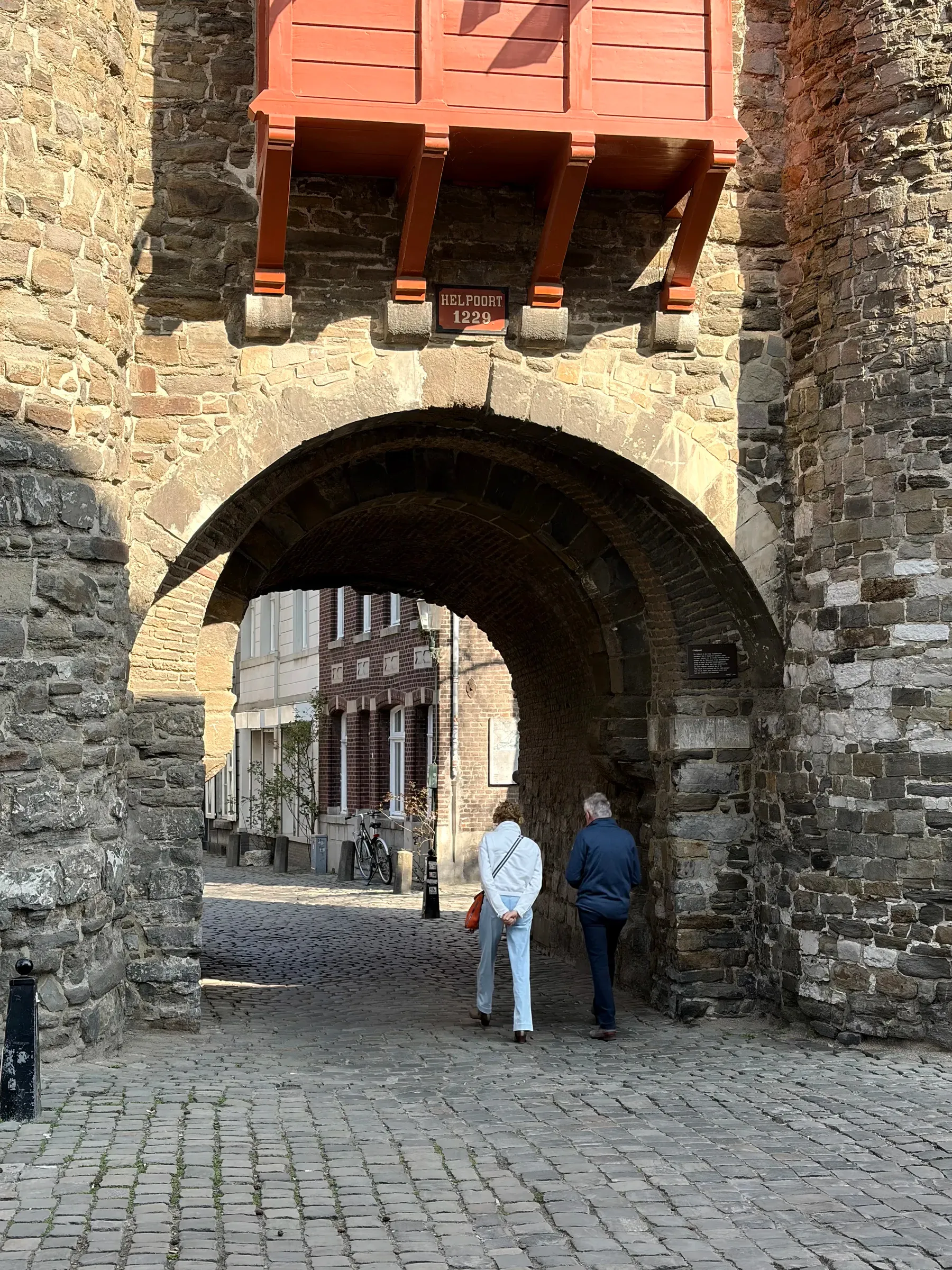
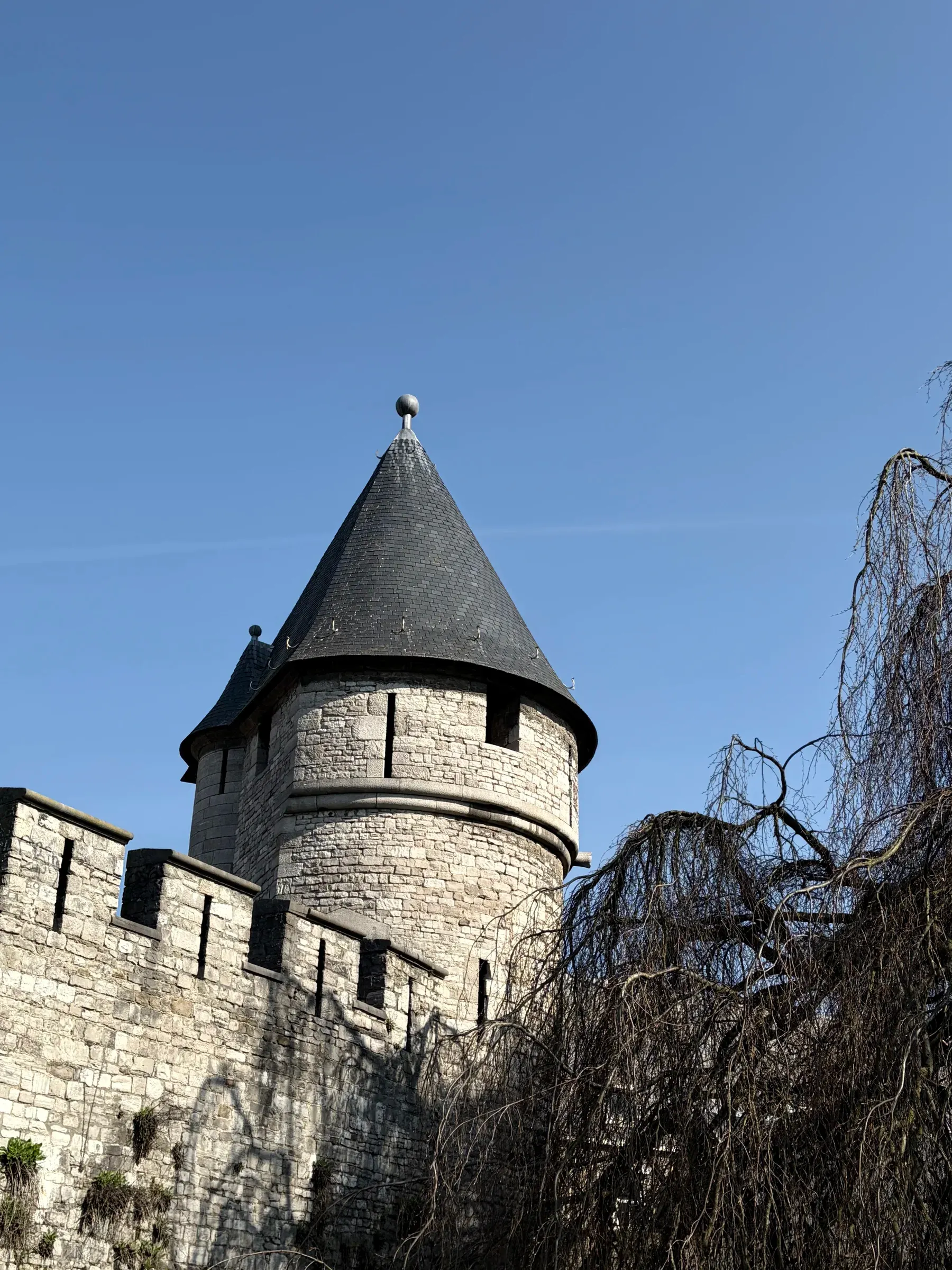
The Helpoort at the southern edge of the Jekerkwartier is the only large city gate still standing in Maastricht and the oldest surviving gate in the Netherlands, built around 1229 when Duke Henry I of Brabant allowed the first stone city wall. Two round towers of kolenschot sandstone flank a brick-vaulted passage that once controlled the road south toward Liège. For two centuries the gate remained a defensive structure; later it served as a cloth hall, powder magazine, and even a residence. A small fortress museum inside tells the story. From here the wall continues west toward the Jekertoren and east toward the Maas, a line you can still walk through Stadspark.
Stadspark
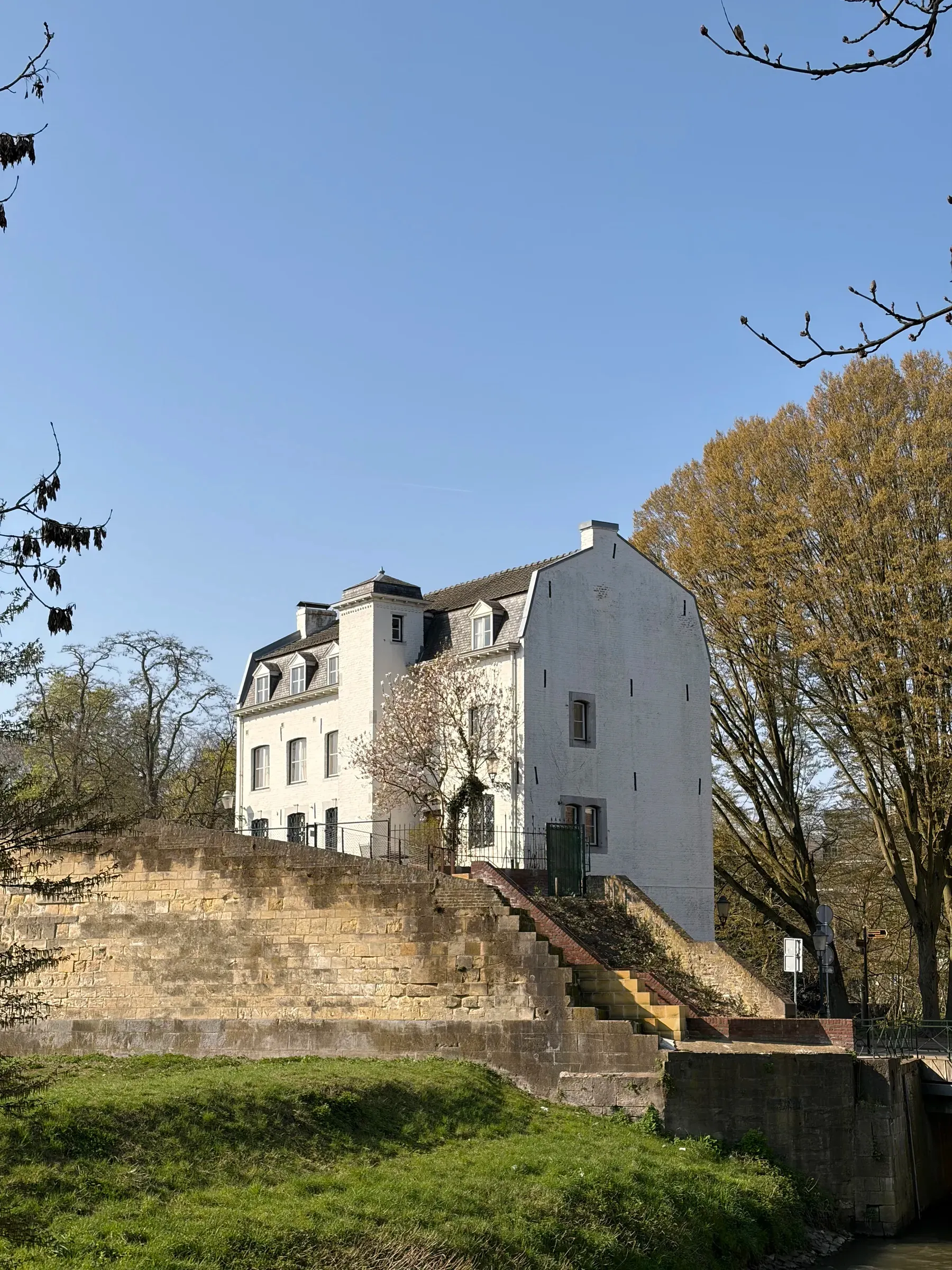
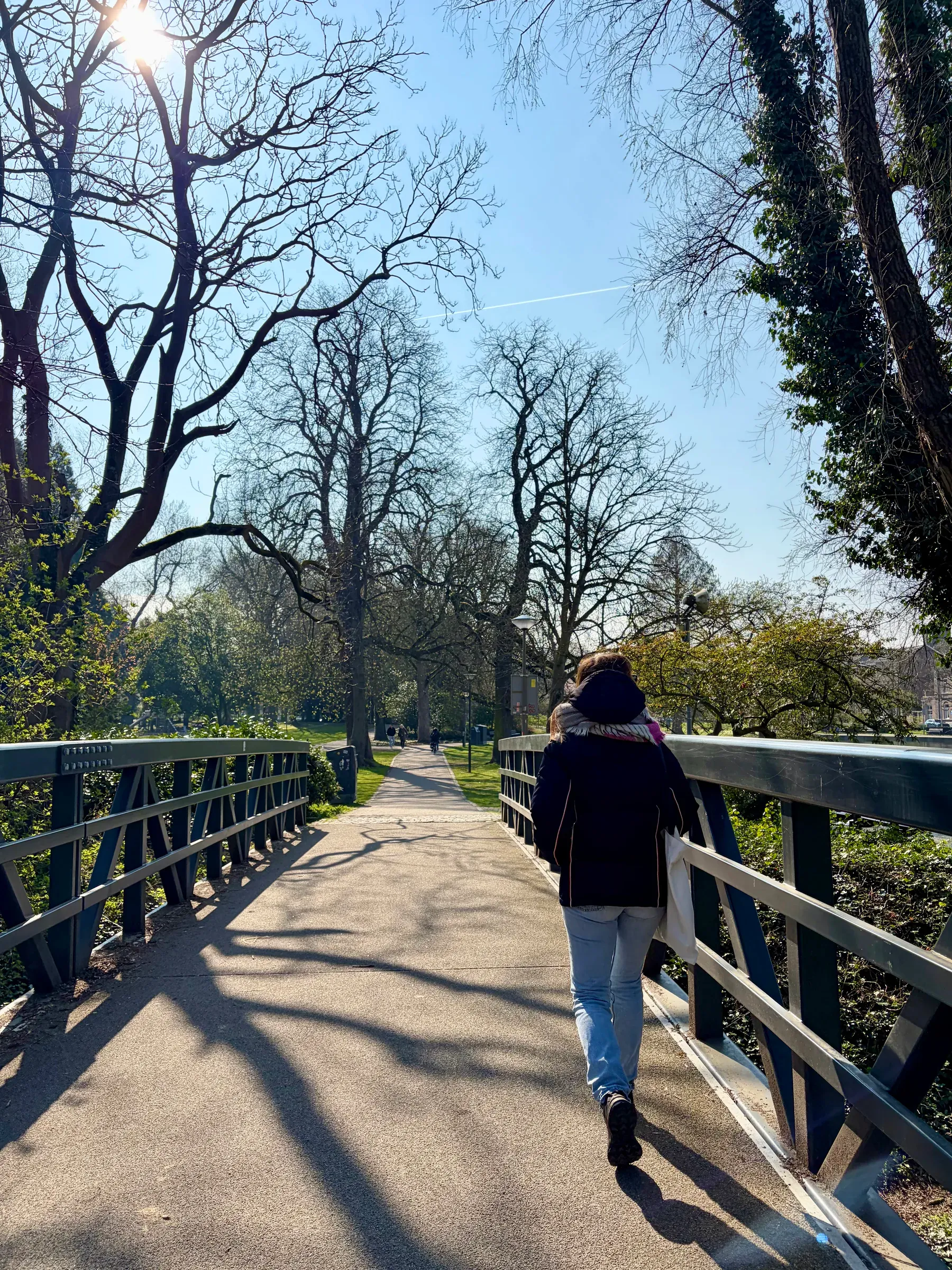
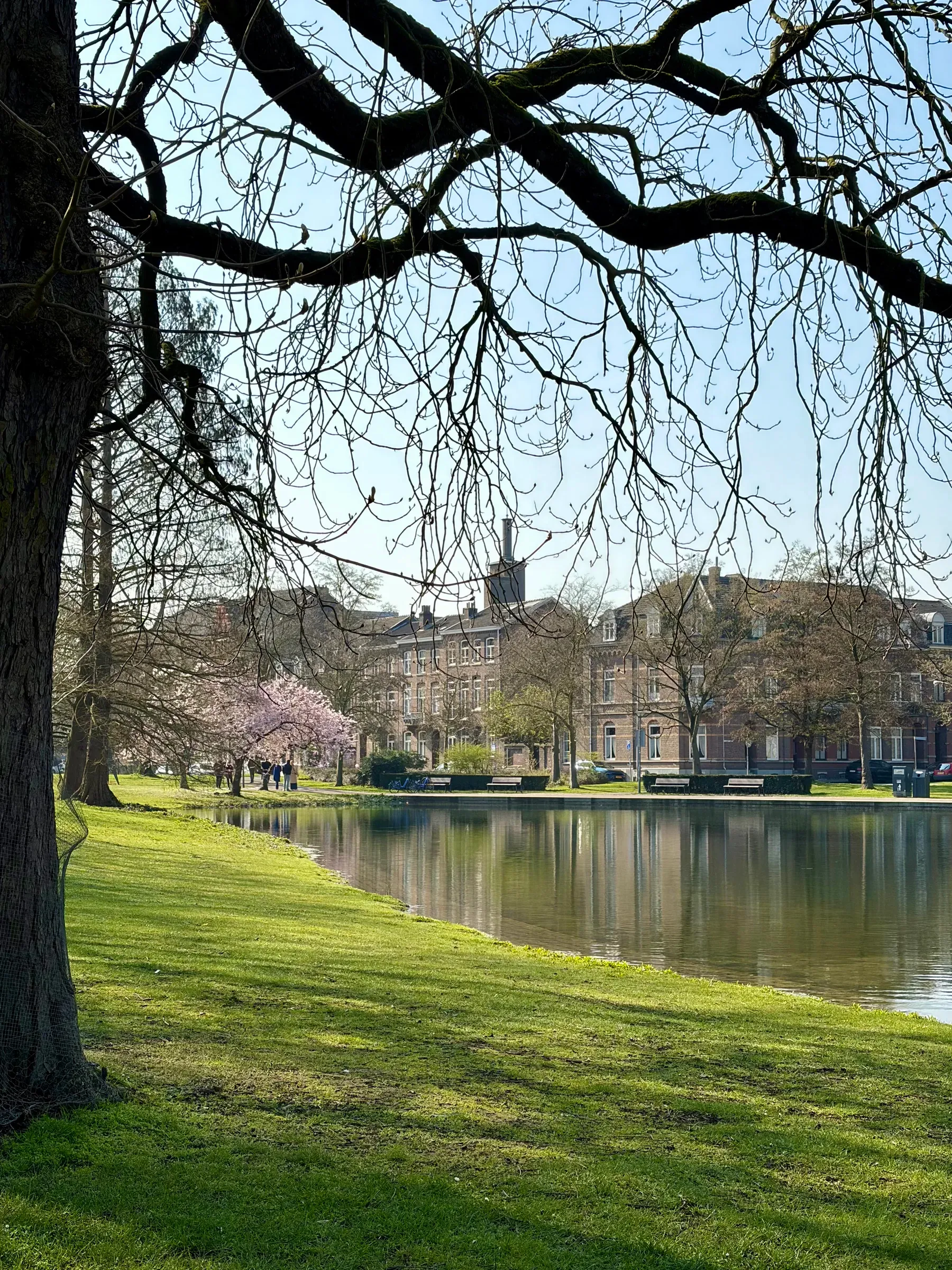
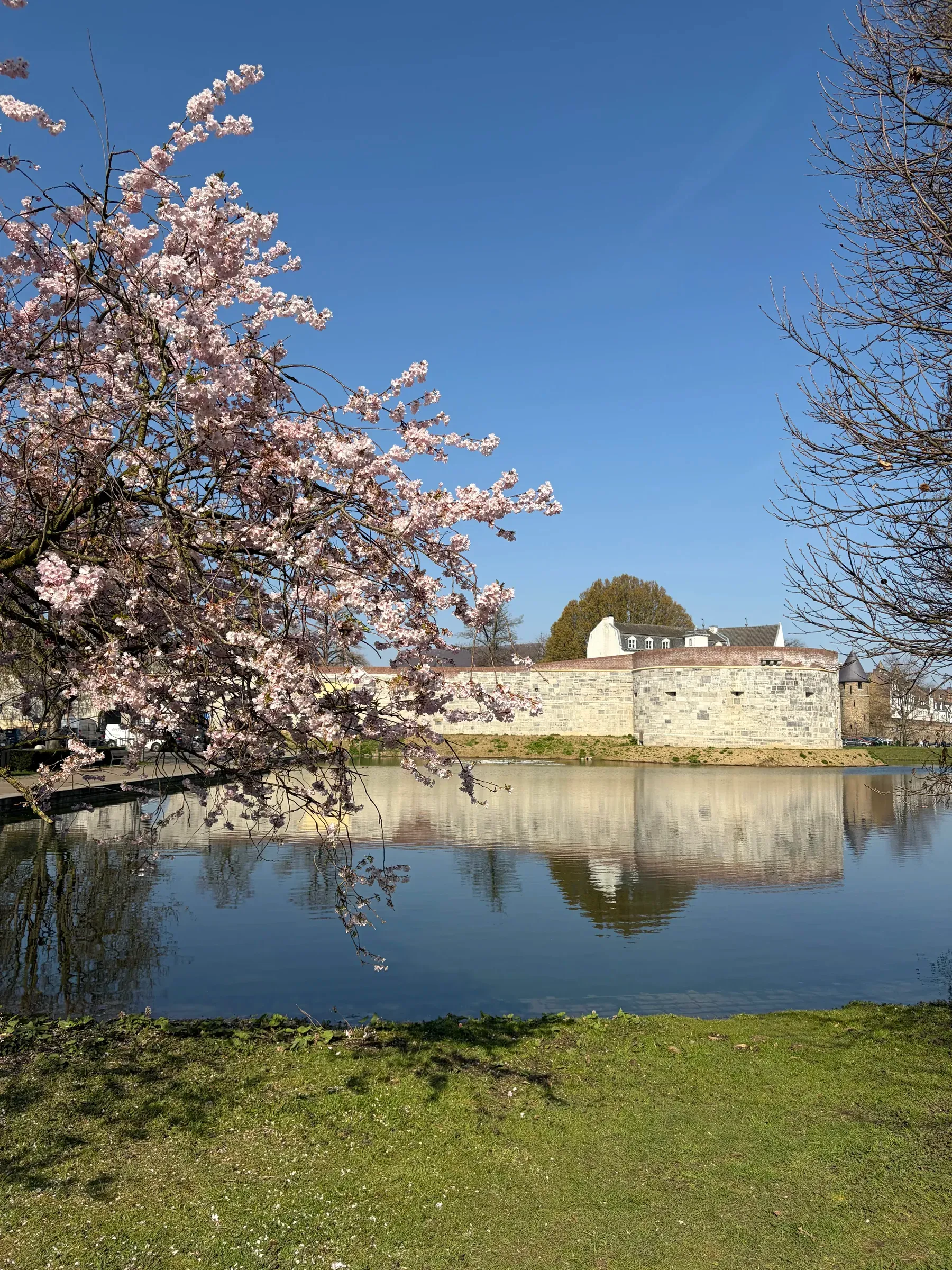
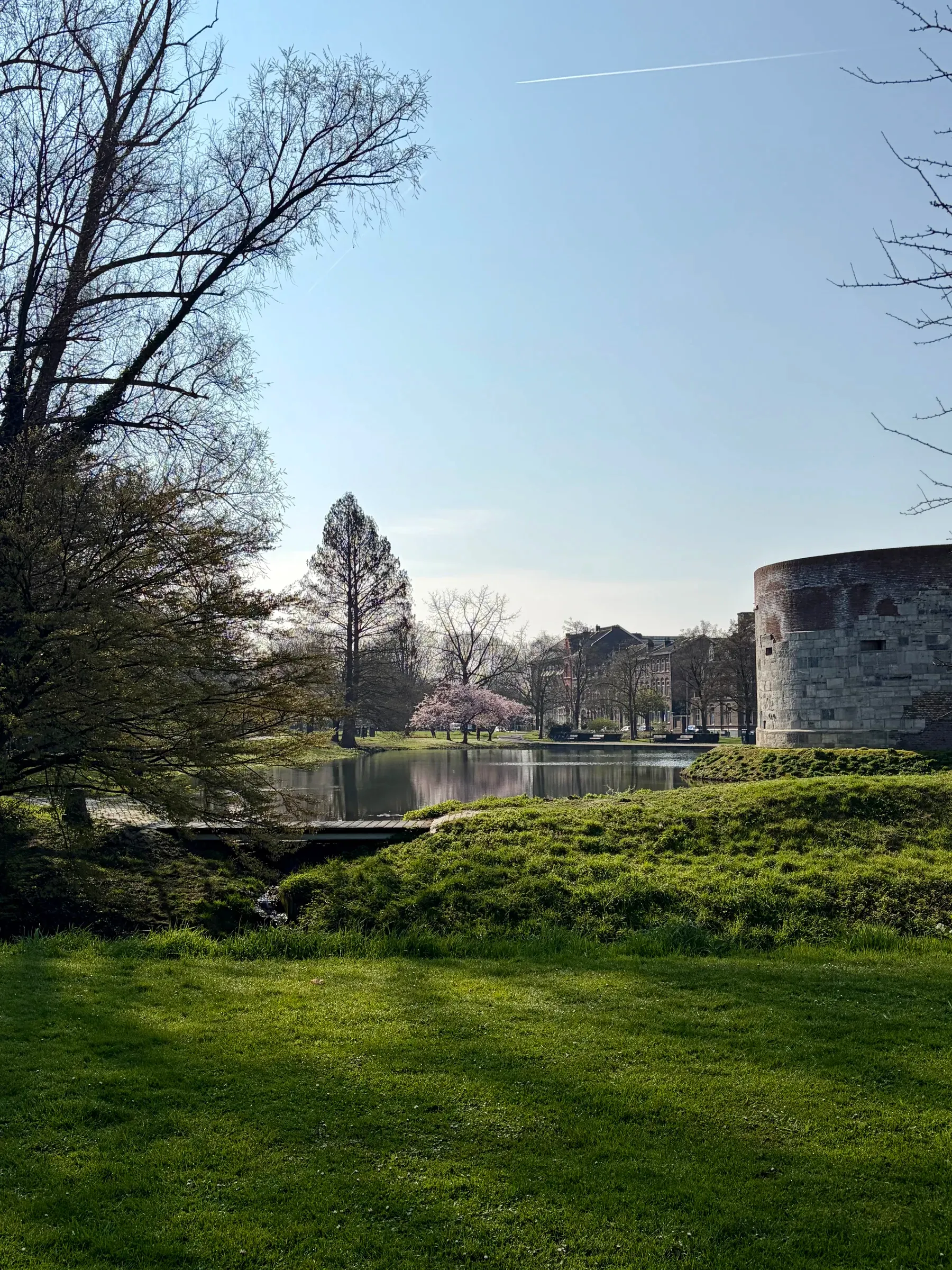
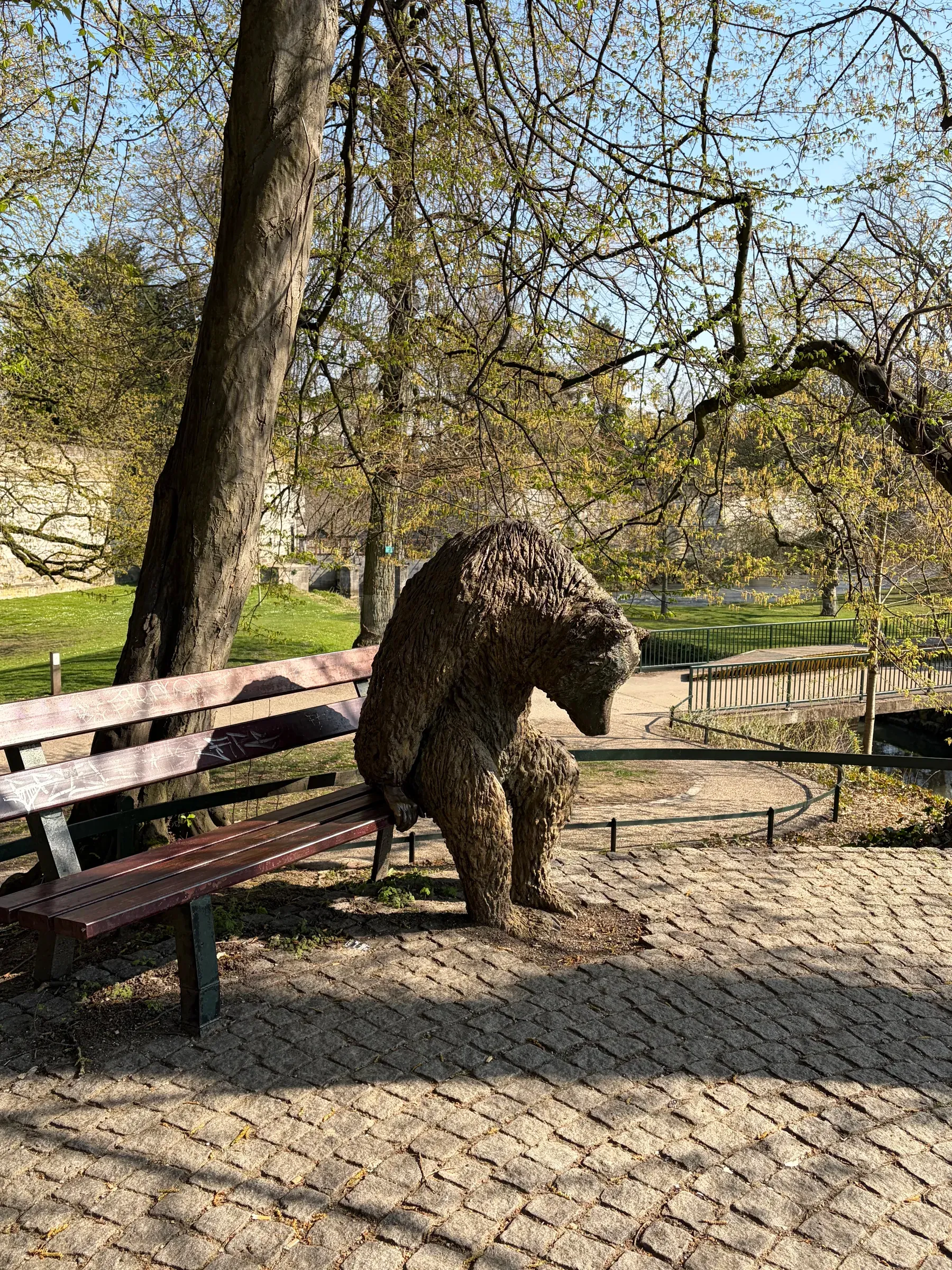
Stadspark wraps around the old fortifications on the west side of the centre, where the first and second medieval city walls meet the Jeker as it flows toward the Meuse. What was once a defensive ring is now open lawn, pond, and path: students on the grass in summer, cherry blossom along the water in March, and always the limestone bastions reflected in the moat. In Aldenhofpark, near the site of the old Berenkuil, Michel Huisman's Halfautomatische Troostmachine remembers the bears once kept here and other vanished animals. The Pater Vincktoren and fragments of the Onze Lieve Vrouwewal rise above the paths, so that a stroll through the park is also a walk through Maastricht's military past.
Jo the Bear
Bear Jo sits alone on a bench near the former Berenkuil in Stadspark, head bowed, paws folded like a person lost in thought. He was the last bear kept in Maastricht's public bear pit: one of three cubs born in 1968 to Max and Polla, the long-lived pair who had become a fixture of the city. After his brothers died and protests over the cramped concrete enclosure grew, Jo was moved to Ouwehands Dierenpark in Rhenen in 1993. He died there in 1997, and the pit never held bears again. In 2001 sculptor Michel Huisman placed this bronze figure at the edge of the park as part of De Halfautomatische Troostmachine, a memorial to extinct species and to the complicated affection Maastricht once felt for its caged bears. Jo's human hands are deliberate: the artist wanted a creature you could almost sit beside and comfort.
Treaty of Maastricht
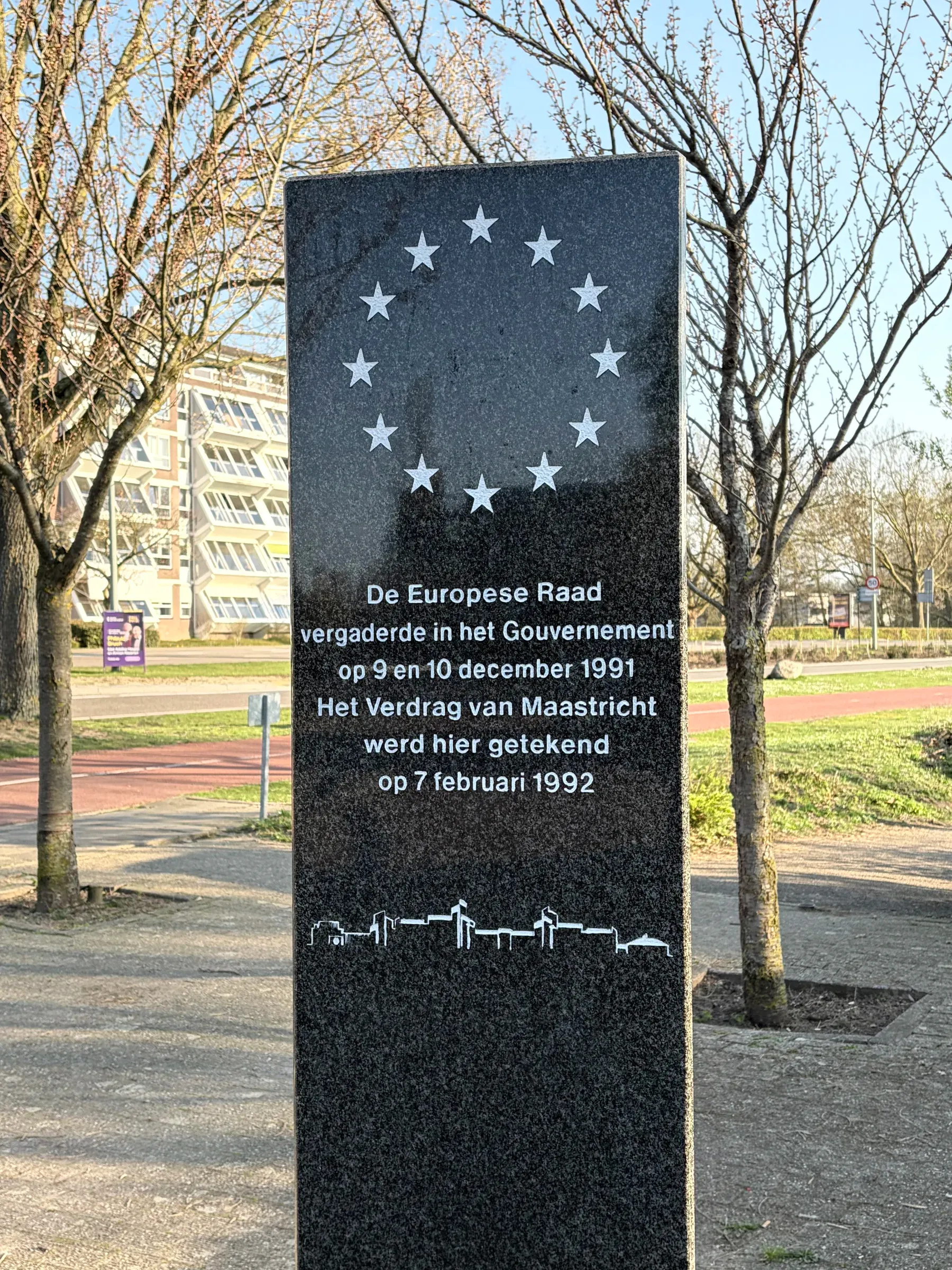
In December 1991 twelve European leaders met in Maastricht while the Netherlands held the rotating presidency of the European Community. Negotiations at the Gouvernement aan de Maas, the provincial government seat on an island in the river, continued over dinner at the Stadhuis and at Château Neercanne outside the city. On 7 February 1992 the Treaty on European Union was signed in the building's State Room, creating the framework for the euro and the modern European Union. A granite monument near the Céramique district records the dates in Dutch beneath the circle of EU stars.