Summers in San Francisco
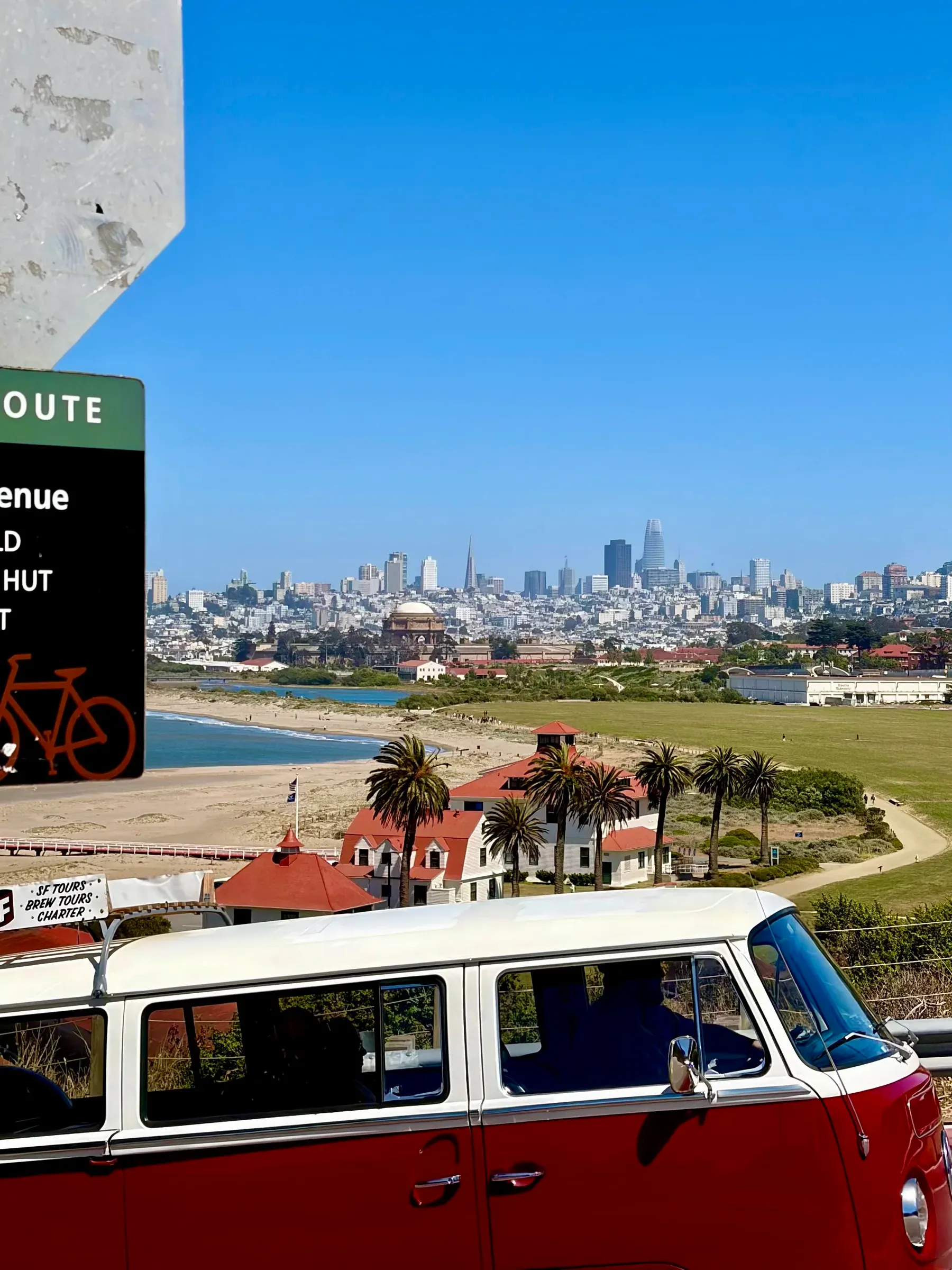
This album brings together photographs from two different vacations in San Francisco, one in 2025 and one in 2026. I first thought of them as separate trips, but the more I looked at the images, the more they seemed to belong to the same story: North Beach and Coit Tower, Pier 39 and Fisherman's Wharf, Union Square, Chinatown, the Golden Gate, and the Marin Headlands all answering each other across time. I decided to place them side by side because San Francisco feels too layered to be held by a single route or mood. Its soul is an incredible tapestry of hills, food, fog, murals, glass towers, painted storefronts, cable car tracks, water, wind, pride, and everyday street life.
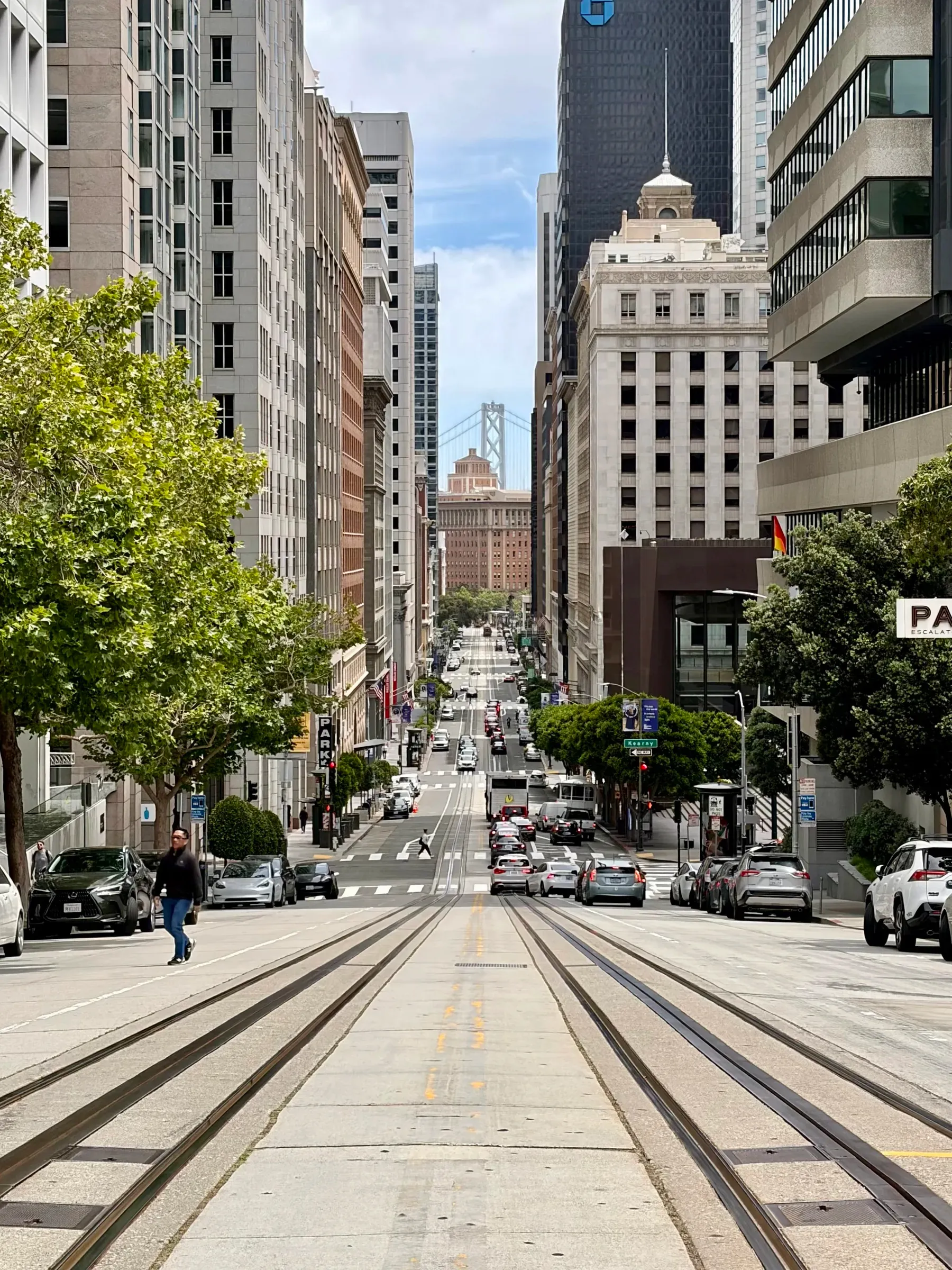
California Street
California Street compresses San Francisco's dramatic topography into a single vector: steel rails, an 18% incline, financial district towers, and the Bay Bridge anchorage framed in the far distance. Built in 1878 by railroad tycoon Leland Stanford, the California Street Cable Car line is one of three surviving lines from a peak 19th-century network. Unlike modern electric transit, cable cars are mechanically pulled at a constant 9.5 miles per hour by underground steel cables driven from a central powerhouse at Mason Street. Looking down the corridor from Nob Hill, the street creates a powerful spatial illusion: the ground drops away beneath your feet while granite and glass skyscrapers form an urban canyon, opening up to reveal the blue waters of the bay below.
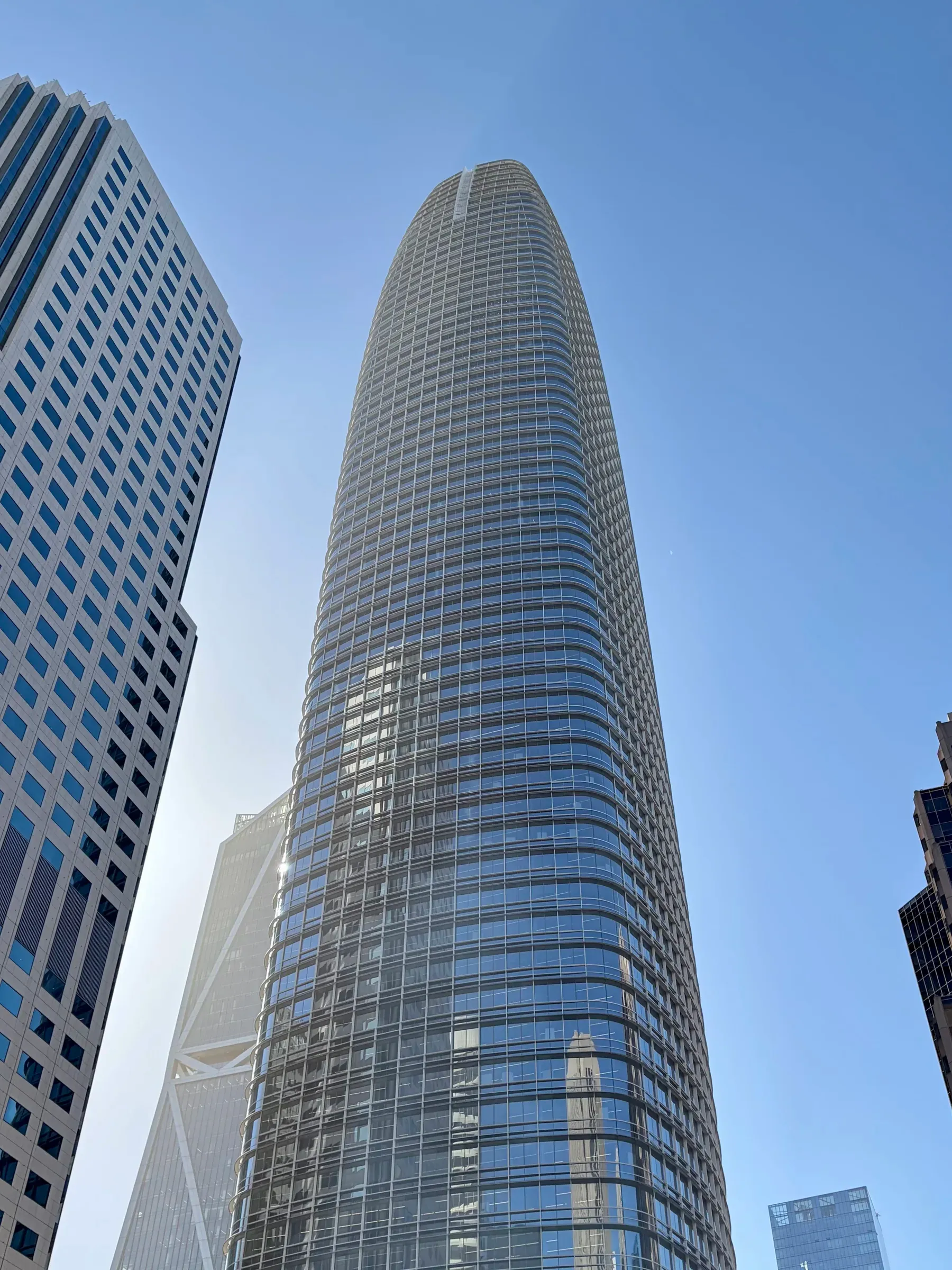
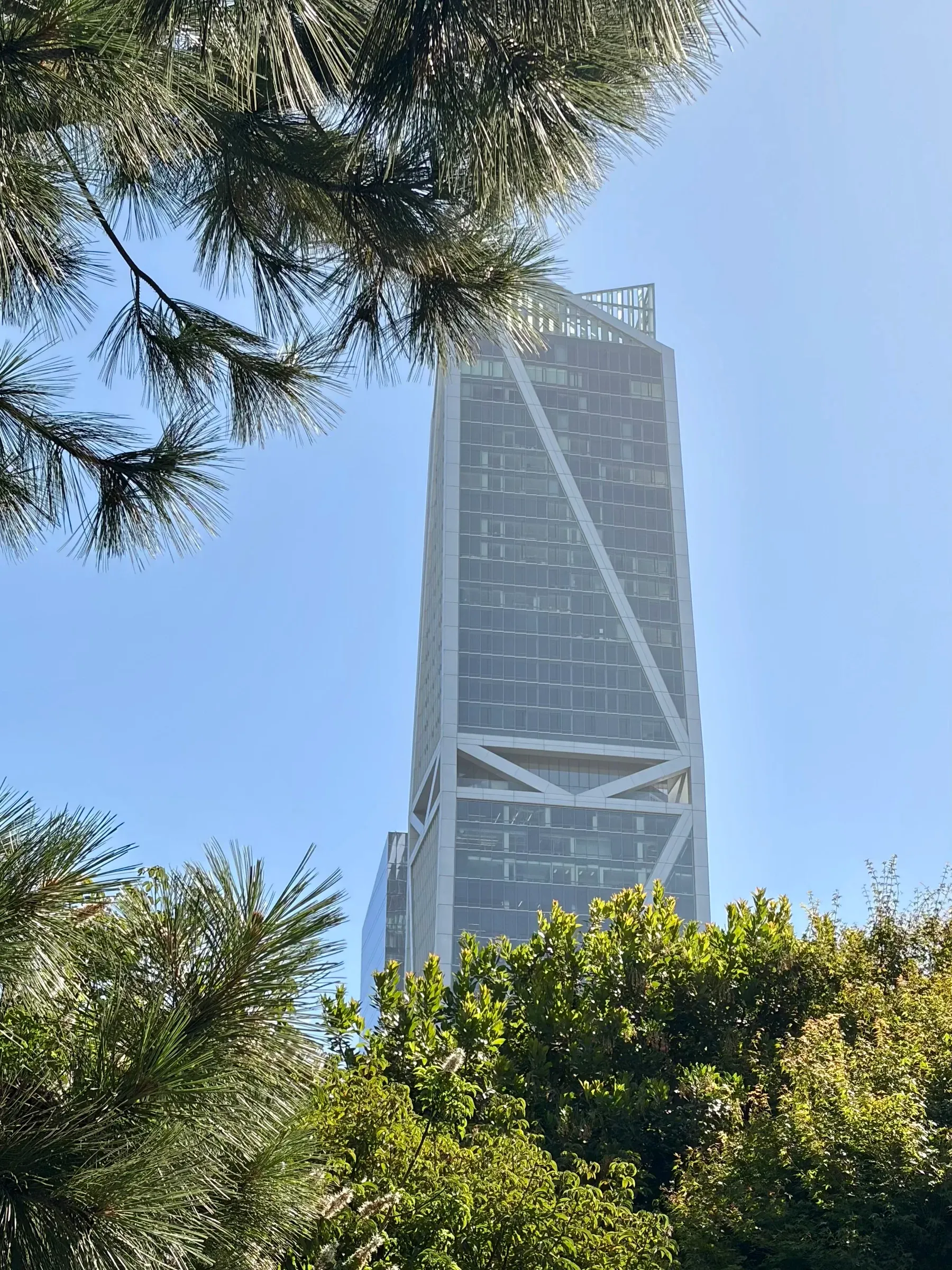
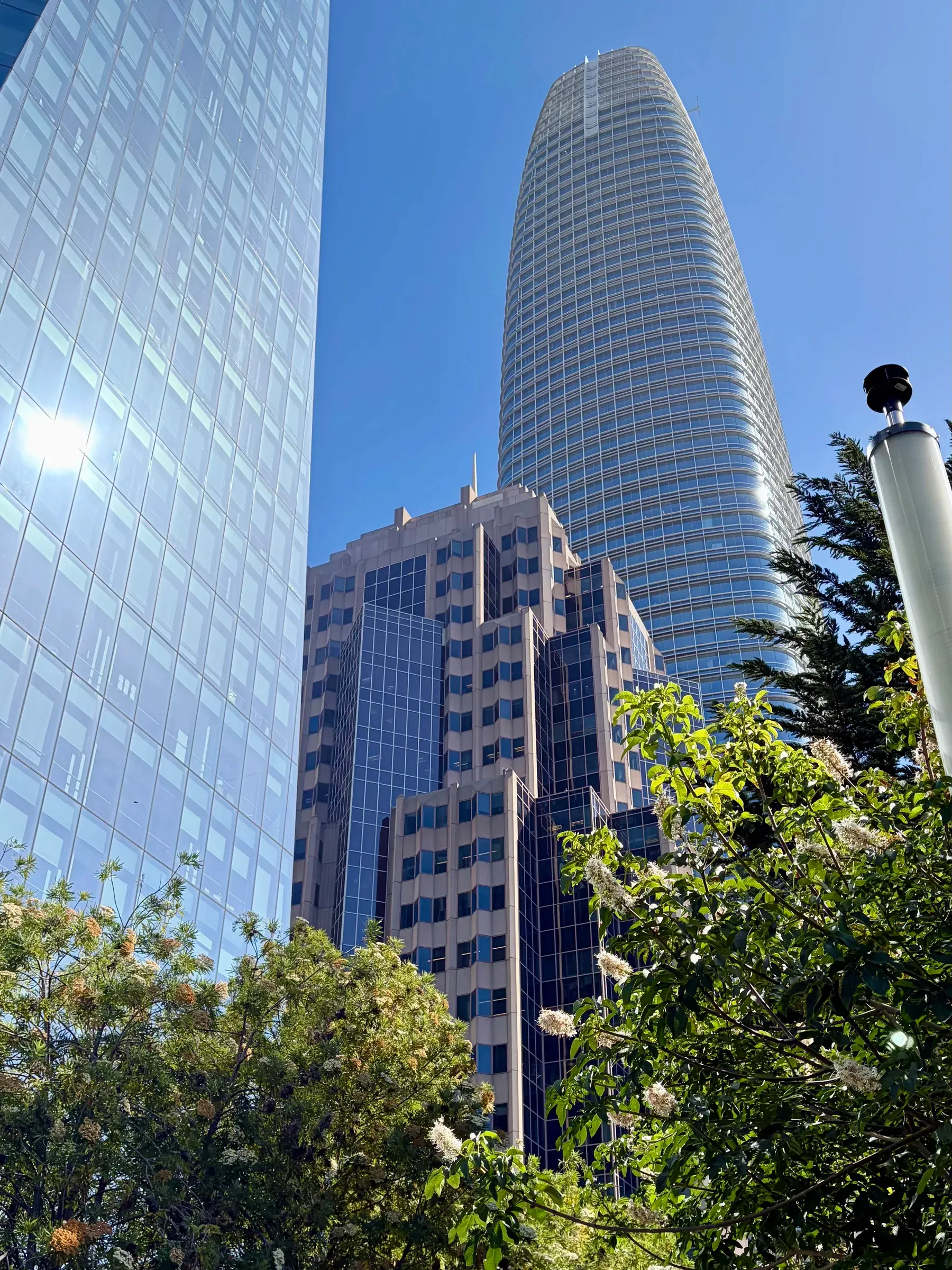
Union Square
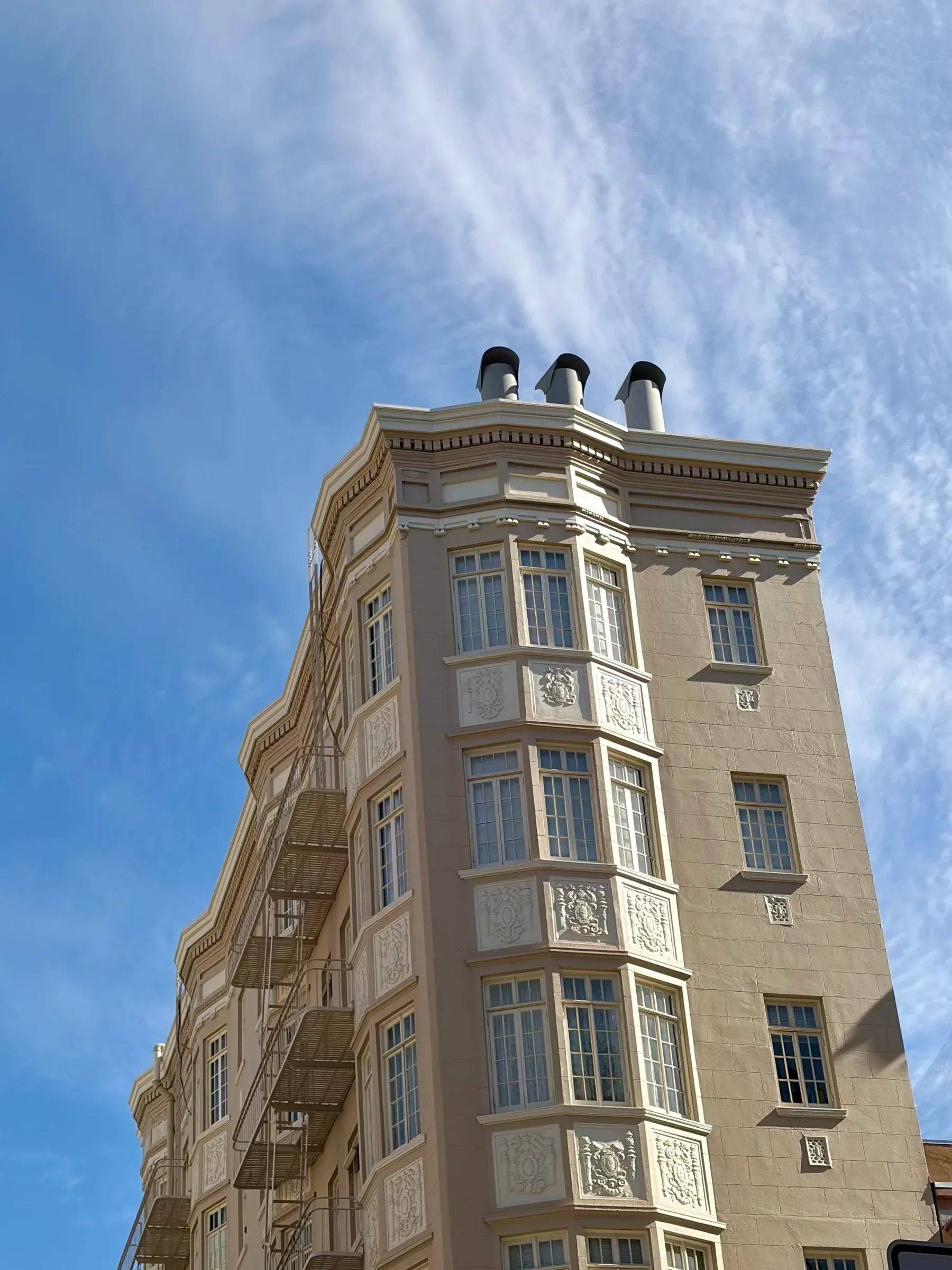
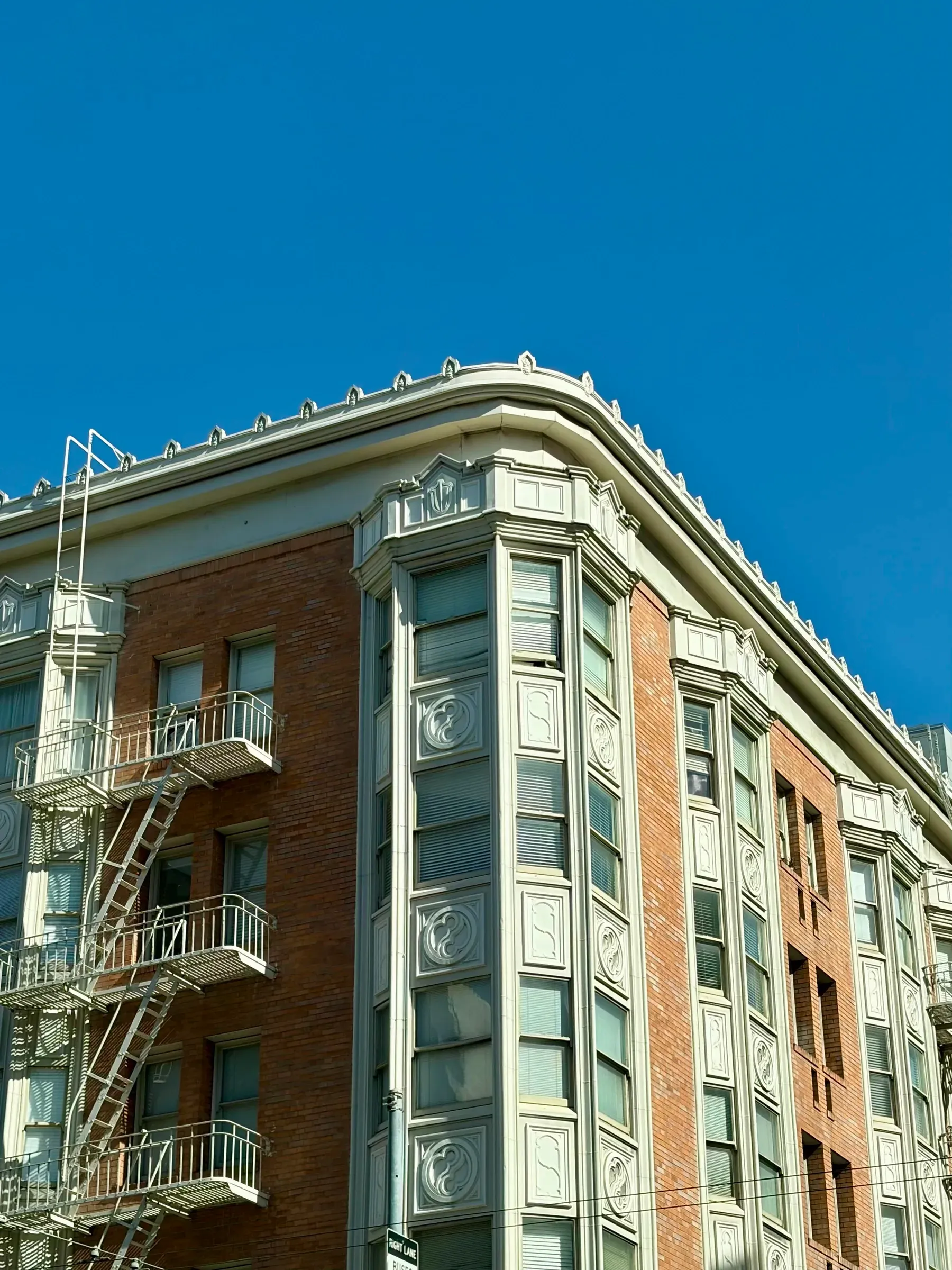
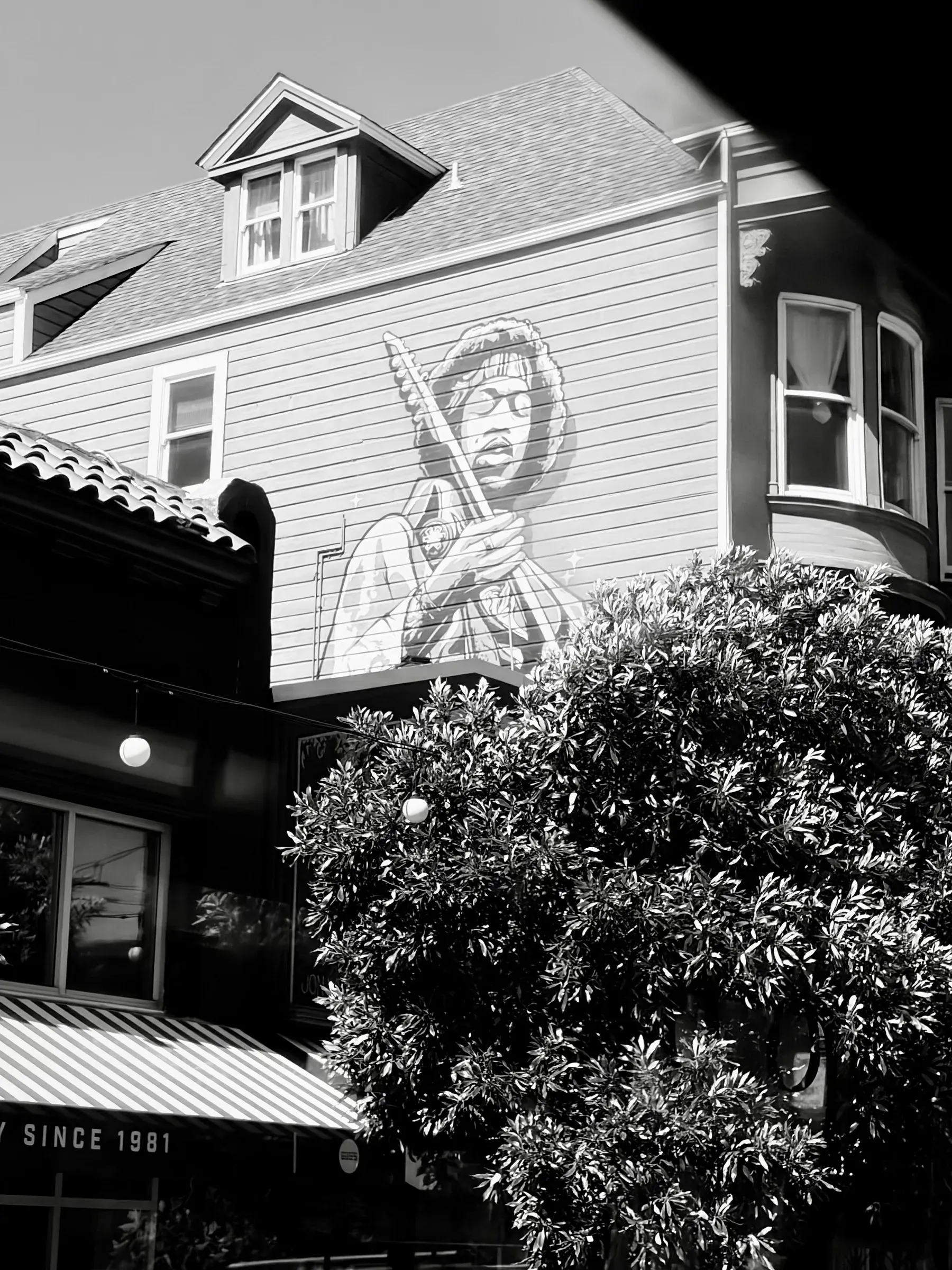
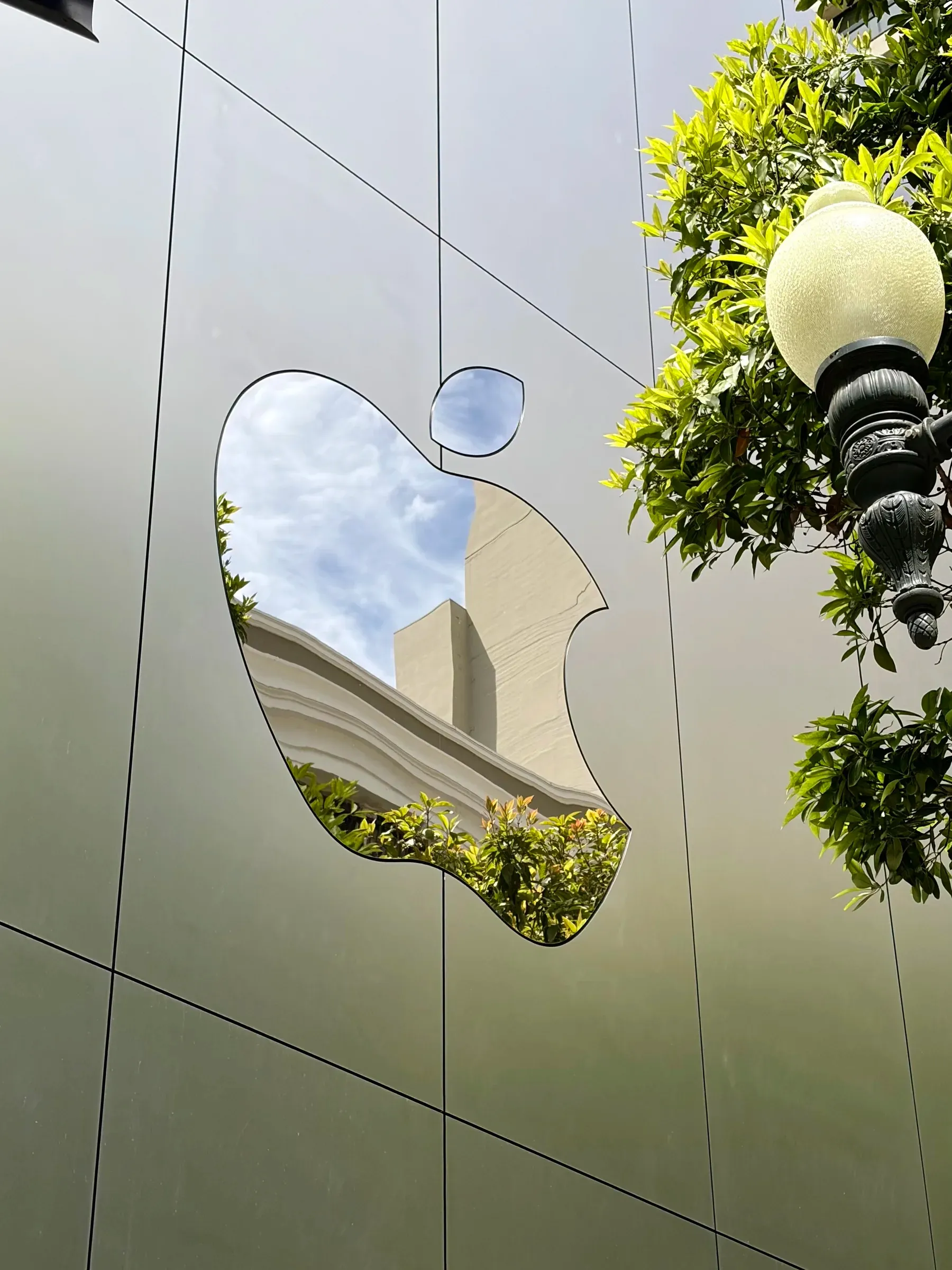
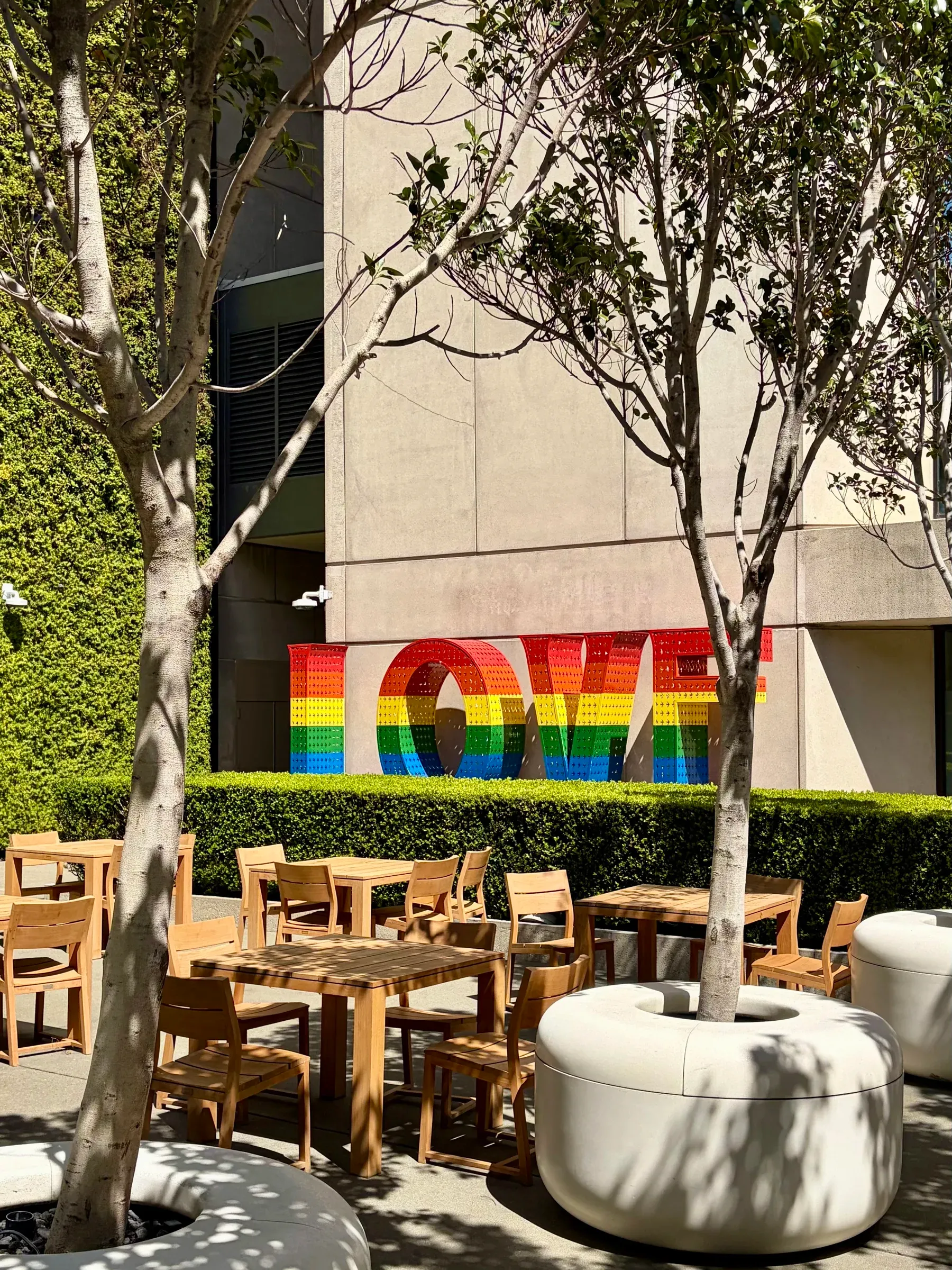
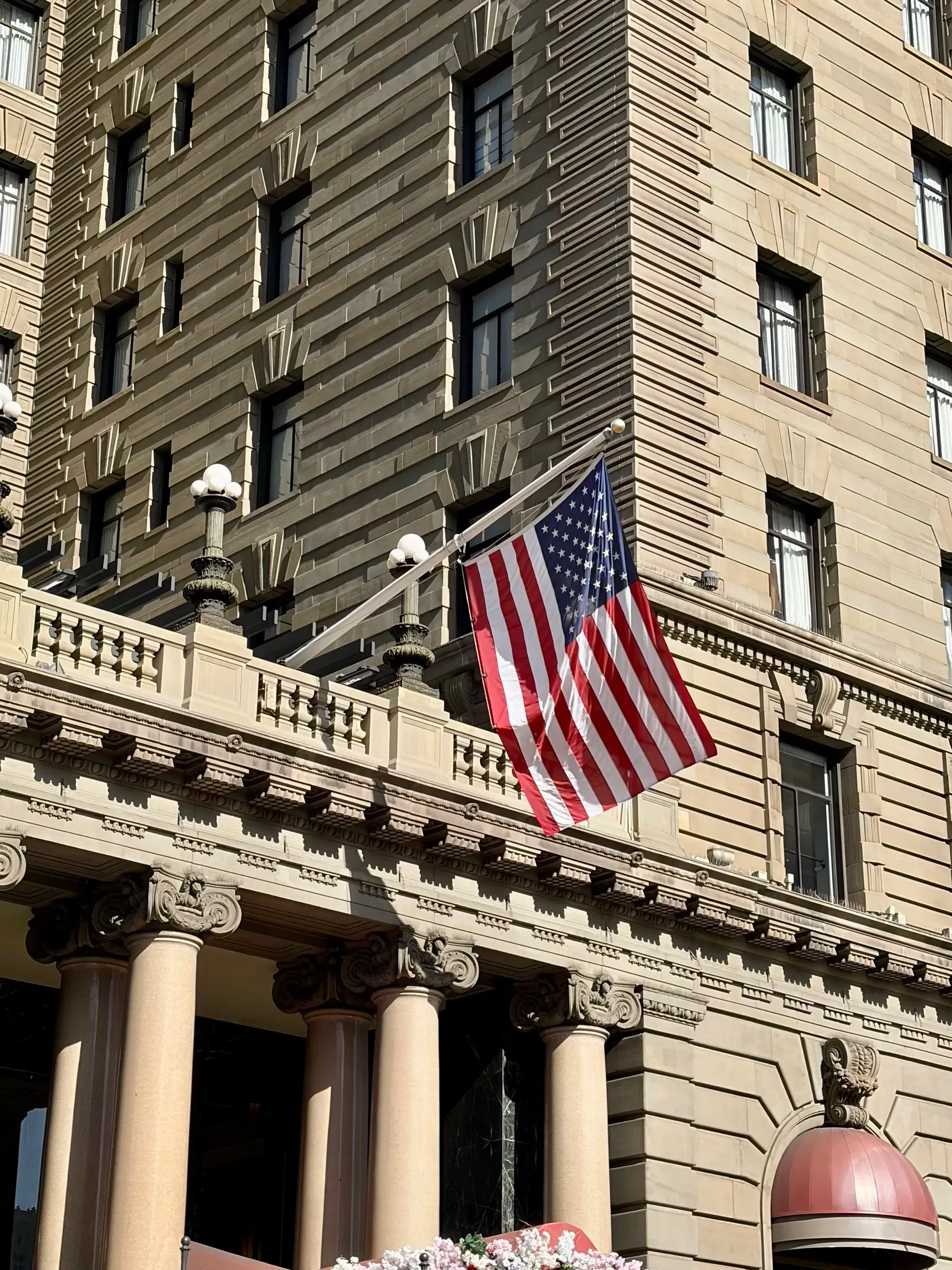
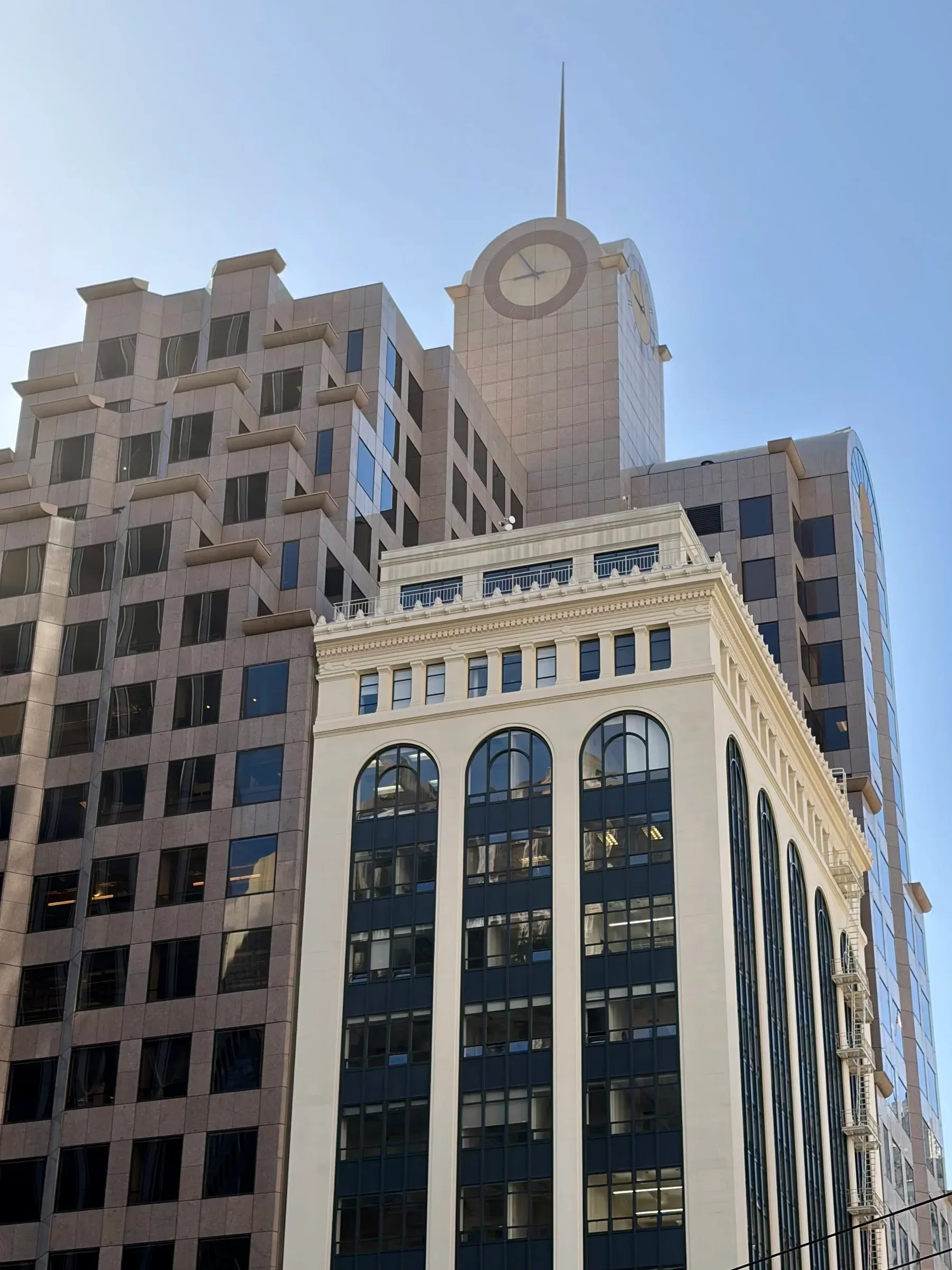
Downtown San Francisco opens here with reflective surfaces, crisp geometry, and urban foliage. Designed by Foster + Partners and opened in 2016, Apple Union Square reimagined modern retail as civic architecture, anchored by two giant 42-foot-tall sliding glass doors that sweep open directly onto Post Street. The building functions entirely on 100% renewable energy, utilizing roof-mounted solar arrays and structural glass beams to flood the two-story interior with natural light. From the sidewalk, polished glass, street trees, historic hotel facades, and the bright curve of the Apple logo blend into a single mirror. It is not the traditional postcard view of the city, but it sets the tone for downtown: architecture as reflection, public plaza as sanctuary, and light filtering through towering high-rise blocks.
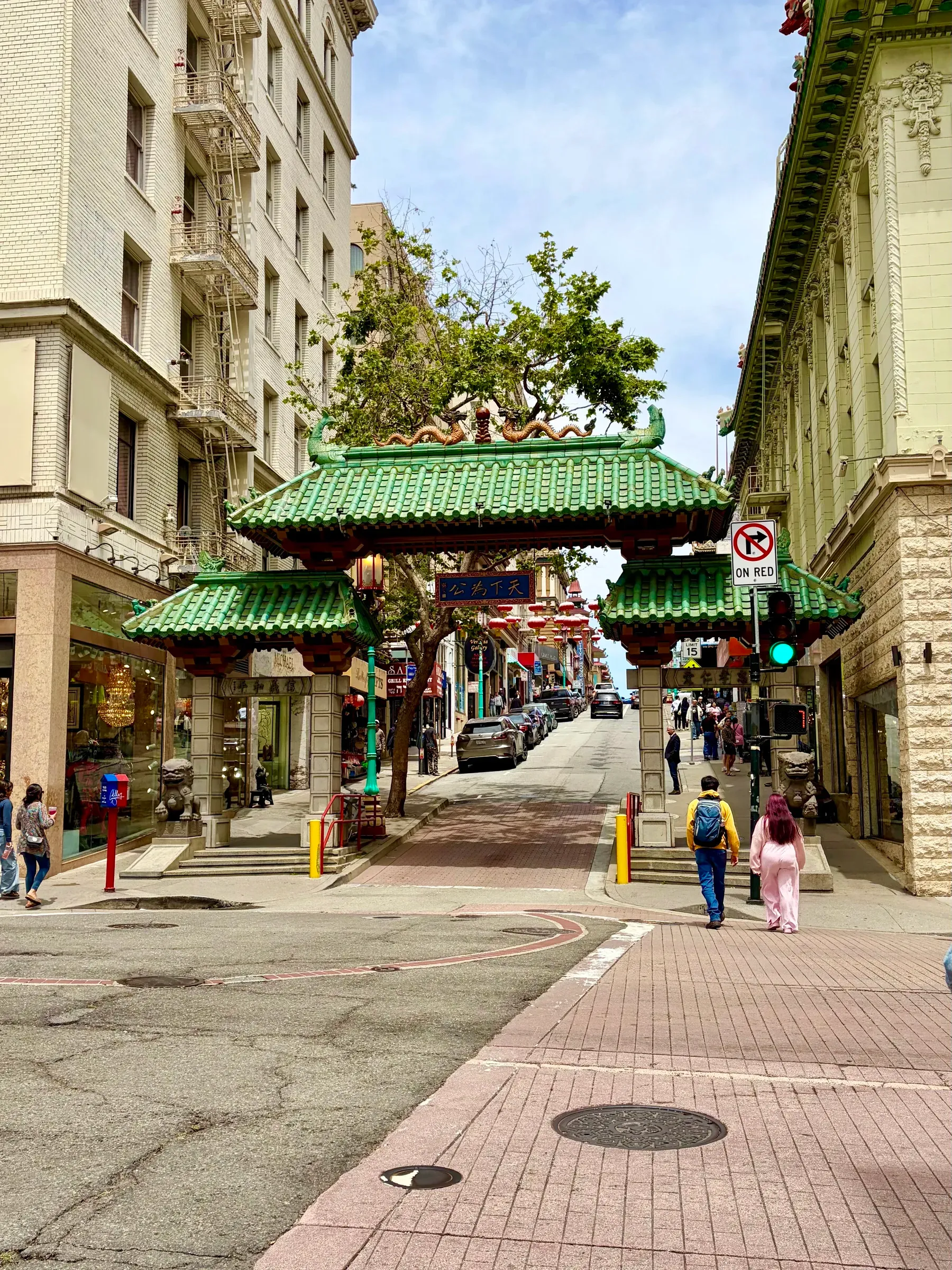
Chinatown
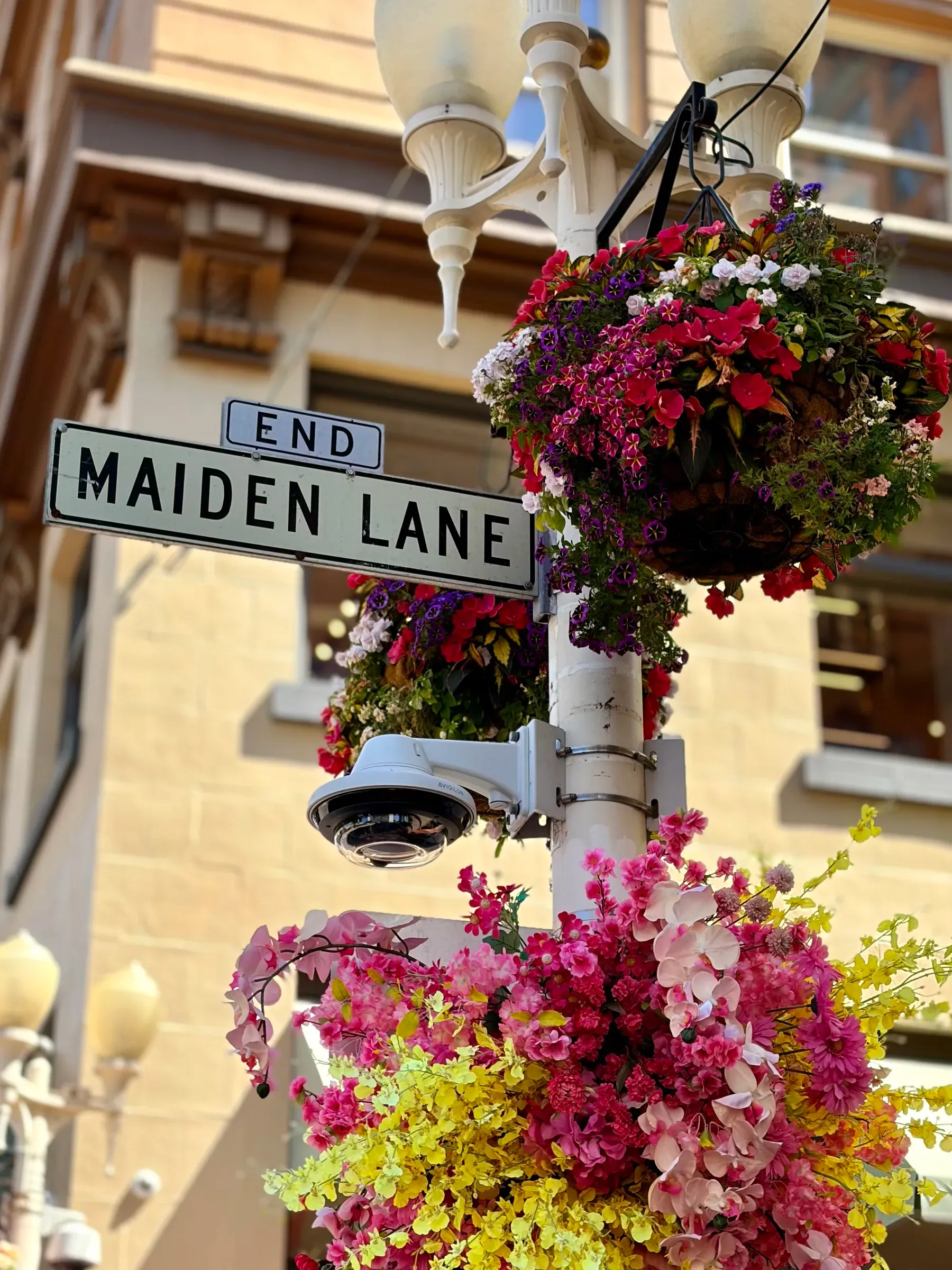
Chinatown alters the scale of the city immediately after the financial district. Established in 1848 during the California Gold Rush, San Francisco's Chinatown is the oldest in North America and the largest Chinese enclave outside Asia. Following the devastating 1906 earthquake and fire, local merchants and architect Joseph Leonard deliberately redesigned Grant Avenue with iconic pagoda rooflines, cast bronze dragon street lamps, and painted balconies to attract visitors and celebrate Chinese culture. Today, Grant Avenue and Stockton Street remain dense with daily life: strings of red paper lanterns, herbalist shopfronts, dim sum kitchens, and hanging flower baskets. The photographs stay close to these street-level details, capturing the rich texture of bronze, painted timber, and golden light.
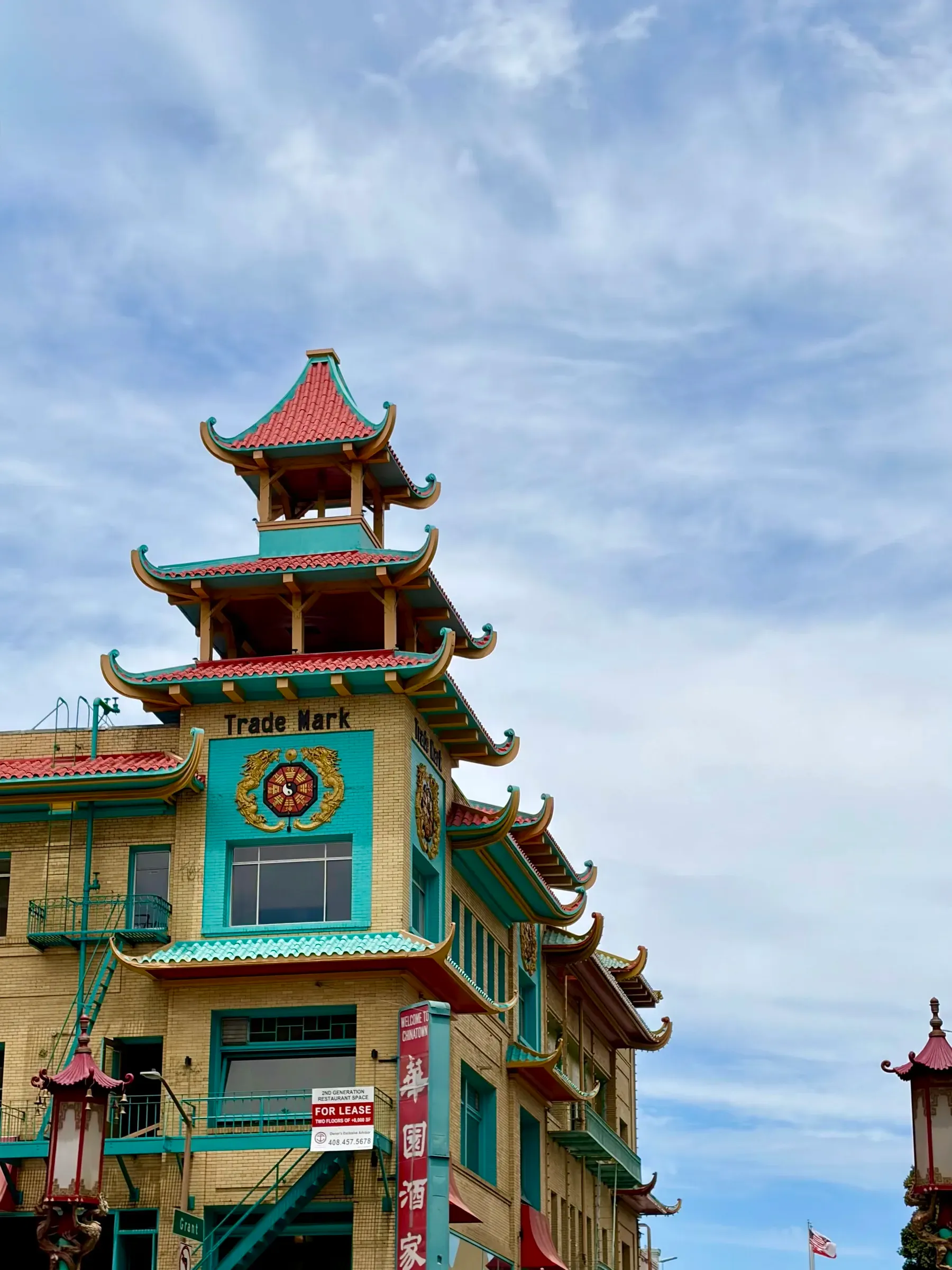
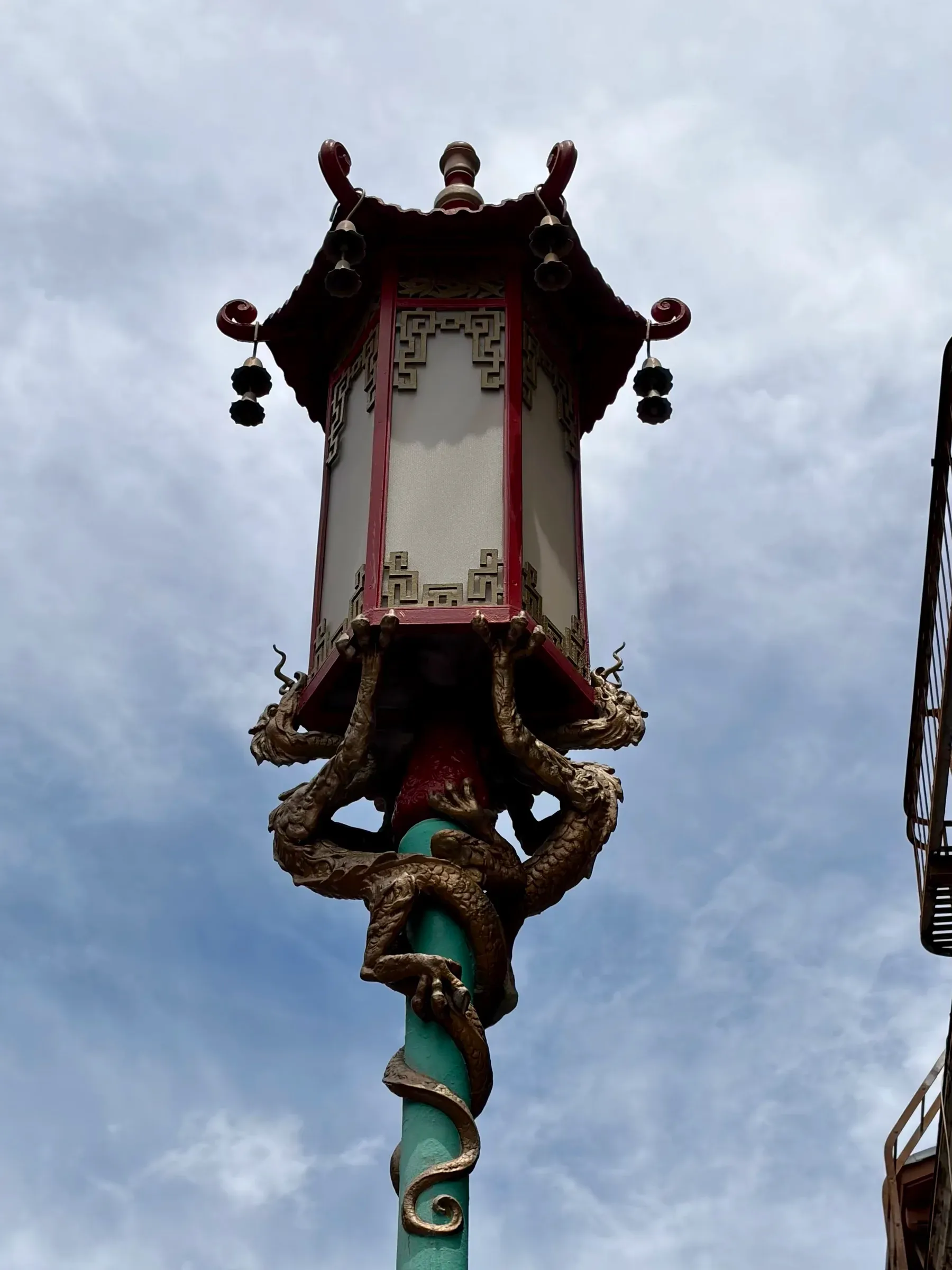
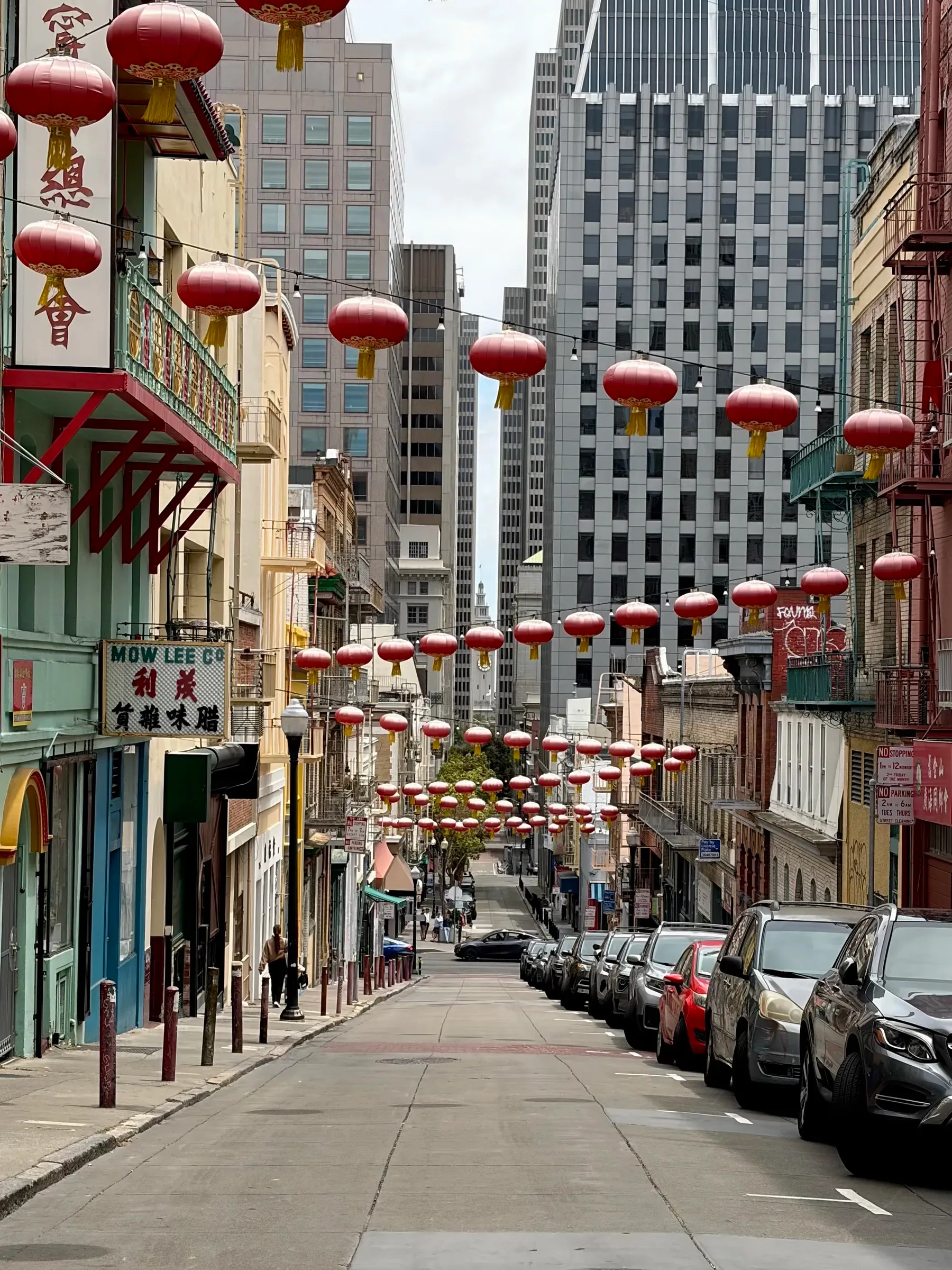
North Beach
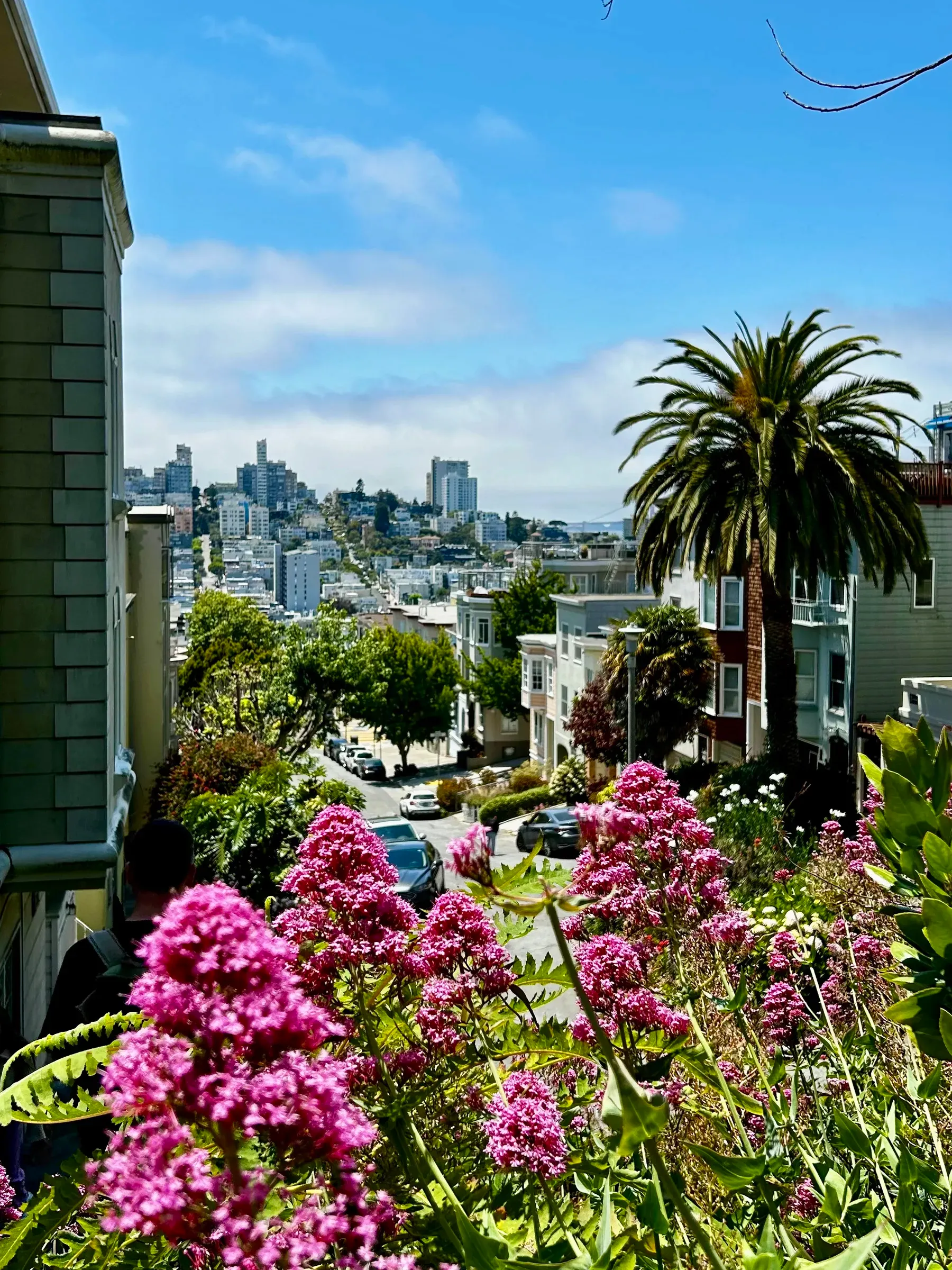
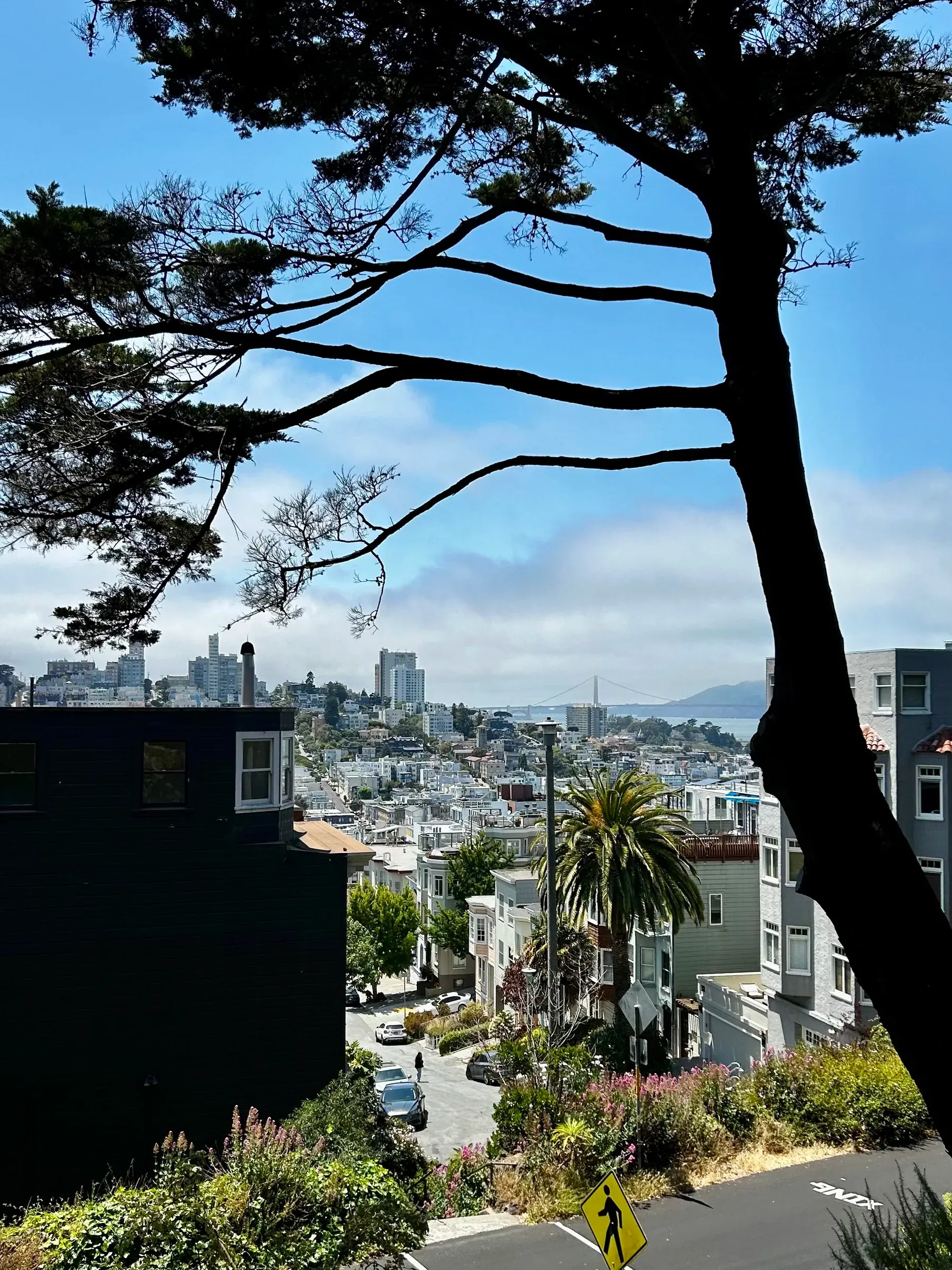
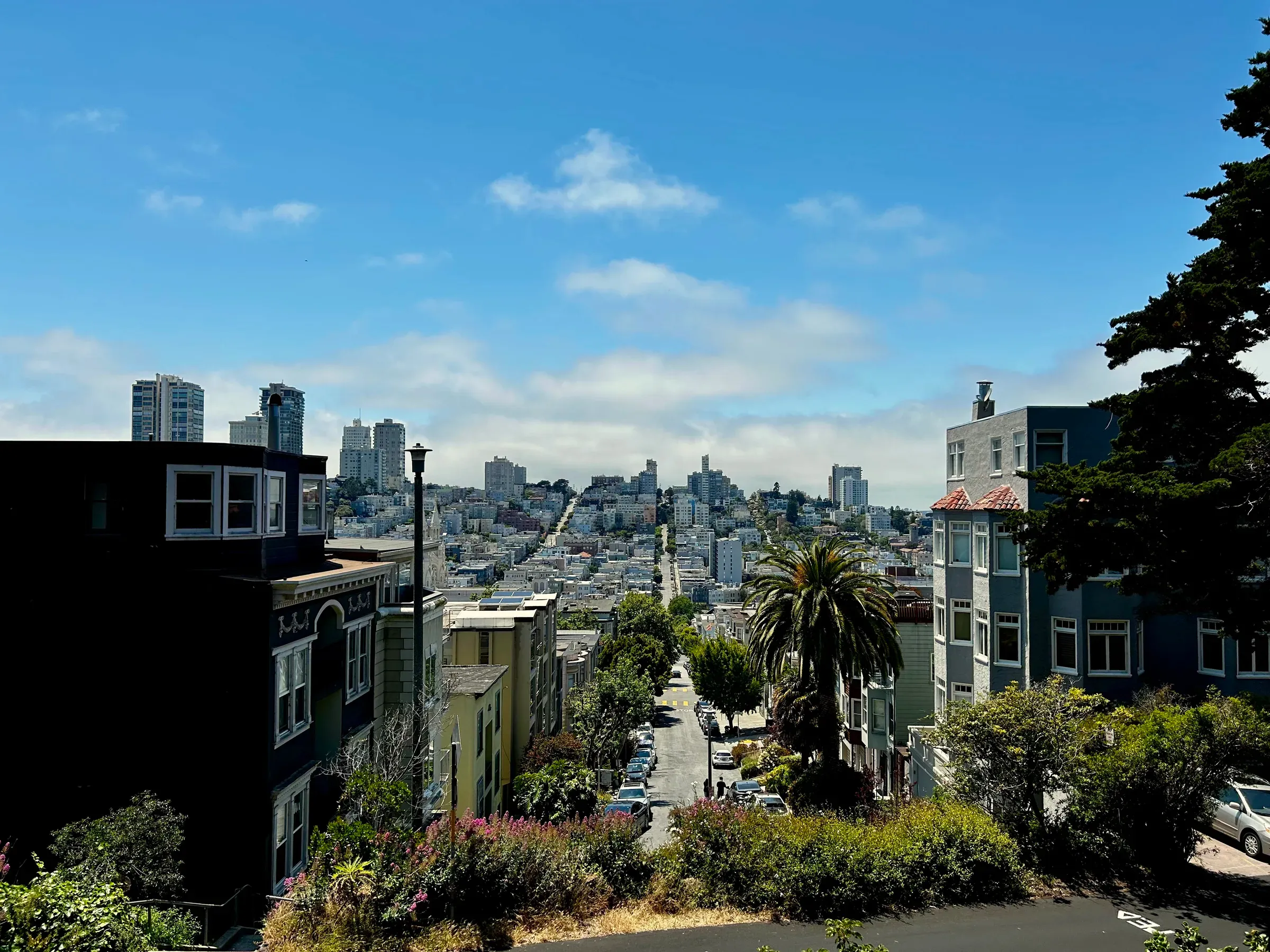
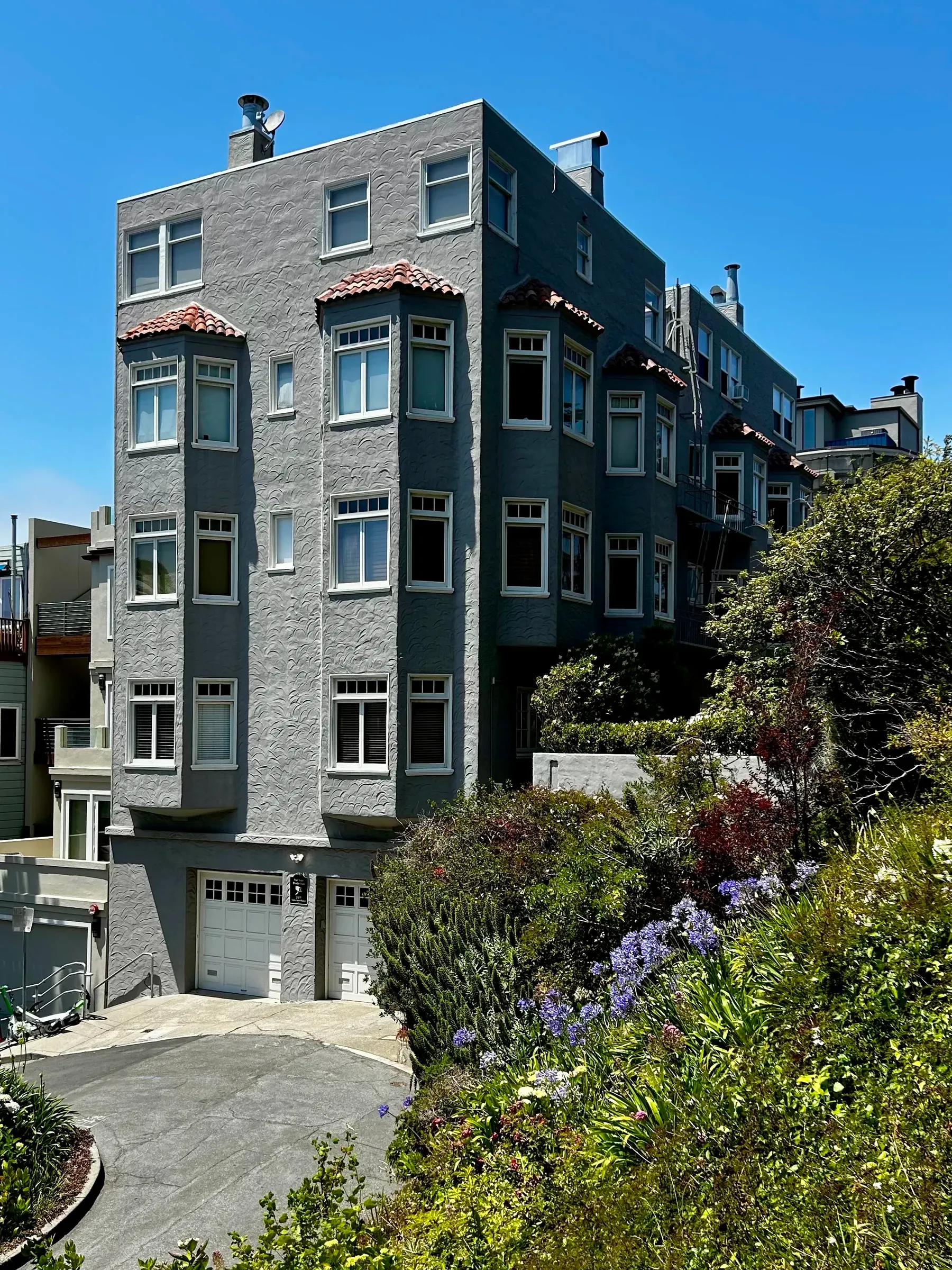
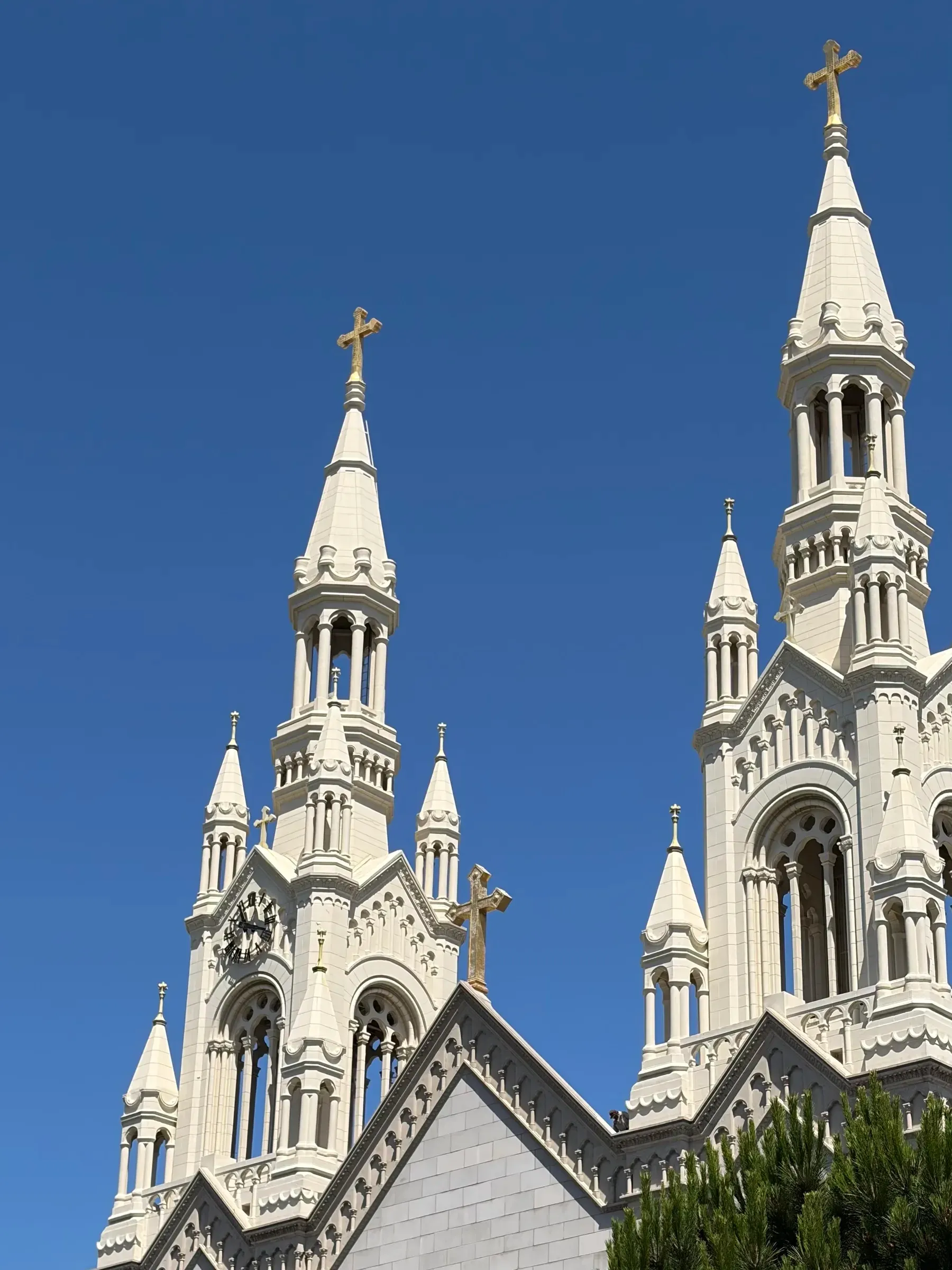
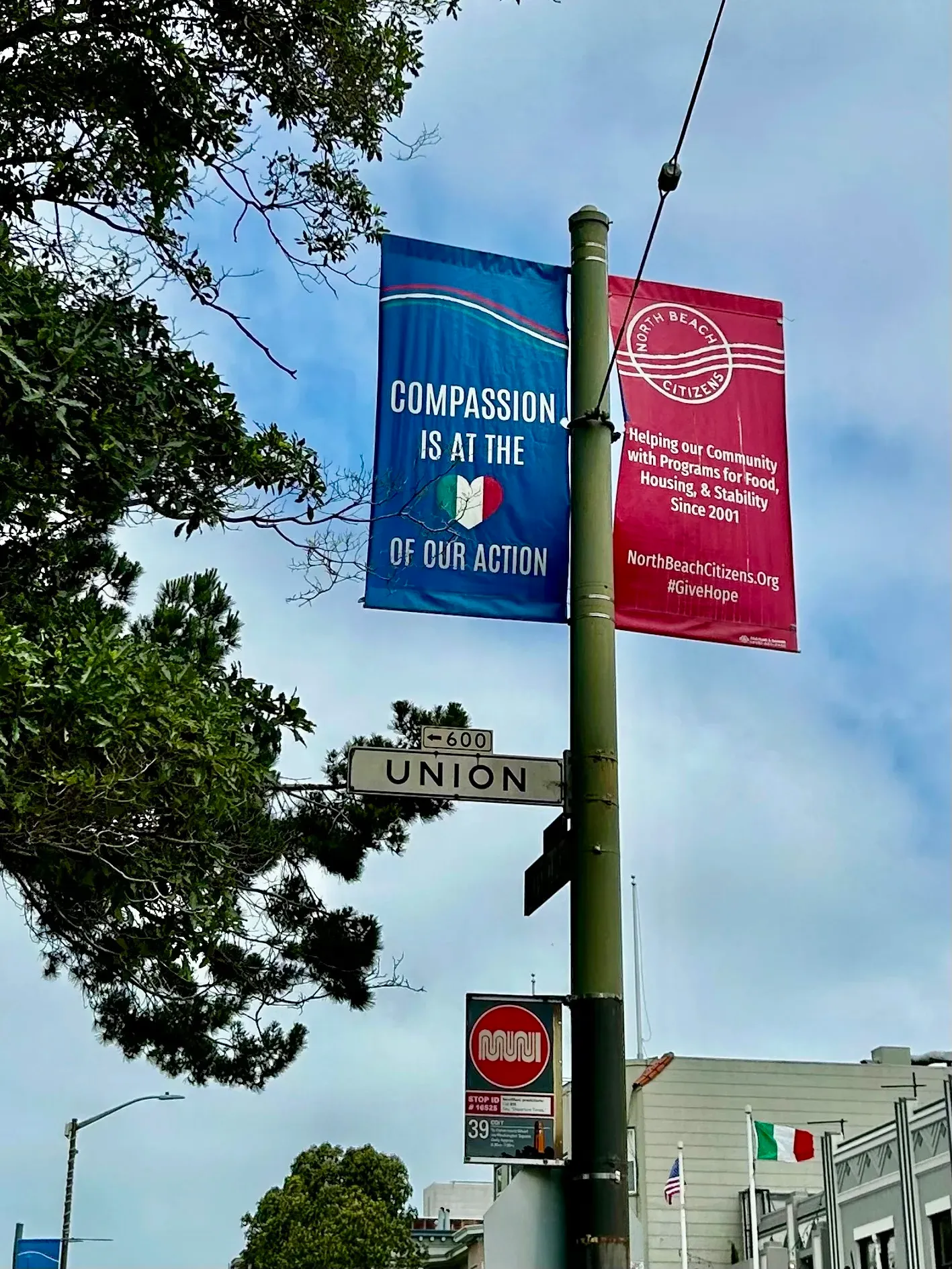
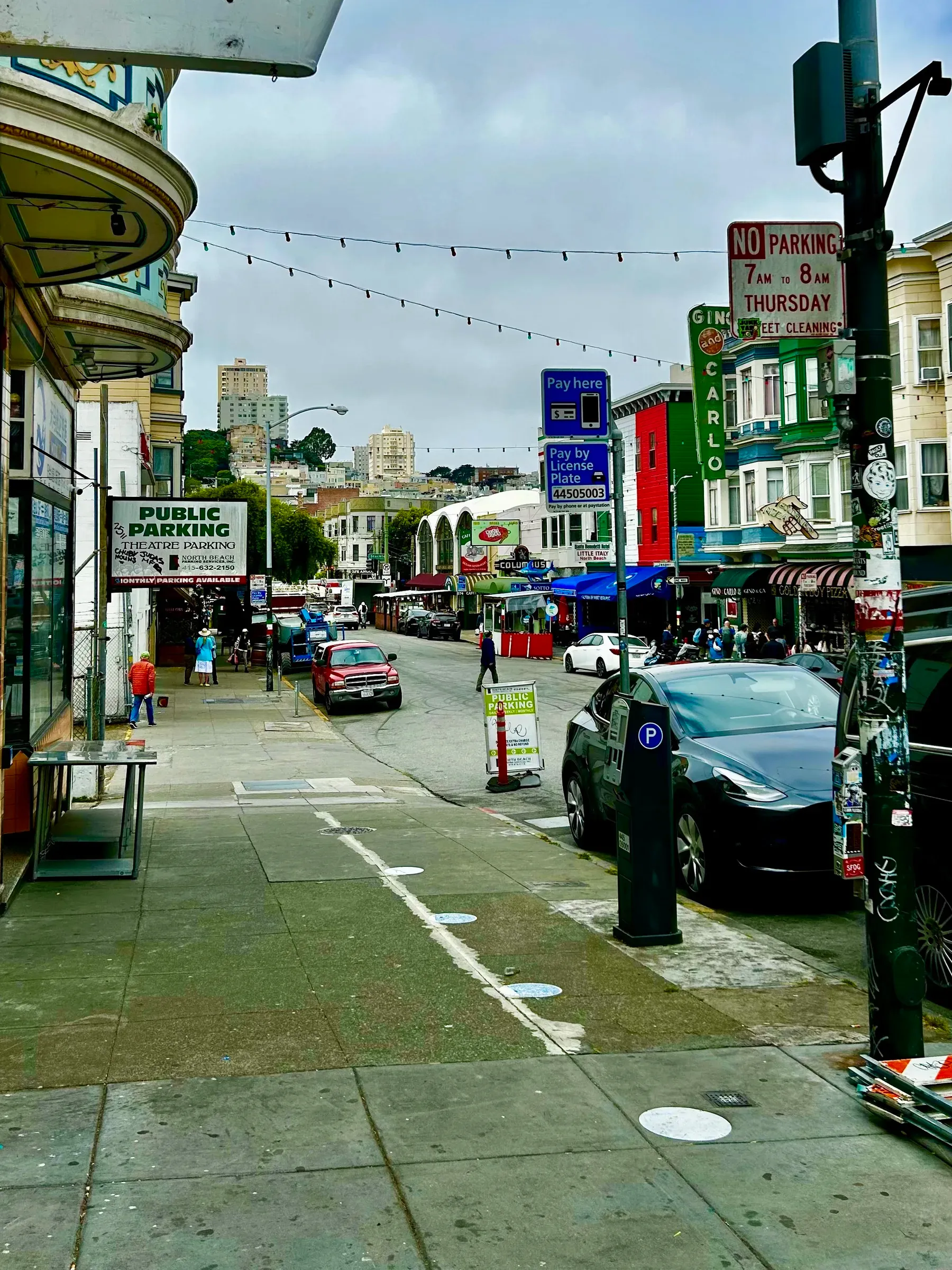
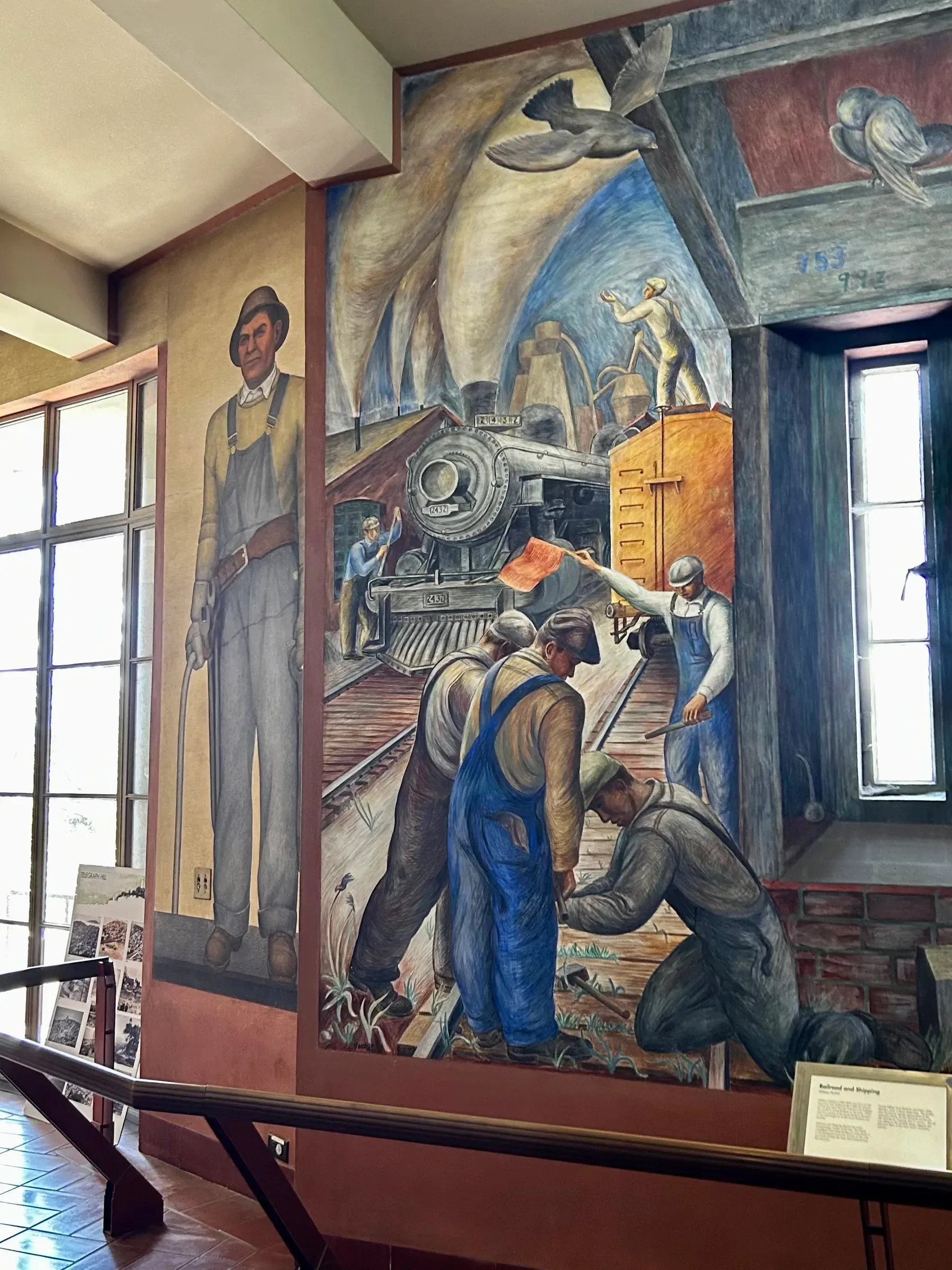
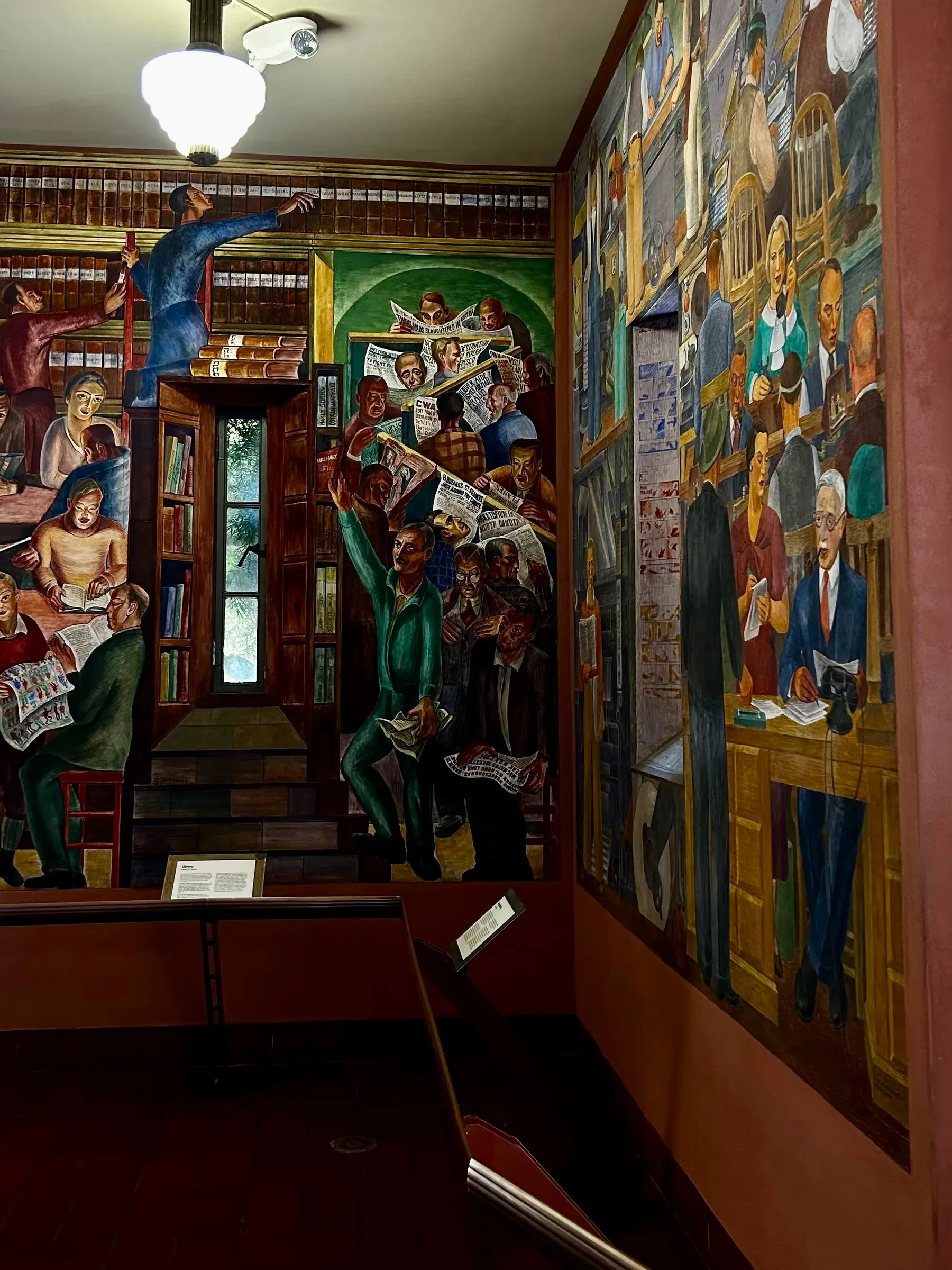
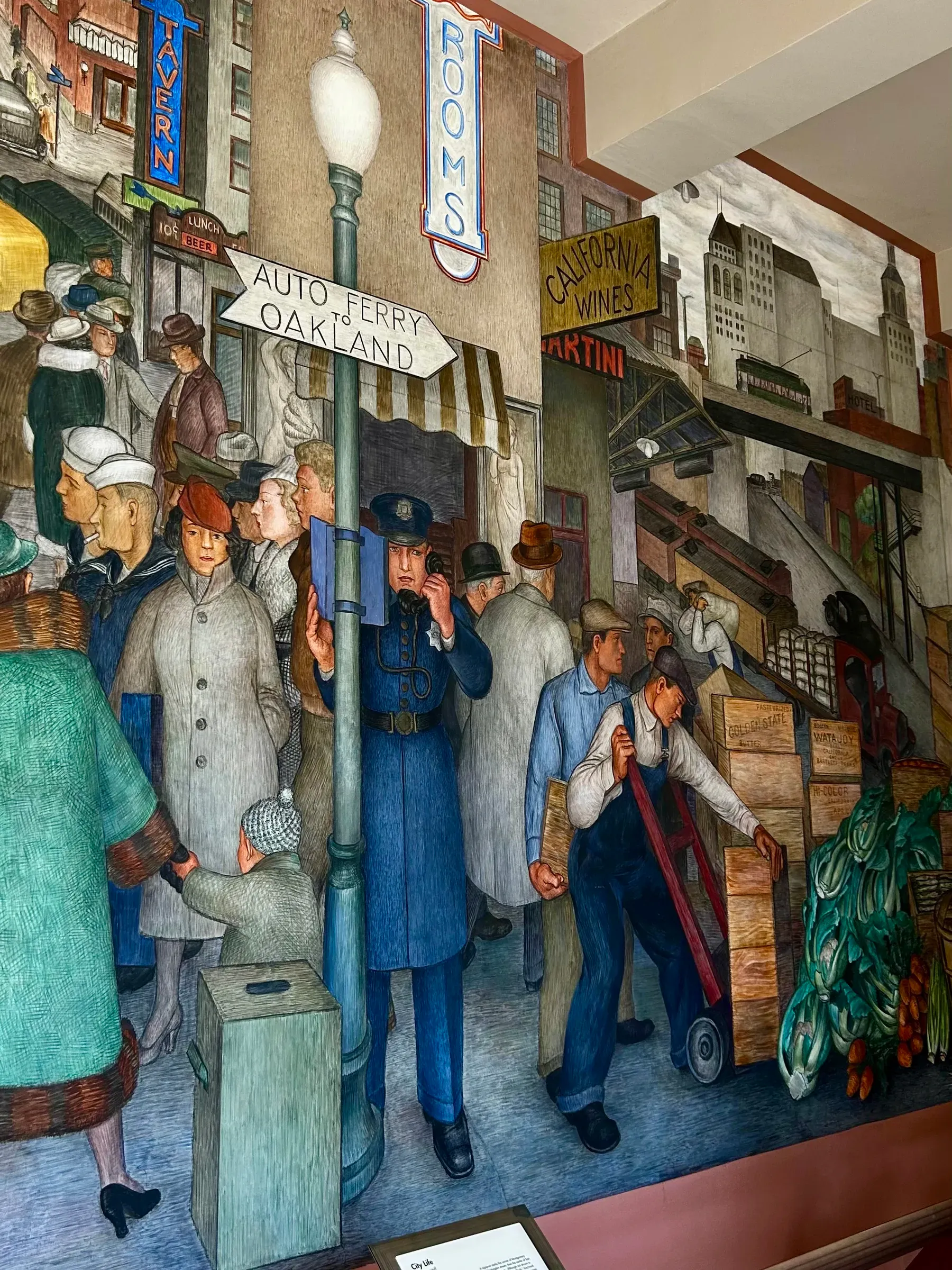
North Beach brings the walk into San Francisco's historic Italian quarter and Beat Generation refuge. Steep residential blocks, parked cars at impossible angles, and pastel-painted wooden facades lead toward Telegraph Hill. At the top of Filbert Street rises Coit Tower, an Art Deco cylinder erected in 1933 with funds bequeathed by eccentric heiress Lillie Hitchcock Coit to honor the city's volunteer firefighters. Inside the tower's base lie famous 1934 Public Works of Art Project murals depicting California labor and street scenes during the Great Depression. Filbert Street renders the neighborhood vertical without losing its human scale: everyday errands carried up stairs and garden paths that offer sudden panoramic glimpses of San Francisco Bay.
Pizza at Acquolina
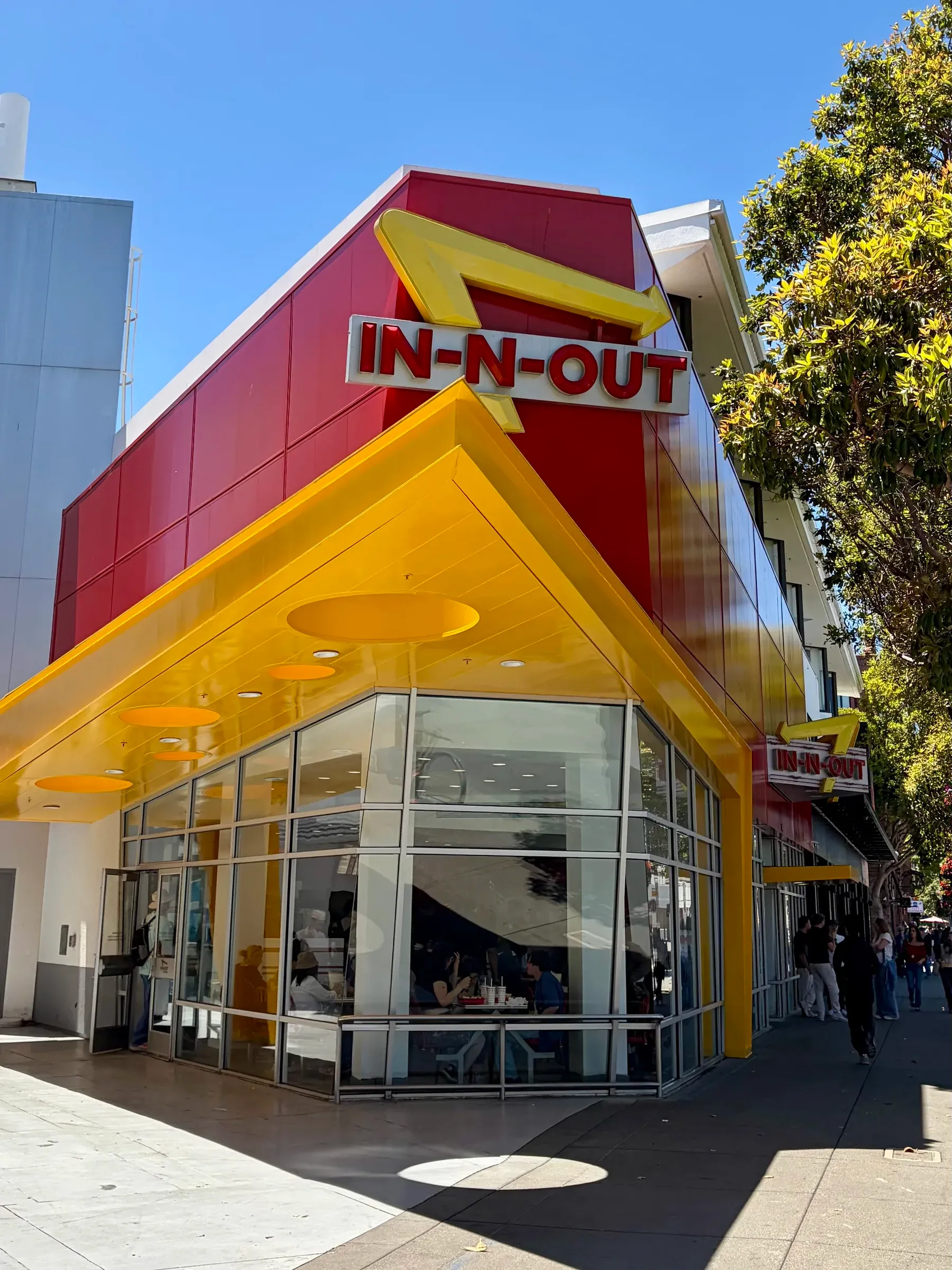
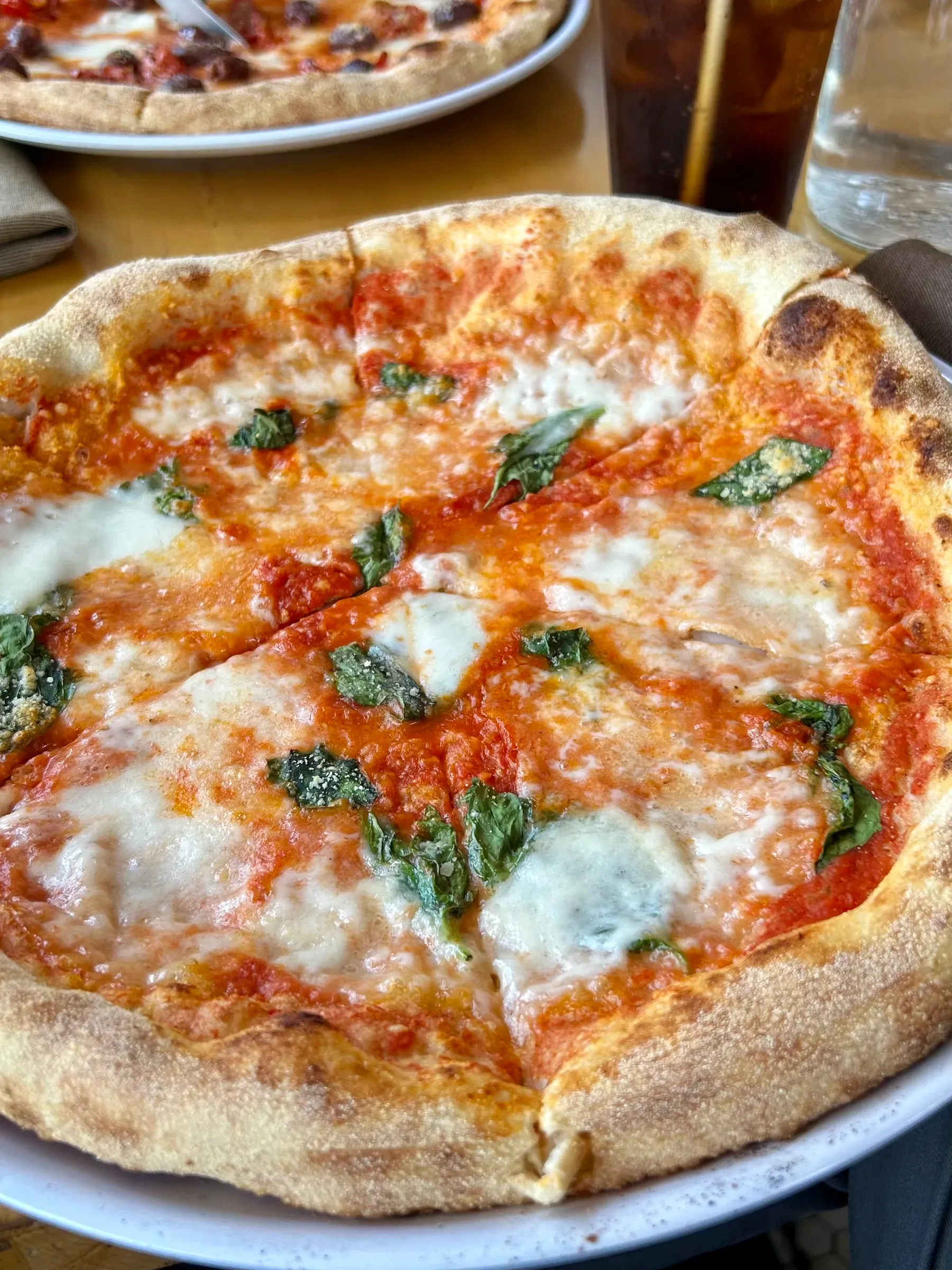
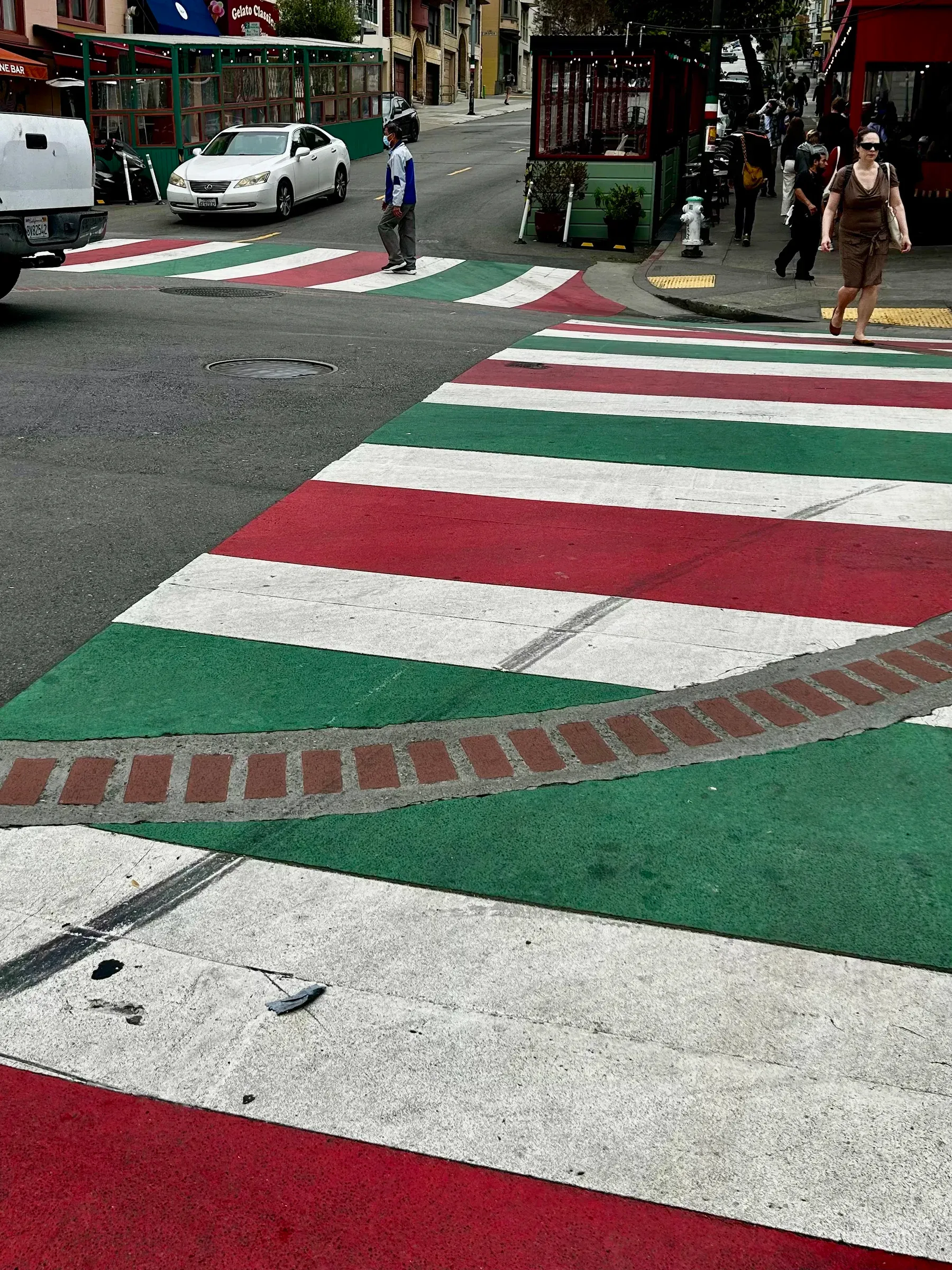
Acquolina sits at 1600 Stockton Street, across from Washington Square Park, in the middle of North Beach's Italian orbit. The restaurant describes itself as a Tuscan trattoria with regional Italian cooking, Italian and Californian wines, and Neapolitan-style pizza made with imported Italian flour and San Marzano tomato sauce. That makes the plate feel less like a break from the walk than part of it: church spires outside, park chatter at the corner, the red-white-green neighborhood palette, and a pizza that keeps the scene grounded in appetite. North Beach can be read through immigration, literature, and architecture, but sometimes its most direct sentence is crust, tomato, mozzarella, basil, and the street waiting uphill again.
Coit Tower
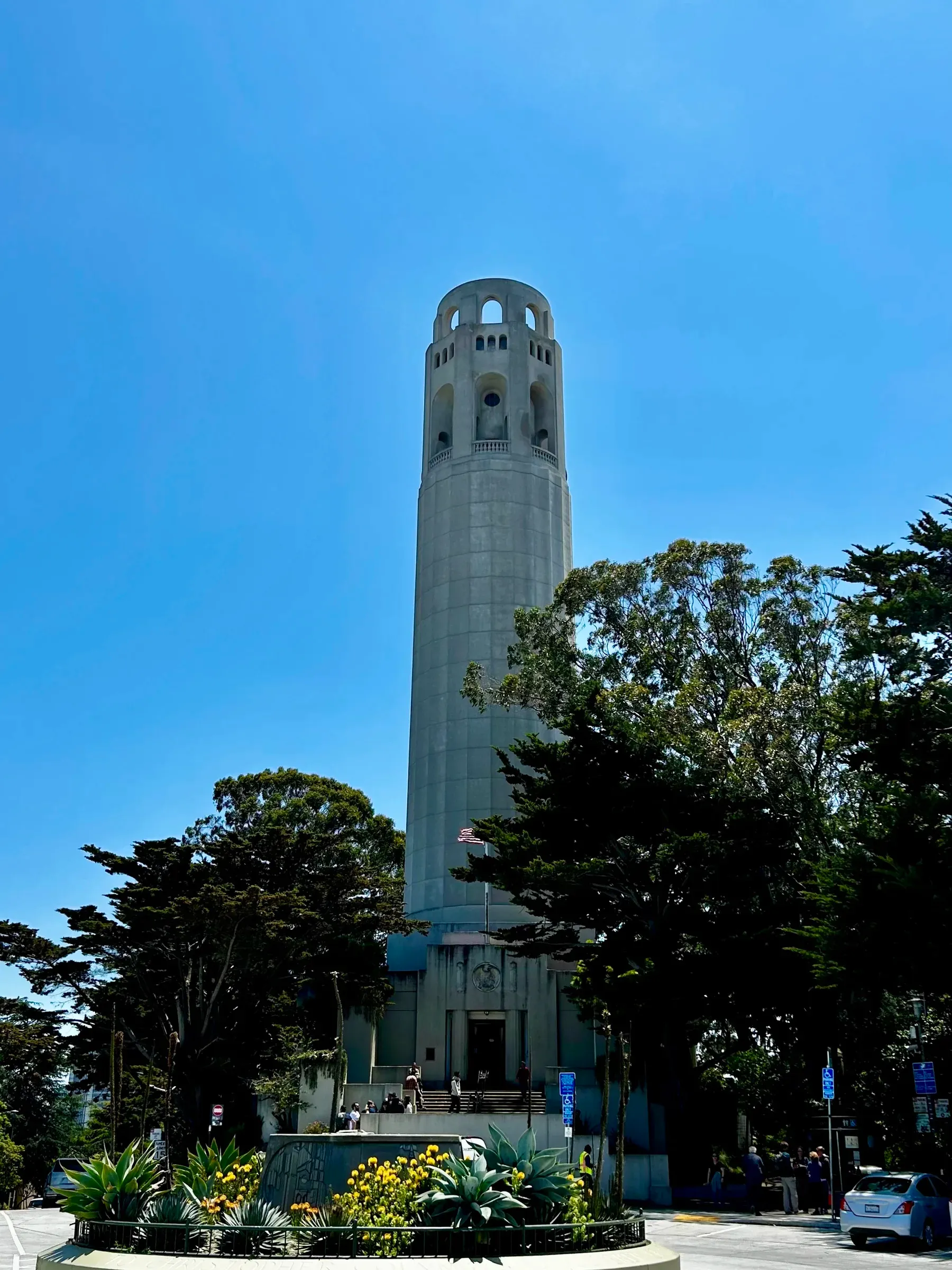
Coit Tower rises from Telegraph Hill as one of San Francisco's cleanest silhouettes: a fluted white concrete column completed in 1933 and funded by Lillie Hitchcock Coit's bequest to beautify the city she loved. The common story says it was shaped like a fire-hose nozzle, a tempting myth given Coit's devotion to volunteer firefighters, but the city's own account says otherwise. Inside the base, the real surprise is horizontal rather than vertical: murals painted in 1934 by Public Works of Art Project artists, filled with California labor, streets, machinery, libraries, farms, and Depression-era politics. Outside, the tower keeps slipping between trees and rooftops; inside, it turns into a compact civic archive.
Pier 39
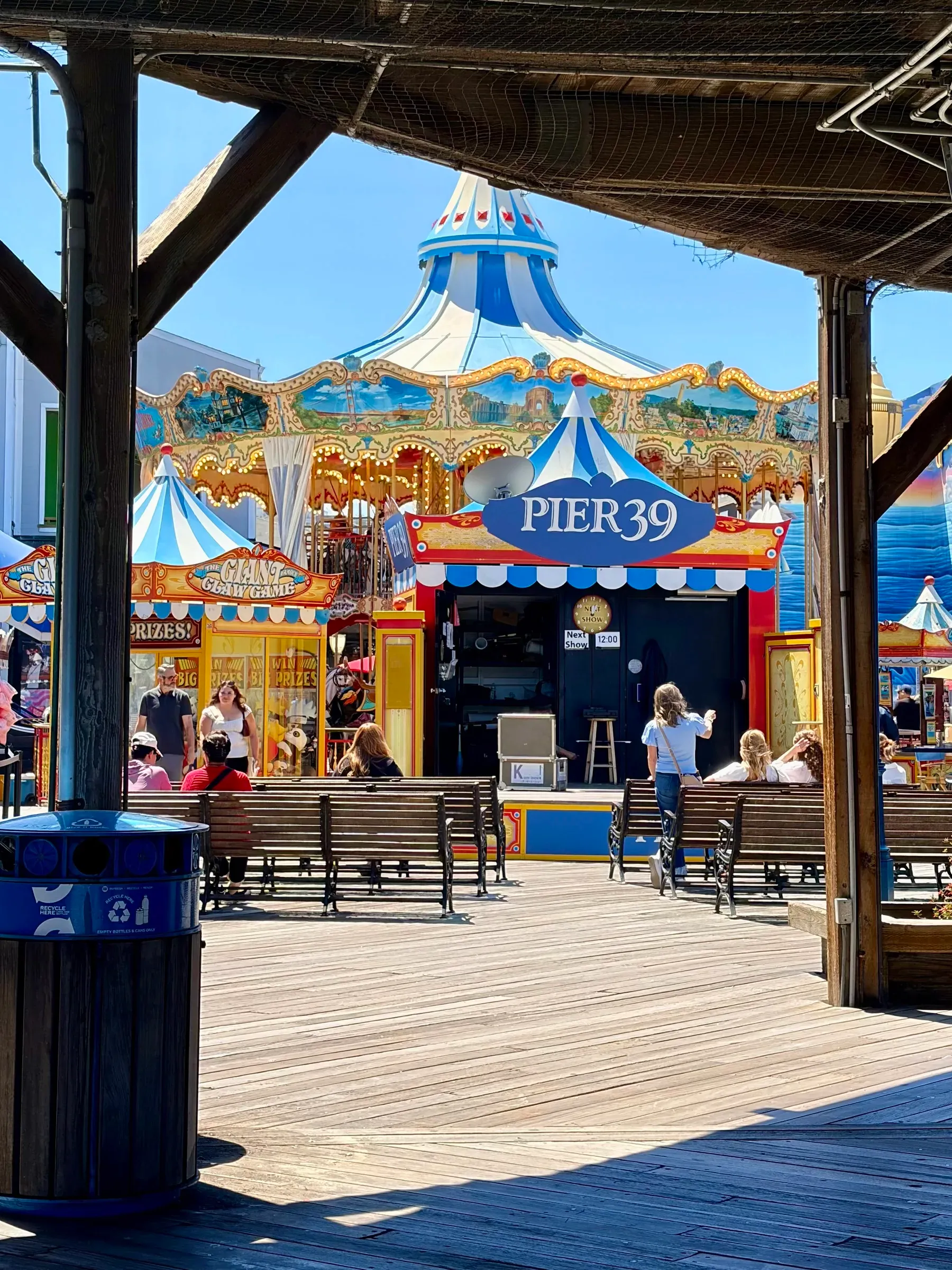
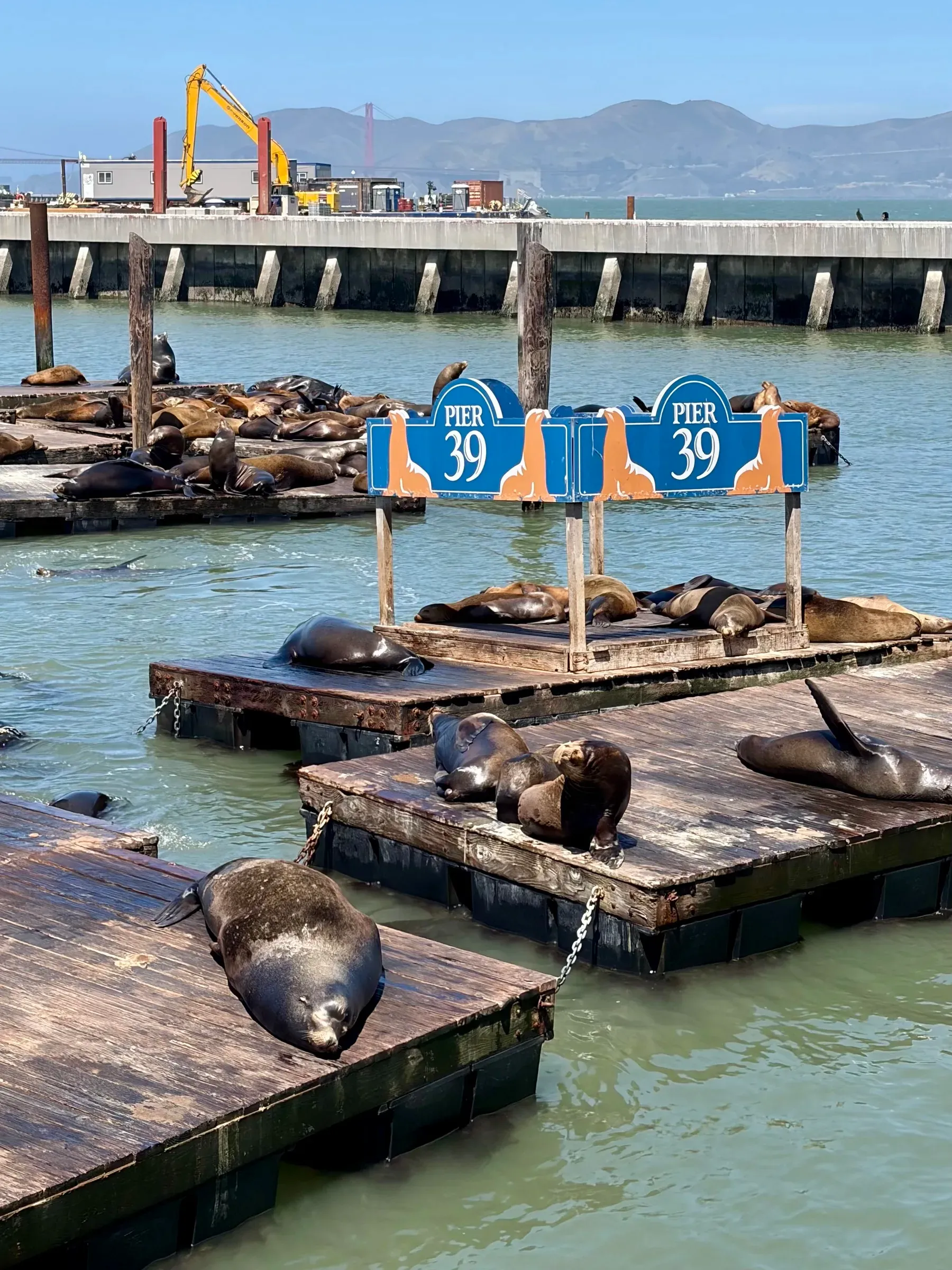
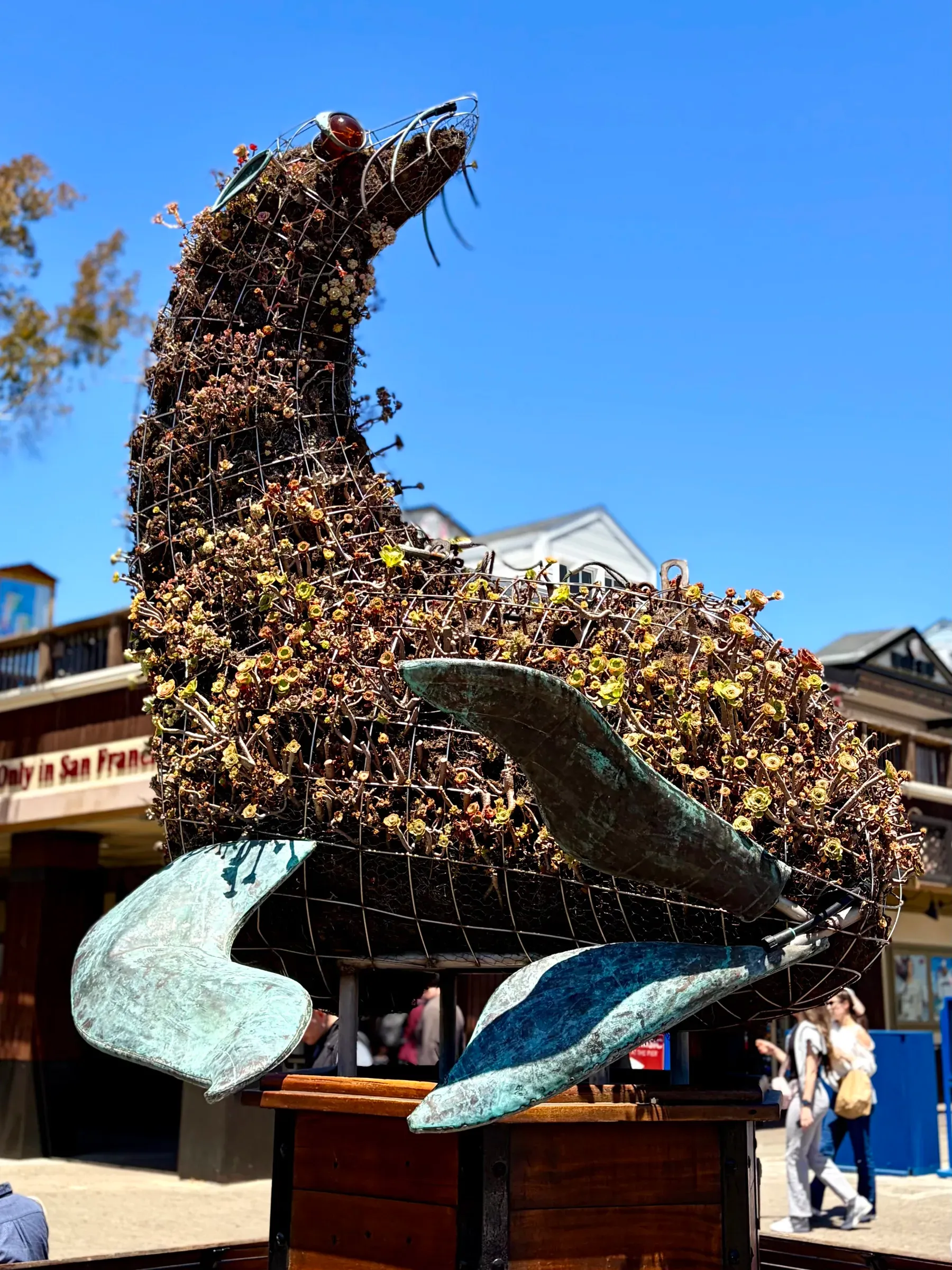
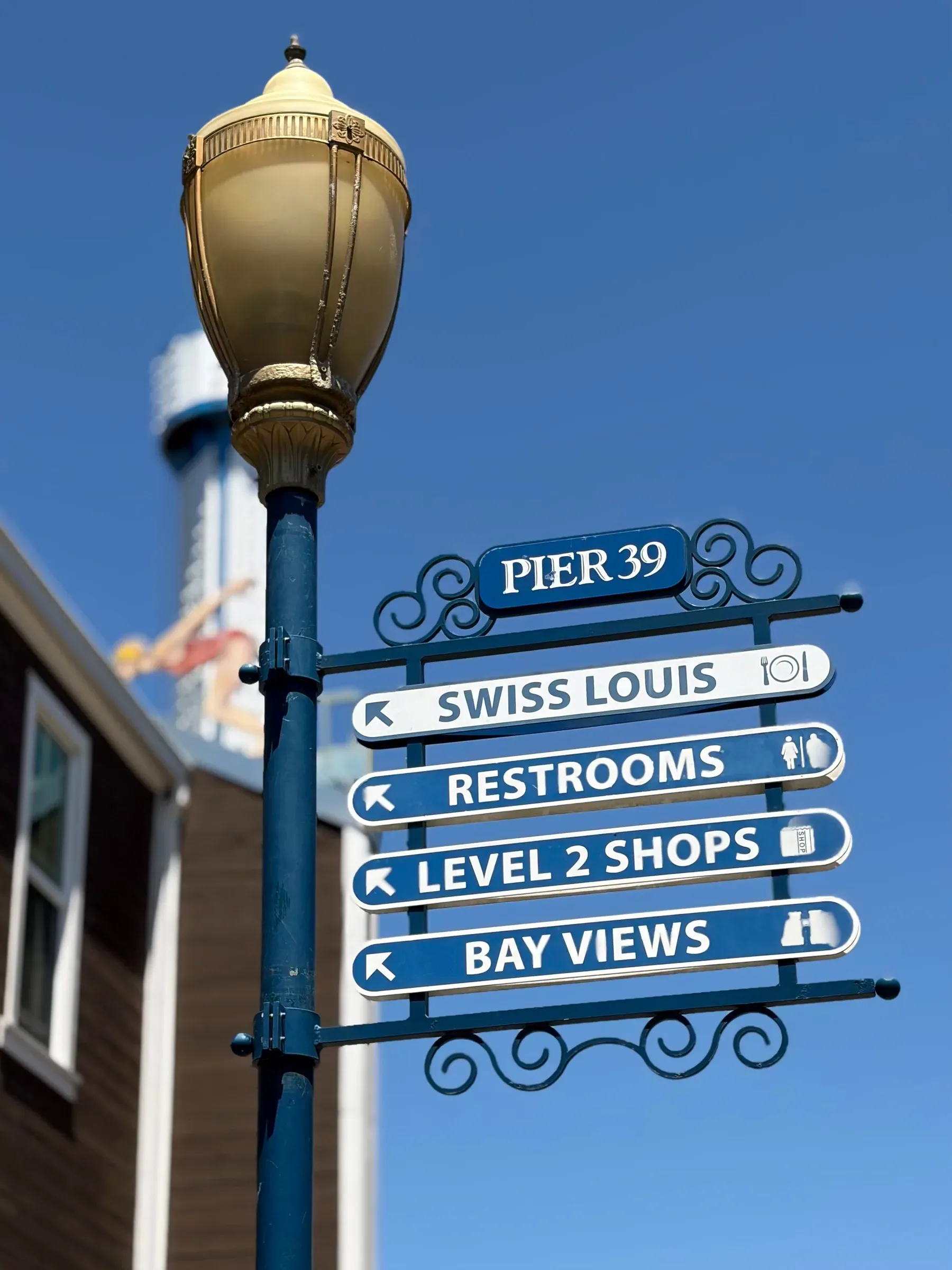
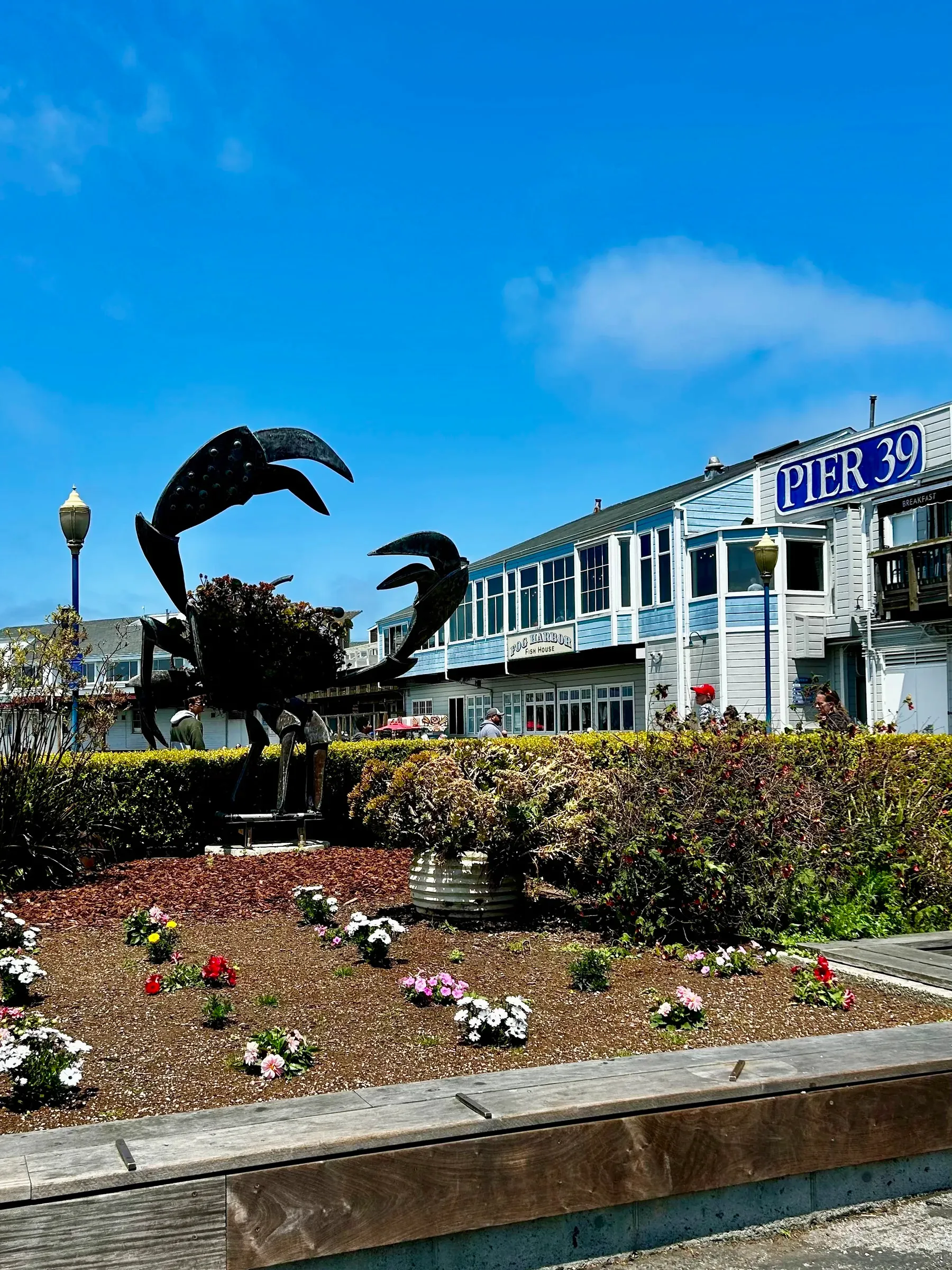
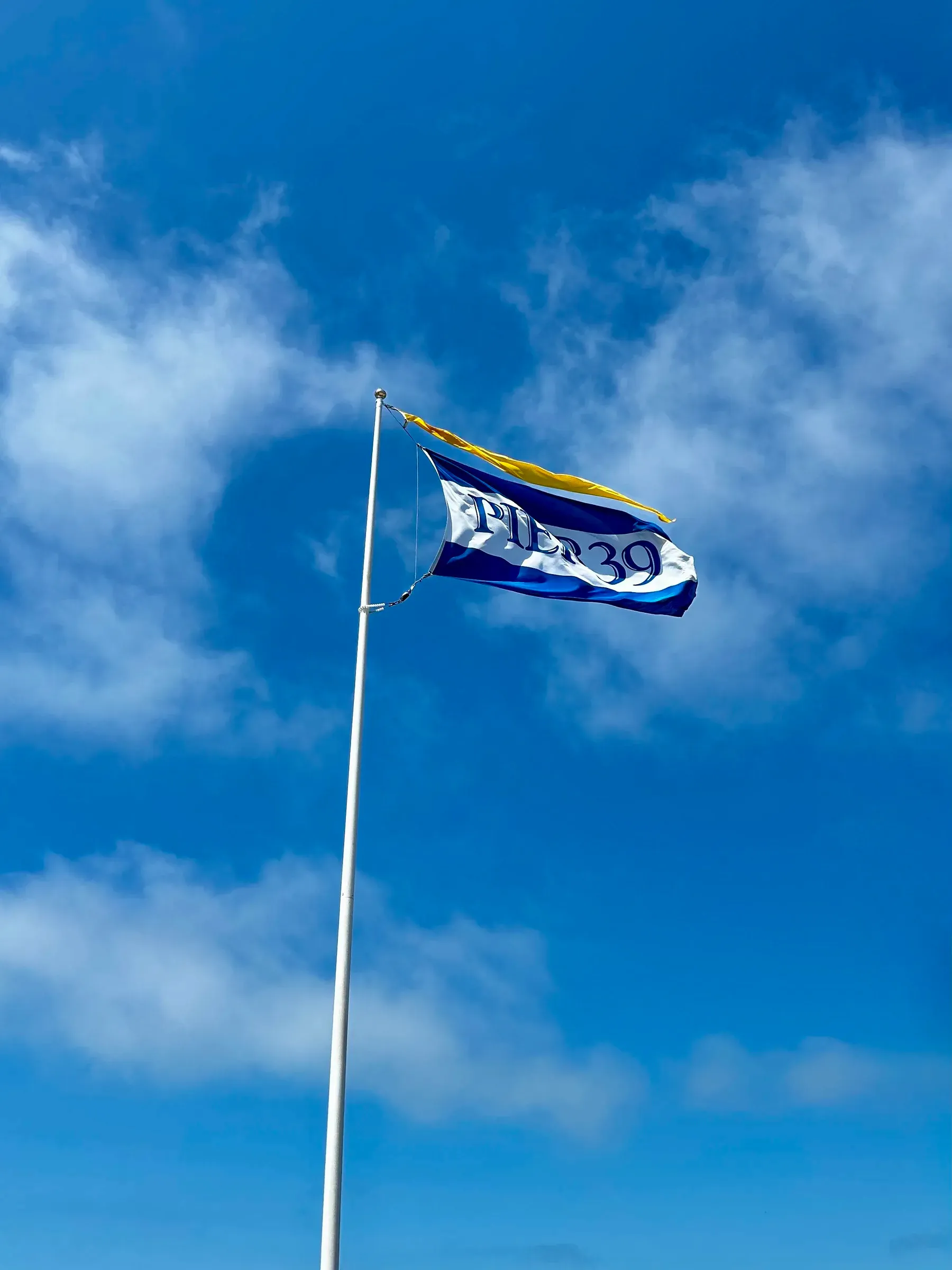
Pier 39 combines tourist boardwalk energy with the authentic rhythms of a working maritime harbor. The pier gained global fame in January 1990 following the 1989 Loma Prieta earthquake, when wild California sea lions began taking over the wooden floats at K-Dock, attracted by herring runs and shelter from marine predators. Marine biologists advised letting the sea lions stay, and today as many as 1,700 sea lions haul out onto the docks during peak season, their barks echoing across the waterfront. Behind the souvenir shops and wooden walkways, active fishing boats, ferry slips, and open bay water remind you that this is still a functioning waterfront edge where San Francisco meets the tides.
Wyland's Whaling Wall
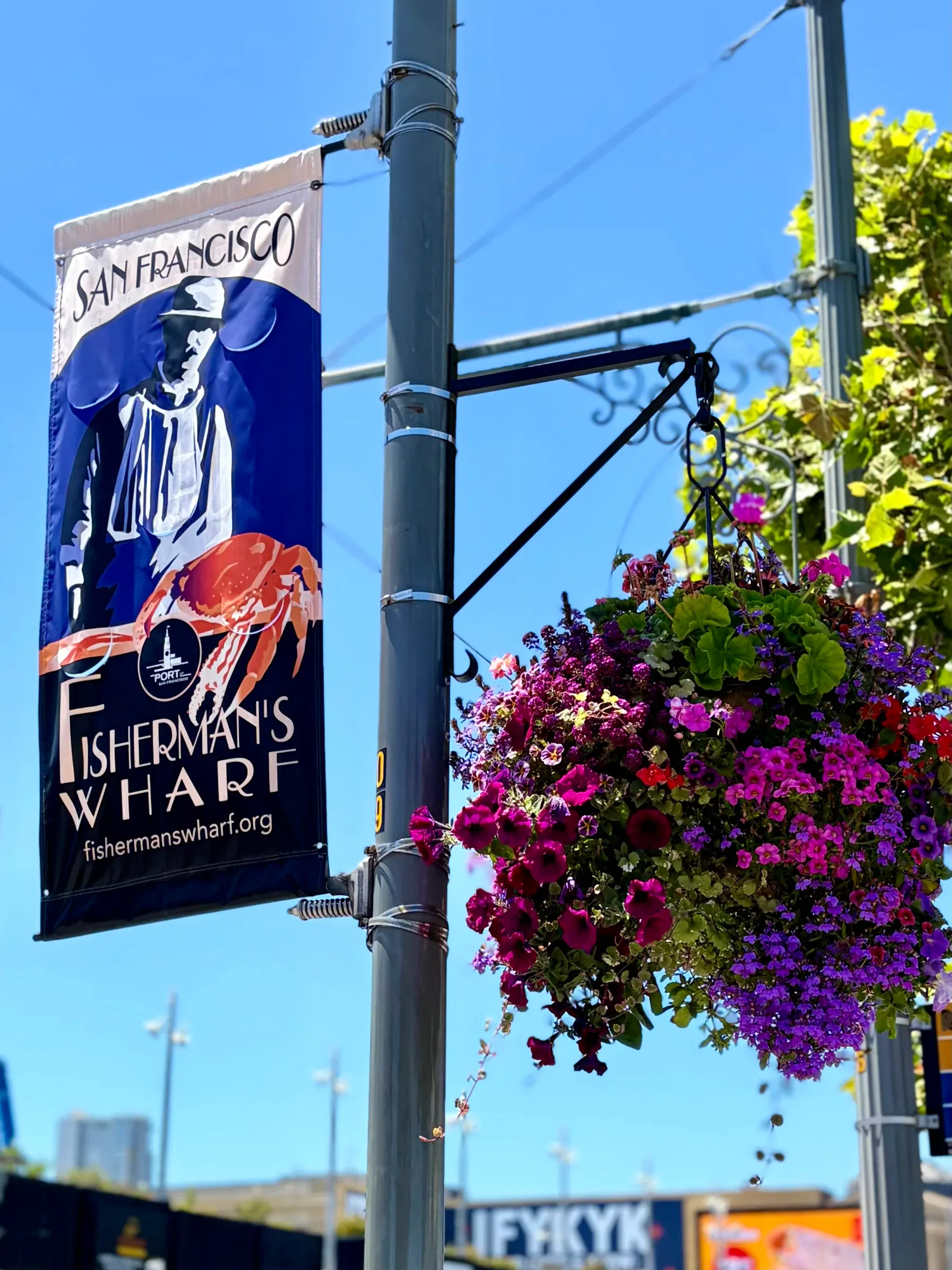
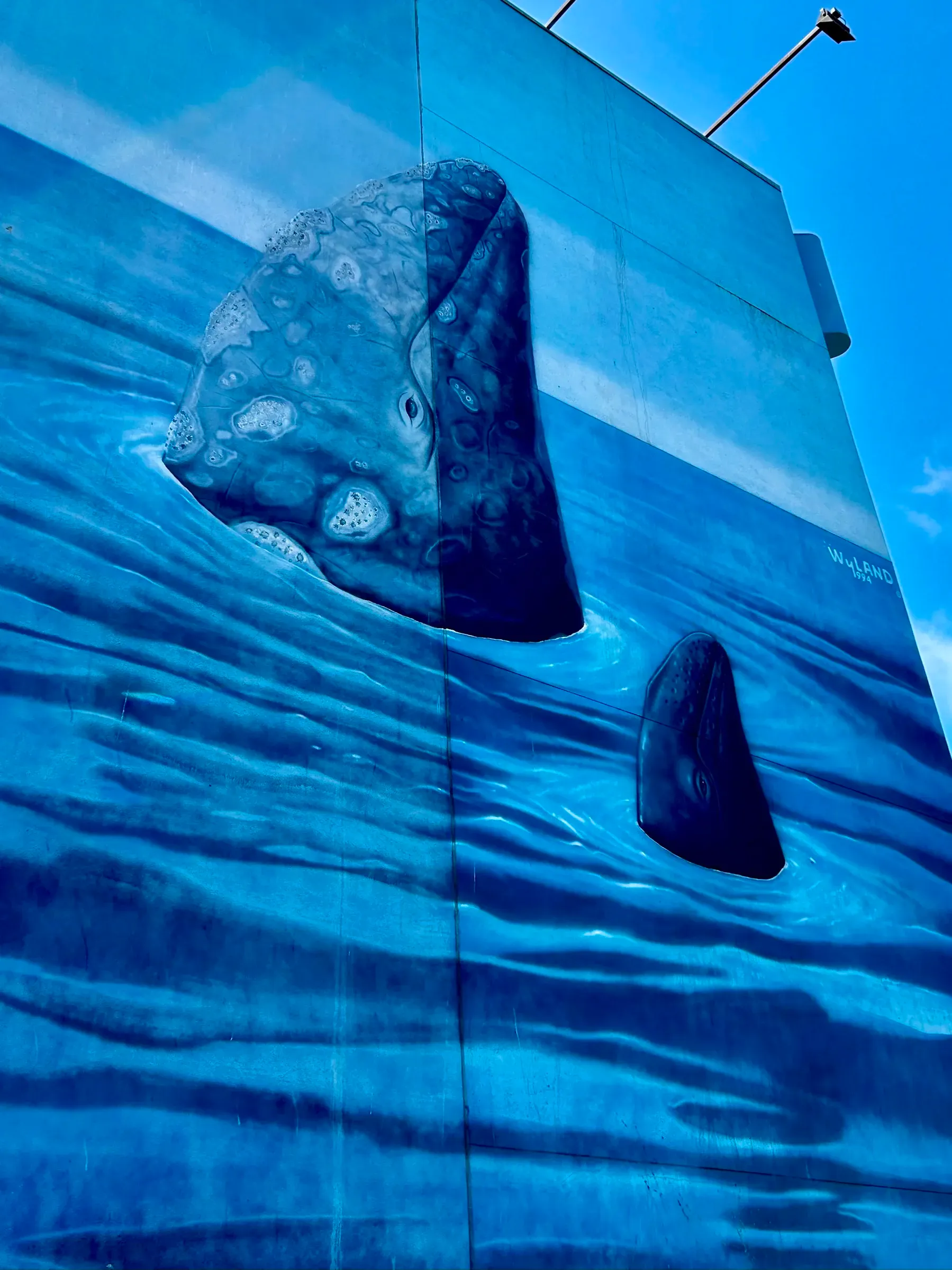
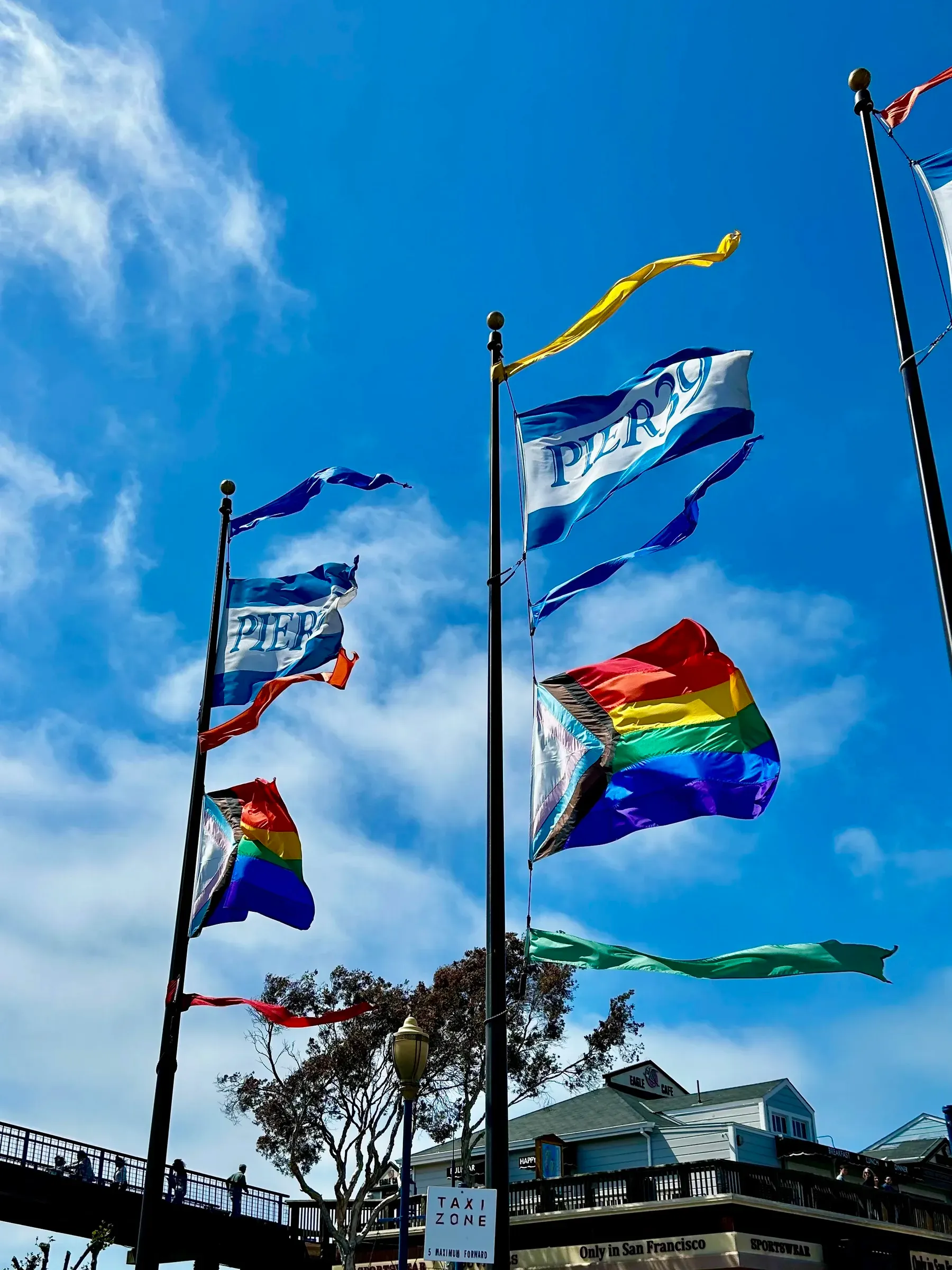
Wyland's Whaling Wall near Pier 39 belongs to the artist's global series of large marine-life murals, painted as public-scale reminders that cities are connected to oceans even when the street feels loud and commercial. San Francisco has two Pier 39 entries in the series: Spyhopping Gray Whale at the parking structure entrance and Grays off the San Francisco Coast by the Aquarium of the Bay, both dedicated on the same September day. The whale works well here because the surrounding waterfront is already layered with spectacle and ecology: sea lions at K-Dock, crab signs, ferries, souvenir flags, Pride colors, and the bay beyond the railings. It is a tourist corner, but the mural pulls the eye back to migration, scale, and open water.
Clam Chowder at Cioppino's
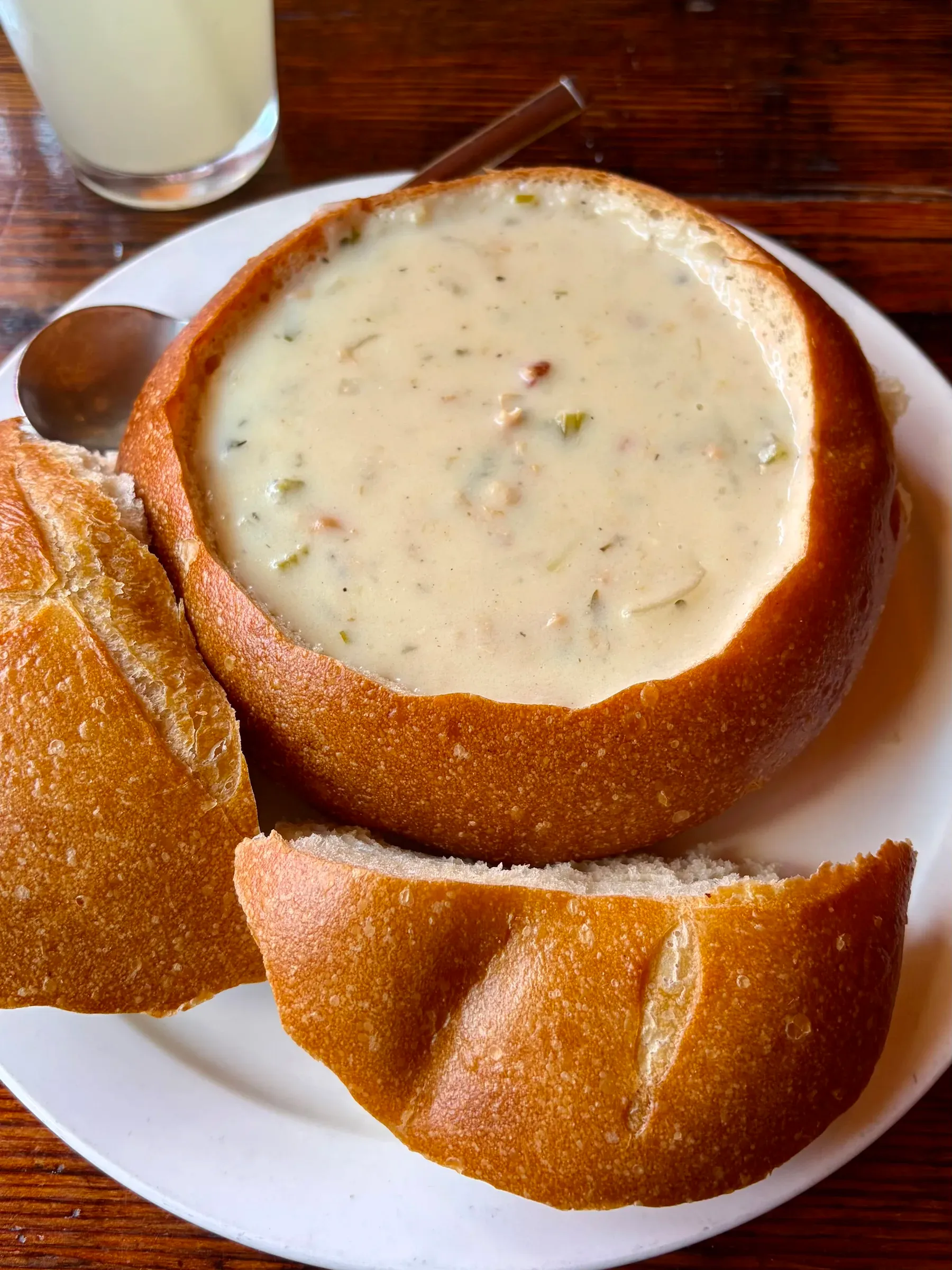
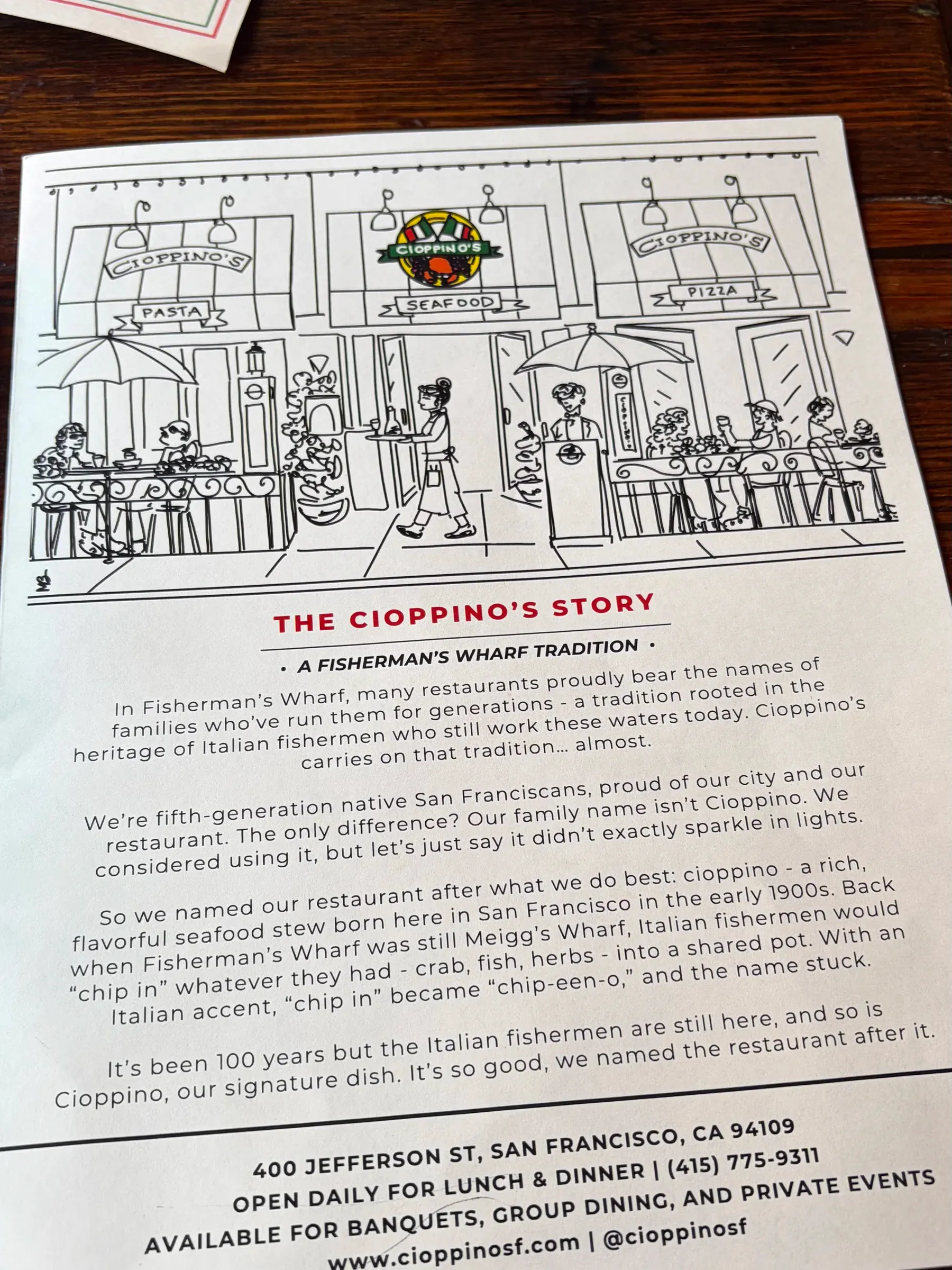
Sitting down at Cioppino's, located at 400 Jefferson Street in the heart of Fisherman's Wharf, the focus turns entirely to a steaming bowl of clam chowder served in a hollowed-out sourdough bread bowl. Run by a family of fifth-generation San Franciscans, Cioppino's sits steps from the historic docks. While the restaurant takes its name from the city's famous seafood stew, its clam chowder in sourdough is pure San Francisco comfort food: rich, velvety cream loaded with sweet clams, diced potatoes, and herbs, cradled inside a tangy sourdough loaf. San Francisco sourdough owes its distinct taste to wild local sourdough starters (*Lactobacillus sanfranciscensis*) cultivated by Gold Rush bakers like Boudin since 1849. Tearing into the crusty, soup-soaked sourdough wall at a table on Jefferson Street is a classic waterfront ritual, connecting food, fog, and maritime history in one dish.
The Golden Gate
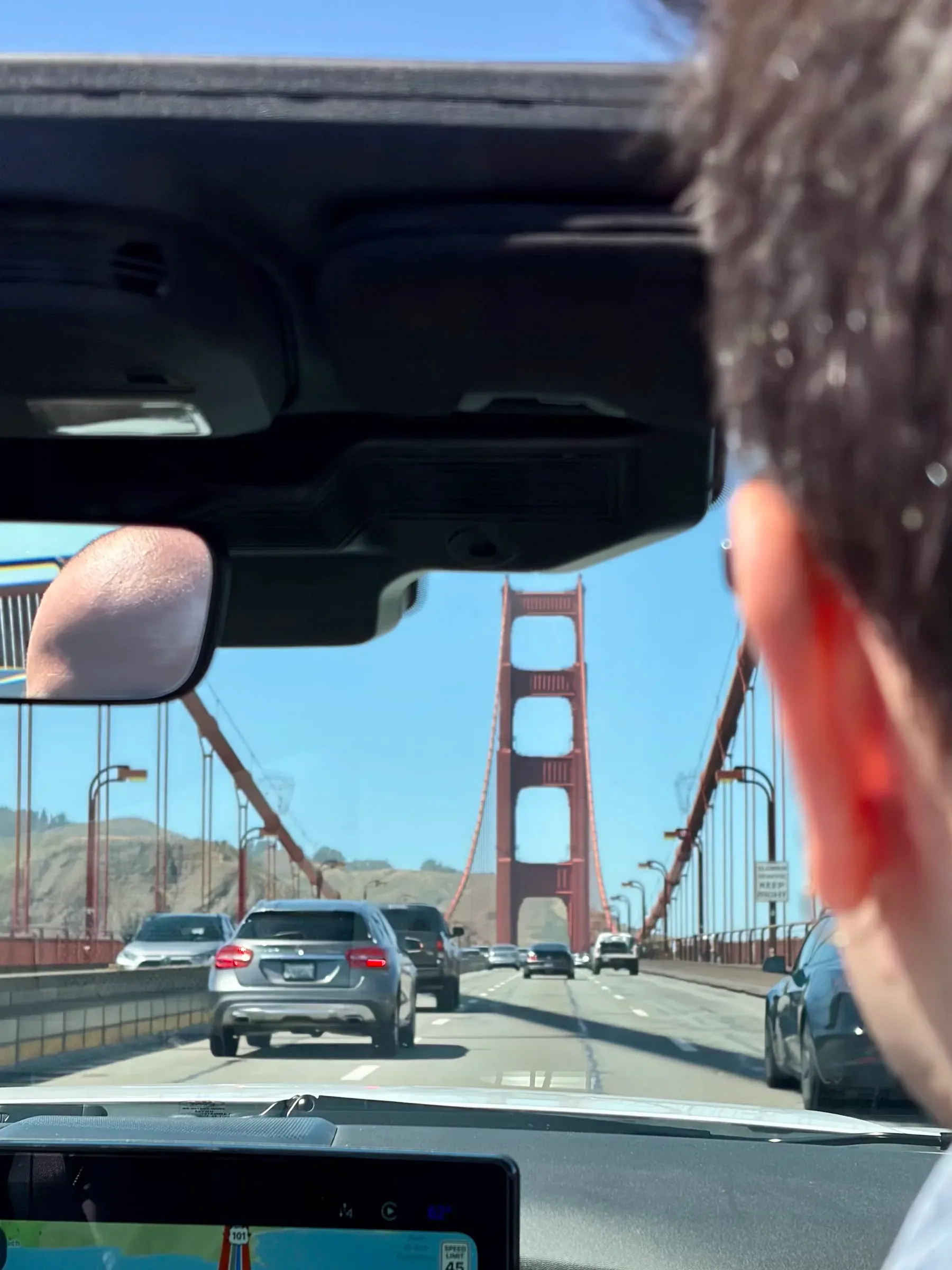
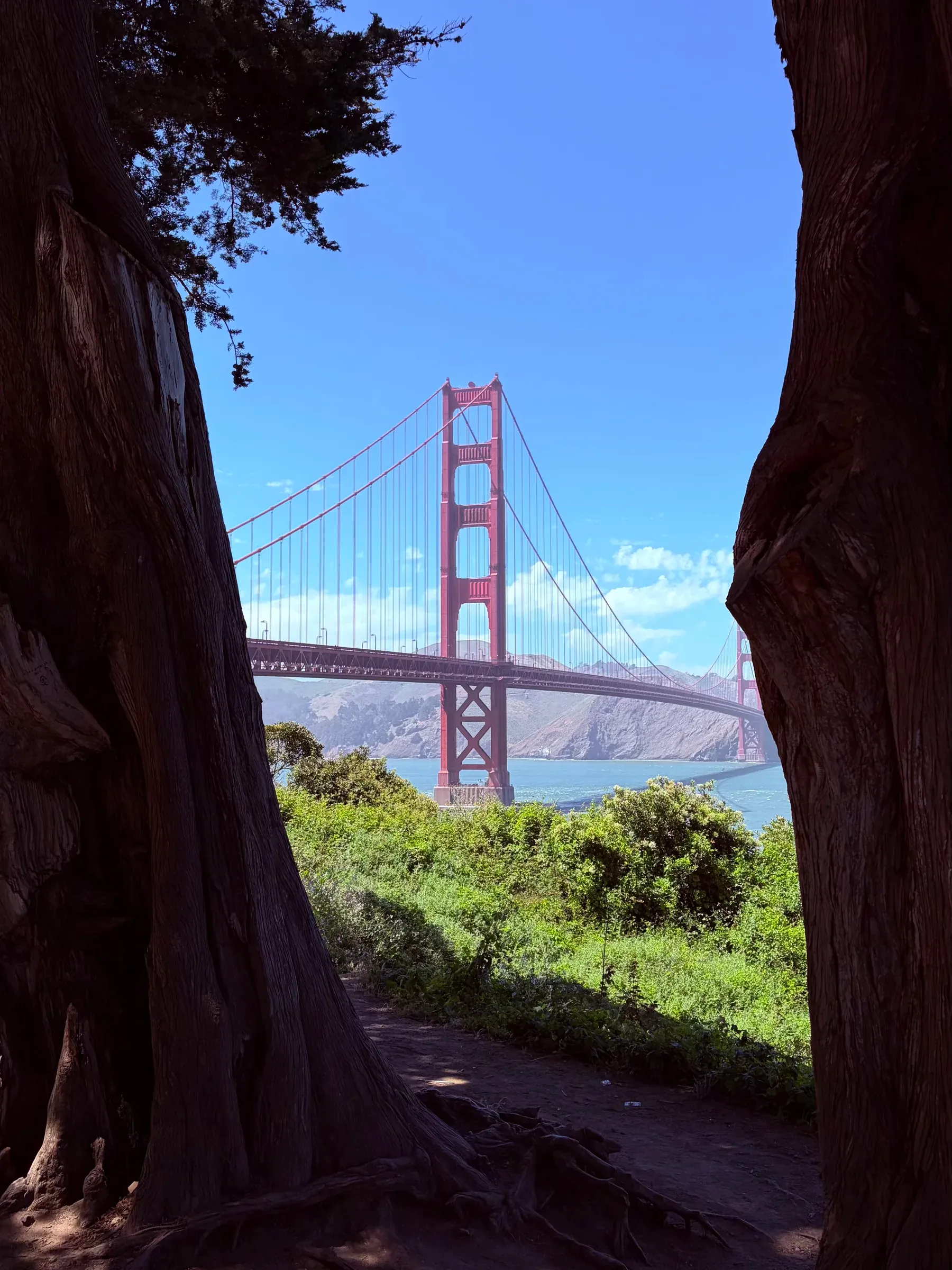
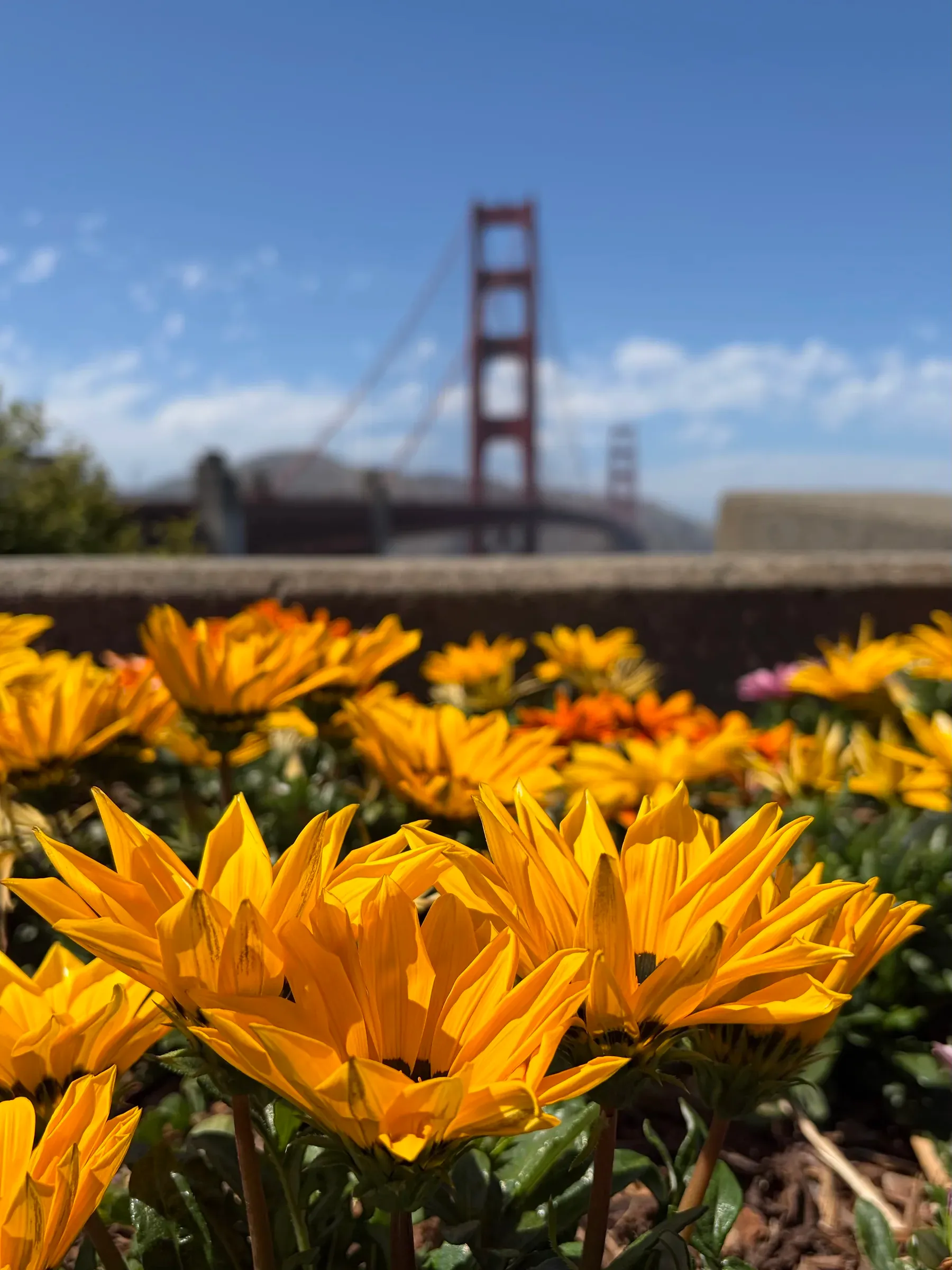
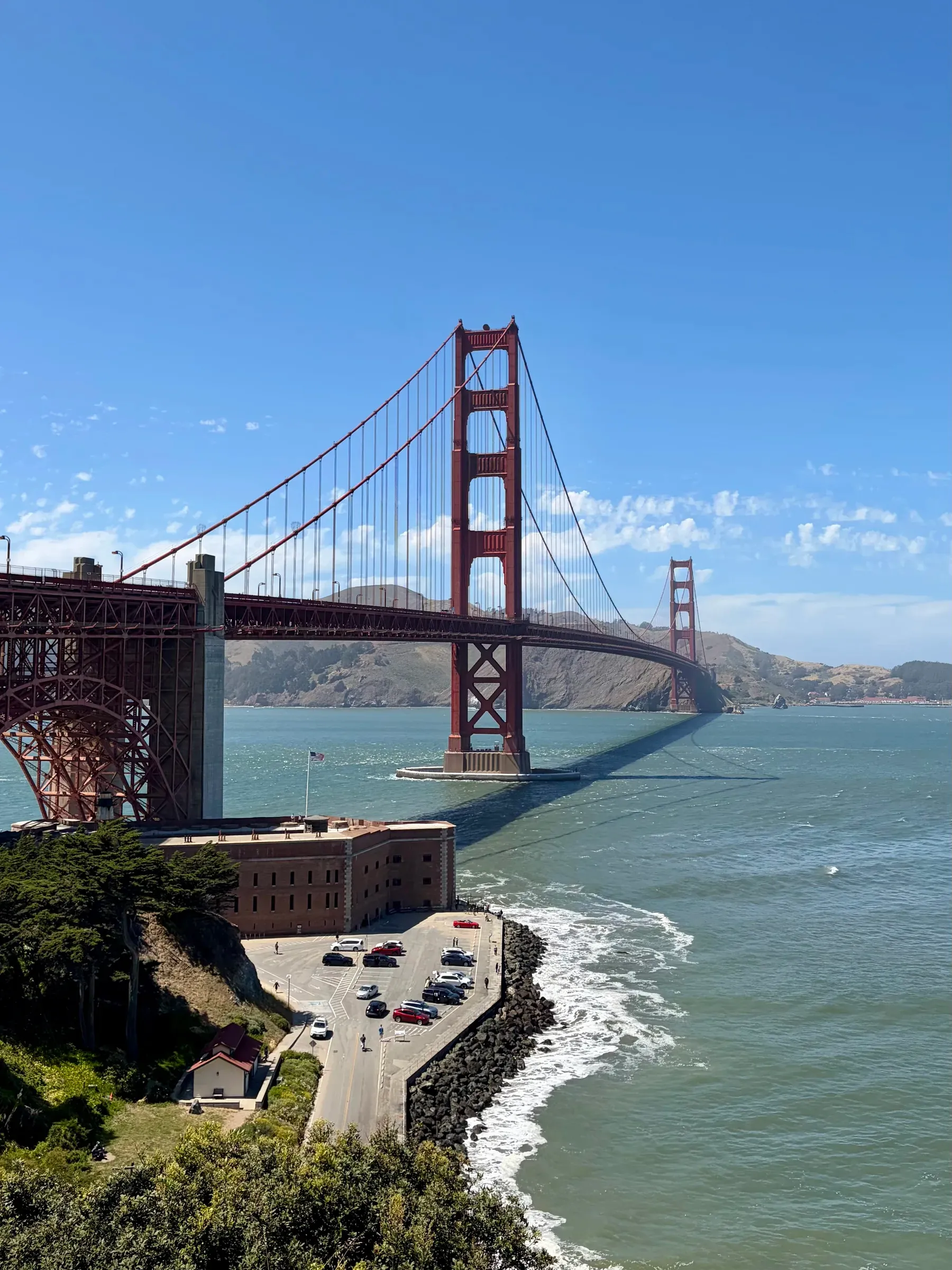
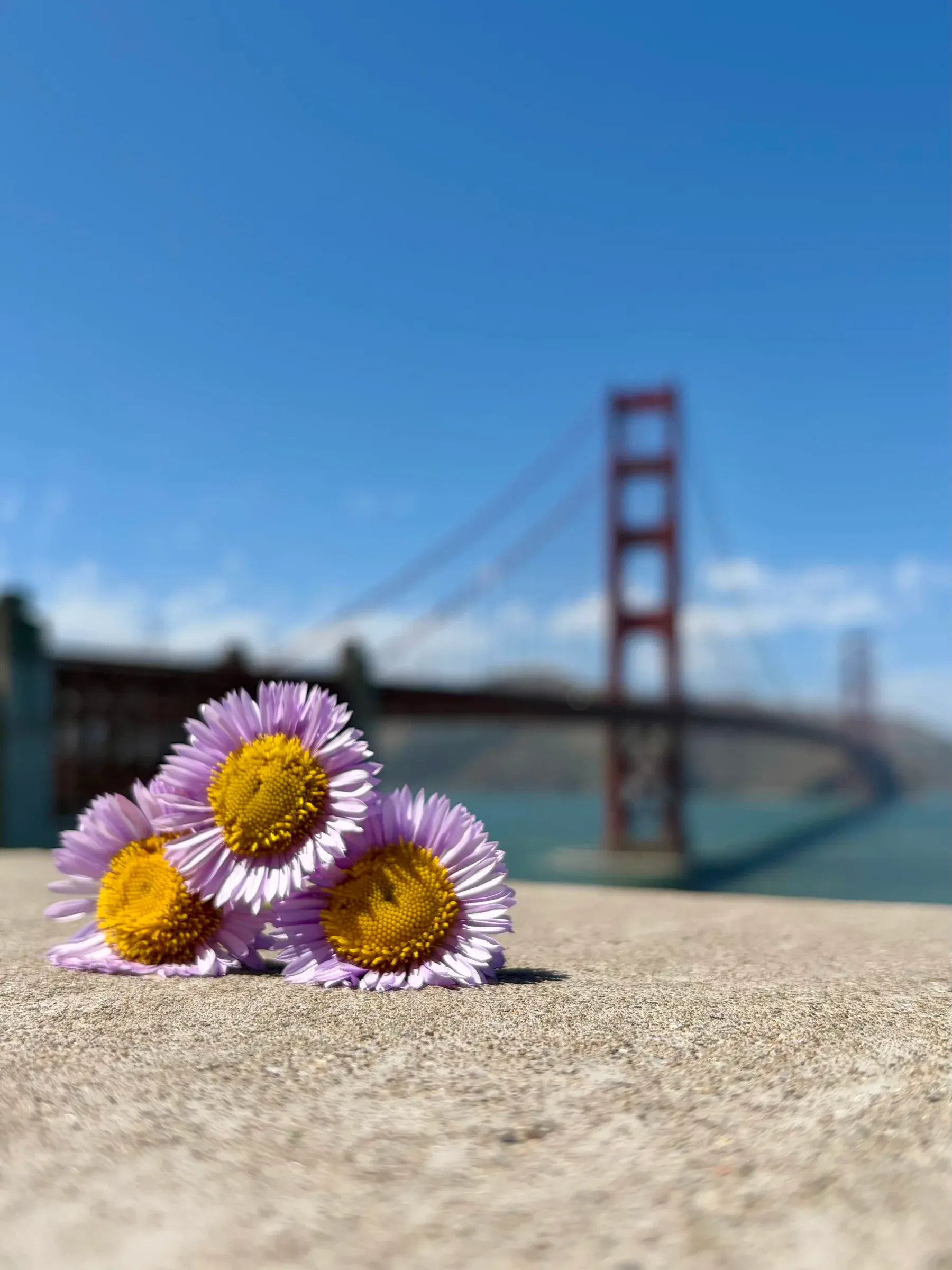
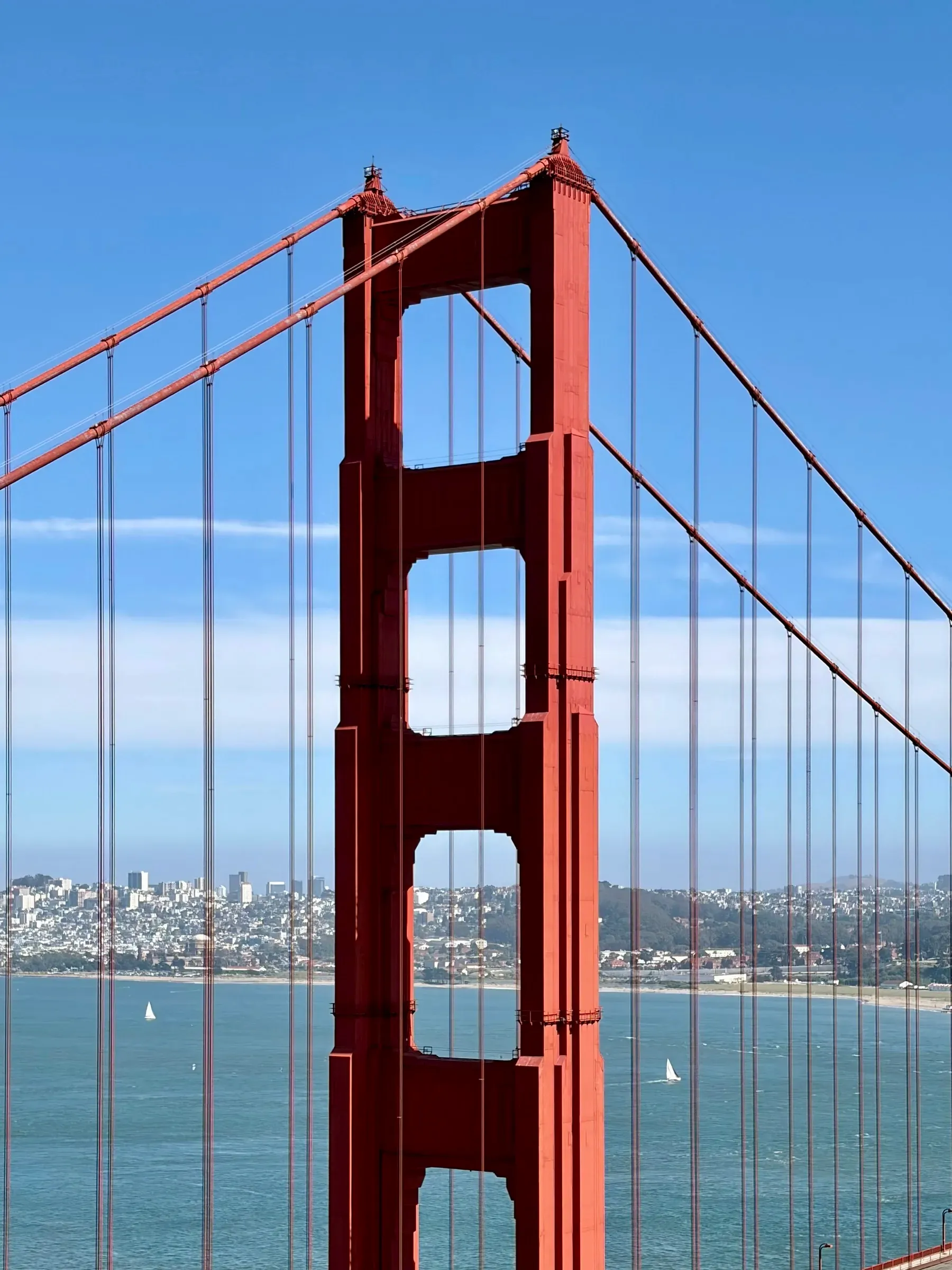
The Golden Gate reveals a different persona from every angle, framed here between the dark trunks of coastal Monterey cypress trees. Spanning 1.7 miles across the strait connecting San Francisco Bay to the Pacific Ocean, the bridge's signature reddish-orange hue is officially designated as 'International Orange.' Consulting architect Irving Morrow selected the shade in the 1930s over standard black or navy gray because it harmonized with the warm coastal bluffs while maximizing visibility through heavy sea fog. As June light shifts, the suspension towers change from bright vermilion against clear blue sky to soft, glowing silhouettes wrapped in low-lying fog ('Karl the Fog'), surrounded by blooming Gazania flowers and coastal scrub along the Presidio.
Battery Spencer
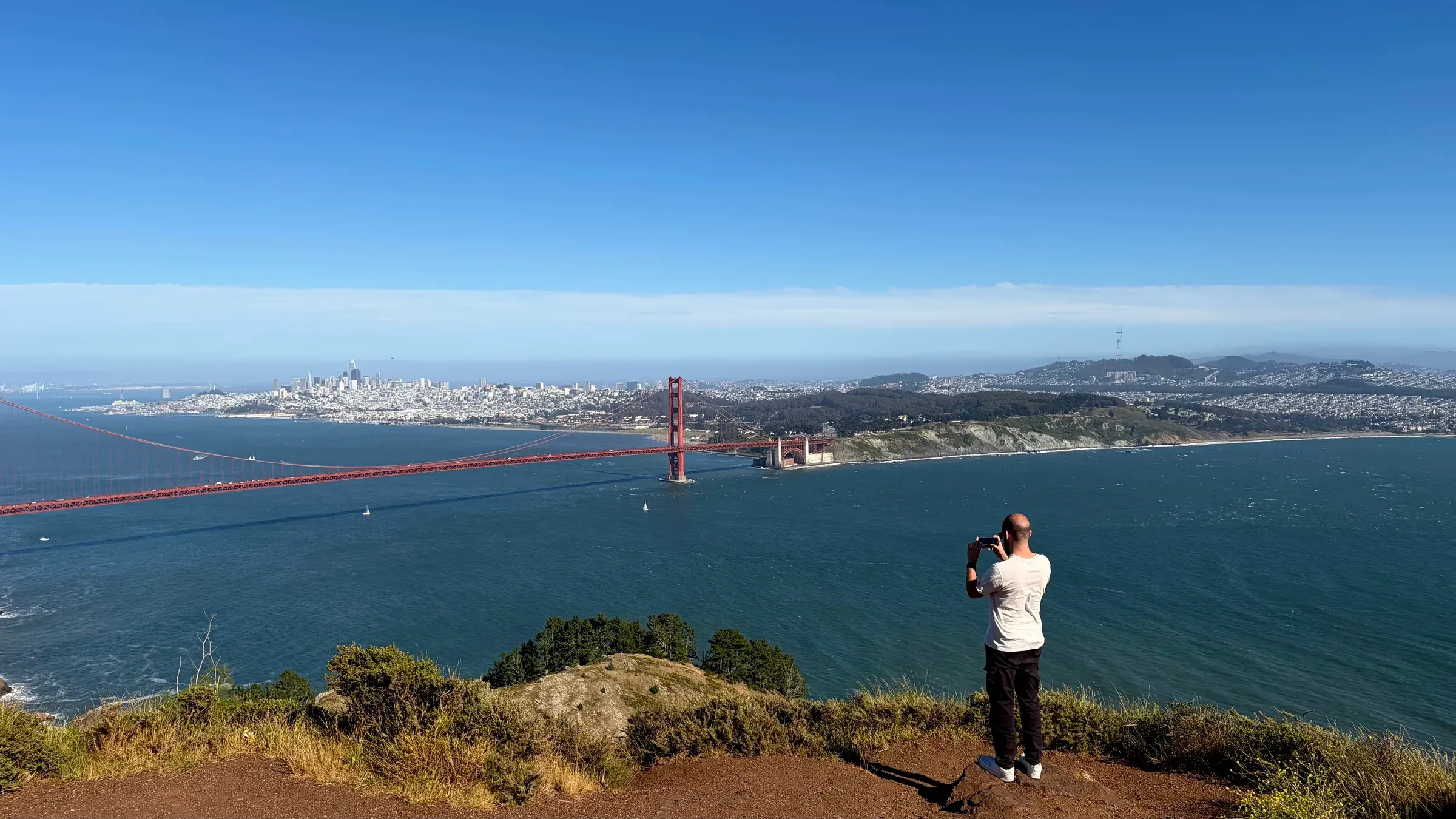
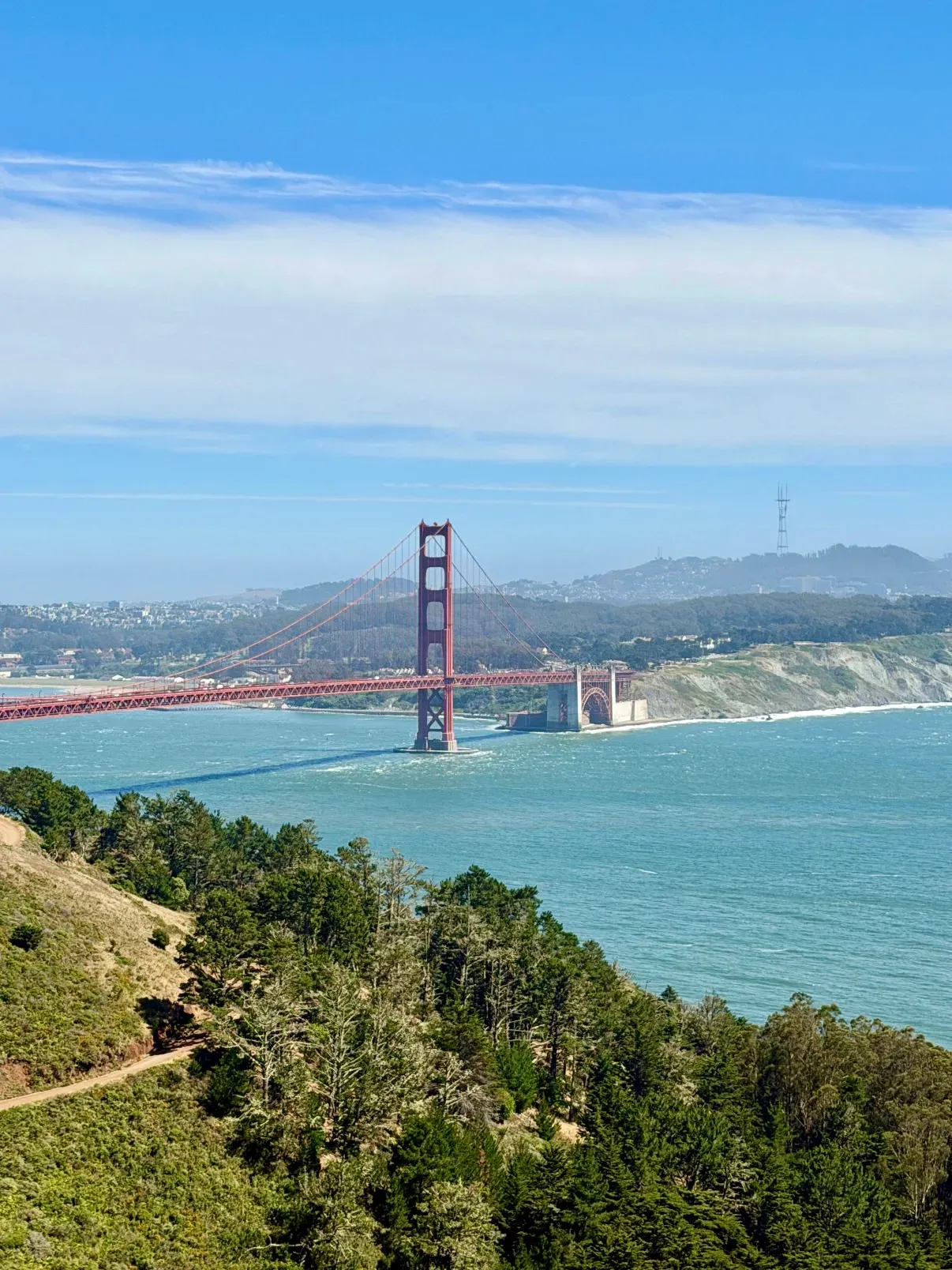
Perched 500 feet above the Pacific entrance on the bluffs of the Marin Headlands, Battery Spencer provides one of the most breathtaking vantage points over the Golden Gate Bridge and the San Francisco skyline. Constructed between 1893 and 1897 as a coastal defense artillery installation, the battery was named after Civil War officer Major General Joseph Spencer and originally housed heavy 12-inch breech-loading rifles mounted on disappearing carriages to guard the bay entry. Today, the concrete gun emplacements serve as an elevated bluff overlook. Standing at the edge, the scale of the International Orange suspension towers against Kirby Cove, ocean freighters passing underneath, and swirling Pacific headwinds creates an indelible sense of place.