Christmas in Vienna
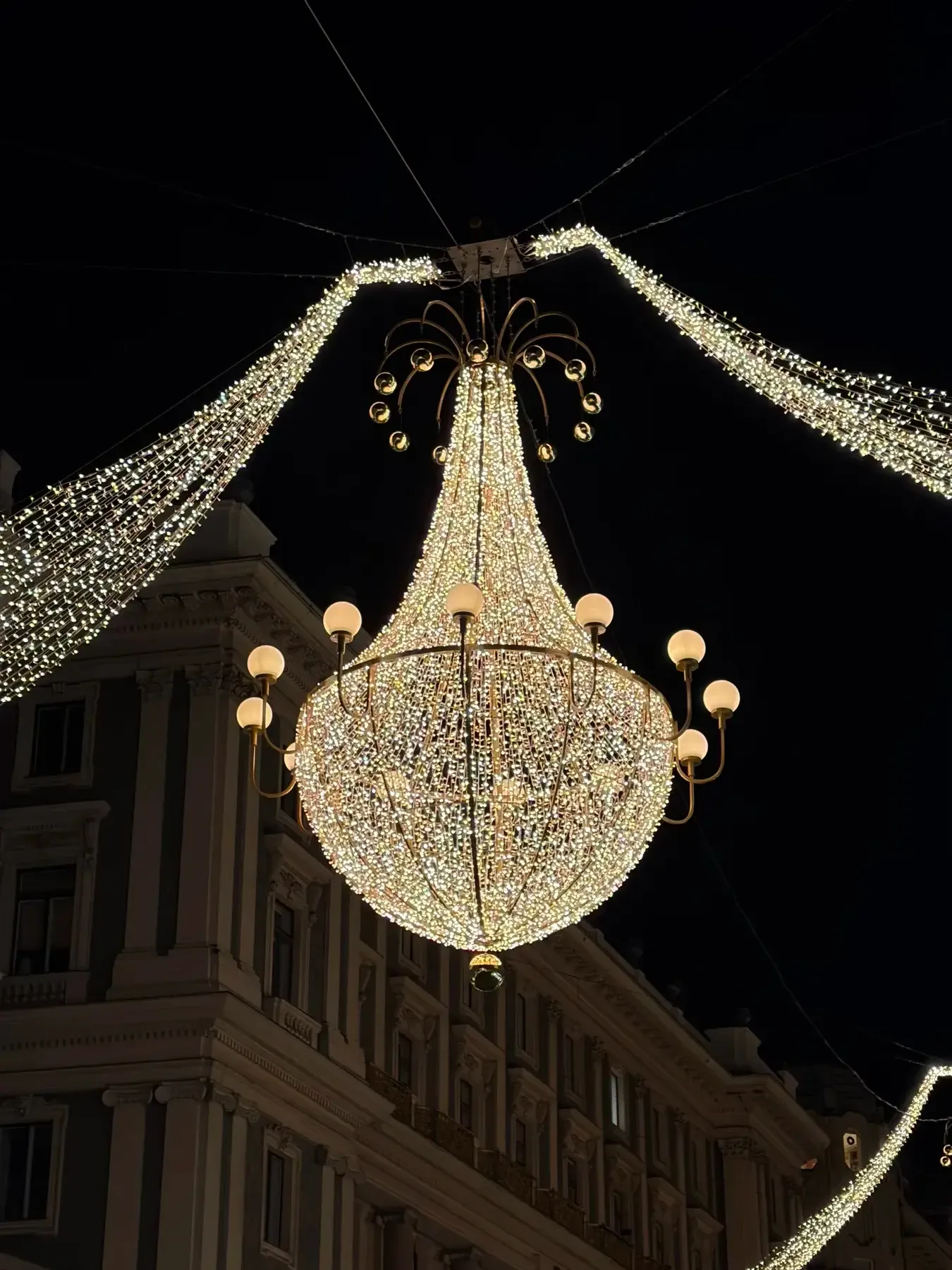
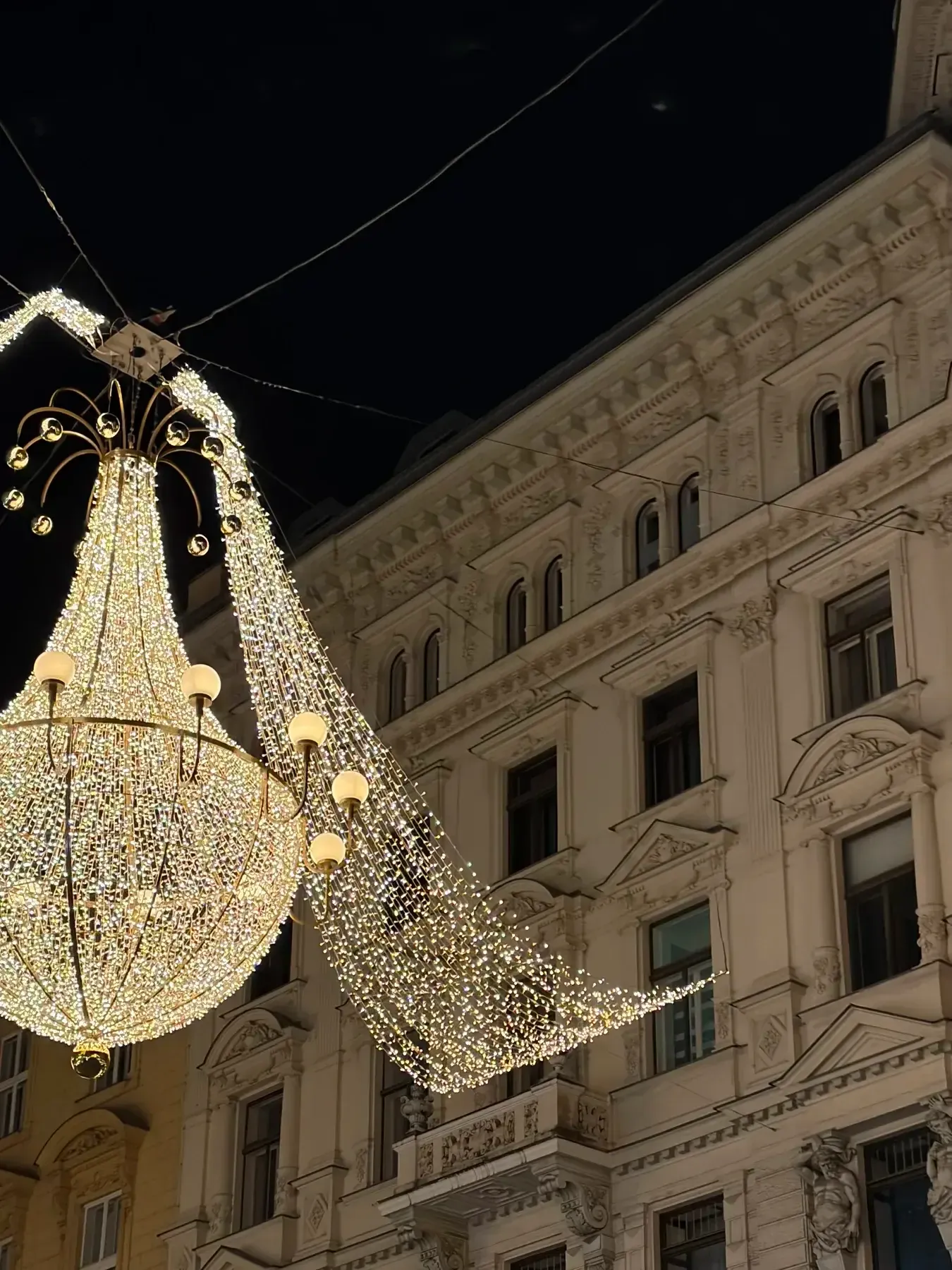
Four days in Vienna at the end of December, between Christmas Eve and the last Advent weekend. The city trades summer crowds for market lights, cathedral bells, and cold clear evenings along the Donaukanal. These photographs move from the Rathausplatz Christkindlmarkt to Stephansdom, the Belvedere gardens, the Prater, and the canal after dark.
Rathausplatz Markets
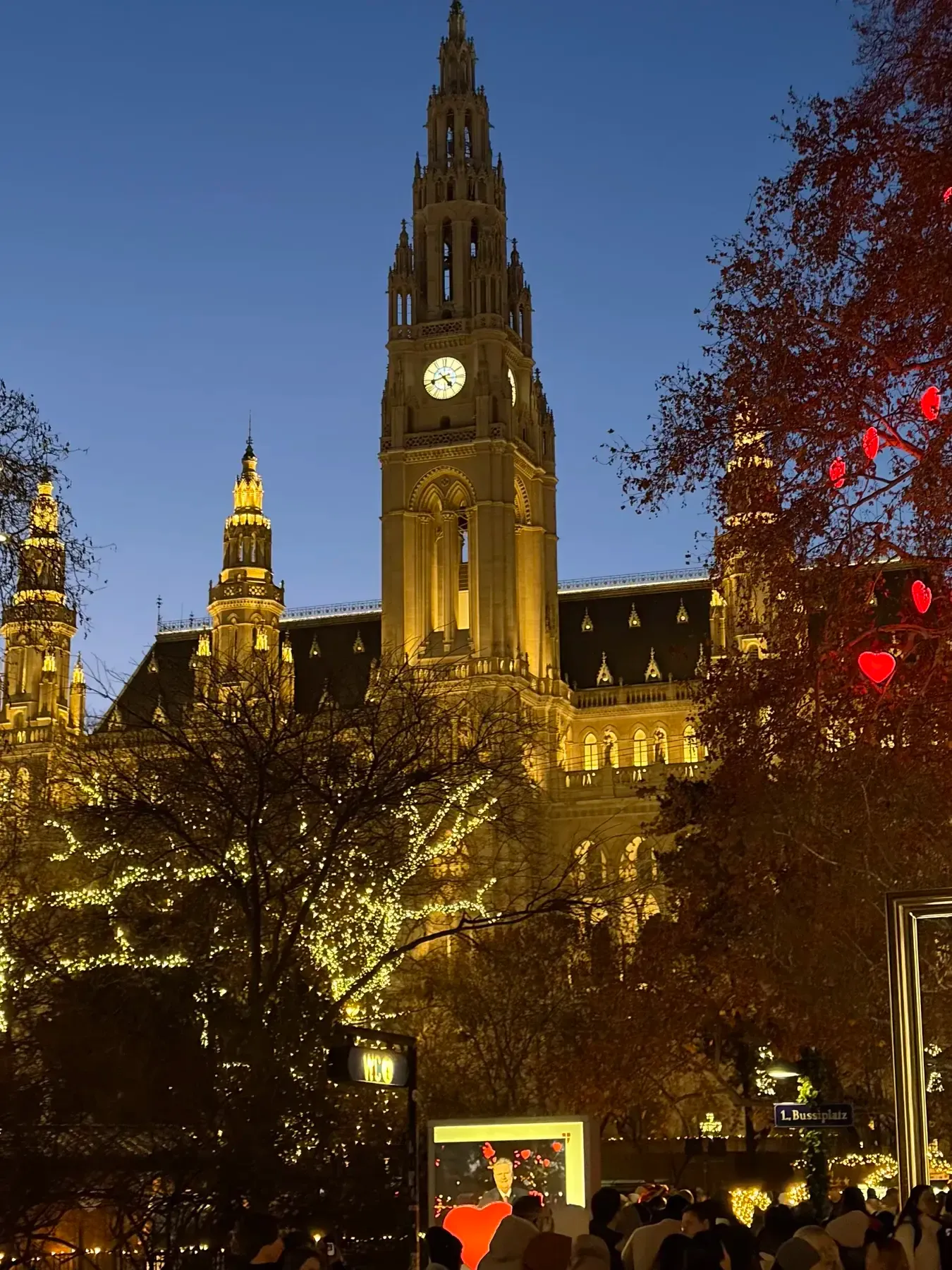
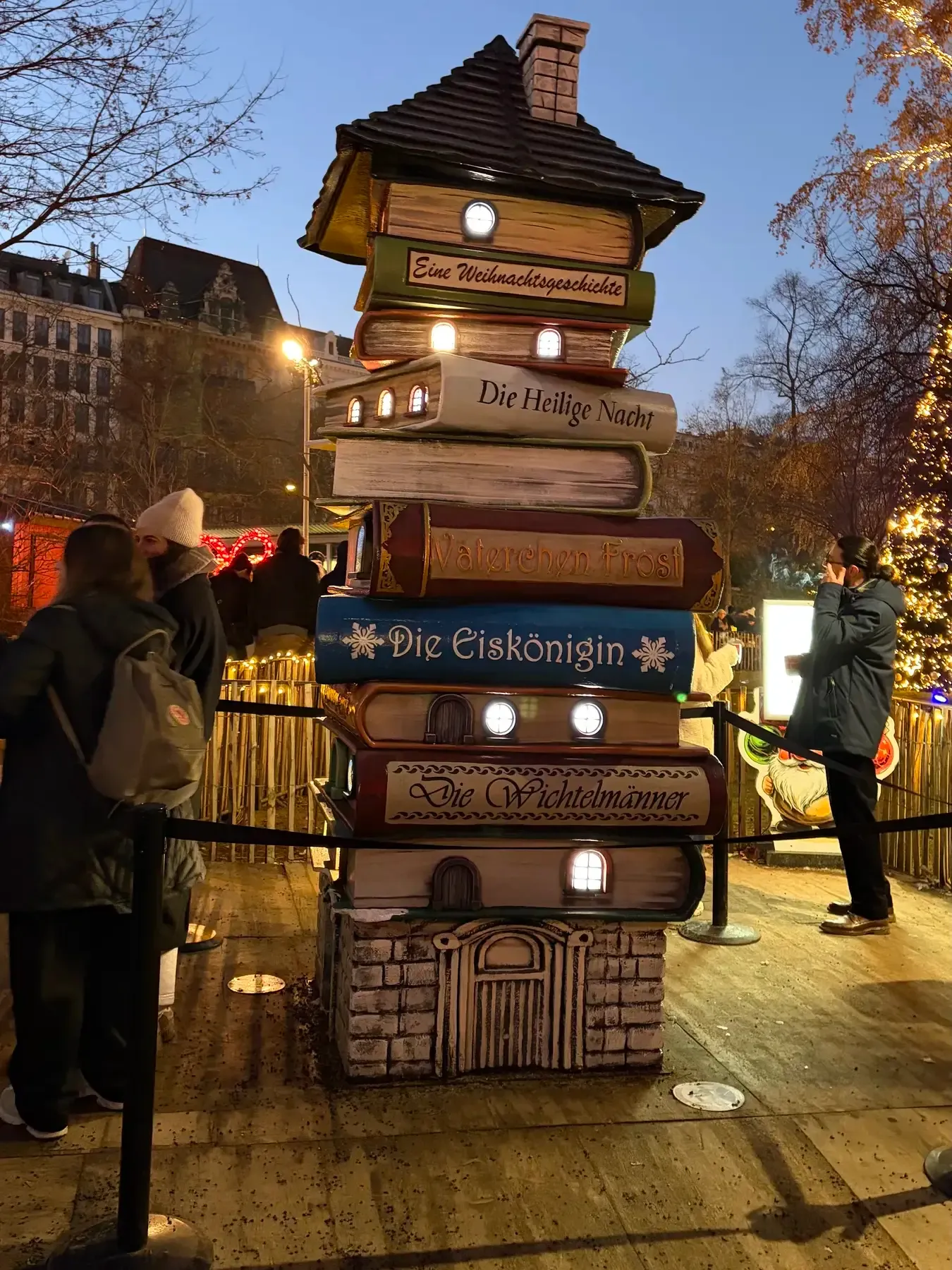
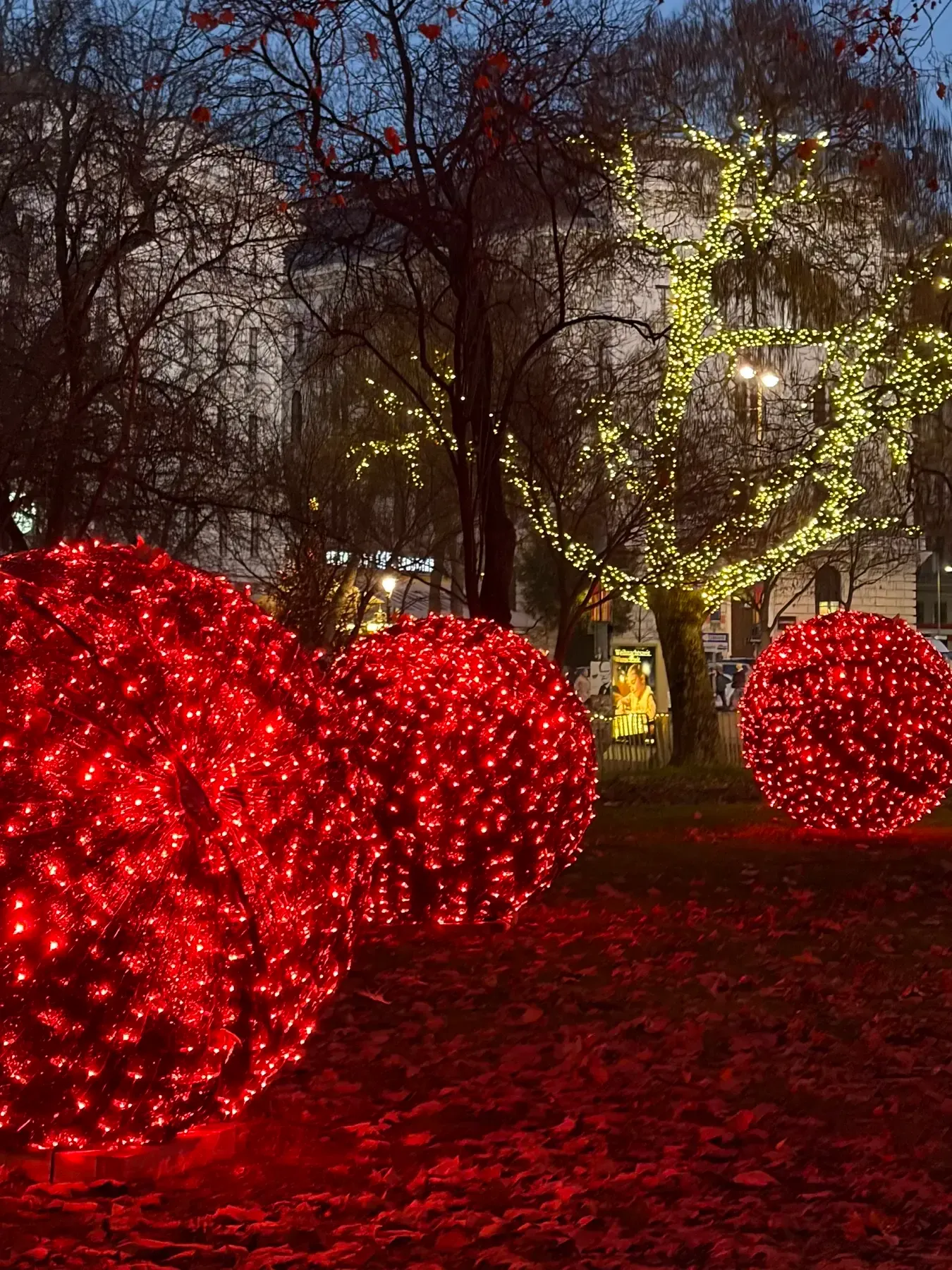
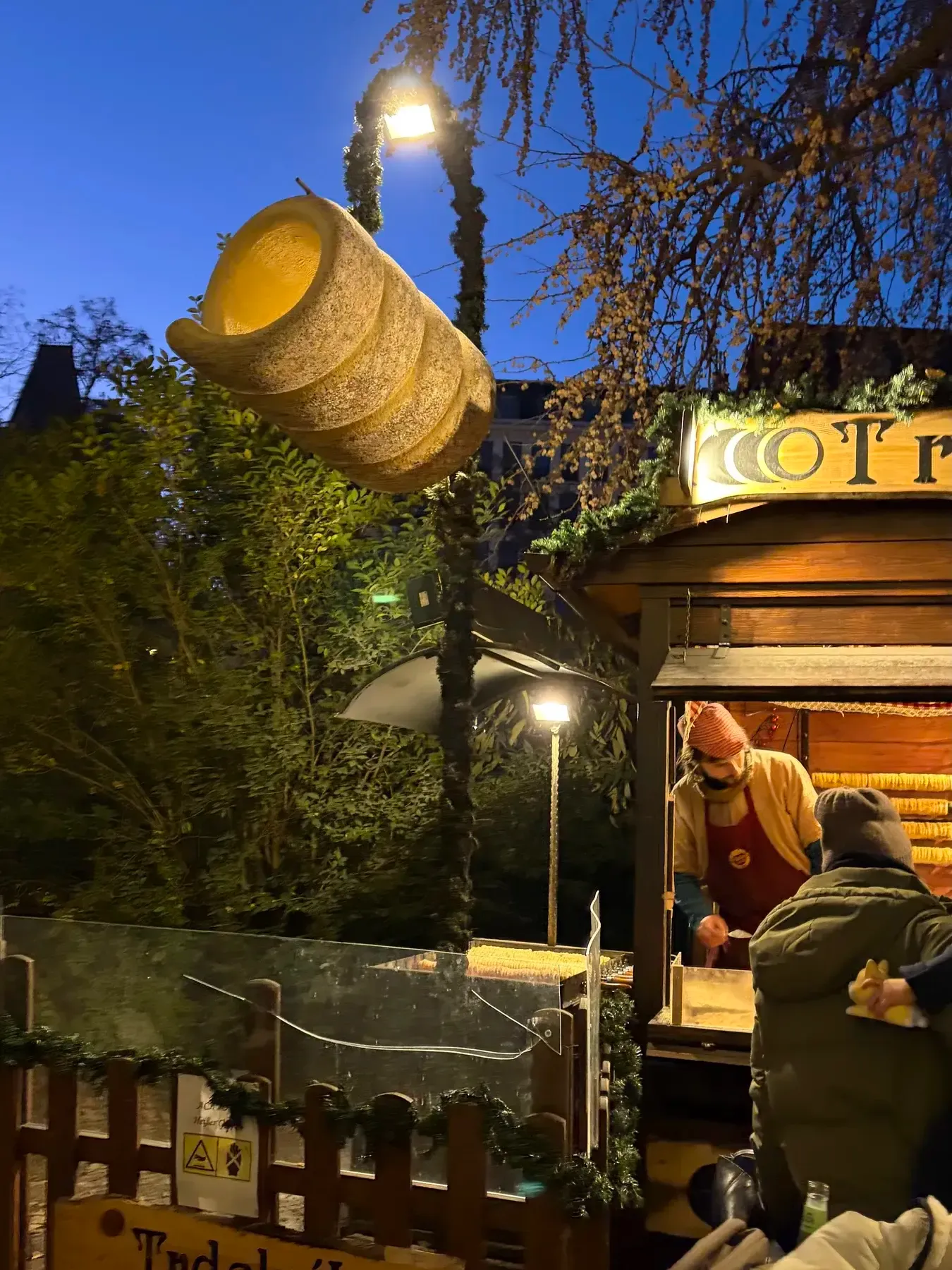
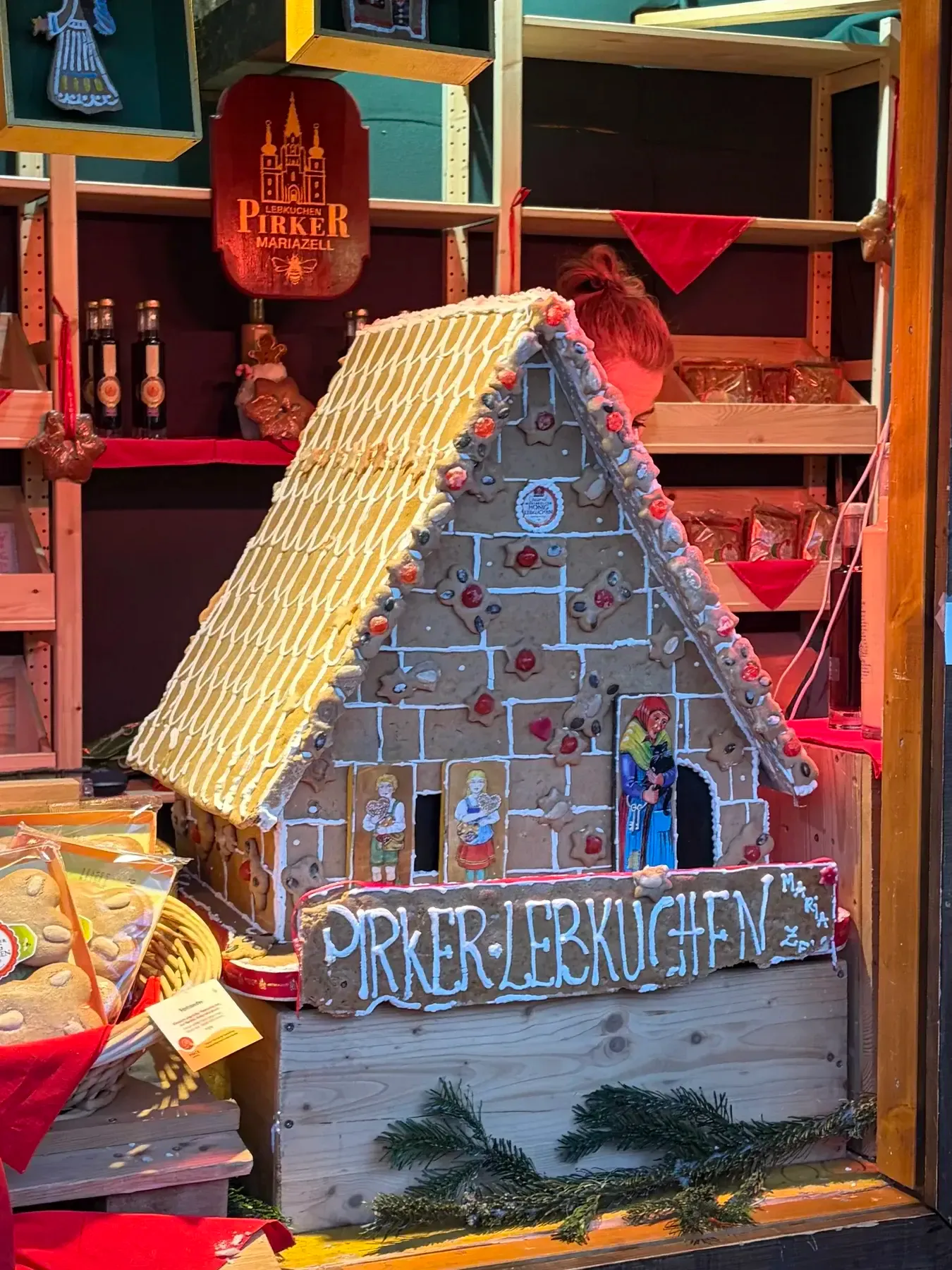
The Christkindlmarkt on Rathausplatz has been here since 1975, when construction at the Messepalast forced the market to move. What was meant to be temporary became permanent: roughly 150 wooden chalets spread across the square and into the Rathauspark, with the neo-Gothic city hall rising behind them. Vienna's Christmas market tradition goes back centuries, but this is the scene everyone pictures now. In December the air smells of roasted chestnuts and punch, and the square stays busy well past dark.
Café Sluka
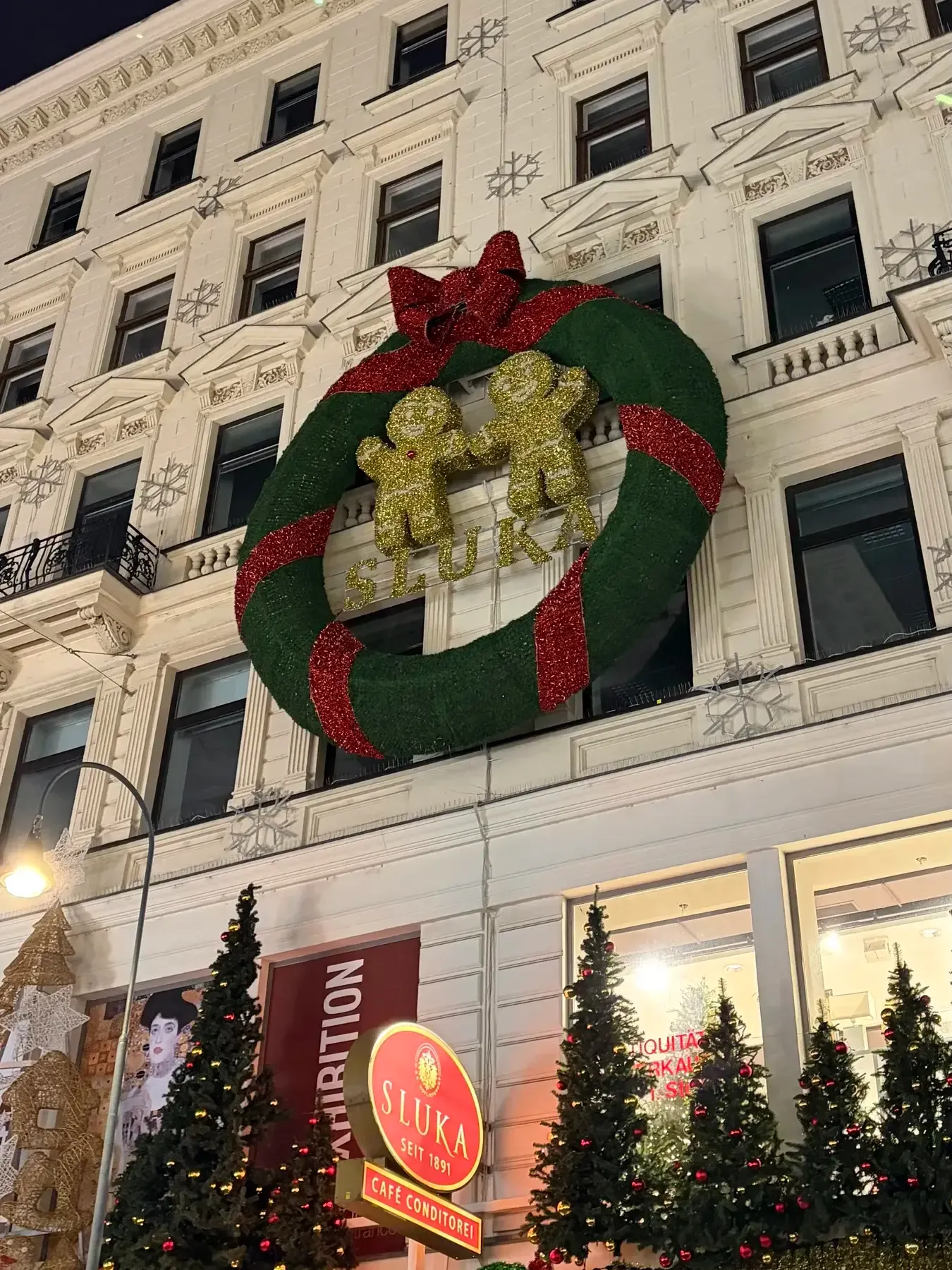
Sluka was founded in 1891 and named k.u.k. Hofzuckerbäcker in 1896, supplier to the imperial court. Empress Elisabeth, ministers from the nearby parliament, and Burgtheater actors all passed through the original café on Rathausplatz. The Kärntner Straße branch opened in 2017, a few steps from Stephansplatz, but the recipes have not changed much: the Sluka-Torte is still made to the same formula. In December the windows turn into small theatre sets of marzipan, ribbon, and gilt cardboard.
St. Stephen's Cathedral
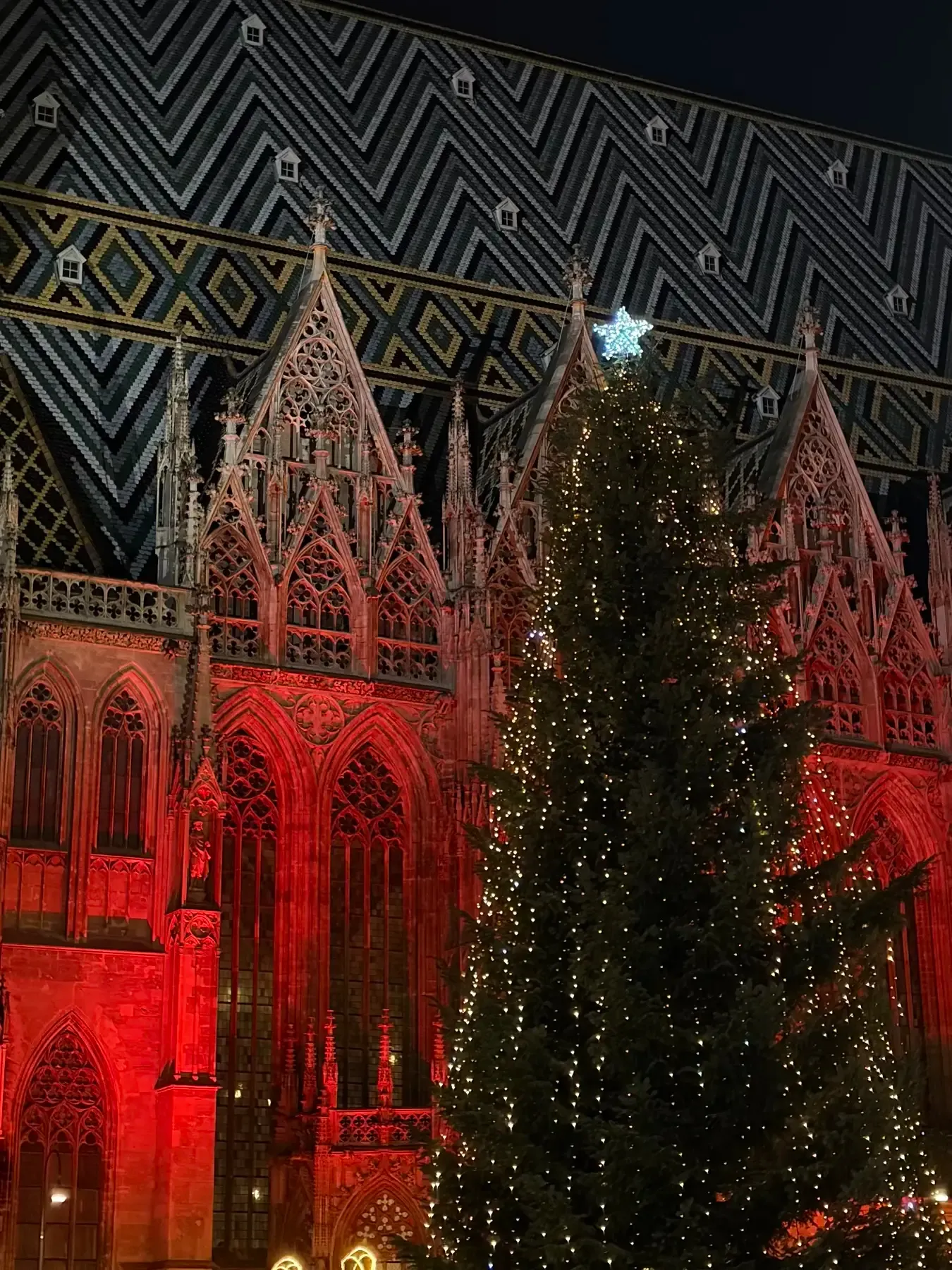
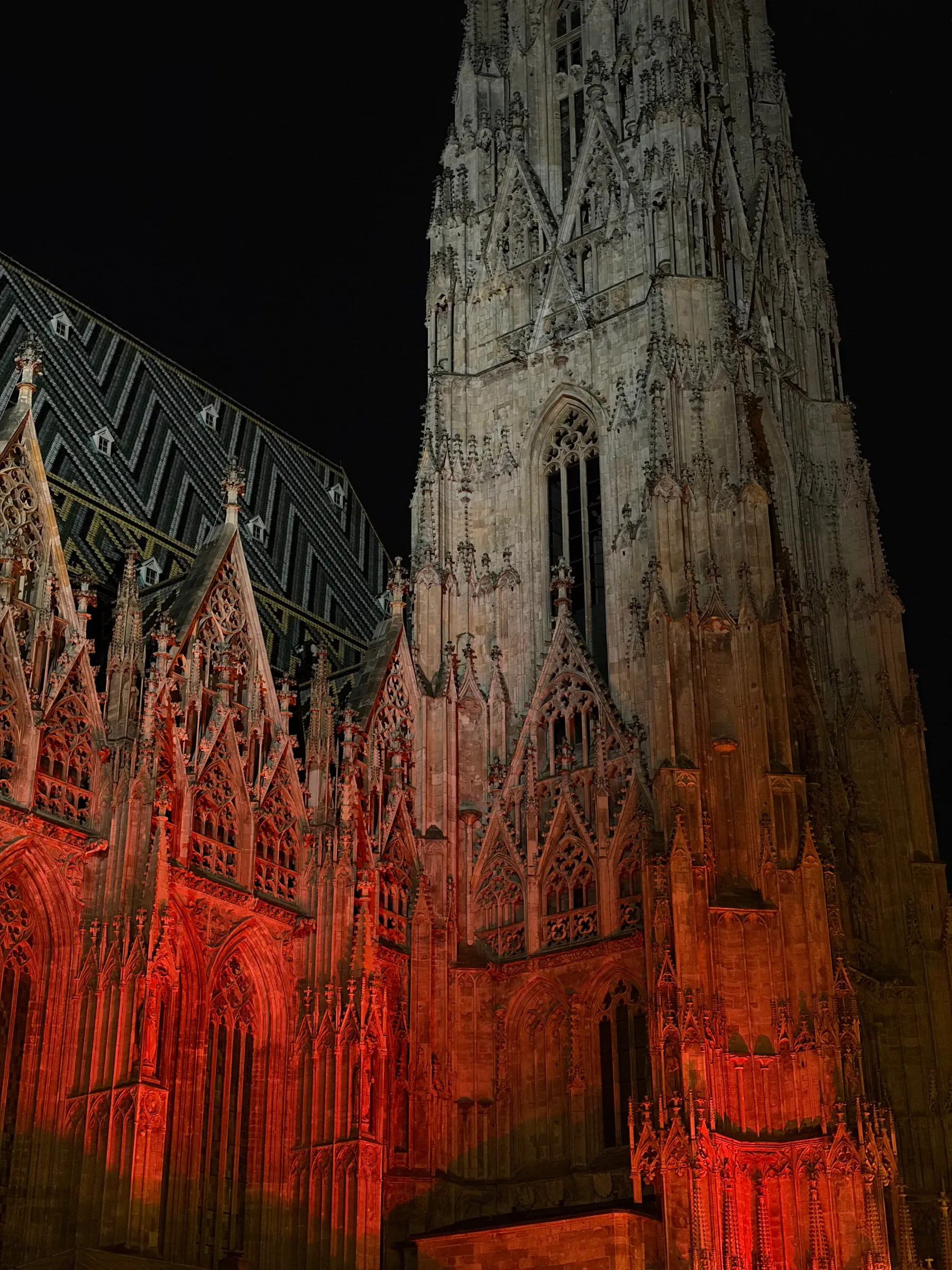
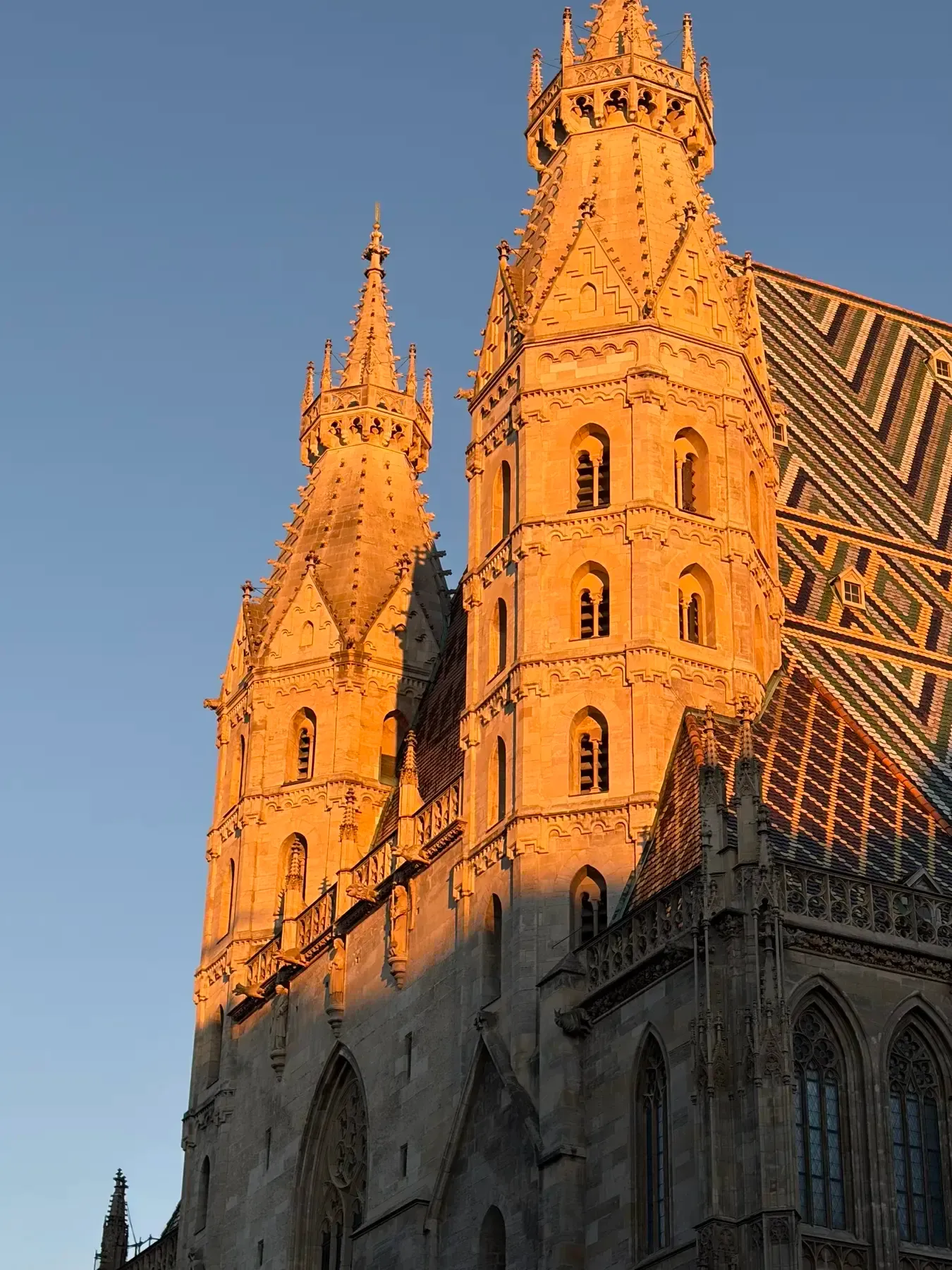
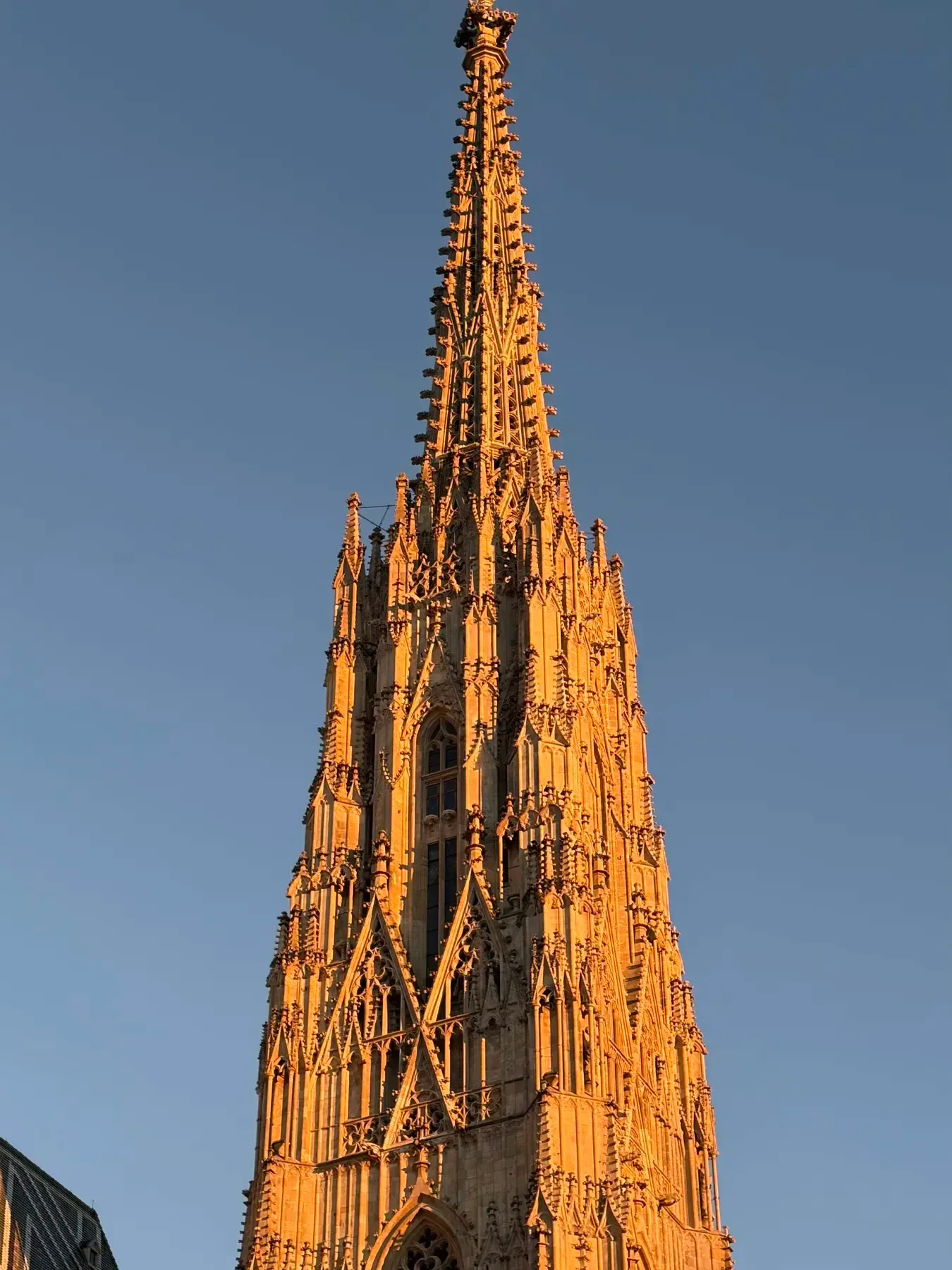
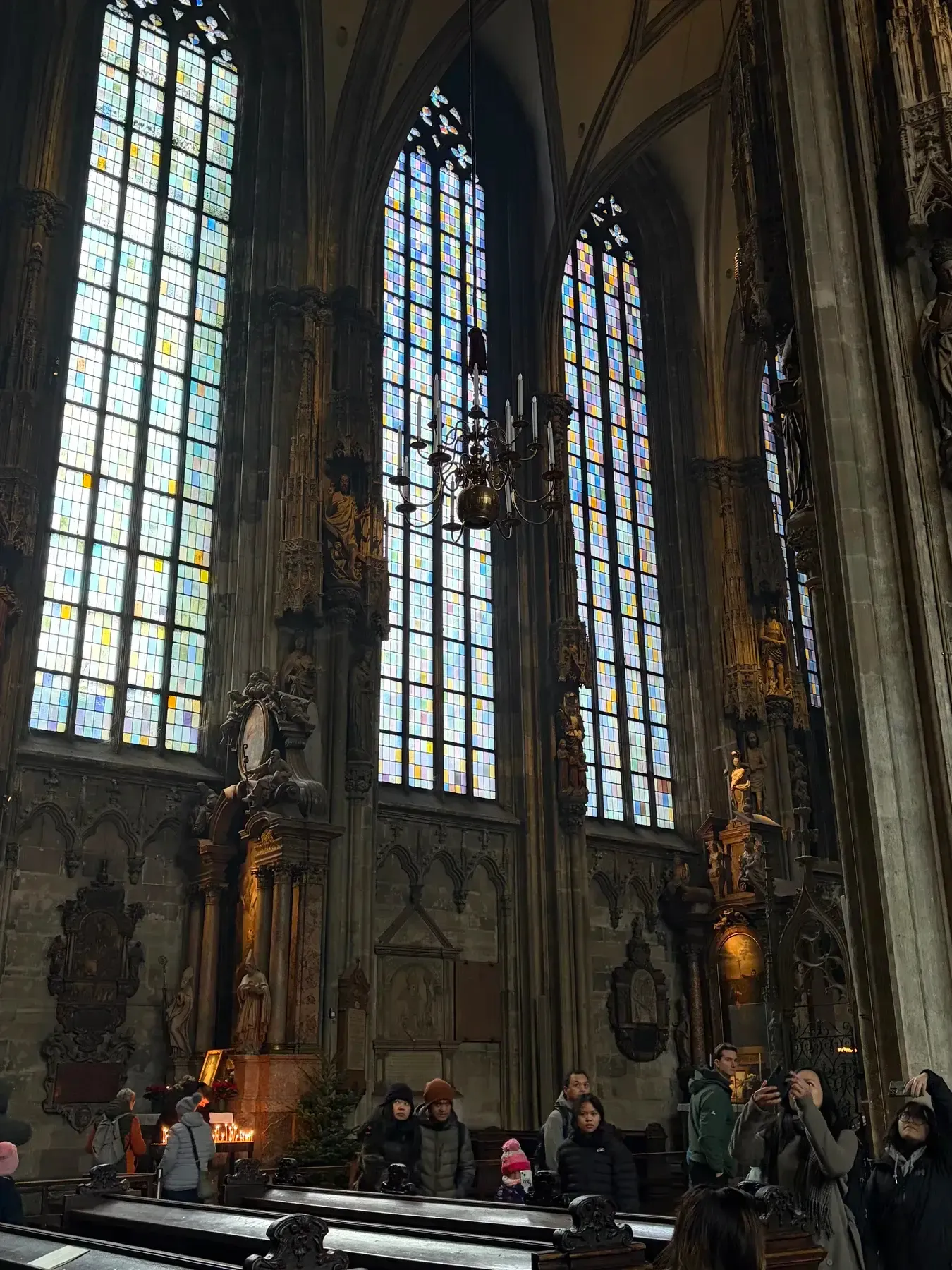
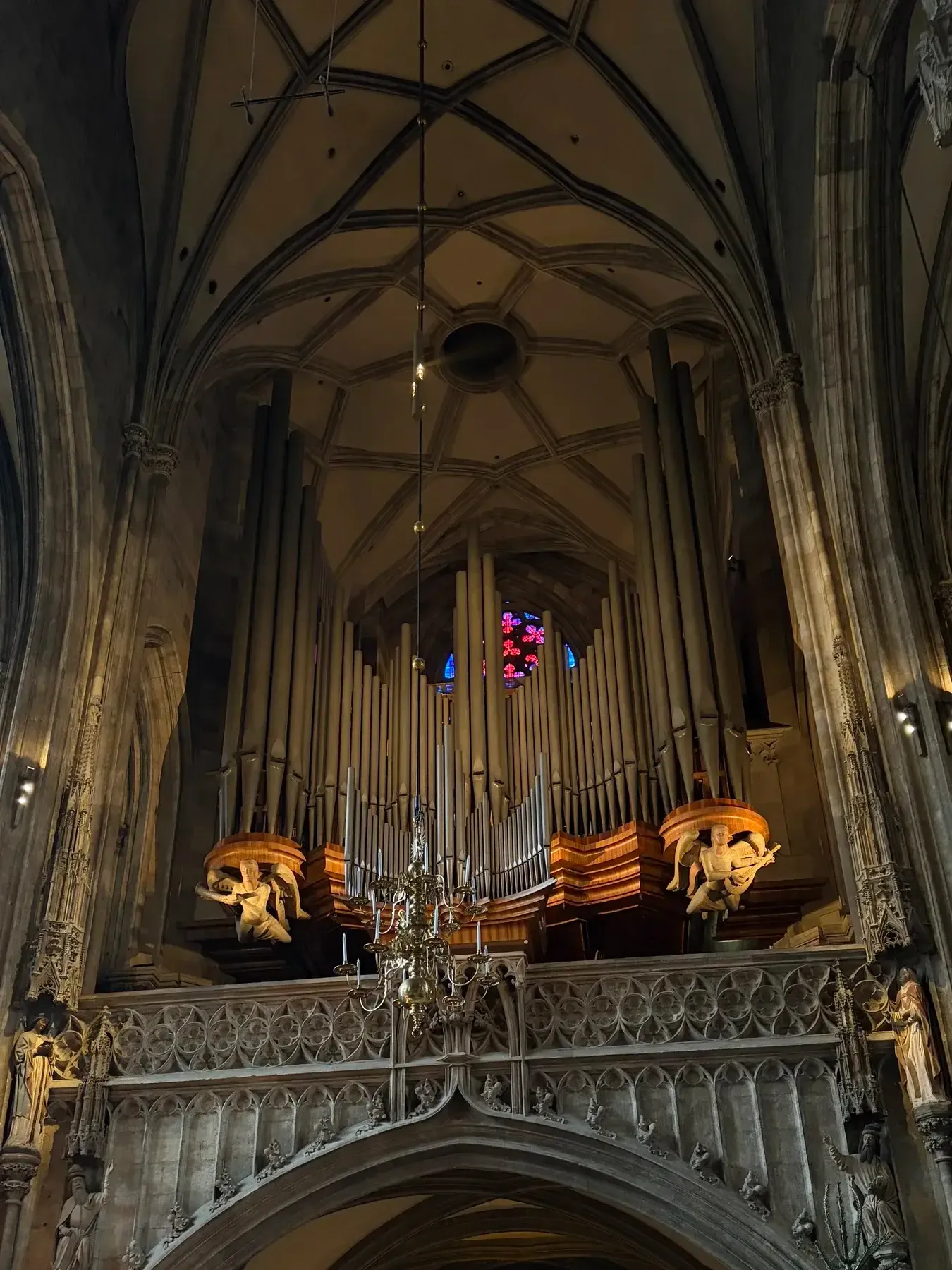
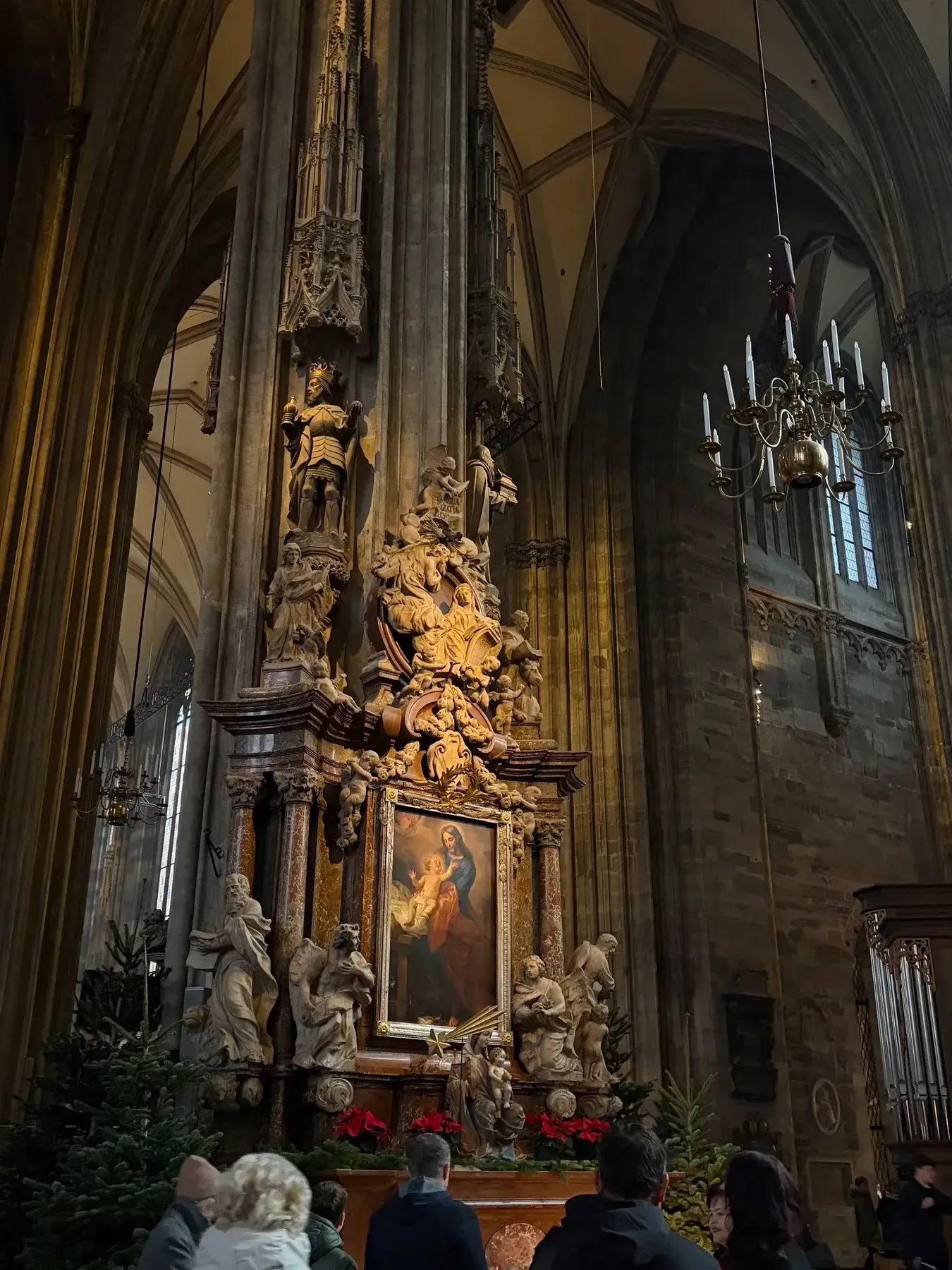
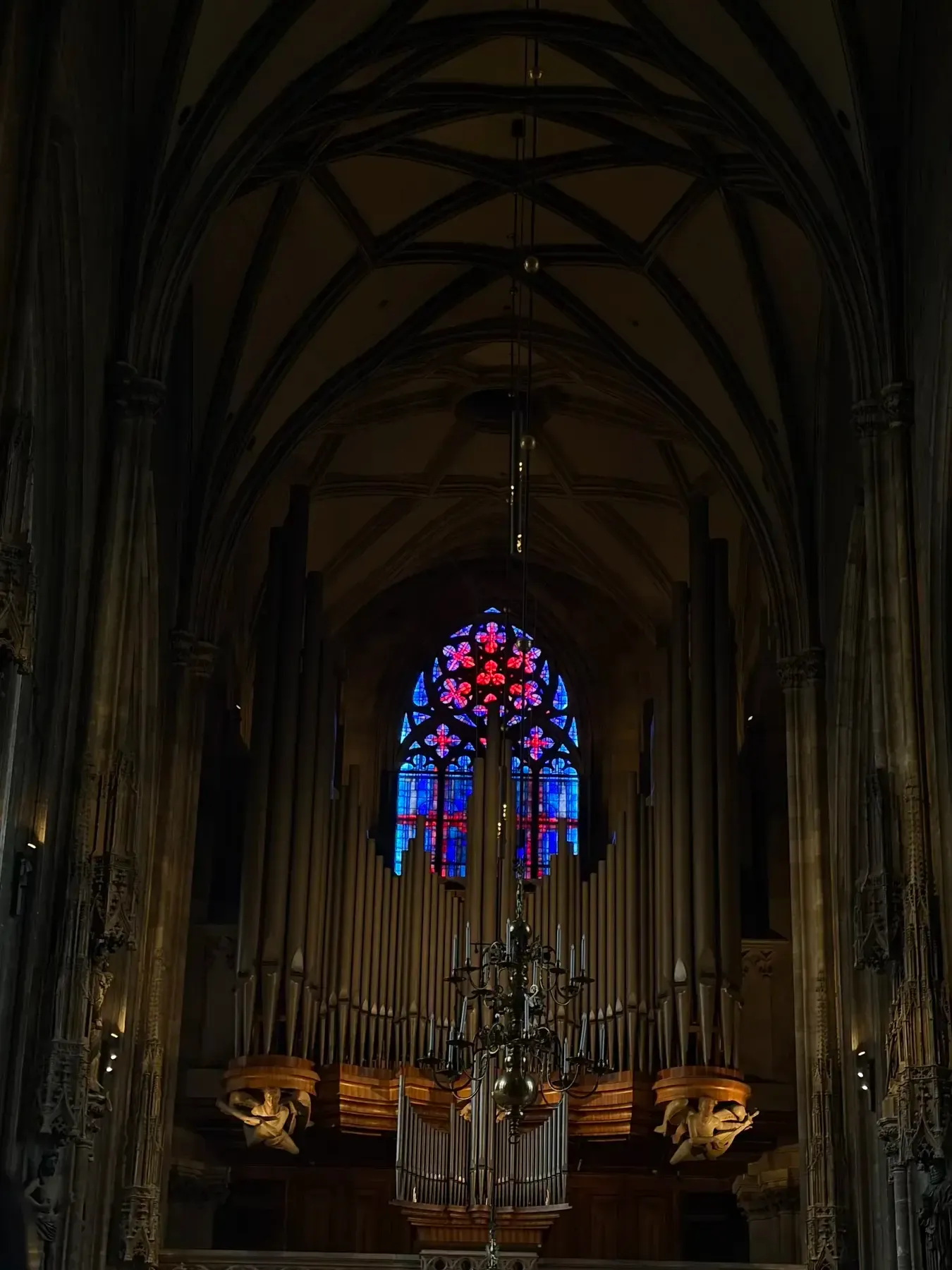
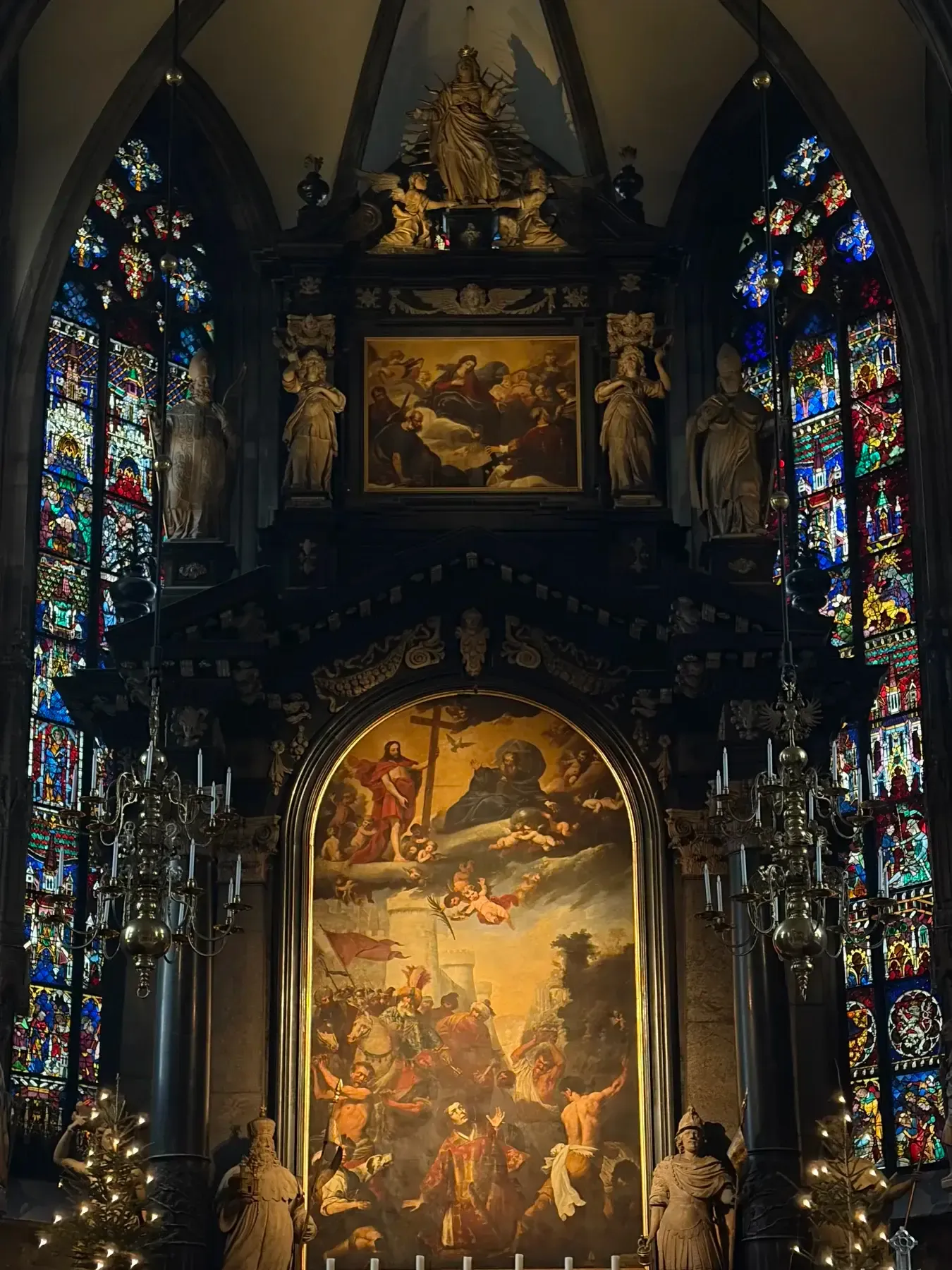
Viennese call it the Steffl, and the name fits the south tower as much as the whole building. Gothic work began here in the twelfth century; Duke Rudolf IV laid the foundation stone for the present cathedral in 1359. The tiled roof is the city's signature from above: 230,000 glazed tiles forming the Habsburg double eagle and the coats of arms of Vienna and Austria. The Pummerin, one of Europe's largest swinging church bells, hangs in the north tower. Fire destroyed the roof timber in 1945; it was rebuilt by 1952, one of the first symbols of the city's recovery.
Belvedere
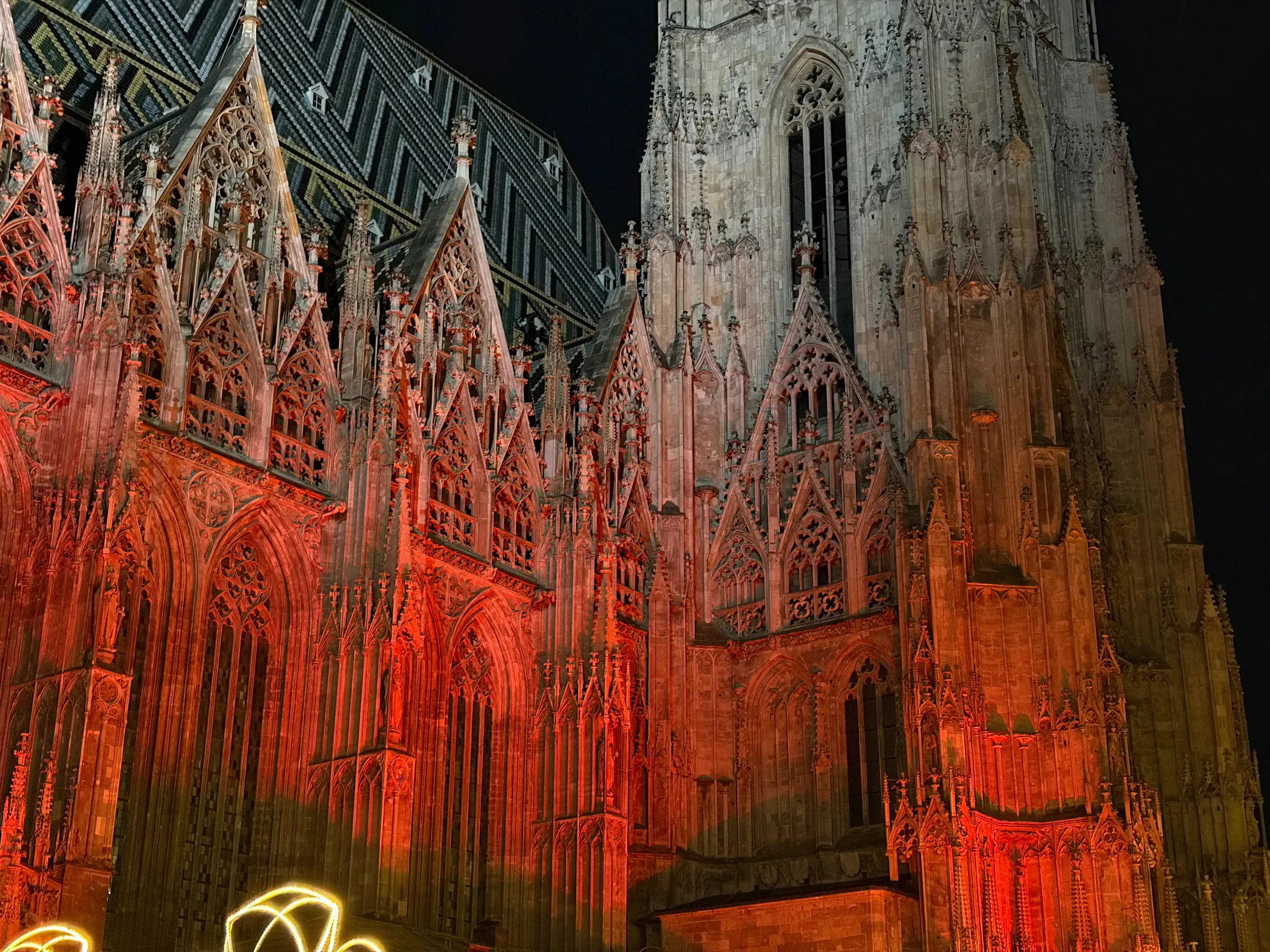
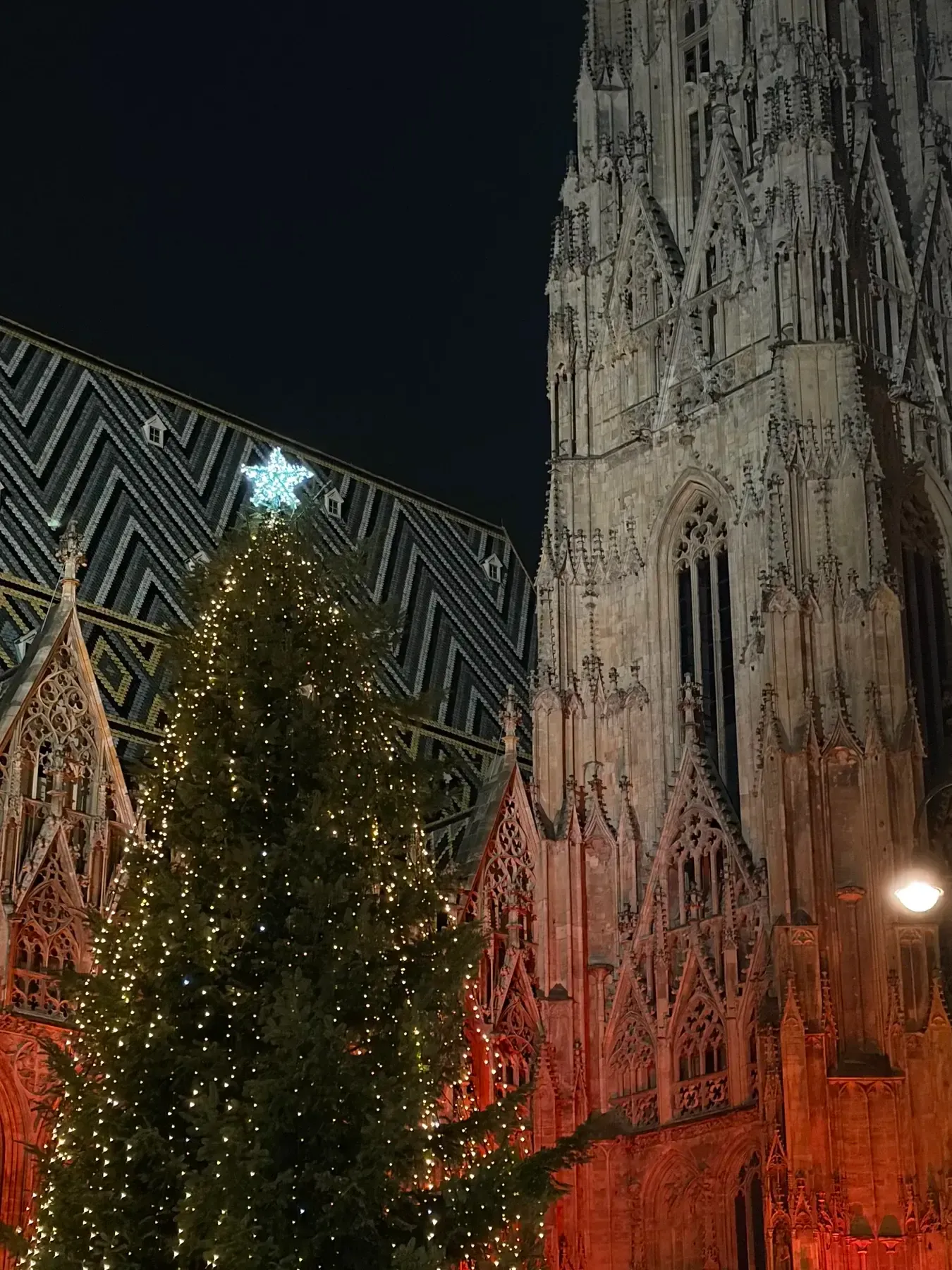
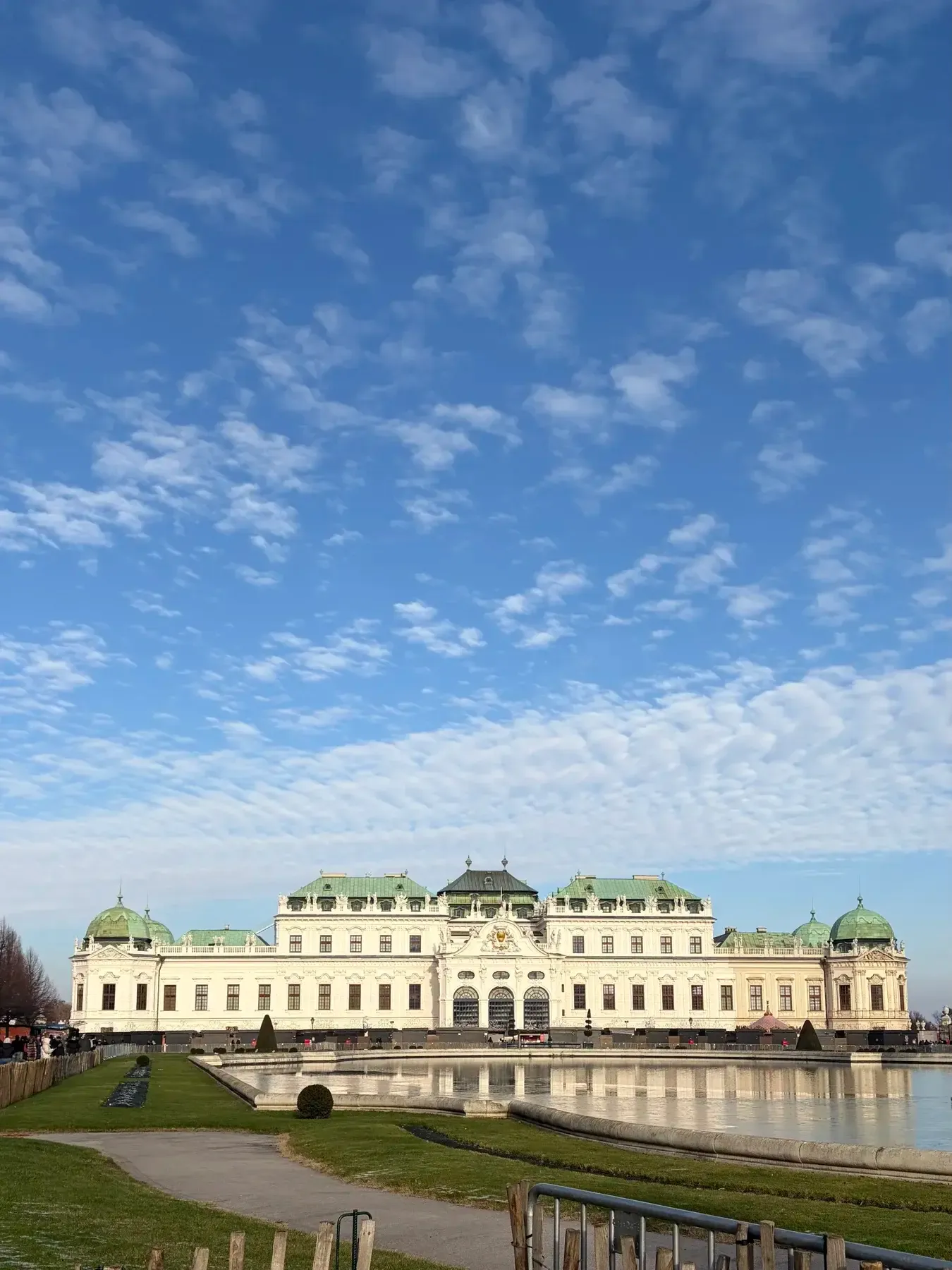
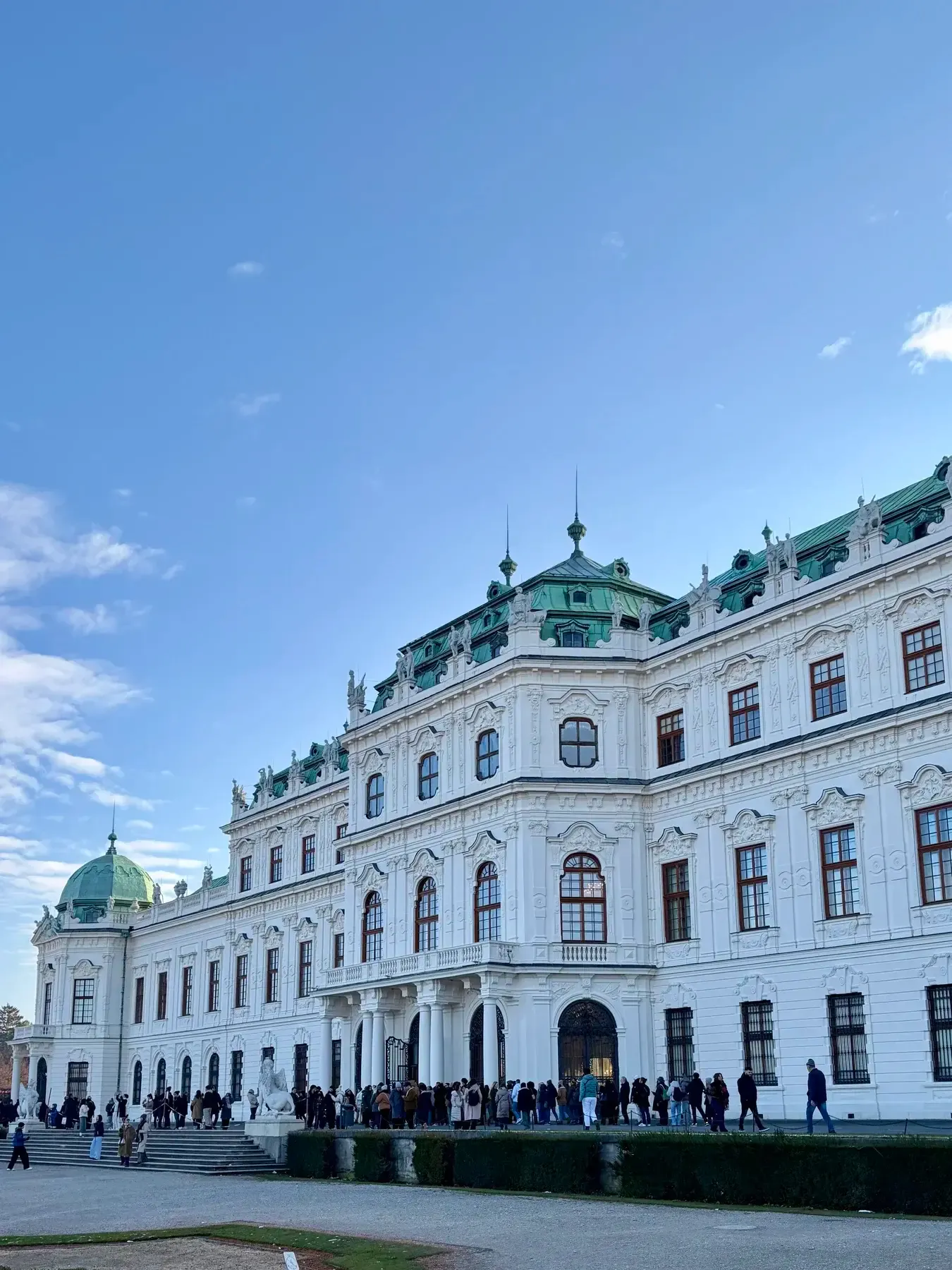
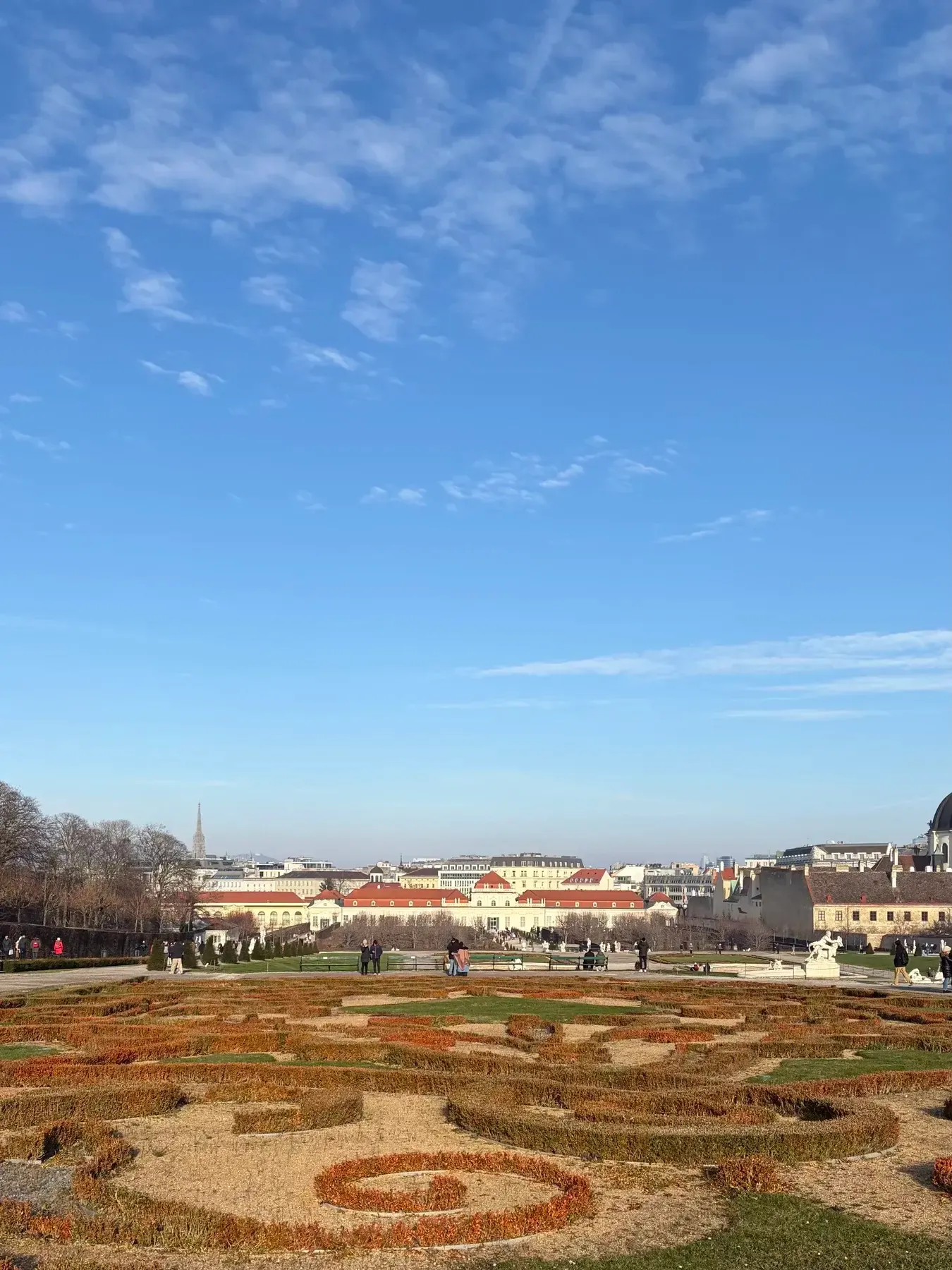
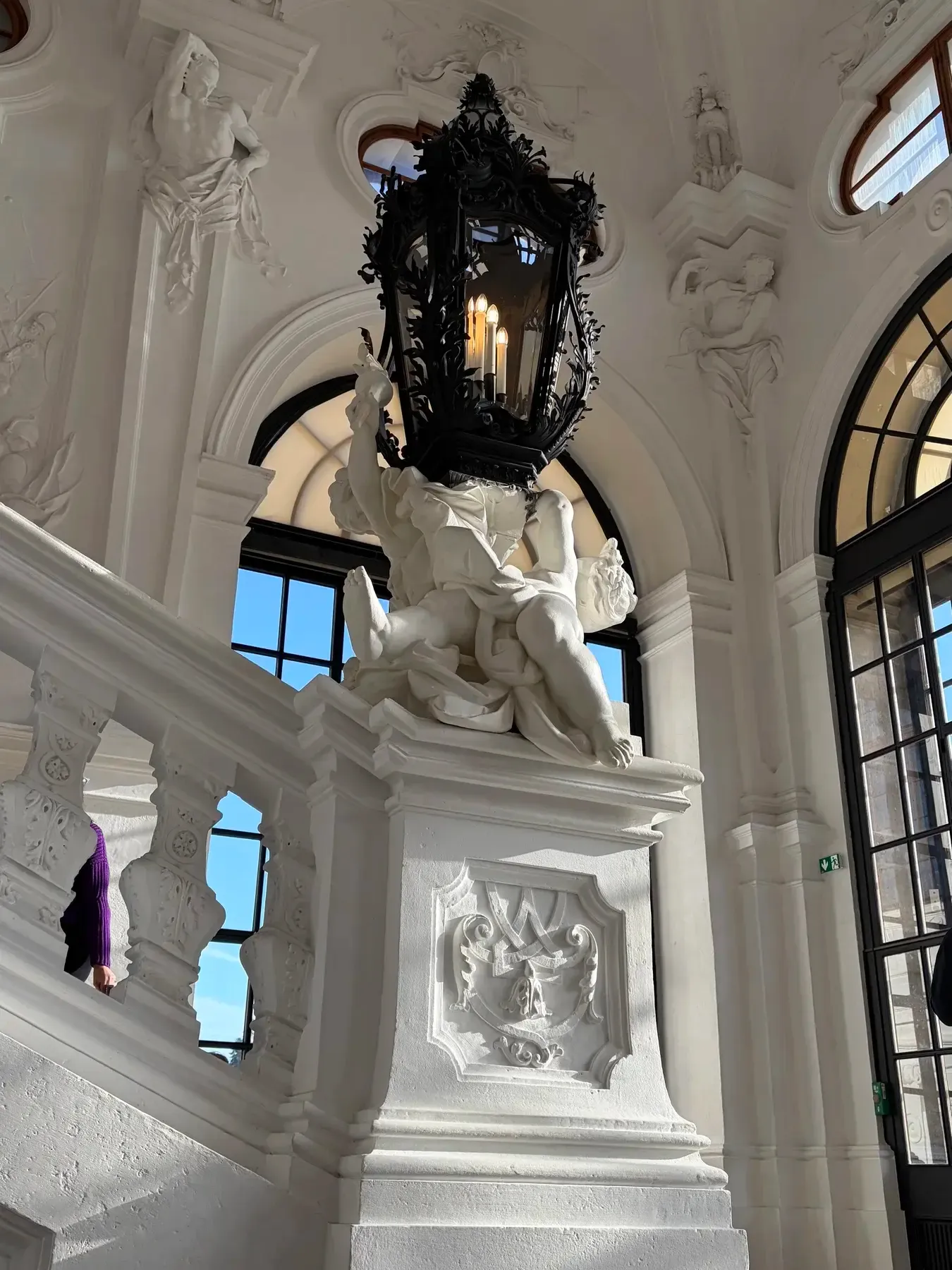
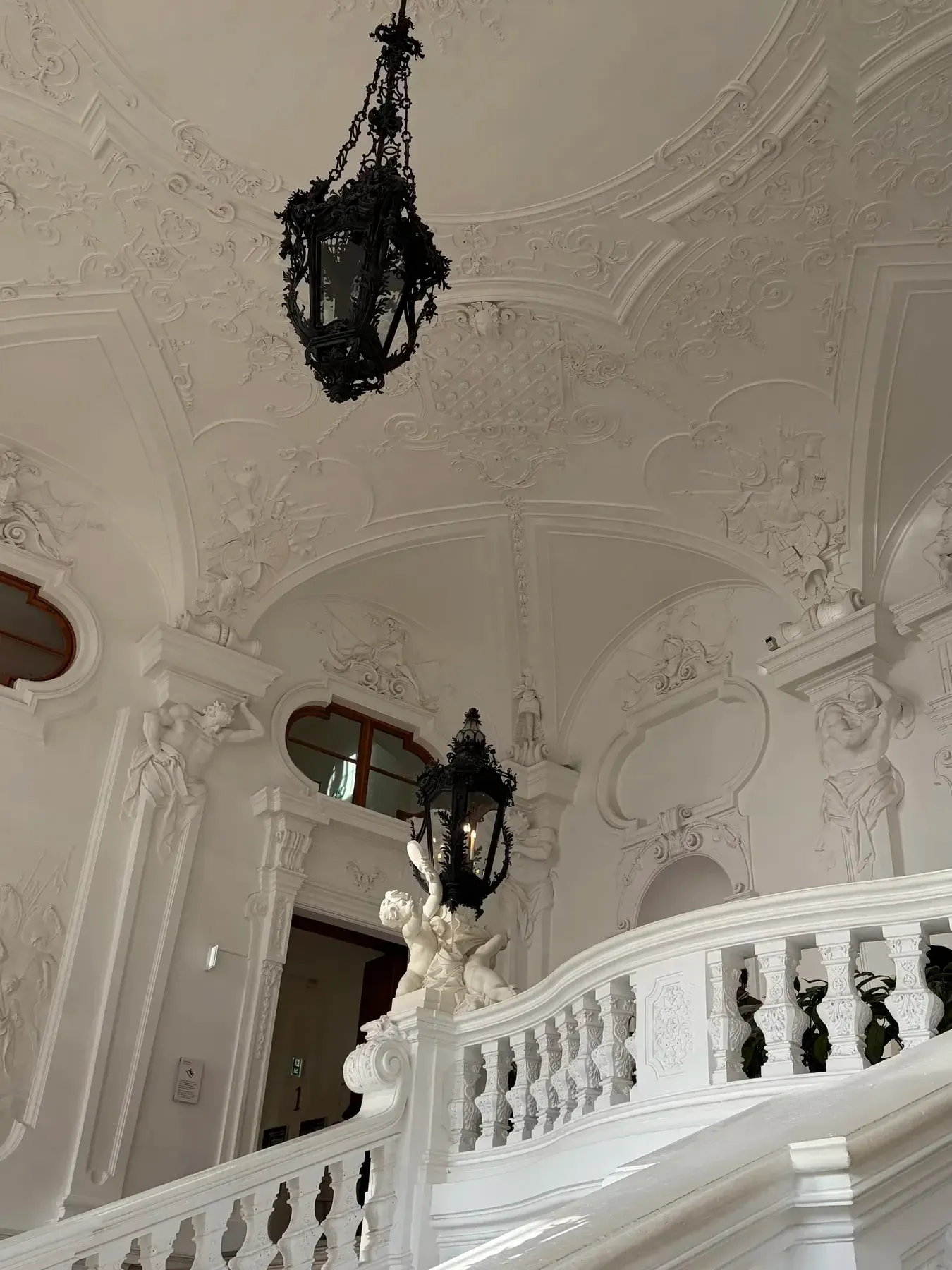
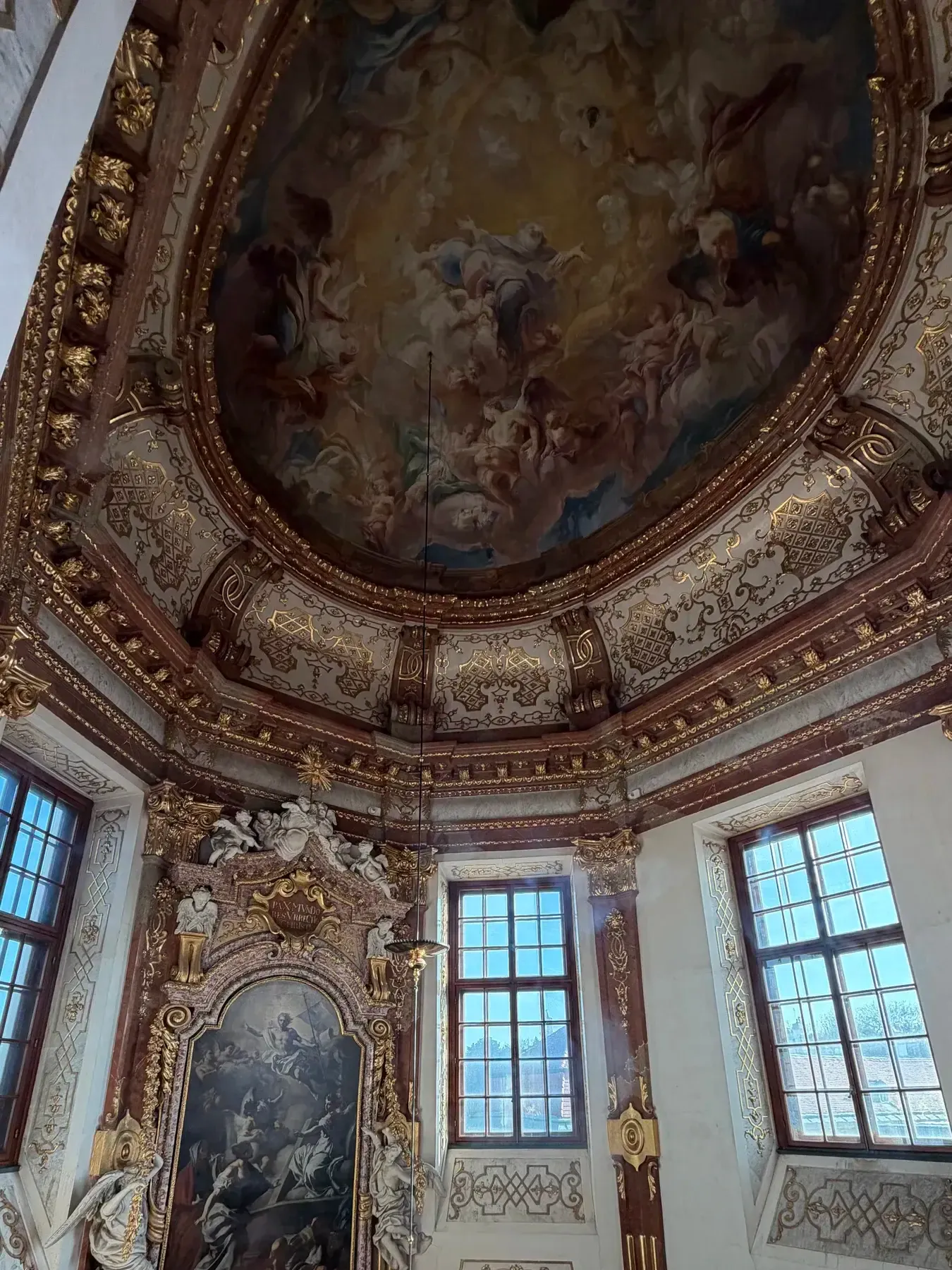
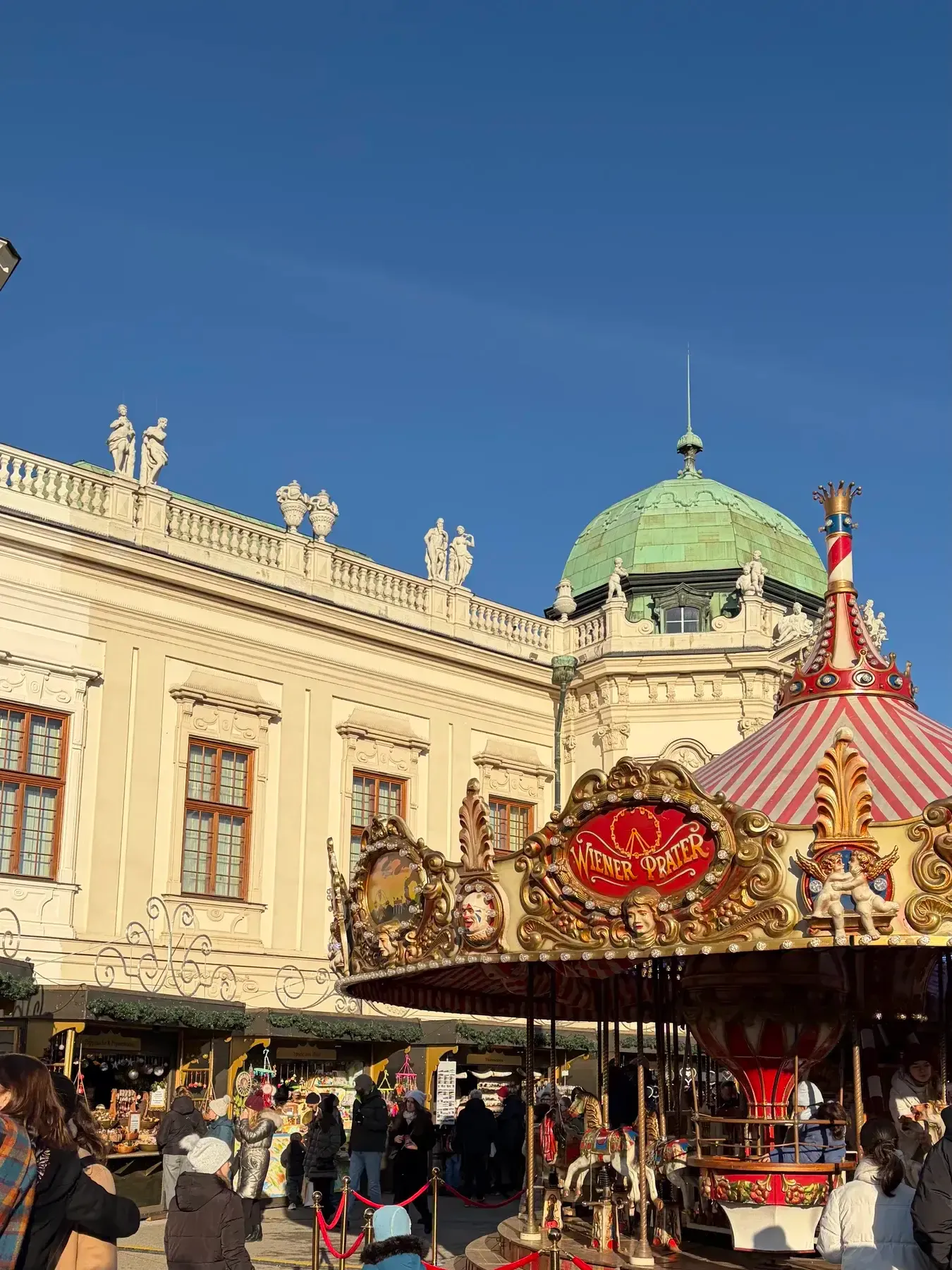
Prince Eugene of Savoy commissioned Johann Lukas von Hildebrandt to build the Belvedere as a summer residence in the early eighteenth century. Two baroque palaces face each other across formal terraces and reflecting pools, once outside the city walls, now a short tram ride from the centre. Maria Theresa turned the Upper Belvedere into a public gallery in the 1770s, among the earliest of its kind. Today it holds the world's largest Klimt collection, including The Kiss, though in December the gardens matter as much as the galleries: bare linden alleys, frost on the parterres, the upper palace mirrored in still water.
MAK
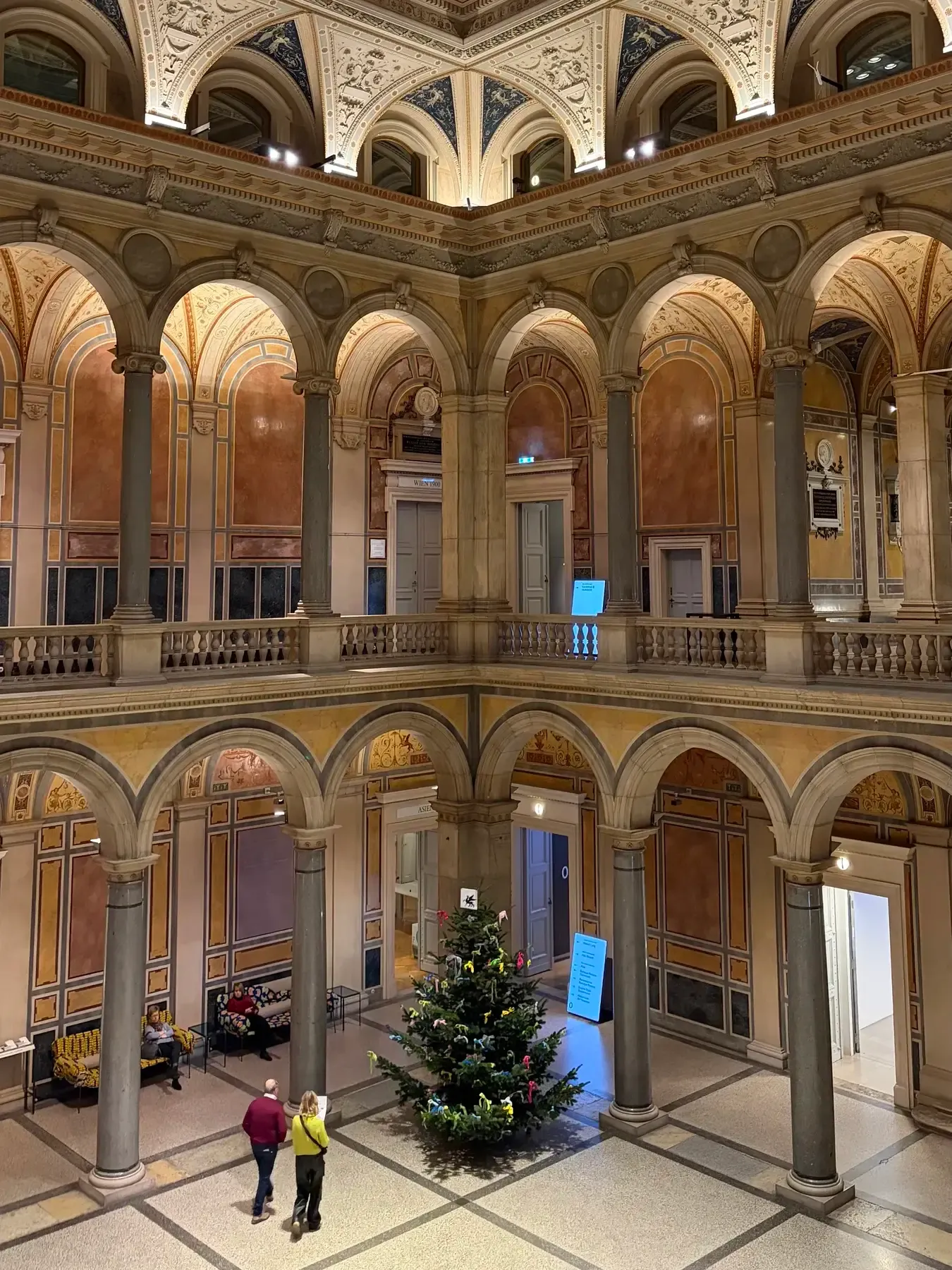
The MAK was the first museum on the Ringstraße, opened in 1871 in Heinrich von Ferstel's Renaissance building, eight years after the museum itself was founded. It was modelled on the Victoria and Albert in London and devoted from the start to applied arts: furniture, textiles, design, everyday objects treated as seriously as painting. The facade on Stubenring mixes historicism with industrial confidence, a fitting gate to a collection that runs from Biedermeier silver to Wiener Werkstätte glass.
Prater
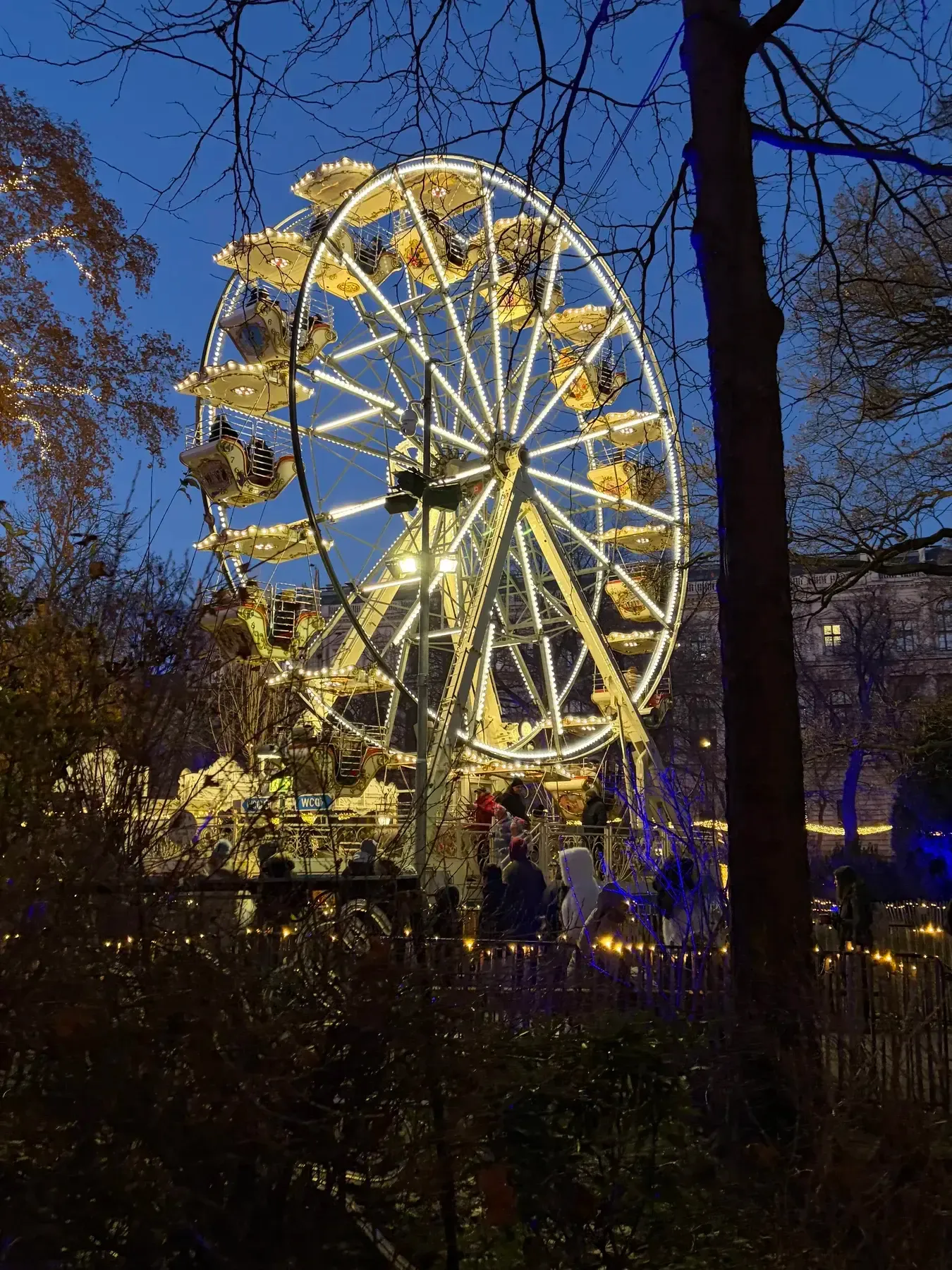
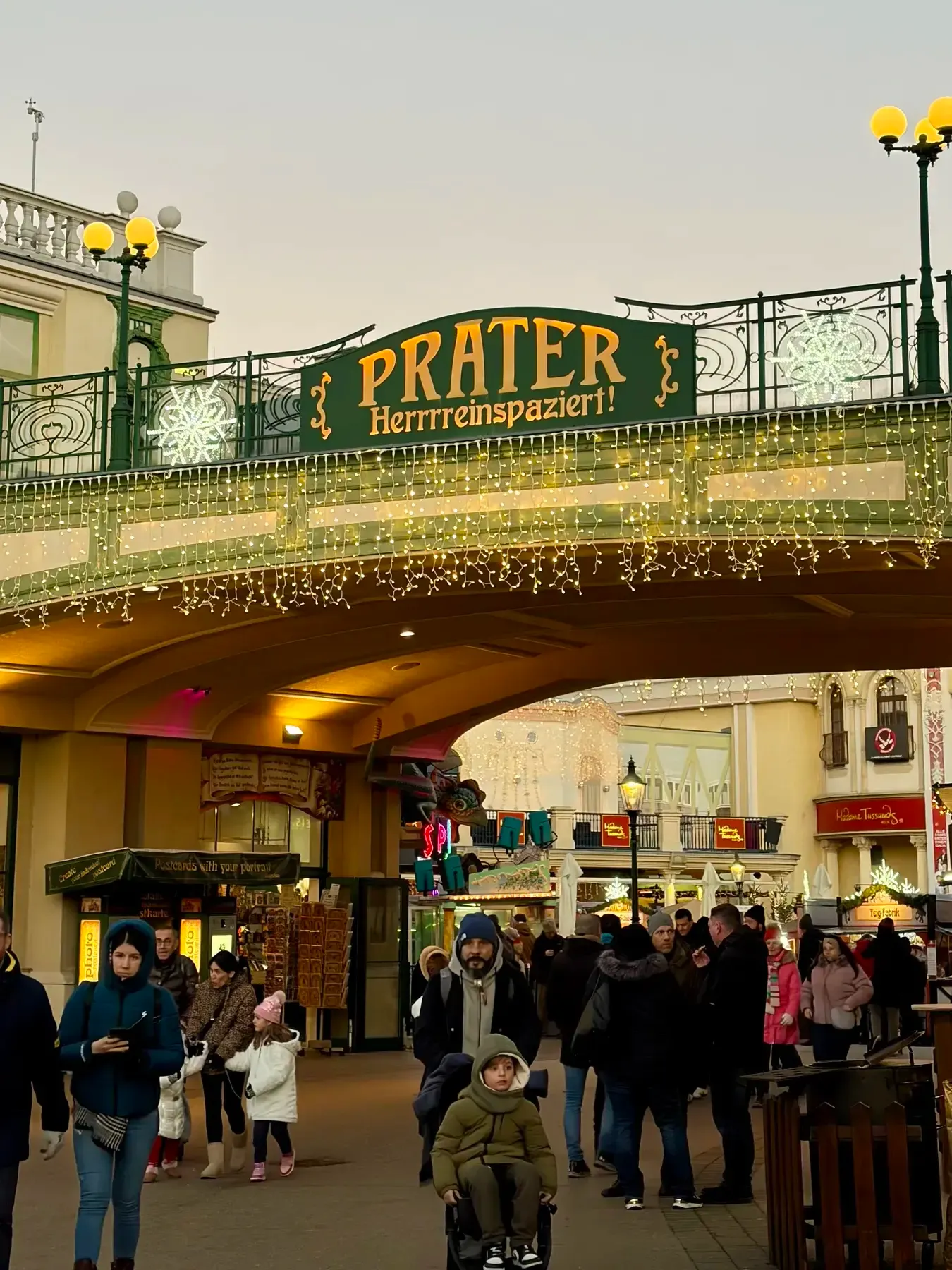
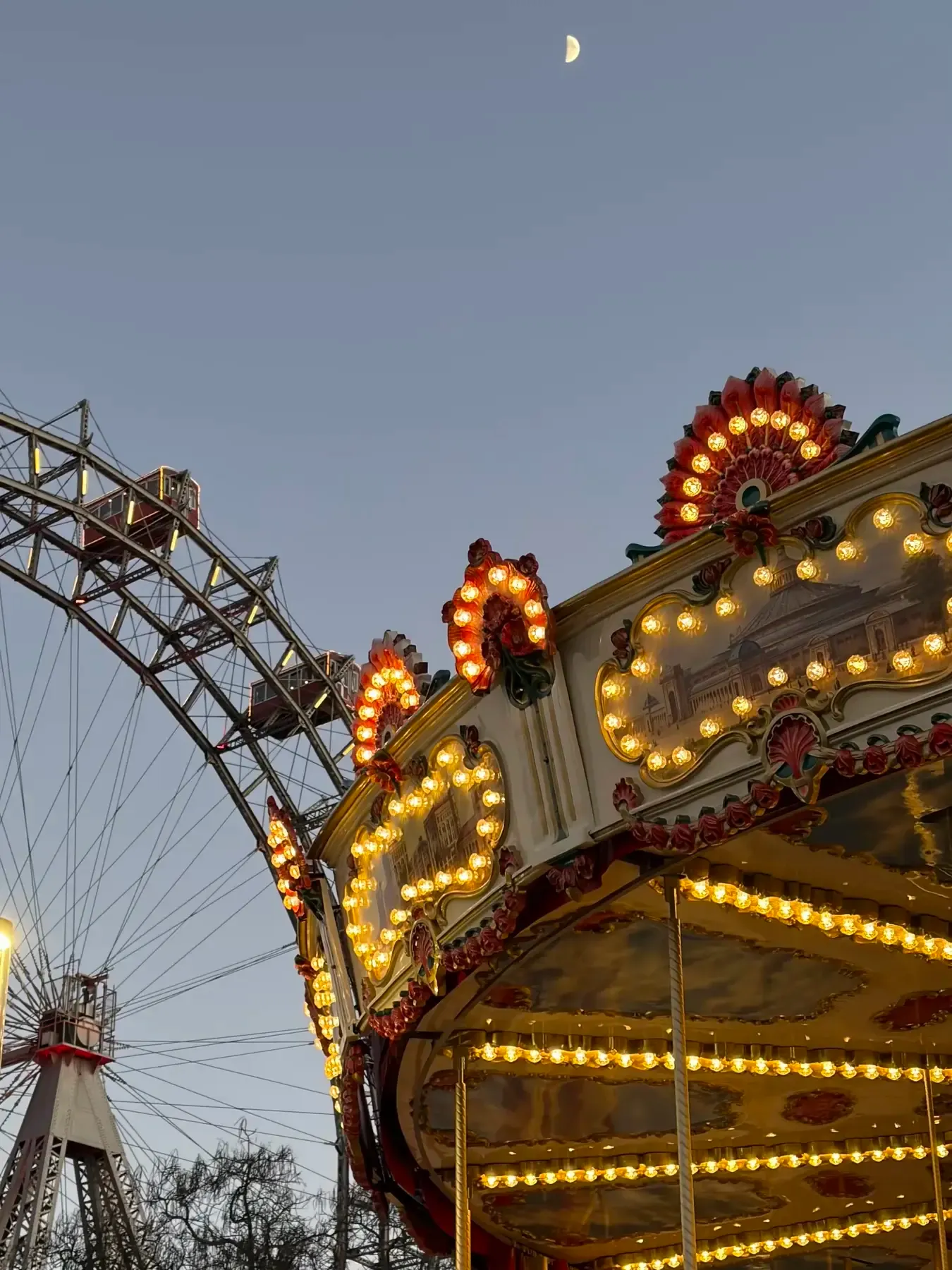
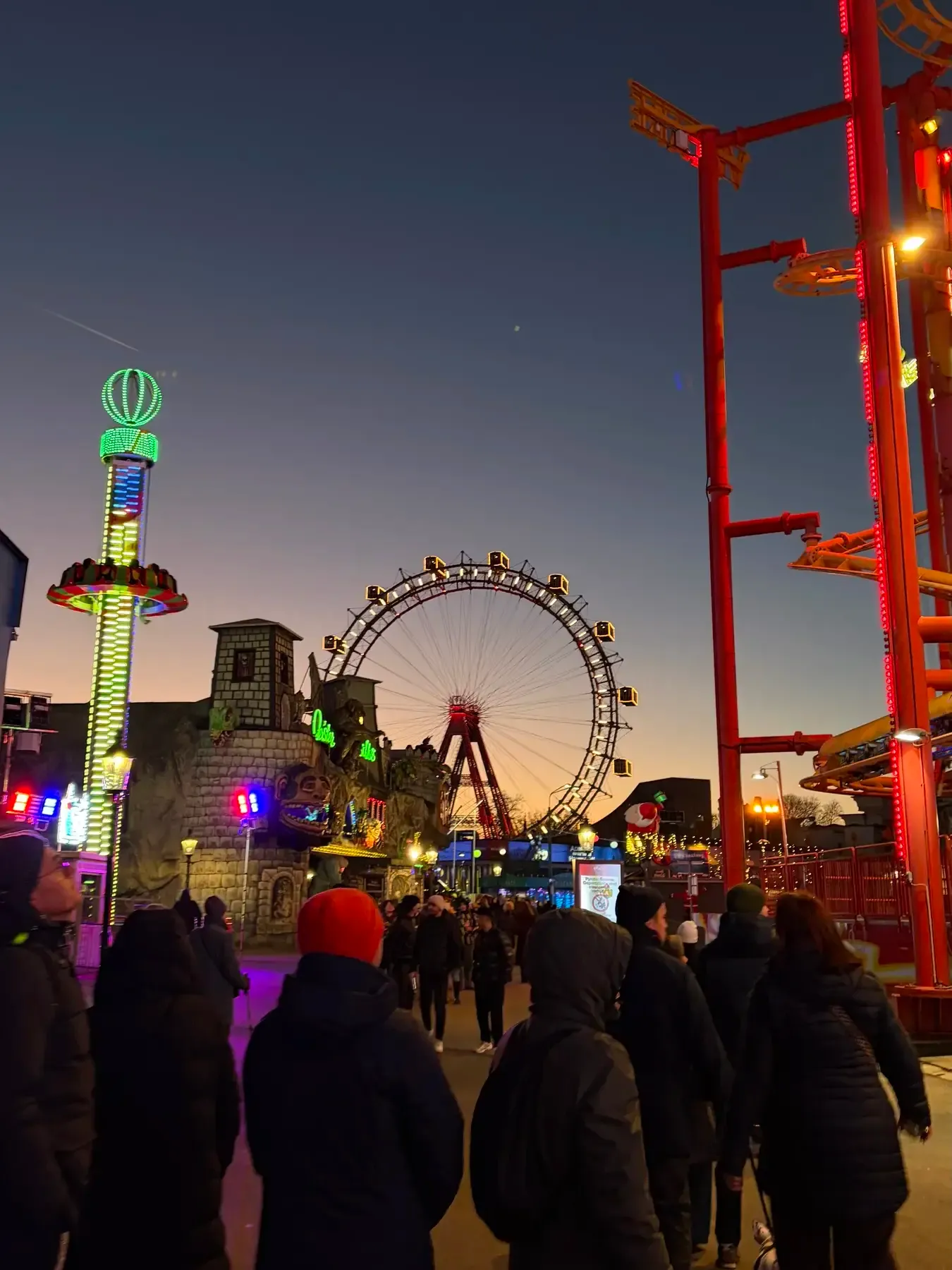
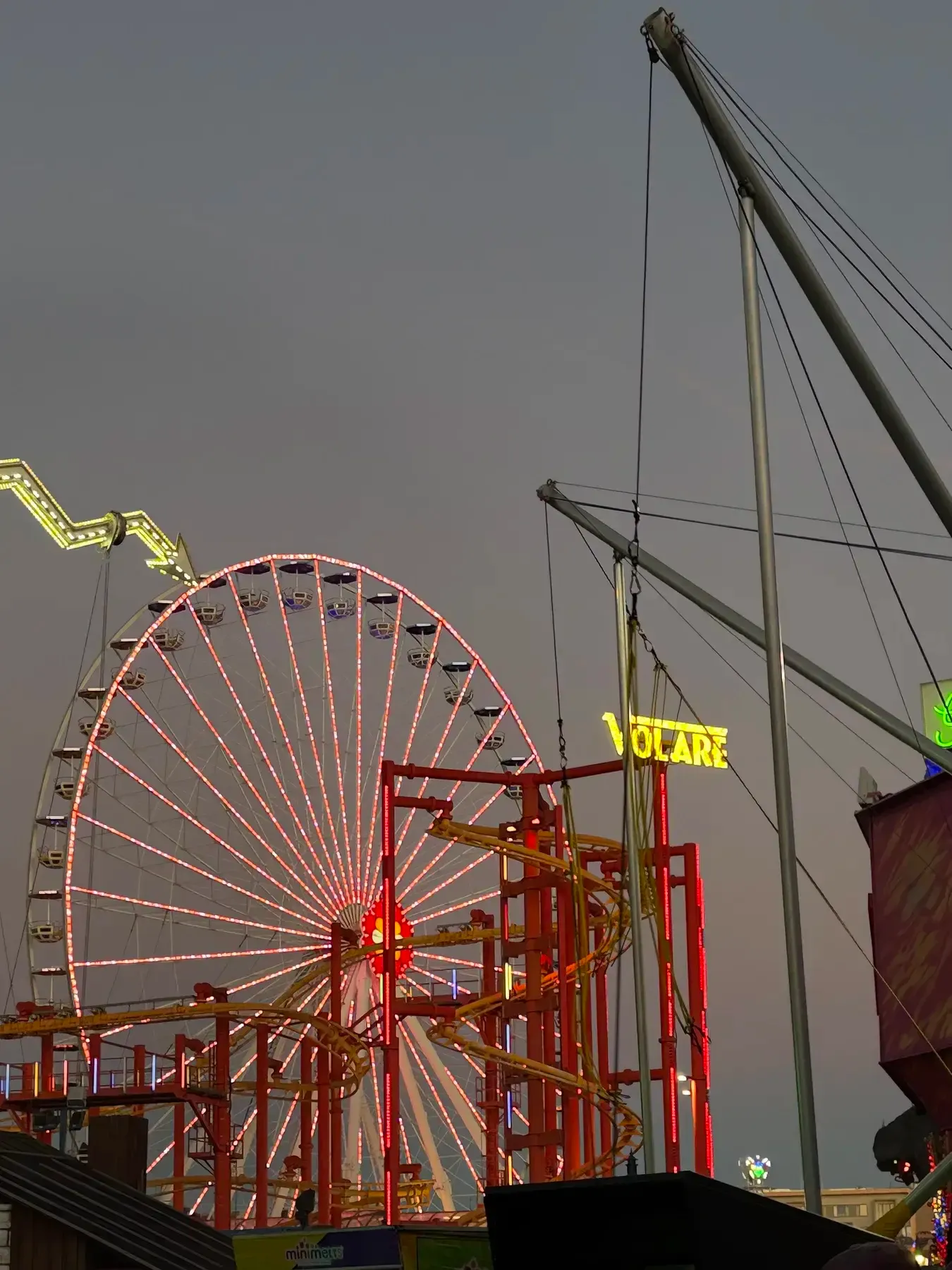
The Prater is a former imperial hunting ground opened to the public by Joseph II in 1766. The Riesenrad at its entrance was built in 1897 for Franz Joseph's golden jubilee, designed by English engineers and for decades the tallest Ferris wheel in the world. It survived near-total destruction in 1944 and reopened in 1947 with fifteen gondolas instead of thirty. In winter the amusement stalls mostly sleep, but the wheel still turns above bare chestnut trees, oddly calm for a place built for noise.
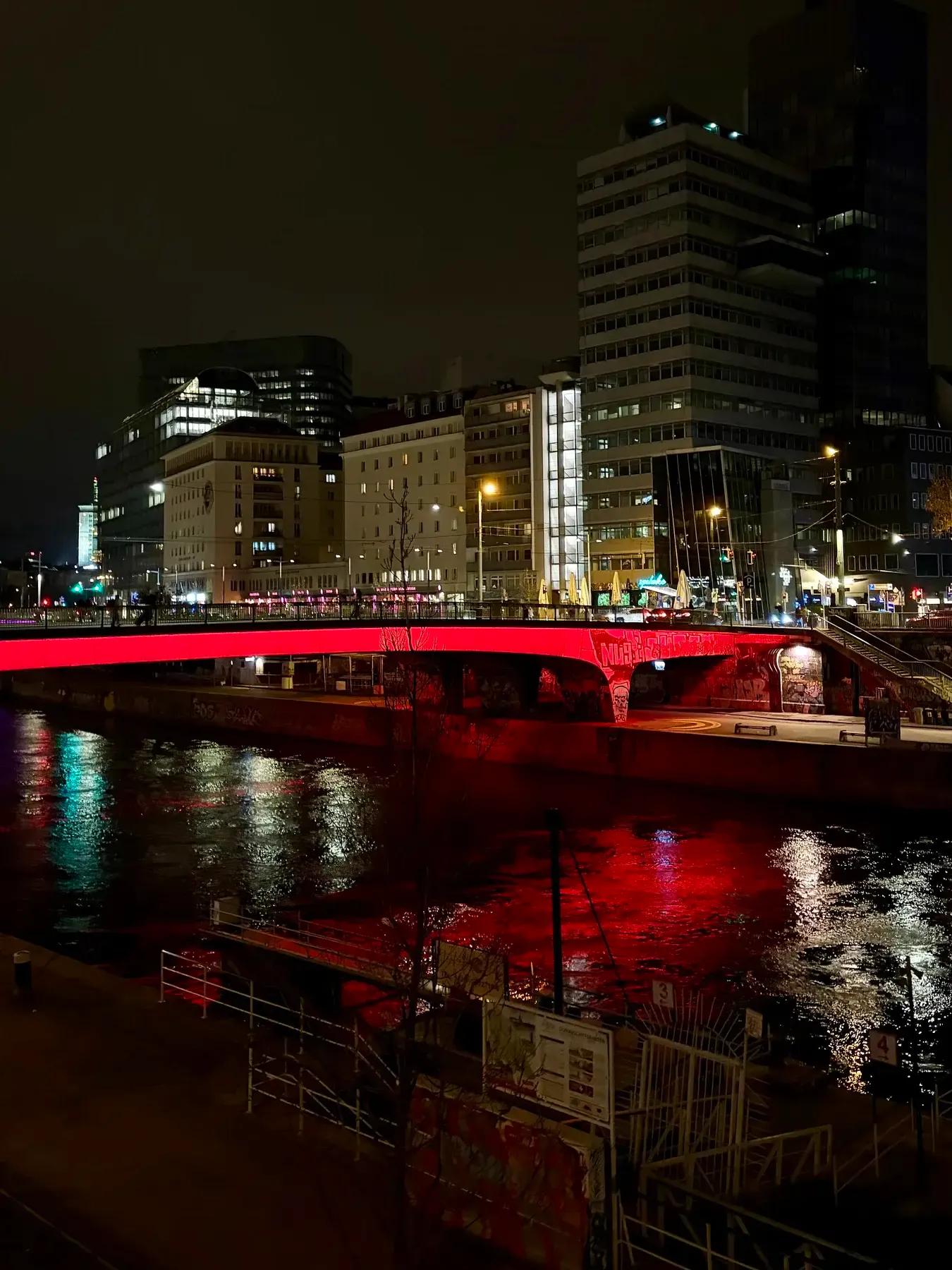
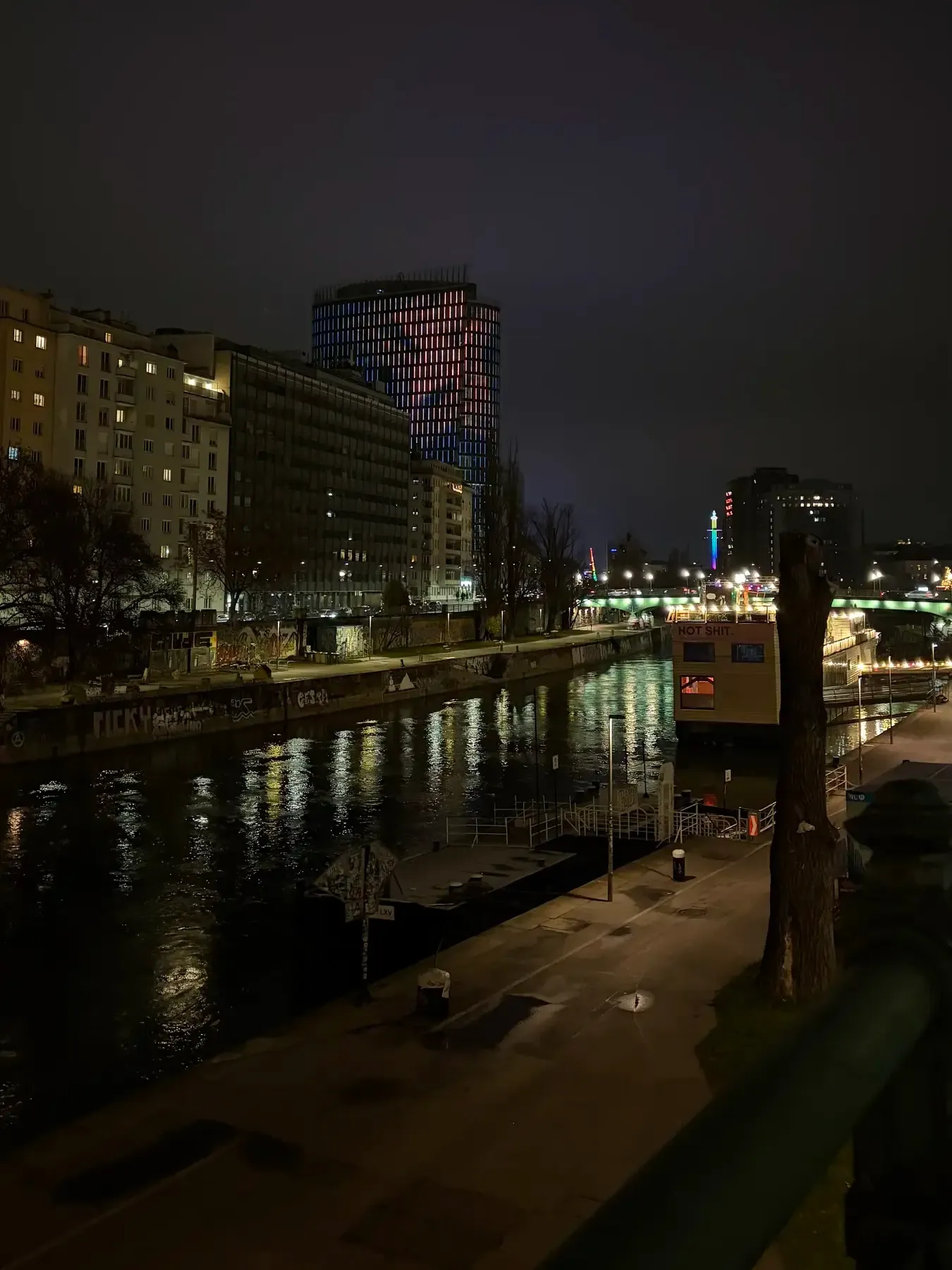
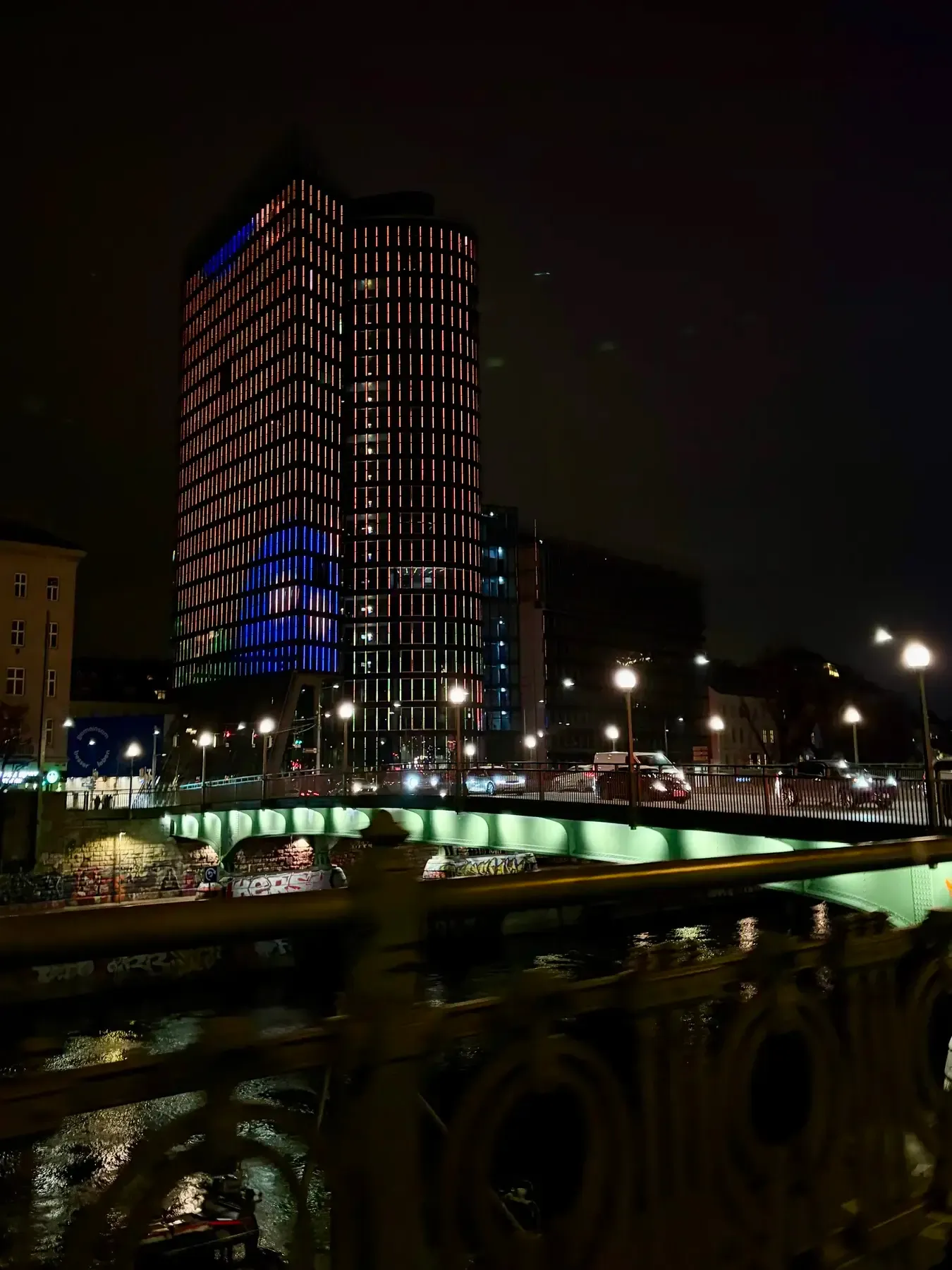
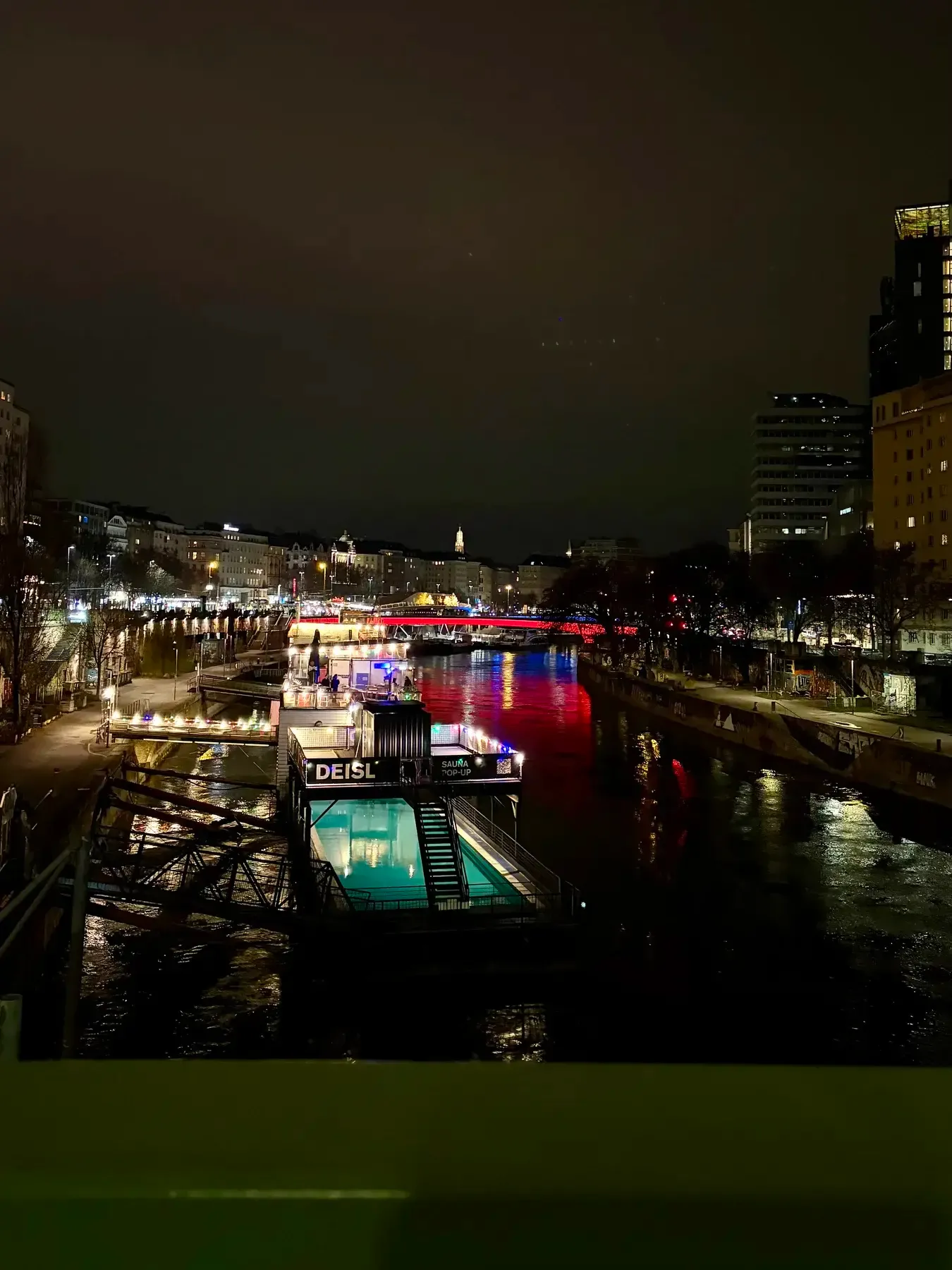
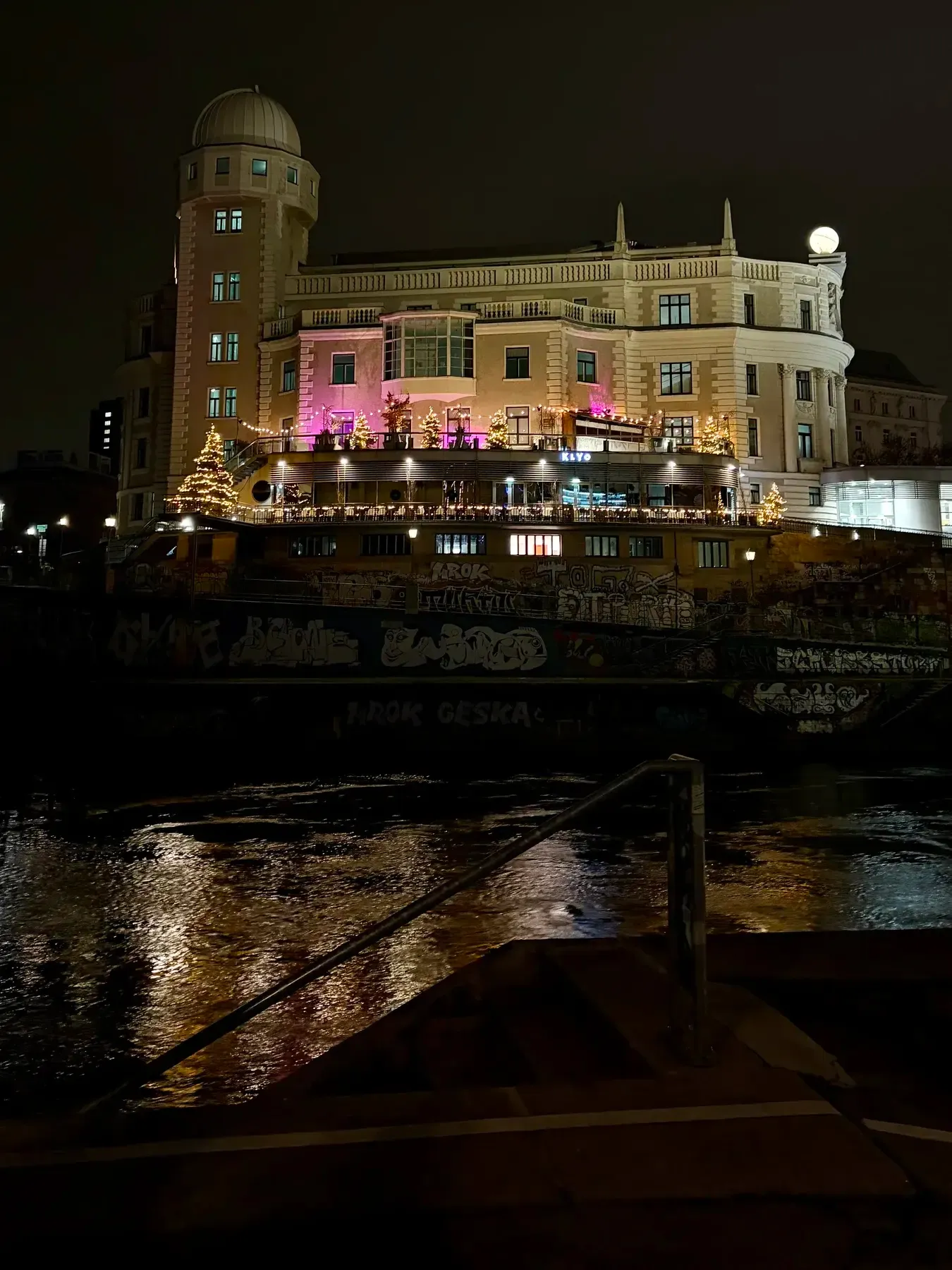
Donaukanal at Night
The Donaukanal is not the Danube most tourists expect: a regulated side channel that curves around the old city, first tamed in the late sixteenth century. For years it was an industrial backwater; since the 1990s the banks have filled with legal graffiti walls, summer beach bars, and clubs like Flex in a former tunnel. In December the deckchairs are packed away, but the murals and neon still reflect in the water. It is the easiest place to see a younger, less imperial Vienna, a few minutes on foot from Stephansplatz.